Cisco's AI Security Pivot and Quantum Leap Ignite Wall Street Valuation Debate
Cisco Systems has aggressively accelerated its transformation from a legacy networking hardware giant into a high-margin software and security powerhouse. This fundamental shift is underscored by a major expansion of its agentic security portfolio and pioneering developments in quantum infrastructure. By embedding artificial intelligence natively across its ecosystem and laying the foundation for next-generation encryption, Cisco aims to insulate enterprise clients from highly sophisticated, weaponized cyber threats. The strategy has generated substantial market momentum, sending shares higher by more than 54% year-to-date, far outpacing the broader technology sector as detailed by Zacks Investment Research .
Despite this impressive rally, Wall Street is deeply divided on whether Cisco can sustain its rich valuation amid execution risks and fierce sector competition. Critics note that the stock trades at a notable premium relative to historical averages, forcing a heated debate over the timeline required to turn bleeding-edge investments into meaningful top-line growth. While third-quarter fiscal 2026 security revenues remained flat at $2.01 billion, the company registered explosive double-digit order growth across its core security products, signaling robust underlying customer demand. According to data tracked via Yahoo Finance, this tension between immediate financial results and forward-looking momentum highlights the high stakes of Cisco’s new roadmap.
Building the Agentic Security Operations Center
To defend enterprises operating in an era of machine-scale data transfers, Cisco has positioned itself at the nexus of automated network defense. The vendor has rolled out specialized Zero Trust Access protocols specifically designed for autonomous AI agents, mitigating vulnerabilities introduced by fragile third-party models and open API integrations. This approach is reinforced by new orchestration capabilities within its agentic Security Operations Center (SOC) and real-time observability engines. Strategic alliances amplify these native platforms, notably the expanded Secure AI Factory framework co-developed with Nvidia, alongside threat-intelligence data sharing with industry leaders like OpenAI and Anthropic.
The Quantum Frontier and Portfolio Integration
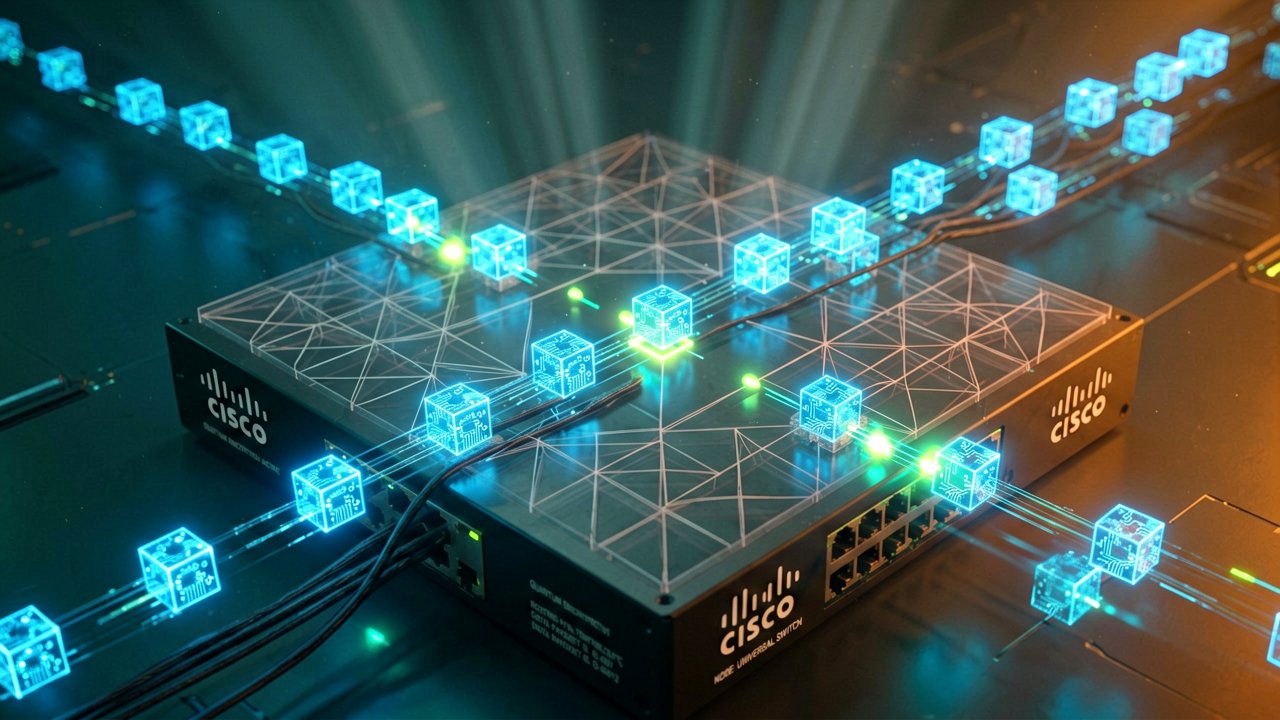
Cisco is making significant capital investments to neutralize long-term cryptographic risks, anchored by its innovative Universal Quantum Switch. This room-temperature device routes and translates quantum data packets, representing a crucial breakthrough for scalable quantum networking. Concurrently, the tech giant plans to roll out comprehensive quantum-safe encryption features across its primary hardware, software, and cloud services by the end of 2026. This comprehensive timeline represents an ambitious engineering endeavor, aiming to offer continuous security across multi-year asset lifecycles before quantum decryption capabilities become a widespread threat.

Balancing Investor Risk and Structural Rewards
The financial community remains acutely focused on the operational challenges of Cisco's dual-track technological push. Consolidating legacy infrastructure through unified control planes boosts customer retention, yet execution delays could quickly expose Cisco to agile security-focused competitors like Palo Alto Networks or CrowdStrike. Analysts at Simply Wall St observe that balancing the immediate demand for operational AI defense against the massive, pre-revenue requirements of quantum development may strain internal engineering resources. Consequently, Cisco's capability to efficiently monetize these next-generation protocols will ultimately dictate its ability to defend both enterprise networks and its premium stock valuation.
Behind the Scenes of Cisco’s Cloud-First Security Evolution
What Most Reports Miss: The internal shift driving Cisco’s radical security overhaul is not merely a marketing pivot toward artificial intelligence, but a fundamental re-engineering of how telemetry data is digested across distributed enterprise architectures. Historically, Cisco operated as a fragmented collection of hardware-centric business units that frequently prioritized proprietary routing chips over cohesive software frameworks. The acquisition of Splunk serves as the definitive turning point in this culture war, supplying the unified data plane required to feed real-time security logs into machine learning models. By marrying network packet traffic data with endpoint application security logs, engineers are finally moving away from reactive perimeter defense and toward preemptive structural isolation.
This structural transformation has triggered a quiet ideological conflict within Cisco’s traditional enterprise customer base. Veteran network administrators, accustomed to high-touch hardware configurations and localized firewall deployments, are wrestling with the migration toward highly automated, cloud-managed control planes. The promise of an autonomous, agentic Security Operations Center reduces the crushing burden of alert fatigue on lean corporate IT teams, but it simultaneously introduces immense reliance on black-box algorithms. Large financial and healthcare institutions express particular anxiety regarding automated policy enforcement, where an algorithmic false positive could instantly sever network connections to business-critical transaction infrastructure.
Simultaneously, Cisco’s aggressive push into quantum-safe infrastructure represents a calculated gamble to capture the next multi-decade refresh cycle of enterprise network architectures. While standard artificial intelligence tools protect against present-day automated exploits, the threat of "harvest now, decrypt later" tactics by sophisticated state actors requires immediate architectural adjustments. The engineering behind the room-temperature Universal Quantum Switch bypasses the strict cryogenic limitations that typically stall quantum laboratory hardware, laying early physical groundwork for a post-quantum internet. This ensures that when corporate boards eventually order widespread infrastructure upgrades to meet new federal post-quantum compliance standards, Cisco will already possess the dominant, pre-vetted hardware footprint.
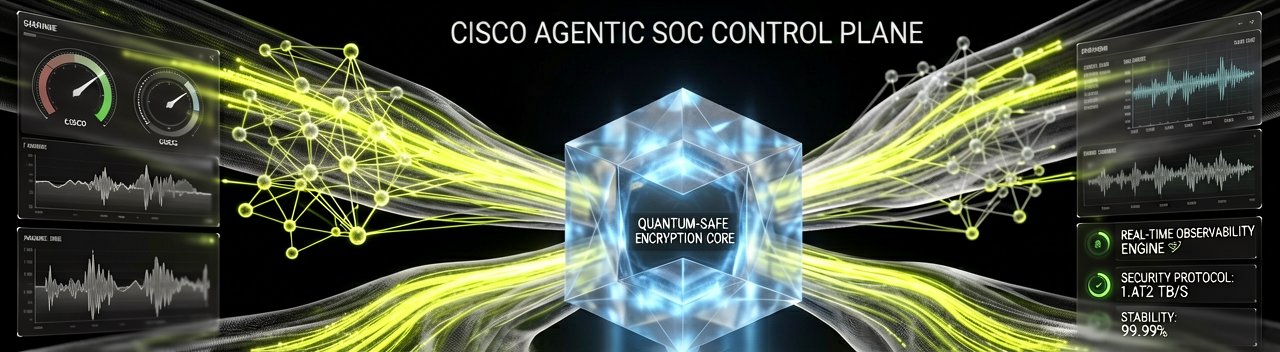
Financially, this dual-pronged focus forces executive leadership into a delicate balancing act to keep Wall Street pacified. Building out the infrastructure for the Secure AI Factory alongside Nvidia requires immense, upfront capital expenditures that threaten to temporarily compress gross margins. Mainstream investors frequently demand immediate subscription revenue recognition from software licenses, yet the long-term payoff for foundational quantum routing technology remains years away. Cisco's ability to navigate this tension depends entirely on keeping enterprise order momentum high for its current security portfolio, proving that it can successfully finance tomorrow's quantum defenses with today's automated intelligence suites.
Challenging the AI-Quantum Corporate Paradigm
Reading Between the Lines: Cisco’s aggressive corporate pivot relies on the convenient narrative that complex network vulnerabilities can be uniformly solved by layering more advanced software onto legacy networking architecture. This tech-centric optimism frequently ignores the operational reality of enterprise IT, where the primary point of failure remains human misconfiguration rather than a lack of algorithmic sophistication. By prioritizing agentic security systems that continuously tweak firewall policies on the fly, Cisco introduces a fresh tier of systemic vulnerability. A single corrupted prompt or an adversarial data poisoning attack on a shared AI model could theoretically trigger a widespread, automated self-block across thousands of global corporate nodes before human engineers can step in.
A deeper contradiction lies in Cisco's simultaneous pursuit of immediate AI monetization and distant quantum-safe security readiness. The company expects investors to cheer the explosive double-digit order growth of its current software portfolio while patiently absorbing the heavy research and development costs of its Universal Quantum Switch. However, the hardware required to fully exploit quantum-safe networking does not yet exist at commercial scale, meaning Cisco is building an expensive bridge to a digital shore that remains decades out of reach. This creates a jarring strategic mismatch, forcing a mature, dividend-paying tech giant to burn capital like an unvetted Silicon Valley startup while trying to maintain its traditional premium valuation on Wall Street.
Furthermore, the competitive landscape suggests that Cisco’s consolidation play may alienate the very ecosystem it desperately needs to survive. The reliance on partnerships with industry heavyweights like Nvidia, OpenAI, and Anthropic exposes a critical dependence on external intellectual property. While Cisco controls the physical switches and the telemetry pipes, it does not control the foundational large language models powering its threat-intelligence engines. If these AI providers renegotiate access terms or alter their API pricing structures, Cisco could find its software margins squeezed by the exact tech enablers it currently relies on to justify its forward-looking premium to skeptical shareholders.
Ultimately, the long-term implication of this strategy is a high-stakes centralization of enterprise digital risk. As corporations hand over network routing, cloud observability, and automated threat defense to Cisco’s unified control plane, they eliminate the traditional defense-in-depth benefits of vendor diversification. While a single vendor solution drastically simplifies administrative overhead, it converts localized technical glitches into catastrophic infrastructure failures. Cisco is effectively asking the global enterprise market to trust that its autonomous systems will always guess correctly, a wager that leaves very little margin for error in an increasingly hostile and unpredictable digital ecosystem.
"Enterprise technology strategy has always been a cycle of paying to automate the solutions to problems we created by automating things the decade before. Cisco is banking on the hope that if you make the software complex enough, Wall Street will confuse the sheer volume of lines of code with an economic moat, and clients will keep buying the updates just to figure out what the previous version was supposed to be doing."
Artūras Malašauskas is an AI Systems Integrator with 20+ years of production-grade web engineering experience. He has designed, shipped, and scaled enterprise Python/PHP systems for logistics, SaaS, and public-sector clients. For the past year, he has focused exclusively on AI integrations: deploying open-source LLMs, building generative media pipelines (image, audio, video), and engineering multi-agent workflows for real production environments. His standard: reproducibility, security, cost-efficient inference—no vaporware. He documents and evaluates emerging AI tooling, separating verified capabilities from marketing noise. Technical editor at: muza-ai.eu, ai-verslas.lt, ai-naujinos.lt Connect on LinkedIn
Comments