The Era of Electric Intelligence: How AI and Cybersecurity Form the New Bedrock of European Electrification
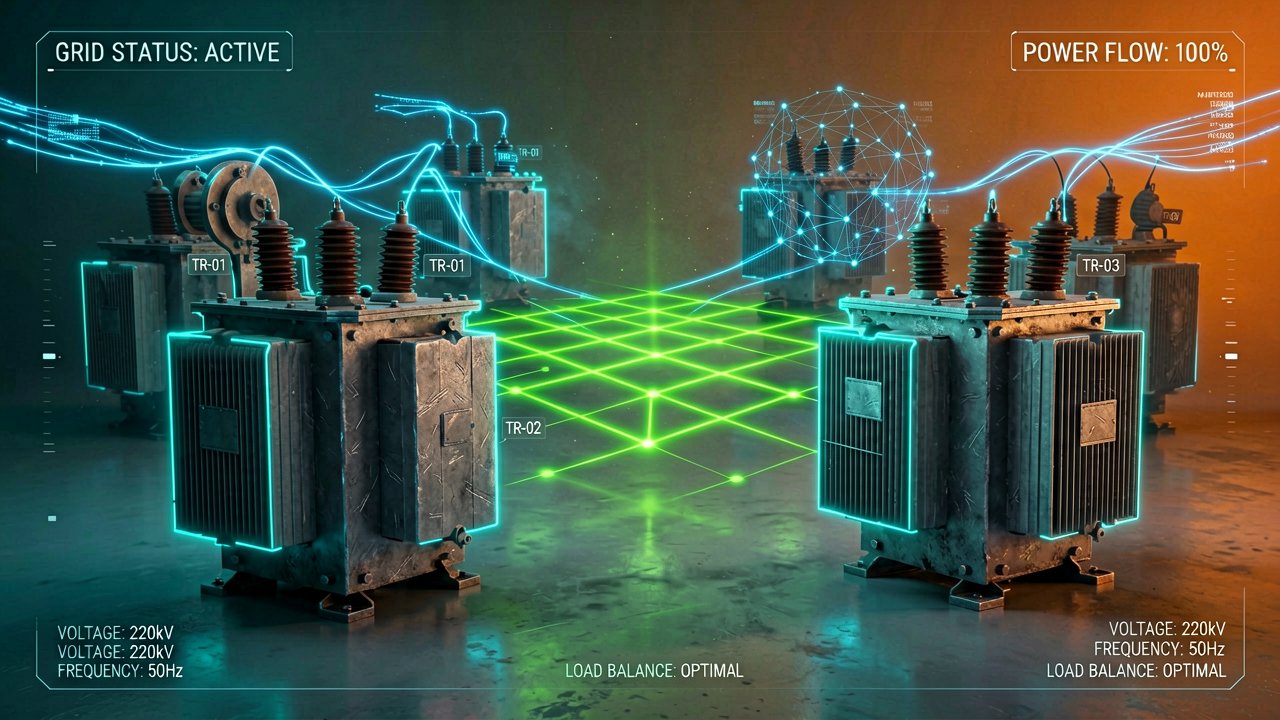
The European energy sector has reached a critical inflection point where the transition to a decarbonized economy is no longer just an infrastructure challenge, but a digital evolution. At the recent Eurelectric Power Summit 2026 in Helsinki, industry leaders and policymakers made it clear that transforming Europe into the world’s first "electro-continent" requires an immediate, massive scale-up of artificial intelligence and advanced cybersecurity frameworks. While Europe's electrification rate has historically hovered around 23%, a surge in power demand from heavy industry, electric transit, and data centers is forcing a structural convergence between the digital and energy sectors.
This convergence brings a complex dual challenge. On one hand, artificial intelligence acts as an unprecedented driver of electricity consumption, with estimates revealing that data centers could account for roughly 28% of the growth in European power consumption by 2030, according to analysis shared by Renewable Matter. On the other hand, AI is the primary mechanism utilities must use to manage increasingly volatile, decentralized renewable energy grids. This bidirectional relationship means that the stability of Europe's power grids is fully dependent on its ability to securely deploy digital intelligence at scale.
As critical infrastructure digitizes, the threat landscape expands exponentially, making robust cyber defense a prerequisite for investment. Geopolitical friction, hybrid warfare, and sophisticated digital attacks mean that protecting the grid edge is now synonymous with national security. The consensus among experts at the summit emphasizes that without strict regulatory alignment and innovative cyber architecture, the financial and operational risks could stall the billions in capital required for Europe’s twin transition.
The Double-Edged Sword: Balancing AI Demand with Grid Optimization
The rapid expansion of generative AI and cloud computing infrastructure has triggered an aggressive revision of European load forecasts. To address this paradigm shift, Eurelectric and EY-Parthenon launched a flagship initiative, "The Era of Electric Intelligence," alongside the signing of the Twin Transition Commitments, as detailed by Eurelectric on X. This framework brings utilities and technology hyperscalers together to establish practical pathways for expanding data centers without destabilizing localized distribution networks.
Rather than viewing data centers purely as a resource drain, progressive utilities are utilizing them for grid flexibility. Co-location projects, such as Fortum’s heat recovery plant developed in partnership with Microsoft data centers, demonstrate how computing infrastructure can actively support municipal heating grids and balance load requirements. Additionally, energy companies are shifting focus from simply building foundational AI models to accelerating "AI diffusion," using specialized algorithms on the power station floor to optimize real-time generation, forecast weather-dependent renewable output, and automate demand-side response markets.
Cybersecurity and Grid Edge Visibility in an Age of Hybrid Threats
As the electricity grid transitions from a centralized, one-way system to a highly distributed, bidirectional network, the number of potential digital entry points multiplies. Grid modernization requires pervasive visibility at the edge, a need that is met by the massive deployment of smart metering systems. According to a strategic analysis by ESMIG, these smart meters provide the essential digital layer necessary to measure, settle, and reward demand-side flexibility, turning regular consumers into active market participants.
However, this vast network of connected devices introduces severe systemic vulnerabilities. European energy networks face an escalating volume of hybrid attacks and state-sponsored cyber threats targeting critical infrastructure. Industry experts reporting via Power Technology note that the accelerated trend in digitalization, paired with current geopolitical volatility, has elevated cybersecurity to a primary operational hazard. Protecting this infrastructure requires zero-trust architectures and automated, AI-driven threat detection capable of isolating localized security breaches before they cascade into regional blackouts.
Regulatory Frameworks and System-Level Execution
The technical integration of AI and cybersecurity cannot succeed in a regulatory vacuum. European policymakers are under pressure to synchronize energy market design with digital governance policies. The European Commission is actively working on updating data center energy performance standards, while simultaneously preparing tailored guidelines for the AI Act to clarify high-risk use cases within critical infrastructure sectors. This regulatory alignment is vital to give institutional investors the long-term predictability they need to fund heavy industrial electrification.
Achieving Europe's decarbonization mandates ultimately depends on shifting away from fragmented, localized planning toward integrated, system-level execution. This strategy demands deep collaboration between hardware engineers, data scientists, and federal regulators to ensure that security measures are built directly into the grid's design rather than added as an afterthought. As Europe builds out its digital energy infrastructure, the ability to balance compute-driven load growth with autonomous, cyber-resilient grid operations will determine its industrial competitiveness on the global stage.
The Hidden Architecture of Grid-Edge Autonomy
Beyond the Main Stage: The real operational tension discussed throughout the summit lies in the unglamorous reality of the low-voltage distribution network. For decades, transmission operators managed centralized power via a handful of large plants, but the modern European grid must suddenly choreograph millions of solar inverters, electric vehicle chargers, and heat pumps. This decentralization has created a blind spot for traditional supervisory control and data acquisition systems. Industrial strategists are quietly warning that transmission networks are becoming entirely dependent on distribution networks for system balance, shifting the operational center of gravity closer to individual residential streets than to massive regional substations.
To prevent localized grid collapse from overloading transformers, utilities are moving away from traditional, centralized cloud processing in favor of edge computing. Deploying localized machine learning models directly within neighborhood substations allows for autonomous, microsecond-level decision-making without waiting for data to travel to a central data center and back. This shift fundamentally alters the infrastructure's defense strategy; if a localized digital disruption or cyber attack occurs, a substation can instantly isolate itself from the broader network, operating as a self-sustaining microgrid rather than triggering a cascading regional failure.
This technical evolution has sparked intense debates regarding regulatory data ownership and consumer privacy. Legacy telecom frameworks often clash with modern energy requirements, as smart meter data frequency and granular usage tracking face heavy scrutiny under European data protection laws. Major technology providers argue that overly restrictive data regulations prevent algorithms from accurately predicting demand spikes, while consumer advocacy groups express valid concerns about the monetization of behavioral data. Navigating this delicate balance between absolute data privacy and grid-balancing visibility remains one of the most critical hurdles for operators aiming to scale up automated demand-side response programs.
Furthermore, legacy hardware remains a significant bottleneck that cannot be resolved solely through software updates. A substantial portion of Europe’s substation infrastructure was built over forty years ago, long before digital connectivity was an engineering consideration. Upgrading these mechanical systems with advanced sensors, digital relays, and automated switchgear requires unprecedented capital expenditure. Industry veterans emphasize that while software-driven AI solutions can optimize existing capacity, they cannot entirely compensate for aging physical assets, meaning long-term grid stability requires a sustained, dual investment in both physical copper and digital code.
The Paradox of Automated Resilience
Reading Between the Lines: The prevailing narrative surrounding Europe’s twin transition portrays a harmonious symbiosis where artificial intelligence effortlessly remedies the volatility of renewable energy. However, a deeper analysis reveals a profound structural contradiction. European energy policy aggressively mandates decarbonization and grid electrification, yet it simultaneously fosters an insatiable appetite for data center capacity to fuel the very AI models designed to manage that grid. By solving a physical balancing problem with a digital compute solution, the industry is effectively swapping a resource-management crisis for an electricity-consumption crisis, raising valid concerns about whether the net efficiency gains will ever truly materialize.
This reliance on algorithmic governance introduces an unprecedented form of systemic vulnerability known as code-level brittleness. While AI excel at optimizing predictable, historical datasets, their behavior during extreme, unprecedented anomalies—such as a simultaneous geopolitical cyber-offensive and a severe climate event—remains dangerously unpredictable. Relying on automated machine learning models to manage real-time power distribution runs the risk of creating a digital bystander effect, where human operators lose the situational awareness and manual overrides necessary to intervene when an algorithm encounters an edge case it was never trained to understand.
Furthermore, the push for ironclad cybersecurity standards exposes a glaring disconnect between legislative ambition and localized economic reality. European directives demand uniform compliance across all distribution networks, yet a fragmented ecosystem of thousands of small, municipal utilities lacks the capital and specialized talent to implement enterprise-grade cyber defenses. Enforcing identical regulatory burdens on a multi-national energy conglomerate and a rural cooperative does not inherently secure the grid; instead, it creates a compliance-checking culture where resource-strapped operators prioritize passing bureaucratic audits over implementing genuine, dynamic security measures.
Ultimately, projecting these trends forward suggests that Europe's path to electrification will not be a smooth march toward decentralized autonomy, but rather an ongoing battle over digital sovereignty and computational triage. As power demand approaches physical grid constraints, regulators may soon face the politically unpalatable task of rationing electricity between heavy industrial manufacturing, residential heating, and the tech sector's data warehouses. Without a sobering reassessment of the physical resource limitations inherent to digital infrastructure, Europe risks building a highly sophisticated, intelligent grid that is perfectly optimized on paper, yet perpetually teetering on the edge of structural exhaustion.
"We are rushing to build a futuristic energy system where artificial intelligence flawlessly orchestrates billions of clean electron flows, yet the entire apparatus still remains thoroughly terrified of a single unpatched software vulnerability, an unpredictable cold snap, or a clever teenager with a basic understanding of network entry points."
Artūras Malašauskas is an AI Systems Integrator with 20+ years of production-grade web engineering experience. He has designed, shipped, and scaled enterprise Python/PHP systems for logistics, SaaS, and public-sector clients. For the past year, he has focused exclusively on AI integrations: deploying open-source LLMs, building generative media pipelines (image, audio, video), and engineering multi-agent workflows for real production environments. His standard: reproducibility, security, cost-efficient inference—no vaporware. He documents and evaluates emerging AI tooling, separating verified capabilities from marketing noise. Technical editor at: muza-ai.eu, ai-verslas.lt, ai-naujinos.lt Connect on LinkedIn
Comments