TENEX.ai Redefines Cybersecurity with AI-Driven, Human-Centric SOC Model
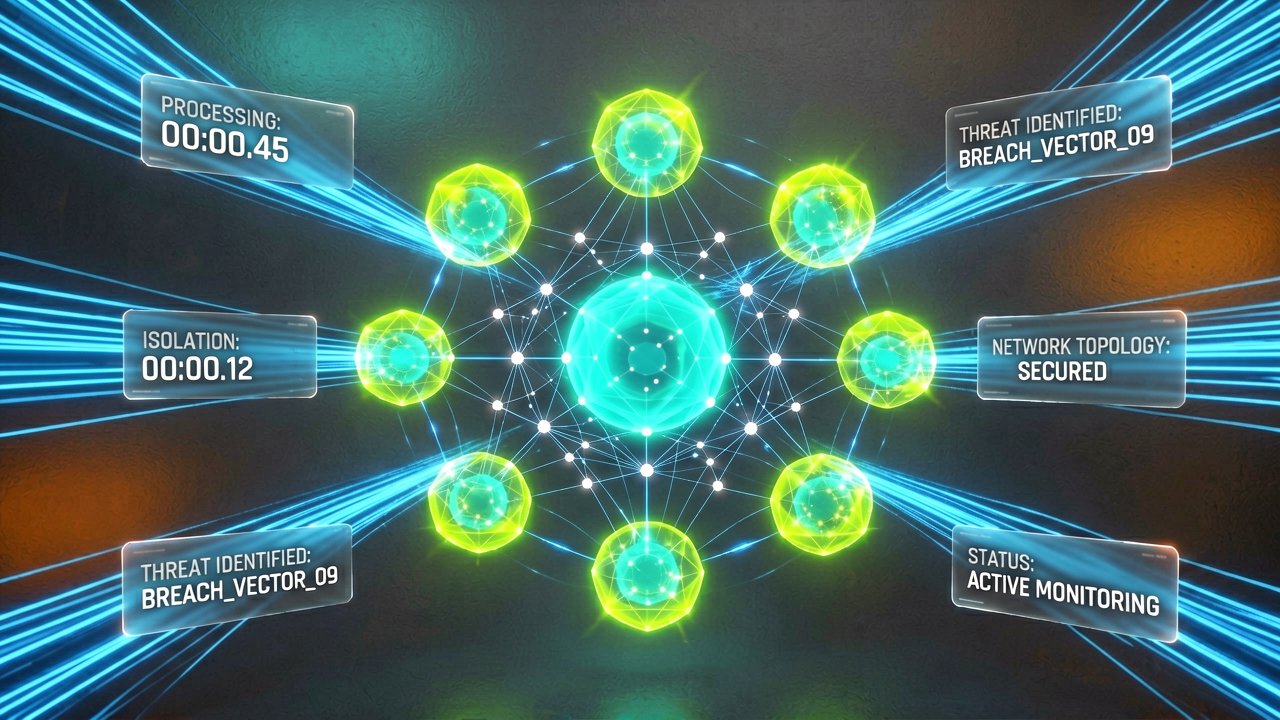
The traditional managed detection and response (MDR) paradigm is undergoing a structural disruption as enterprise alert volumes outpace human cognitive capacity. Legacy Security Operations Centers (SOCs) routinely triage only a fraction of inbound signal telemetry, leaving organizations vulnerable to prolonged threat dwell times. By engineering an AI-native ecosystem from the ground up rather than appending machine learning onto legacy infrastructure, TENEX.ai is shifting the industry focus from software tools to automated, deterministic security outcomes.
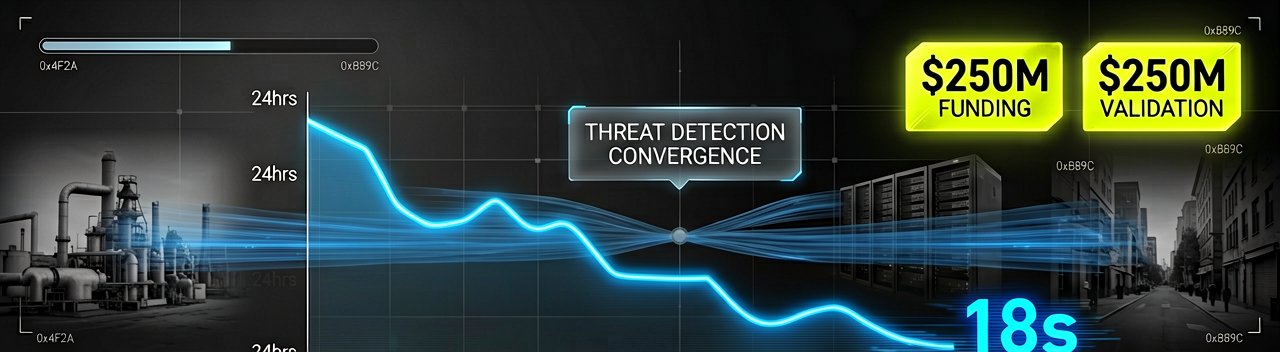
In a recent strategic update, TENEX.ai CEO Eric Foster detailed how the company’s platform, anchored by its Pulse 2.0 architecture, executes autonomous triage on over 95% of incoming alerts. Built natively on the Google Cloud Security platform, the system processes 100% of customer telemetry within sub-minute intervals. This rapid processing addresses the core bottleneck of modern security services by dramatically compressing threat dwell times, which remains the single most critical metric for mitigating enterprise risk.
This operational efficiency has triggered notable market validation, evidenced by a $250 million Series B funding round that positions TENEX.ai at the forefront of the AI SOC category, as reported by Tech Insider. By leveraging advanced agentic AI layers, the platform translates security data into instant context. This automation isolates routine anomalies without human intervention, reserving human analytical capabilities for high-level adversarial judgment and strategic threat hunting.
The Architecture of Pulse 2.0 and Agentic AI
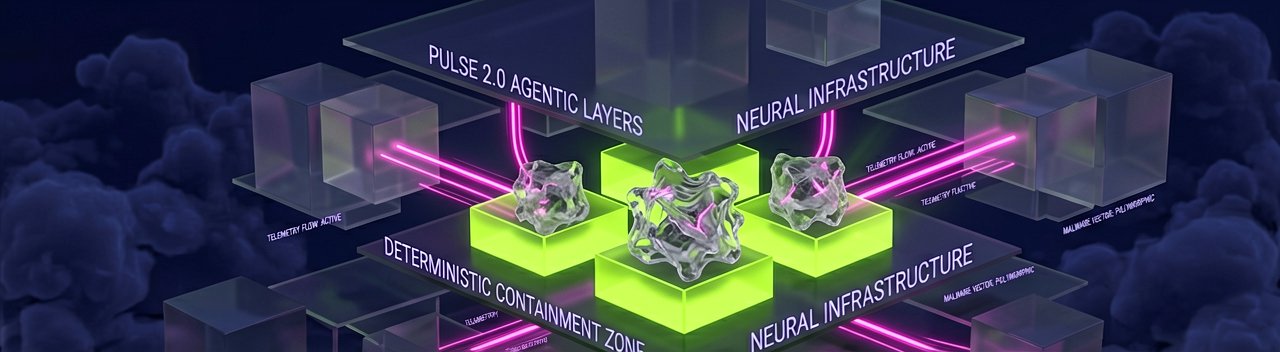
Pulse 2.0 represents a departure from traditional Security Information and Event Management (SIEM) rule-tuning by utilizing autonomous digital labor. According to technical insights from Bank Info Security, the platform extends beyond simple detection to execute direct containment actions, such as isolating compromised hosts or removing malicious content across diverse enterprise environments. This capability allows the system to operate effectively even in complex network architectures lacking native integrations.
Market Shift toward Outcome-Based Security Services
The explosive enterprise adoption of TENEX.ai highlights a macro shift away from purchasing fragmented cybersecurity tools toward acquiring guaranteed security outcomes. By utilizing foundational big data platforms like Google SecOps and integrating conversational and analytical capabilities via Gemini models, the company has established a new benchmark for managed detection. This paradigm eliminates the operational fatigue and recency bias common to human-only triage teams, allowing organizations to scale their digital defenses proportionally with escalating global threat vectors.
Behind the Scenes of the Autonomous Security Shift
The operational friction within legacy Security Operations Centers stems from a fundamental mismatch between adversarial speed and human processing limits. For over a decade, security teams have relied on SIEM systems that generate thousands of daily alerts, creating a state of perpetual cognitive overload. As threat actors weaponize automated scanning tools and generative AI to craft polymorphic malware, the industry has reached a tipping point where human-first triage is no longer viable for enterprise defense.
Industry veterans note that the primary challenge is not a lack of data, but an inability to quickly contextualize signals across disparate cloud and on-premise environments. When a security engineer spends the first critical hours of an incident manually querying logs and verifying user identities, the attacker gains a decisive advantage. The market is reacting to this vulnerability by shifting capital away from traditional software licensing toward platforms that assume the burden of initial validation and containment.
This structural evolution fundamentally alters the role of the modern security analyst from a reactive log processor into a strategic supervisor. By automating the ingestion, enrichment, and isolation of routine threats, Tier 1 and Tier 2 analyst functions are consolidated into the software layer itself. This transition allows human expertise to focus exclusively on complex adversarial behavior, custom threat hunting, and the refinement of organizational security policies.
The long-term viability of this model hinges on the precision of the underlying AI telemetry and its integration with cloud infrastructure. Enterprise buyers remain cautious about automated containment actions due to the historic risk of false positives disrupting critical production environments. Consequently, platforms that demonstrate deterministic, low-error execution are successfully capturing market share, setting a new standard for operational resilience in an increasingly hostile digital landscape.
Reading Between the Lines: The Automation Paradox
The marketing narrative surrounding autonomous Security Operations Centers promises a frictionless future where machine intelligence absorbs the operational burden of enterprise defense. However, replacing human fatigue with algorithmic predictability introduces a distinct set of systemic vulnerabilities. When security platforms boast of automated triage rates exceeding 95%, they implicitly reveal an architectural reliance on standardized threat profiles. This structural uniformity risks creating a dangerous blind spot for highly customized, low-signal adversarial campaigns designed to bypass automated filters.
Furthermore, the industry's rapid shift toward outcome-based security services creates a subtle contradiction in liability and operational accountability. While enterprise buyers are eager to offload the burden of log management, the ultimate legal and financial responsibility for a catastrophic data breach remains firmly with the corporate boardroom. Software vendors can offer rapid containment metrics, but they do not absorb the reputational damage or regulatory fines incurred when an automated rule accidentally blocks a business-critical database or permits a sophisticated lateral movement.
The reliance on deep integrations with infrastructure providers like Google Cloud also raises significant concerns regarding vendor lock-in. As the underlying machine learning models become deeply woven into specific cloud ecosystems, migrating to alternative platforms becomes economically and operationally prohibitive. Enterprises may find that the efficiency gained in threat detection is offset by a long-term loss of architectural flexibility, tying their digital sovereignty to the pricing structures and technical roadmaps of a single dominant cloud provider.
Ultimately, the displacement of Tier 1 analysts creates an industry-wide talent pipeline crisis that few vendors are willing to address. If automated systems handle all entry-level triage, the industry risks choking off the developmental pathway for the next generation of cybersecurity professionals. Without the foundational experience of diagnosing routine anomalies, the industry will struggle to cultivate the senior analysts required to oversee these very autonomous systems when a sophisticated adversary inevitably breaches the perimeter.
Cybersecurity spending continues to rise, yet the industry remains locked in a cycle where enterprises spend millions on automated software to fix the vulnerabilities created by the previous generation of automated software.
Artūras Malašauskas is an AI Systems Integrator with 20+ years of production-grade web engineering experience. He has designed, shipped, and scaled enterprise Python/PHP systems for logistics, SaaS, and public-sector clients. For the past year, he has focused exclusively on AI integrations: deploying open-source LLMs, building generative media pipelines (image, audio, video), and engineering multi-agent workflows for real production environments. His standard: reproducibility, security, cost-efficient inference—no vaporware. He documents and evaluates emerging AI tooling, separating verified capabilities from marketing noise. Technical editor at: muza-ai.eu, ai-verslas.lt, ai-naujinos.lt Connect on LinkedIn
Comments