Zscaler Throws Down the Zero Trust Gauntlet to Shield Autonomous AI Agents
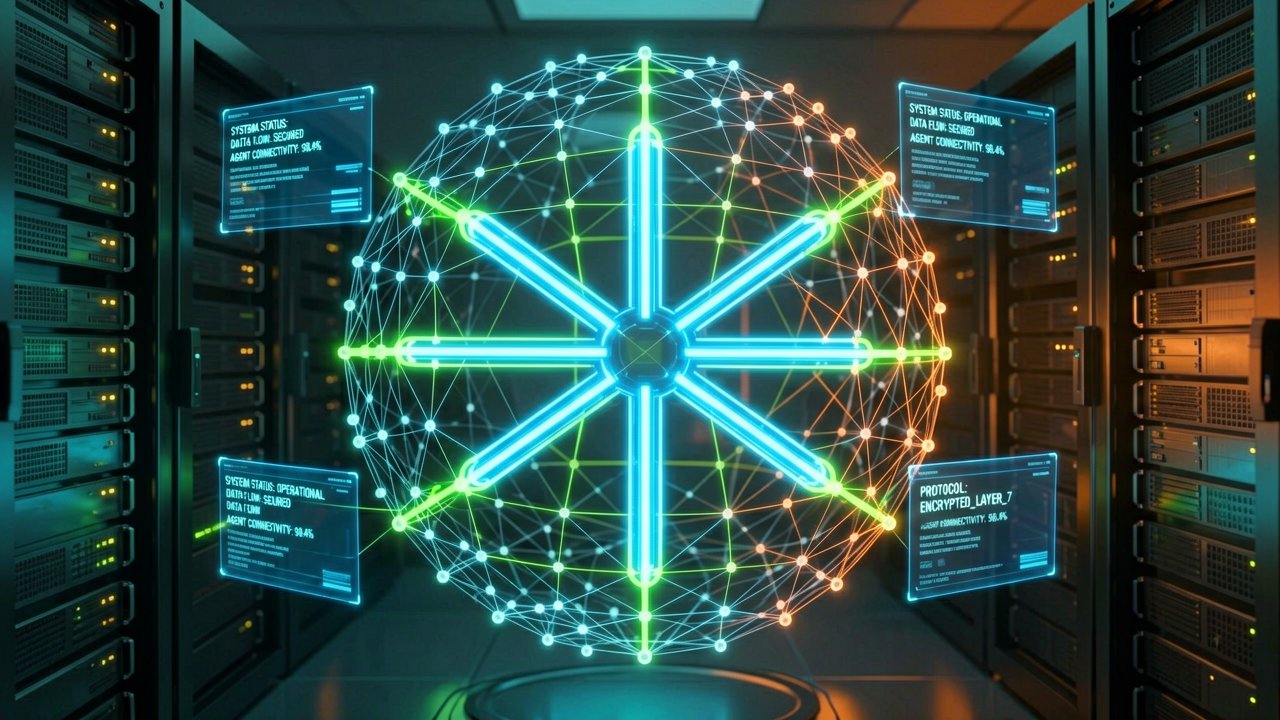
The enterprise rush to deploy autonomous AI agents is moving at a breakneck pace, but security frameworks built around predictable human behavior are dropping the ball. To plug these glaring visibility gaps, cybersecurity giant Zscaler, Inc. announced a suite of ground-up defensive tools at its annual Zenith Live 2026 conference in Las Vegas. The company rolled out what it bills as the industry's first complete zero-trust platform explicitly engineered for agentic AI, targeting the unique vulnerabilities that occur when autonomous software interacts at machine speed.
Traditional firewalls and legacy perimeter architectures assume an "inside versus outside" binary that simply fails when ephemeral AI identities start spawning sub-agents and requesting data independently. The newly unveiled capabilities extend the existing platform to inspect and dictate exactly how these digital entities connect to enterprise networks, communicate with various models, and execute tasks on employee devices. By implementing this architectural shift, the firm aims to ensure that an organization's expanding fleet of AI agents does not evolve into its weakest security link.
The New Defensive Blueprint: AI Broker and Endpoint Protection
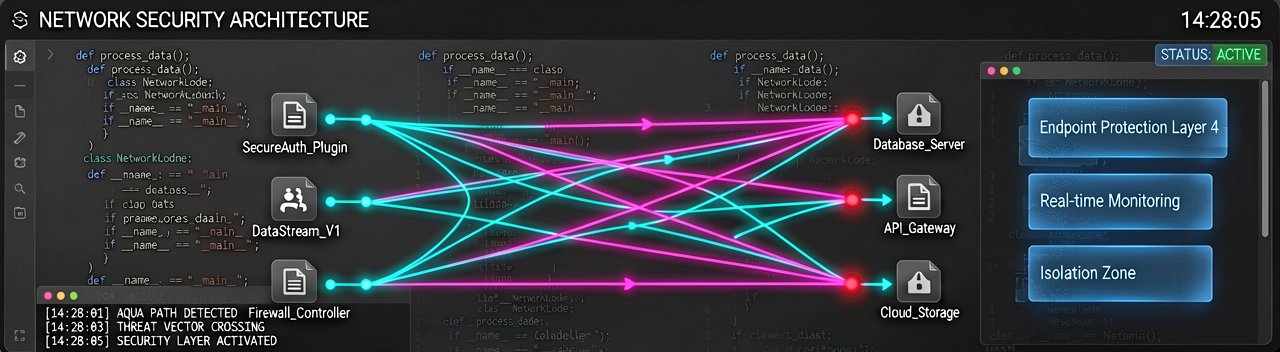
At the center of this product rollout is the Zscaler AI Broker, a dedicated tool built to police agent-to-agent communications alongside Model Context Protocol connections. Backed by a centralized Agent Registry, it allows security teams to enforce fine-grained access policies so that a specific agent can only touch the precise applications or data silos it needs to execute its job. This stops lateral movement in its tracks, preventing a compromised or malfunctioning agent from running amok across the broader corporate infrastructure.
Simultaneously, the firm introduced Zscaler Endpoint AI Security to handle threats natively residing on user hardware. Because developer environments and desktop applications increasingly leverage local AI extensions, malicious plugins can easily slide right past conventional endpoint detection software. This new endpoint layer peers directly into browser extensions and local codebases, giving administrators the visibility needed to track data lineage and spot rogue behavior before sensitive corporate information leaks out.
Mapping Identity and Managing Machine-Speed Exploits
A crucial piece of this updated framework stems from the company's recent acquisition of Symmetry Systems, which powers the brand-new Zscaler AI Access Graph. This specialized analytics layer visually maps the complex web of connections linking distinct user identities, applications, and LLM data sources across the entire enterprise. It answers a vital operational question for modern CISOs: knowing exactly which autonomous agent is talking to what data source, and why, at any given microsecond.
According to official details shared in the Zscaler Press Room, these architectural upgrades build directly upon the foundational AI Protect features launched earlier in the year. By offering automated code scanning, prompt hardening services, and compliance heat maps, the platform tries to get ahead of a threat landscape where automated exploits can compromise unsecured AI infrastructure in mere minutes. As autonomous systems take the wheel for complex workflows, treating every single agent action as untrusted until proven otherwise is fast becoming the baseline for corporate survival.
Behind the Scenes of the Autonomous Security Battlefield
What most high-level product announcements gloss over is the chaotic reality of how enterprise developers actually deploy agentic systems. In the rush to automate customer support, logistics, and data analysis, software engineers frequently use open-source frameworks to spin up autonomous entities that can read and write to corporate databases. The core problem is that these agents are not static scripts; they dynamically decide their own path to achieve a goal. When an AI agent decides to solve a problem by creating three temporary sub-agents, it effectively spawns completely unmanaged identities that possess administrative access tokens, operating entirely outside the view of traditional identity management systems.
Security researchers have warned for months that the primary threat vector has shifted from classic network intrusion to prompt injection and data poisoning. An autonomous agent tasked with scanning public emails or web forums can easily ingest a malicious payload hidden in plain sight. Once processed, that payload can overwrite the agent's internal system instructions, turning a benign productivity tool into an insider threat that quietly exfiltrates data. By implementing a dedicated inspection broker, security teams are essentially placing a digital hall monitor between the LLM and the corporate network, ensuring that even if an agent's logic is hijacked, its permissions remain strictly contained.

From the perspective of Chief Information Security Officers, this architectural pivot represents a race against time rather than a luxury upgrade. Boardrooms are demanding rapid AI integration to stay competitive, forcing security teams into a defensive crouch where they must safeguard systems they do not fully control. Early feedback from enterprise pilot programs suggests that the visibility provided by relationship graphs is a massive wake-up call for administrators, frequently revealing dozens of active, undocumented AI integrations already running across various departments without formal IT approval.
Historically, the cybersecurity industry has spent decades playing catch-up, building defensive walls only after new technologies have been thoroughly exploited. We saw this with the rapid, unmapped migration to the cloud, and again with the explosion of unmanaged mobile devices in the workplace. The aggressive push toward agent-specific zero-trust platforms indicates an industry-wide determination not to repeat those mistakes with artificial intelligence. Forcing machine-speed software to constantly re-authenticate its identity and justify its data requests may introduce a slight friction layer, but it is a necessary compromise to keep the autonomous enterprise from spinning out of control.
Reading Between the Lines: The Illusion of Total Machine Control
The tech industry's sudden infatuation with protecting autonomous agents highlights a glaring contradiction in the broader AI narrative. For over a year, enterprises have been sold on the promise of hyper-efficient, self-governing software capable of executing complex workflows with minimal human oversight. Yet, the rapid introduction of heavy-handed security frameworks proves that the industry is quietly terrified of what these agents will actually do when left to their own devices. We are witnessing a bizarre architectural paradox where developers build sophisticated software specifically to break free from rigid scripts, while security teams simultaneously deploy complex brokers designed to strip away that very autonomy.
There is also an element of security theater that deserves measured skepticism. Marketing a platform as the "industry's first complete zero-trust platform for agentic AI" sounds revolutionary, but beneath the buzzwords, it relies heavily on traditional micro-segmentation and identity management principles repackaged for machine identities. The true bottleneck is not the lack of defensive tools, but rather the sheer speed at which these autonomous entities operate. If a security broker must inspect every single sub-routine and Model Context Protocol request in real-time, the resulting latency threatens to destroy the very performance gains that made agentic AI attractive to businesses in the first place.
Furthermore, relying on a centralized registry to police decentralized, ephemeral agents assumes that security teams can keep up with the chaotic pace of shadow IT. History shows that whenever corporate security teams implement rigid boundaries, developers inevitably find clever workarounds to bypass them in the name of speed. If configuring an agent to go through a secure broker requires weeks of policy tuning, engineers will simply look for loopholes, potentially exposing corporate data via unsecured local models or unmonitored browser extensions. The ultimate success of these new defensive tools depends entirely on whether they can remain truly invisible to the developers tasked with building the future.
Looking ahead, this cat-and-mouse game will likely trigger an arms race between corporate defense systems and adversarial AI. As security platforms get better at mapping relationship graphs and identifying anomalous agent behavior, rogue actors will inevitably train their own malicious agents to mimic legitimate corporate behavior with chilling accuracy. We are rapidly approaching a reality where corporate networks become digital battlegrounds, with automated defenders fighting automated attackers at a microsecond scale, leaving human administrators to do little more than read the post-incident reports.
"We are rushing to replace human workers with autonomous AI agents to maximize corporate efficiency, only to spend millions of dollars building a digital bureaucracy of automated hall monitors just to keep our new software employees from accidentally leaking the entire company database by lunch."
Artūras Malašauskas is an AI Systems Integrator with 20+ years of production-grade web engineering experience. He has designed, shipped, and scaled enterprise Python/PHP systems for logistics, SaaS, and public-sector clients. For the past year, he has focused exclusively on AI integrations: deploying open-source LLMs, building generative media pipelines (image, audio, video), and engineering multi-agent workflows for real production environments. His standard: reproducibility, security, cost-efficient inference—no vaporware. He documents and evaluates emerging AI tooling, separating verified capabilities from marketing noise. Technical editor at: muza-ai.eu, ai-verslas.lt, ai-naujinos.lt Connect on LinkedIn
Comments