The Canvas Is the Community: Krea 2 Reinvents Its Workflow via Shared Spaces
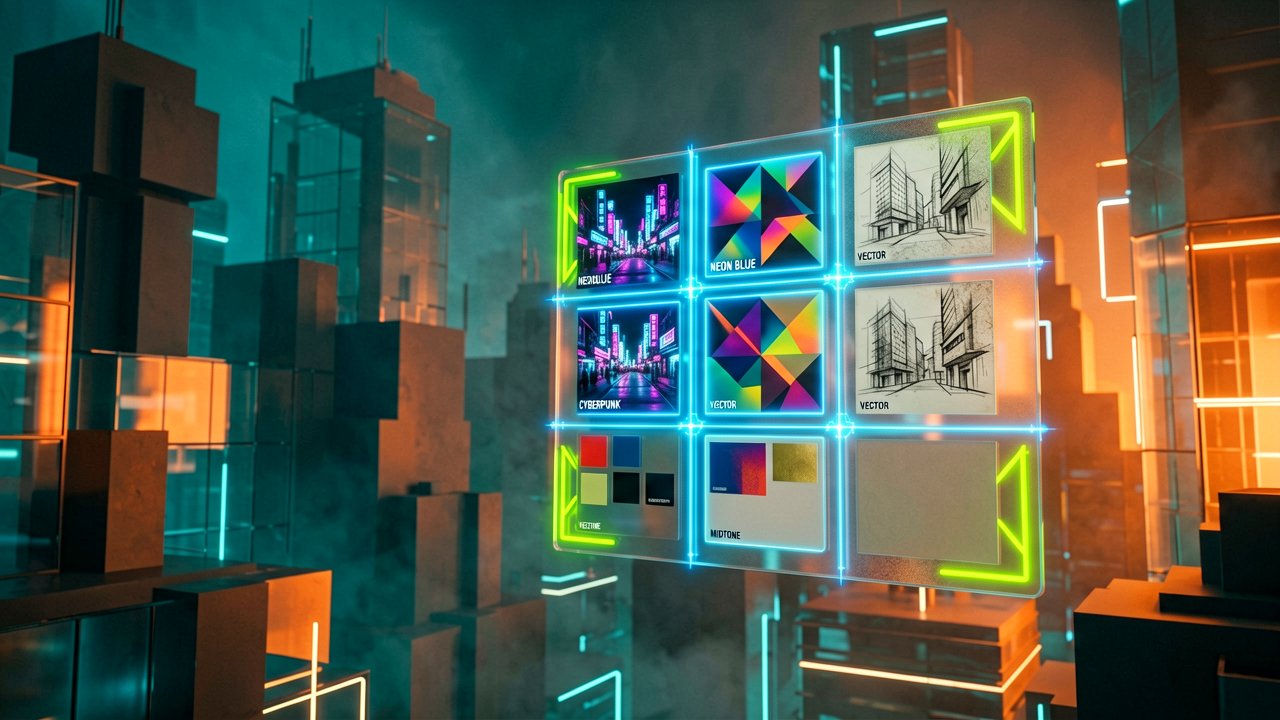
Generative AI tools love to boast about mathematical prompt adherence, but any designer will tell you that true creativity is messy, collaborative, and entirely about the "vibe." Recognizing this, the team behind Krea has formally rolled out Krea 2, an in-house foundation model built completely from scratch. Instead of forcing creators to whisper precise technical commands into a lonely text box, this massive upgrade shifts the creative heavy lifting into dynamic community spaces, public gallery feeds, and interactive digital mood boards. It is a deliberate pivot toward treating artificial intelligence as a raw, flexible creative medium where users can share, copy, and manipulate aesthetic variables in real time.
Stealing Like an Artist, Legally
The standout feature of this new rollout is how seamlessly it weaponizes community inspiration. According to the latest Krea Release Notes, style references (srefs) are now fully visible and one-click copyable right from the public gallery feed. If you spot a painterly composition or a highly specific lo-fi digital decay aesthetic that catches your eye, you do not have to guess the prompt engineering behind it. You simply grab the style reference instantly and reuse it inside your own canvas, dialing the influence strength up or down depending on your project's needs. It collapses the distance between discovery and execution, turning the platform's collective output into a massive, living library of creative presets.
Mood Boards and Shared Architecture
Krea 2 is also fixing the fractured workflow that has plagued professional design studios for the last few years. By introducing advanced public mood board sharing via URL, teams can now lock in a cohesive visual direction—spanning up to dozens of reference images, palettes, and lighting conditions—and pass that exact structural DNA to anyone else. Early experiments published by the Krea Team show that everyone from fashion illustrators to architectural firms are using these collaborative pipelines to keep their generations consistent. It is a major leap forward from the days of generating a stunning, chaotic image that completely falls apart the moment you try to replicate its texture or mood.
Behind the Scenes: The Engineering Shift From Prompting to Curation
The transition to Krea 2 represents a fundamental shift in how the industry views the relationship between human intent and machine execution. For the past three years, the generative AI boom relied heavily on the concept of text prompt optimization—a clumsy, linguistic proxy for visual imagination that often left traditional artists frustrated. By shifting the user interface toward spatial arrangement and visual-to-visual generation, the platform bypasses the limitations of language altogether. This approach treats pixels, layers, and composition hierarchies as the primary input vector, effectively turning the AI into a responsive digital camera lens rather than an unpredictable text interpreter.
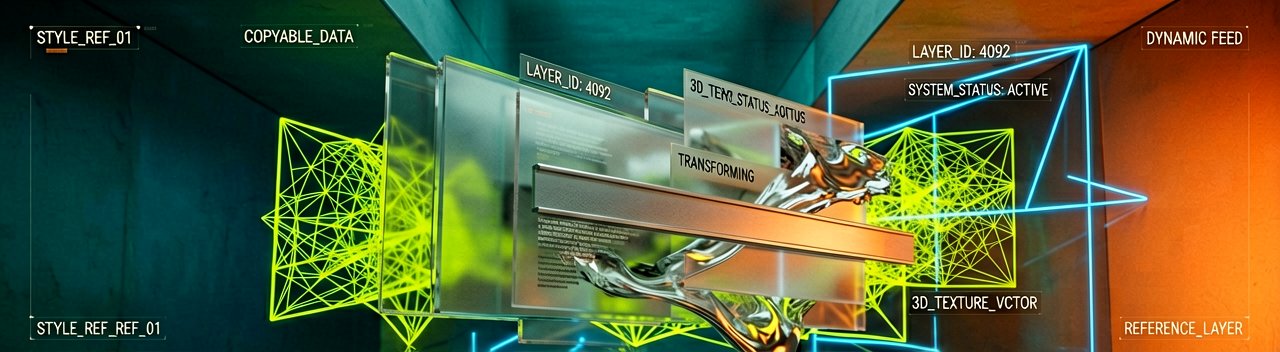
Developing a custom foundation model from scratch allowed the team to deeply integrate these community-driven design mechanics. Standard open-weights models like Stable Diffusion are notoriously rigid when it comes to absorbing new, real-time stylistic influences without extensive fine-tuning. Krea's new architecture natively understands how to deconstruct an image into separate components—such as lighting vectors, edge detection, and surface textures—and then allows users to map those individual elements onto entirely new subjects. This level of granularity is exactly what high-end production houses have been demanding, as it bridges the gap between chaotic conceptualization and predictable commercial execution.
Industry insiders note that this structural change also fundamentally alters the economics of digital asset management within creative agencies. Traditionally, maintaining a consistent brand aesthetic across a global marketing campaign required massive style guides and thousands of hours of human oversight. The ability to anchor a project to a single, evolving community workspace means that freelance contractors and in-house teams are instantly aligned on the exact visual boundaries of a brand. It reduces the friction of onboarding external talent, allowing creative directors to enforce aesthetic quality control passively through the software architecture itself.
However, this level of community fluidness inevitably brings new challenges regarding artistic ownership and attribution. Because anyone can copy a style reference with a single click from the public feed, the line between inspiration and plagiarism becomes incredibly thin. While the platform celebrates this friction-free sharing as a triumph for open-source creativity, some independent creators worry that their unique visual signatures could be diluted overnight. The long-term success of this collaborative experiment will likely depend on how the platform manages creator attribution and whether it introduces opt-out mechanics for artists who prefer to keep their aesthetic data restricted to private workspaces.
Reading Between the Lines: The Illusion of Democratization
The tech industry loves to frame collaborative software as a democratic triumph, yet Krea 2’s hyper-social workflow highlights a glaring contradiction in the creator economy. By transforming a creative tool into a social network where styles are openly harvested, the platform risks commodifying the exact uniqueness it aims to foster. When every highly specific visual aesthetic is instantly downloadable, the shelf life of a trend drops to zero. This creates a relentless treadmill for professionals who can no longer rely on a distinct visual signature for a competitive edge, as any breakthrough look can be absorbed by the collective feed within minutes of publication.
Furthermore, the reliance on a single corporate-controlled foundation model introduces massive platform risk for agencies building their pipelines around it. While open-weights models allow studios to host their own infrastructure and guarantee permanence, a proprietary ecosystem like Krea 2 can shift its pricing, algorithms, or terms of service overnight. A design studio that spends months optimizing its collaborative mood boards could find its entire workflow altered by a silent cloud update. This tension between the sheer convenience of a unified web-based space and the necessity of data sovereignty is a compromise that traditional enterprise clients are rarely comfortable making.
There is also a mechanical skepticism to be leveled at the "one-click style copy" promise. Visual consistency in high-end design is rarely just a matter of matching color palettes and lighting values. True art direction requires an understanding of narrative context, cultural subtext, and intent—elements that an algorithmic style reference simply cannot translate. The danger is that this workflow encourages a superficial mimicry, resulting in a flood of technically pristine but emotionally vacant imagery that feels vaguely familiar because it is all pulling from the same self-referential digital soup.
Ultimately, this update exposes a broader philosophical shift from generation to curation. The designer of the near future is less an illustrator and more a referee of probability, standing over a shared canvas and rejecting or accepting variations. It is a highly efficient way to work, but it changes the psychological reward of the creative process. When a machine handles the execution and a public gallery dictates the style, the human role risks being reduced to that of an editor clicking "approve" on an endless conveyor belt of optimized aesthetic choices.
Designing via community consensus is a brilliant way to ensure your project looks incredibly current, right up until the exact moment everyone else uses the same button to make their work look identical to yours.
Artūras Malašauskas is an AI Systems Integrator with 20+ years of production-grade web engineering experience. He has designed, shipped, and scaled enterprise Python/PHP systems for logistics, SaaS, and public-sector clients. For the past year, he has focused exclusively on AI integrations: deploying open-source LLMs, building generative media pipelines (image, audio, video), and engineering multi-agent workflows for real production environments. His standard: reproducibility, security, cost-efficient inference—no vaporware. He documents and evaluates emerging AI tooling, separating verified capabilities from marketing noise. Technical editor at: muza-ai.eu, ai-verslas.lt, ai-naujinos.lt Connect on LinkedIn
Comments