The Architecture of Trust: AI Red Teaming Escalates to a Boardroom Mandate

Enterprise artificial intelligence development has reached an inflection point where conventional perimeter defenses and standard vulnerability scanning no longer suffice. The rapid shift from simple, siloed chatbots to complex, multi-agent AI ecosystems capable of database access and execution has drastically expanded corporate attack surfaces. As documented by security researchers at CyberSecurity Switzerland, the average enterprise AI implementation now faces a highly distributed threat landscape compared to early legacy deployments. This rapid evolution, combined with public failures and active model exploits, has successfully transitioned AI red teaming from an experimental technical exercise into an essential component of the modern enterprise security stack.
This structural transformation is primarily driven by an aggressive global regulatory landscape that enforces strict corporate accountability. Organizations operating within or selling to international markets are preparing for the definitive enforcement deadline of the EU AI Act, which mandates rigid risk management and adversarial robustness testing for high-risk AI implementations. According to comprehensive analysis by CyberSecurity Switzerland, failure to comply with these adversarial mandates by August 2, 2026, carries severe financial penalties reaching up to €35 million or 7% of global annual turnover. Consequently, corporate compliance, legal risk, and cybersecurity strategies are aligning to codify continuous, proactive system disruption as a standard operating procedure.
In parallel, standard-setting bodies have fundamentally adapted their core methodologies to account for the unique, probabilistic failure modes of artificial intelligence. Traditional security audits are being replaced by dynamic frameworks like the National Institute of Standards and Technology (NIST) AI Risk Management Framework, which explicitly embeds continuous transparency, data origin documentation, and intentional abuse simulation into the modern engineering lifecycle. Because large language models do not fail through isolated, deterministic software bugs but rather through complex, contextual interactions, enterprise defense teams are forced to focus heavily on continuous behavioral discovery and active mitigation rather than relying on historical, point-in-time penetration testing.
Expanding Enterprise Surfaces and Sophisticated Threat Vectors
The technical necessity for dedicated AI red teams stems directly from the failure of legacy Web2 security paradigms to protect non-deterministic neural networks. Standard firewalls and static code analyzers are completely blind to novel exploits like indirect prompt injection, training data poisoning, and unauthorized model exfiltration. When autonomous AI agents are granted access to live production application programming interfaces (APIs) and corporate internal databases, a single compromised instruction can initiate a cascading chain of unauthorized actions across an entire enterprise cloud infrastructure.
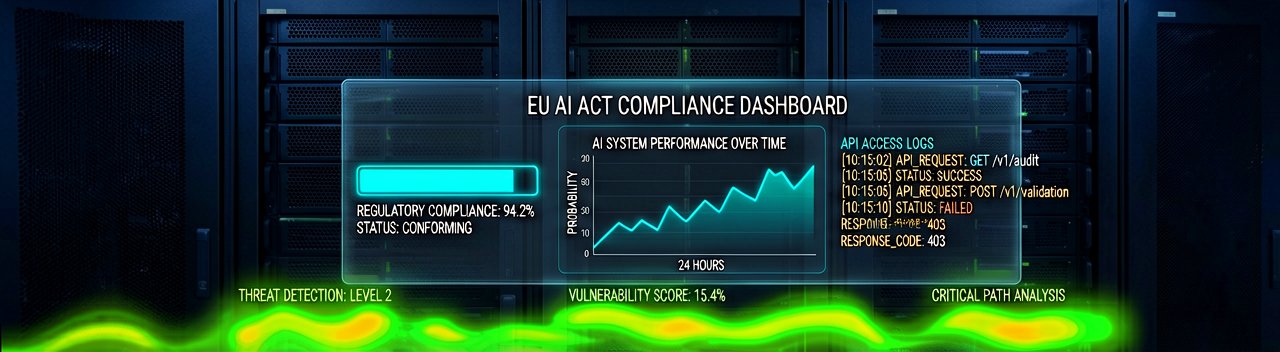
Adversarial engineers mimic these real-world threat actors by deploying targeted, automated testing frameworks alongside manual, creative probing to systematically break system guardrails. These testing teams focus on evaluating how a model behaves under intense stress, assessing data memorization risks to prevent sensitive proprietary data leakage, and identifying subtle vulnerabilities that bypass content filters. By mapping these findings directly to community-driven vulnerability matrices like the OWASP Top 10 for LLMs, organizations ensure that technical findings translate into clear, repeatable defense strategies.
Regulatory Enforcement and the Cost of Non-Compliance
The transition toward mandatory adversarial testing is no longer confined to internal corporate policy or voluntary tech governance. Globally, regulatory bodies are establishing rigid guardrails that treat AI evaluation as a legally binding corporate requirement. The EU AI Act serves as the primary driver for this shift, applying strict obligations to any developers, providers, and third-country deployers whose commercial AI outputs are utilized within the European market. Beyond the immediate financial liabilities, failure to document and submit comprehensive adversarial testing evidence can result in immediate market bans and forced shutdowns of live enterprise production workloads.
In the United States, the regulatory environment is similarly intensifying through a mixture of state-level legislation and aggressive federal agency enforcement. While a unified federal AI law remains absent, individual states like California and Texas have moved forward with active compliance laws governing automated decision-making systems. Simultaneously, federal authorities including the Federal Trade Commission (FTC) are utilizing existing consumer protection mandates to actively penalize corporations for algorithmic bias and deceptive AI security claims. This fragmented ecosystem makes international frameworks like ISO/IEC 42001 the operational baseline for Fortune 500 companies seeking uniform compliance across diverse jurisdictions.
Operationalizing Red Teaming Within the Software Development Lifecycle
To successfully navigate this complex technical and regulatory landscape, organizations are undergoing a massive cultural and operational shift often described as "shifting left" in AI safety. Rather than testing a system immediately prior to its commercial deployment, enterprises are integrating adversarial testing pipelines directly into their initial continuous integration and continuous deployment (CI/CD) pipelines. This proactive alignment requires unprecedented, cross-functional collaboration between machine learning engineers, dedicated cybersecurity personnel, and compliance officers, eliminating historical operational silos.
Furthermore, an effective AI red teaming program requires a highly diverse group of specialists to accurately anticipate real-world risk profiles. Modern red teams must look beyond traditional computer science backgrounds to integrate social scientists, ethicists, and specific industry domain experts who can uncover subtle biases and unintended socioeconomic harms. The resulting documentation serves as a critical audit trail, proving to insurance underwriters, corporate procurement teams, and regulatory bodies that the enterprise possesses a highly resilient, defensible AI infrastructure.
Unmasking the Mirage of Automated Guardrails
What Most Reports Miss: The prevailing enterprise assumption that automated content filters and algorithmic alignment techniques like Reinforcement Learning from Human Feedback (RLHF) provide a sufficient shield is a dangerous technical fallacy. In the race to commercialize large language models, organizations frequently rely on static API wrappers and pre-packaged safety guardrails that create a superficial facade of security. Experienced red teamers understand that these automated defenses operate on deterministic rules, whereas the underlying models remain fundamentally probabilistic. A minor variation in linguistic syntax, a strategically placed adversarial suffix, or a multi-layered roleplay scenario can instantly collapse an automated defense system, exposing the core model to untrusted and potentially catastrophic execution pathways.
The operational reality of modern AI development reveals a deep friction between rapid commercial deployment cycles and rigorous engineering evaluation. Chief Information Security Officers (CISOs) are forced to navigate aggressive timelines imposed by product teams desperate to capture market share, often leading to a checkbox approach to safety. When penetration testing is reduced to an automated script run days before a public launch, it inevitably fails to account for emergent behaviors. True adversarial testing requires human-driven ingenuity capable of conceptualizing abstract threat scenarios—such as exploiting an AI agent's logic to execute a privilege escalation attack across an enterprise cloud network—that automated benchmarking tools are fundamentally incapable of predicting.
This systemic vulnerability is further exacerbated by the industry's widespread adoption of third-party, open-weight foundational models. While fine-tuning these systems on proprietary corporate data accelerates deployment, it also inherits any latent architectural flaws or vulnerabilities embedded within the original model. Red teams are increasingly uncovering instances where upstream models have been subjected to subtle training data poisoning, creating hidden backdoors that remain completely dormant during standard validation testing. Consequently, enterprise stakeholders are beginning to realize that securing an AI system is an ongoing, dynamic battle requiring constant human oversight, rather than a one-time software patch that can be permanently applied and forgotten.
The Compliance Paradox and the Myth of Total Security
Reading Between the Lines: The sudden corporate rush to institutionalize AI red teaming carries all the hallmarks of a classic compliance-driven distraction. As boards of directors scramble to approve massive budgets for adversarial testing, a troubling contradiction is emerging within enterprise engineering departments. Executives are eagerly treating red teaming as a magic bullet that can fully de-risk non-deterministic software, ignoring the reality that neural networks possess an infinite failure surface. By focusing heavily on discovering spectacular, headline-grabbing vulnerabilities, organizations frequently neglect basic, boring security hygiene—such as securing the underlying databases, patching the host infrastructure, and strictly limiting API permissions.
Furthermore, the current commercialization of the AI red teaming market has sparked a subtle conflict of interest between independent safety firms and enterprise vendors. When a software provider hires an external security firm to red team their product, there is a strong, unstated commercial incentive to deliver an audit report that shows just enough vulnerability to look thorough, but not enough to derail the product's commercial release timeline. This tension turns what should be a rigorous adversarial exercise into a form of performative theater, where the primary objective shifts from genuinely breaking the system to generating a clean compliance certificate that satisfies corporate legal teams and insurance underwriters.
Projecting this trend forward, the ultimate implication of this compliance obsession will likely be a severe stagnation in genuine AI capability innovation. As regulatory deadlines approach and the legal penalties for unforeseen model behaviors skyrocket, enterprise legal departments will naturally force engineering teams to tighten guardrails to an absurd degree. This defensive posture risks over-sanitizing models, rendering them so risk-averse, lobotomized, and encumbered by safety wrappers that they lose the very analytical utility and flexibility that made them valuable in the first place. The tech sector may soon find itself building highly secure, perfectly compliant AI systems that nobody actually wants to use because they refuse to answer complex corporate queries out of an abundance of caution.
In our frantic attempt to build bulletproof AI defenses, we have arrived at a fascinating digital irony: we are spending millions of dollars to hire brilliant human minds to trick our artificial brains into saying something stupid, only to find that the safest possible enterprise model is the one that sits silently in the server room, completely compliant, perfectly secure, and utterly useless.
Artūras Malašauskas is an AI Systems Integrator with 20+ years of production-grade web engineering experience. He has designed, shipped, and scaled enterprise Python/PHP systems for logistics, SaaS, and public-sector clients. For the past year, he has focused exclusively on AI integrations: deploying open-source LLMs, building generative media pipelines (image, audio, video), and engineering multi-agent workflows for real production environments. His standard: reproducibility, security, cost-efficient inference—no vaporware. He documents and evaluates emerging AI tooling, separating verified capabilities from marketing noise. Technical editor at: muza-ai.eu, ai-verslas.lt, ai-naujinos.lt Connect on LinkedIn
Comments