White House's AI Evaluation Mandate Sparks Debate Over Regulatory Balance

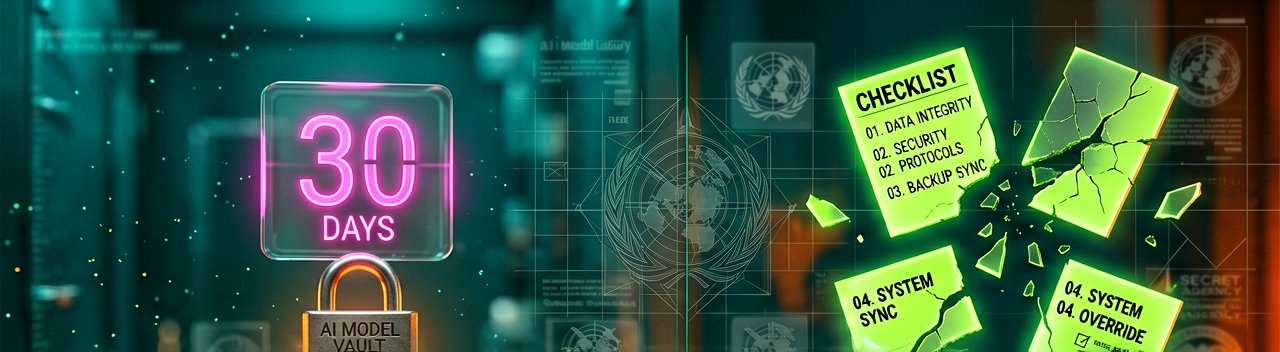
The White House has issued a landmark executive order establishing a voluntary, 30-day pre-release evaluation program for advanced, cyber-capable artificial intelligence models. Signed by President Donald Trump, the directive instructs federal defense and cybersecurity agencies to construct a classified benchmarking process to identify "covered frontier models" that present potential vulnerabilities. By rejecting mandatory licensing and permitting, the policy tries to secure critical infrastructure while keeping American tech firms competitive against global rivals like China.
This early access framework allows developers to share their most powerful systems with federal experts up to 30 days before exposing those tools to other trusted partners or the public. The initiative gained momentum following deep intelligence anxieties over cutting-edge platforms, including Anthropic's Mythos model, which demonstrated an unprecedented capability to find and exploit dormant software bugs. The administration seeks to integrate these early assessments directly into federal cyber defenses to harden municipal utilities, community banks, and rural hospitals against weaponized AI agents.
Industry response to the directive remains sharply divided between proponents of a lighter-touch approach and advocates for enforceable safety guardrails. An earlier iteration of the executive order contemplated an exhaustive 90-day review period, but it was shelved following intense pushback from Silicon Valley advisors who argued that long delays would paralyze market momentum. While major AI labs have cautiously welcomed the collaborative model, prominent lawmakers argue that a voluntary protocol lacks the teeth needed to ensure public accountability and comprehensive risk mitigation.
Strategic Shifts and the Classified Benchmarking Protocol
The core of the new directive relies on the National Security Agency (NSA) and the Cybersecurity and Infrastructure Security Agency (CISA) to establish private parameters for evaluating AI risk, according to a legal analysis by Lexology . Instead of imposing rigid, public compliance Checklists, the government intends to track emergent behaviors and autonomous pipelines that could threaten federal digital networks. This strategy acknowledges that static capability ceilings are obsolete, as state-of-the-art systems change rapidly depending on their data pipelines and software support structures.
Market Impact and the Industry Pushback on Timelines
The transition from a proposed 90-day vetting process to a compressed 30-day voluntary window underscores the delicate balance between national security and tech sector growth, as reported by NBC News . Frontier developers like OpenAI, Google, and Anthropic face structural pressure to cooperate with federal oversight without compromising their intellectual property or deployment speed. The short window mitigates immediate concerns over bureaucratic bottlenecks, but it leaves long-term operational questions open for firms deploying continuous updates.
The Looming Battle Over Public Accountability and Enforcement
While the administration leverages voluntary cooperation to avoid stifling innovation, the lack of mandatory participation has triggered immediate legislative friction, as detailed by JD Supra . Bipartisan voices in Congress are already signaling that an executive order might only be a temporary fix rather than a permanent regulatory endpoint. Lawmakers are pushing parallel bills designed to mandate risk evaluation through formal statutory channels, setting up a prolonged debate over the boundary between government oversight and commercial autonomy.
Reading Between the Lines: The Illusion of Voluntary Control
The administration’s reliance on a voluntary 30-day window rests on the comforting assumption that commercial AI labs will willingly expose their most valuable corporate secrets to federal scrutiny out of pure civic duty. In reality, this framework creates a structural conflict of interest, as tech giants are incentivized to share only the safest, most sanitized versions of their models. By treating public safety as an optional partnership rather than a legal requirement, the policy risks transforming serious national security oversight into an elaborate exercise in corporate public relations.
This hands-off approach exposes a glaring contradiction when compared to how the federal government regulates other high-stakes, safety-critical technologies. Aviation hardware, pharmaceutical compounds, and automotive systems face mandatory, adversarial testing before they ever reach a consumer, yet the software capable of automating zero-day cyberattacks is granted a fast-tracked, voluntary pass. This double standard reveals a deep-seated regulatory anxiety, showing that Washington is terrified of slowing down commercial innovation, even if that speed comes at the expense of infrastructure resilience.
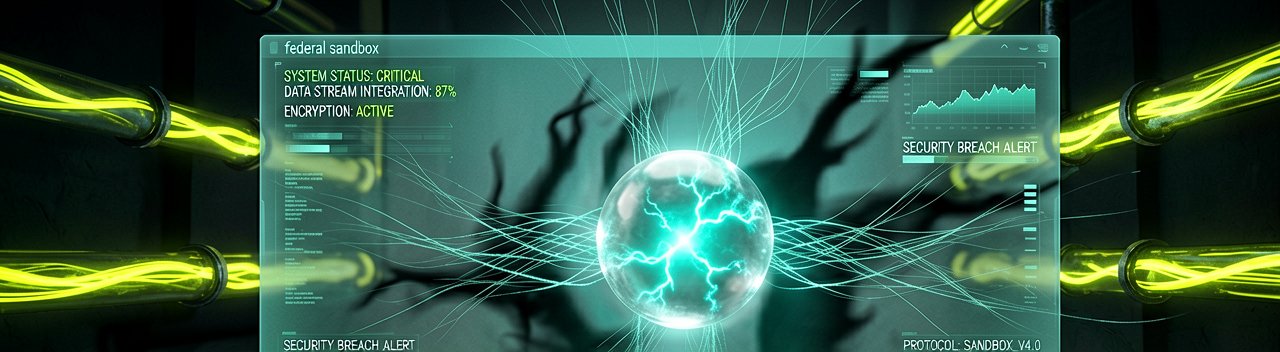
Furthermore, evaluating a frontier model in isolation ignores how these systems actually function when deployed in the wild. An AI model that appears perfectly docile within a government sandbox can quickly become dangerous when connected to external software plugins, web-browsing capabilities, or user-driven data pipelines. Trying to predict a model's full risk profile in 30 days without seeing its real-world integrations is like testing a car's engine on a laboratory bench and declaring the vehicle safe for an icy highway.
As these models continue to scale exponentially, the line between helpful developer tools and automated cyberweapons will blur completely, exposing the limits of informal handshakes. If a voluntary evaluation fails to catch a destructive vulnerability, the political fallout will likely trigger the exact outcome Silicon Valley fears most. A single high-profile breach could completely erase the current hands-off approach, replacing it overnight with a heavy-handed, reactive legislative crackdown born out of political panic rather than measured engineering standards.
"Washington has cleverly designed a system where tech companies get to grade their own papers, federal agencies get to pretend they are proctoring the exam, and the public is left hoping that the curve isn't graded in zero-day exploits."
Artūras Malašauskas is an AI Systems Integrator with 20+ years of production-grade web engineering experience. He has designed, shipped, and scaled enterprise Python/PHP systems for logistics, SaaS, and public-sector clients. For the past year, he has focused exclusively on AI integrations: deploying open-source LLMs, building generative media pipelines (image, audio, video), and engineering multi-agent workflows for real production environments. His standard: reproducibility, security, cost-efficient inference—no vaporware. He documents and evaluates emerging AI tooling, separating verified capabilities from marketing noise. Technical editor at: muza-ai.eu, ai-verslas.lt, ai-naujinos.lt Connect on LinkedIn
Comments