SentinelOne Layoffs: Aggressive Internal AI Adoption Restructures the Cybersecurity Workforce
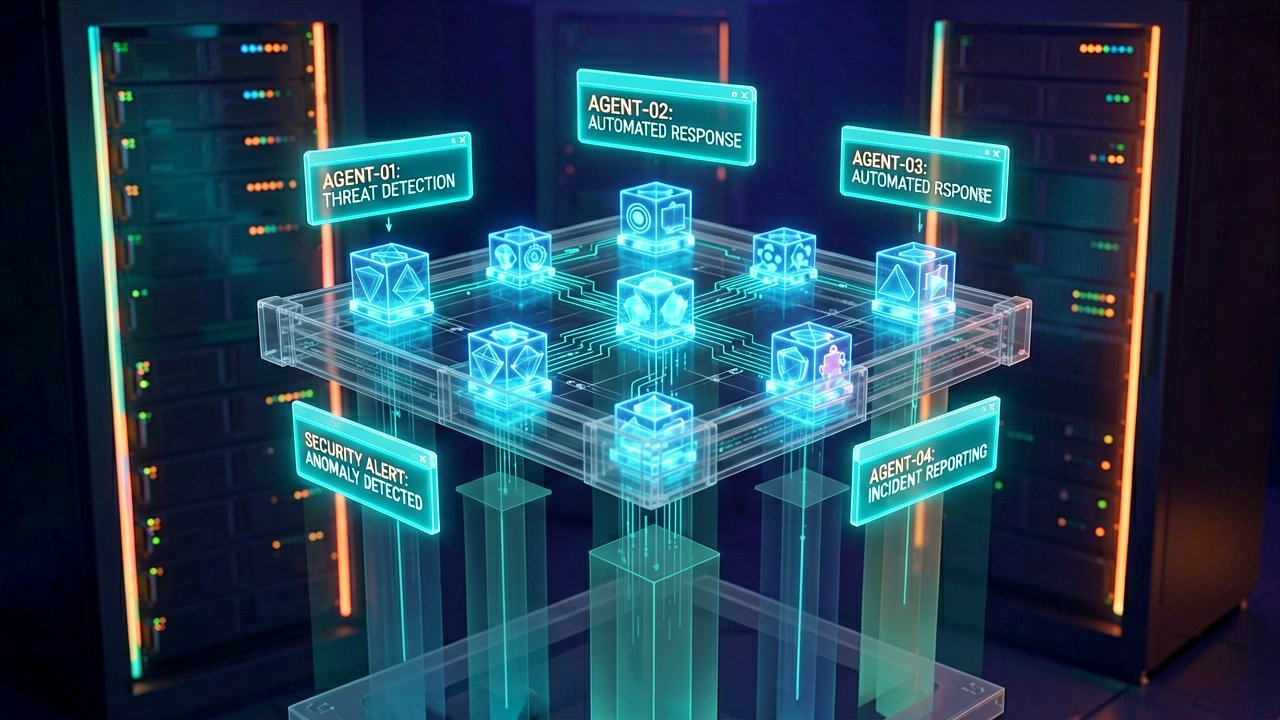
In a move highlighting the growing tension between automated efficiency and human employment, cybersecurity firm SentinelOne has announced a comprehensive restructuring plan that cuts 8% of its global full-time workforce. Disclosed during its fiscal first-quarter earnings report, the workforce reduction will eliminate roughly 230 positions from a pool of over 2,900 employees, carrying a one-time restructuring charge of approximately $25 million. Rather than serving as a desperate reactive measure to market pressures, CEO Tomer Weingarten framed the workforce consolidation as a deliberate evolution designed to build a leaner corporate structure while aggressively reallocating capital into autonomous artificial intelligence and cloud data investments.
The operational shift comes as enterprise technology vendors navigate a delicate macroeconomic landscape where corporate buyers heavily scrutinize deals and stretch traditional sales cycles. While SentinelOne achieved a 21% year-over-year revenue increase to $276.7 million for the first quarter, its forward-looking revenue guidance of $289 million to $291 million for the second quarter landed marginally below initial consensus expectations. This tepid guidance triggered an immediate market correction, highlighting the scrutiny enterprise tech face as they balance high-expenditure AI infrastructure investments against cooling near-term revenue projections.
The Automation Pivot: From Labor-Intensive to Agentic Security
The restructuring underscores a fundamental transformation within the security operations center (SOC) architecture. SentinelOne is actively replacing traditional, labor-intensive workflows with highly automatedpipelines anchored by its AI-powered Singularity security platform. Historically, tier-one triage, threat identification, and minor incident remediation demanded massive teams of entry-level analysts who manually validated network alerts. According to executive commentary, internal deployments of advanced generative AI models have compressed tasks that once required months of development down to mere weeks or days. By automating repetitive workloads, the vendor can sustain aggressive margin expansion and product scaling without the accompanying burden of headcount inflation.
A Broader Tech Trend: Capital Reallocation Over Headcount Growth
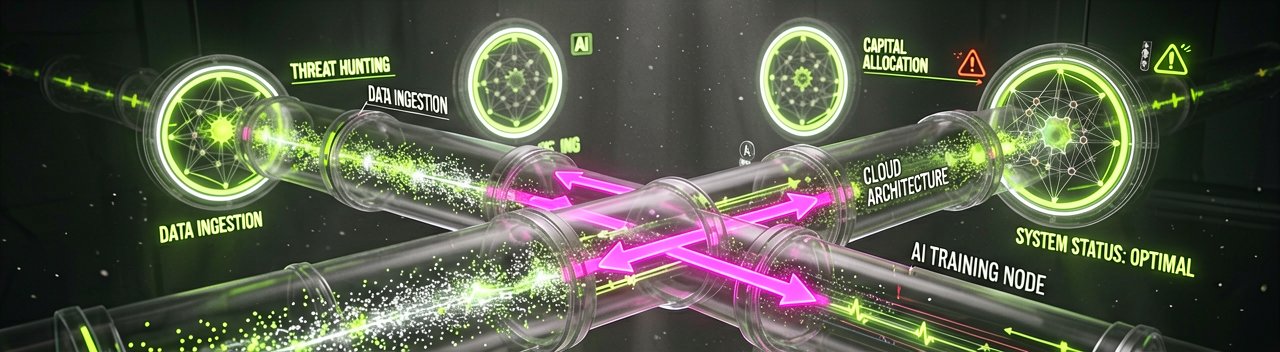
SentinelOne is far from isolated in its strategy, representing a broader industry mutation where workforce scale is no longer the definitive metric of enterprise growth. Tech giants and enterprise software providers are simultaneously executing AI-centric workforce corrections to free up liquidity for expensive machine learning infrastructure. Tech organizations like Wix, Cisco, Block, and Atlassian have all implemented major workforce reductions to pivot toward autonomous platforms and specialized engineering talent. The financial savings extracted from shedding manual, redundant roles are systematically redirected toward high-yielding growth spaces like cloud identity management, endpoint protection, and data governance.
Market Impact and the Future of Cybersecurity Talent
This strategic shift reshapes the baseline requirements for enterprise technology professionals. As foundational security tasks shift to agentic pipelines, the industry is witnessing a steep decline in the demand for purely manual, repetitive tech support. Conversely, it has created a highly competitive marketplace for specialized professionals equipped with hybrid skill sets in data engineering, model safety, and AI system orchestration. Enterprise organizations must recognize that the cost savings achieved through internal automation are being weaponized as R&D advantages. For software vendors, the long-term objective is clear: achieving optimal profitability by deploying highly technical, lean human teams amplified by an integrated layer of corporate AI assets.
For further analysis of the enterprise shift toward automation, review the detailed financial reporting provided by CNBC and regulatory tracking by Reuters.
Behind the Scenes of the Autonomous Pivot
The restructuring at SentinelOne reveals a deeper tension within the cybersecurity sector: the transformation of technical debt into automated equity. For years, rapid scaling in the endpoint protection market relied on throwing human capital at data management challenges. Security operations centers were built on the backs of tier-one analysts who spent their shifts manually correlating alerts across disparate environments. By shedding eight percent of its workforce while expanding internal artificial intelligence initiatives, leadership is effectively acknowledging that human-led triage has reached its economic and operational limit in an era of machine-speed exploits.
From an enterprise engineering perspective, this tactical pivot changes how security software is built, tested, and maintained. The transition away from traditional headcount allows engineering budgets to focus heavily on agentic workflows—AI systems capable of independent decision-making rather than simple pattern matching. Veteran developers within the organization note that the internal integration of these models has radically accelerated software development lifecycles, enabling the company to deploy code and patch vulnerabilities at a pace that legacy team structures could not sustain. However, this shift also introduces new operational risks, as reliance on algorithmic code generation demands more stringent, highly specialized validation protocols from the remaining engineering core.
Wall Street's reaction to the restructuring underscores a fundamental shift in investor expectations for growth-stage technology firms. The era of rewarding sheer headcount growth as a proxy for market share dominance is officially over. Institutional investors now closely scrutinize efficiency metrics, pushing cybersecurity vendors to demonstrate expanding operating margins alongside revenue growth. By taking a significant upfront restructuring charge to streamline operations, corporate leadership is optimizing its balance sheet to withstand prolonged enterprise sales cycles, where corporate buyers demand more comprehensive platform capabilities without a corresponding increase in seat-based licensing costs.
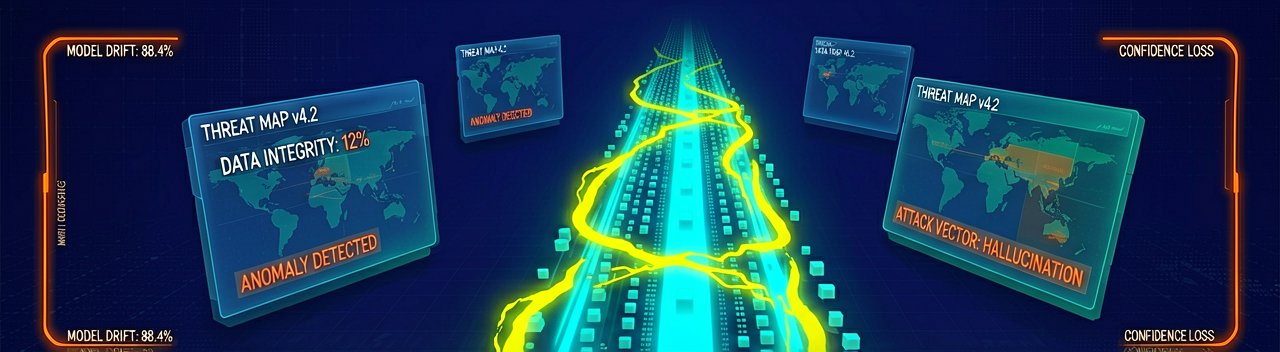
For the broader cybersecurity labor market, this structural realignment serves as an urgent wake-up call regarding skill obsolescence. The roles being phased out are primarily those tied to repetitive, programmatic workflows that can be successfully modeled by large language frameworks. Conversely, demand is surging for specialized talent capable of engineering secure data pipelines and managing the intrinsic risks of AI model drift and adversarial manipulation. The industry is moving toward a bifurcated workforce model, where a lean layer of highly compensated strategic architects oversees an expansive, automated digital infrastructure.
Reading Between the Lines: The Automation Paradox
The corporate narrative positioning these layoffs as a seamless evolution toward AI efficiency deserves a healthy dose of market skepticism. While reducing human headcount lowers immediate payroll expenses, it introduces a volatile dependency on automated infrastructure that remains unproven at this scale. Enterprise software vendors frequently treat artificial intelligence as a plug-and-play replacement for labor, yet historical precedents show that automation often shifts costs rather than eliminating them. The financial capital clawed back from cutting human analysts will inevitably be reallocated to skyrocketing cloud compute fees, model training pipelines, and the premium salaries required to attract top-tier machine learning engineers.
Furthermore, a distinct strategic contradiction lies at the heart of this workforce optimization. Cybersecurity is fundamentally an adversarial, cat-and-mouse game defined by human ingenuity on the attacker side. By aggressively automating internal workflows and threat-hunting capabilities, defensive platforms risk creating highly predictable, algorithmic monocultures. Modern threat actors are already utilizing generative tools to identify the edge cases and systemic blind spots inherent in automated security models. Stripping away the diverse, intuitive problem-solving of experienced human analysts in favor of standardized LLM-driven triage could inadvertently create systemic vulnerabilities that clever adversaries will exploit.
This pivot also complicates the long-term customer relationship model for enterprise security providers. Software-as-a-Service vendors have historically justified premium subscription renewals by highlighting their robust, human-led engineering support and managed detection capabilities. As platforms substitute human touchpoints with autonomous agents, the core product risks becoming commoditized. When every competitor deploys a similarly trained autonomous layer, corporate buyers may begin to view these security platforms as interchangeable utilities, triggering aggressive price wars that compress the very profit margins these layoffs were designed to protect.
Replacing an entire tier of human analysts with autonomous code sounds brilliant during a quarterly earnings call, right up until the moment an unscripted, hallucinations-prone algorithm attempts to negotiate a ransomware settlement with a real threat actor.
Artūras Malašauskas is an AI Systems Integrator with 20+ years of production-grade web engineering experience. He has designed, shipped, and scaled enterprise Python/PHP systems for logistics, SaaS, and public-sector clients. For the past year, he has focused exclusively on AI integrations: deploying open-source LLMs, building generative media pipelines (image, audio, video), and engineering multi-agent workflows for real production environments. His standard: reproducibility, security, cost-efficient inference—no vaporware. He documents and evaluates emerging AI tooling, separating verified capabilities from marketing noise. Technical editor at: muza-ai.eu, ai-verslas.lt, ai-naujinos.lt Connect on LinkedIn
Comments