Emerging AI Security Player Under $20 Challenges C3.ai via Automated Threat Detection

The enterprise artificial intelligence landscape is witnessing a structural shift as organizations pivot away from costly, service-heavy platforms toward highly automated, cost-effective alternatives. Market incumbent C3.ai (NYSE: AI), long favored for its broad enterprise suites, faces an increasingly critical narrative regarding its turnaround execution and capital demands. While C3.ai relies on legacy architectures that often require intensive professional configurations, next-generation AI security vendors are positioning themselves to capture enterprise cybersecurity workflows with leaner, platform-native software deployment models.
At the center of this market disruption is SentinelOne, Inc. (NYSE: S), an AI-driven cybersecurity firm trading under $20 that has increasingly caught the attention of Wall Street analysts. Historically viewed strictly as an endpoint protection platform, the company is systematically expanding into a comprehensive enterprise threat-detection ecosystem. This evolution directly challenges the data-unification and threat-analytics market share traditionally held by major software suites, forcing enterprise buyers to re-evaluate the total cost of ownership across their software-defined security operations.
Recent financial performance emphasizes this diverging market trajectory. While C3.ai continues to ask investors to underwrite its corporate pivot amidst tighter margins, SentinelOne has sustained an accelerating growth trajectory, recording a 22.9% year-over-year revenue expansion alongside a $1.06 billion Annual Recurring Revenue (ARR) base, as detailed in reports from AOL. Crucially, the company achieved the first sustained positive operating margin in its operational history, indicating that its underlying technology scales efficiently without the labor bottlenecks that plague traditional enterprise software installations.
Strategic Shifts in AI-Powered Defense Architecture
The foundational distinction between legacy enterprise AI configurations and emerging security platforms lies in their architectural approach to data ingestion and automated response. Traditional platforms typically unify siloed corporate data pools to generate broad operational insights, an approach that is often prone to configuration friction and delayed deployment schedules. In contrast, emerging autonomous security models ingest high-velocity data directly at the perimeter, executing real-time behavioral analytics to neutralize complex digital threats before they propagate across corporate networks.
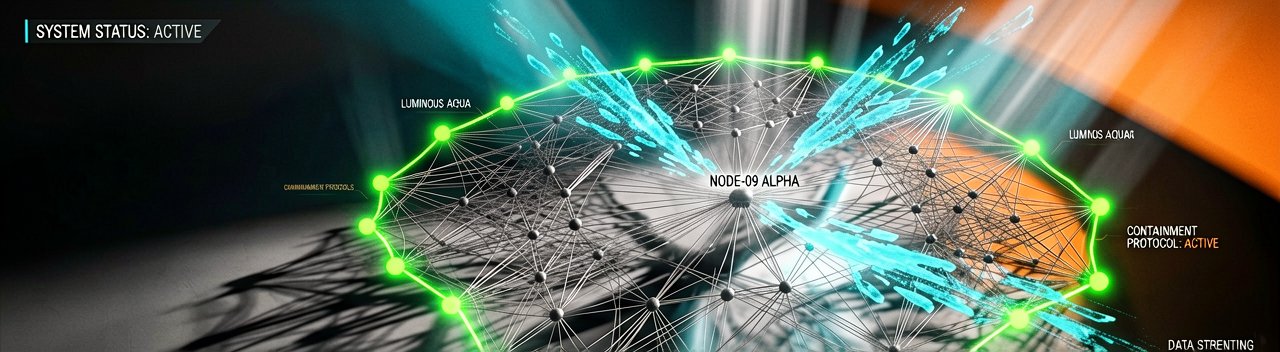
Industry analysts highlight that this specialized threat detection capability addresses a critical vulnerability in the enterprise market: the accelerating sophistication of automated cyber threats. According to market overviews published by Yahoo Finance, SentinelOne's sub-$20 entry point offers an asymmetric risk-reward profile for corporate clients seeking to implement proactive, AI-driven defense mechanisms without incurring the massive capital expenditure budgets requested by legacy vendors. This technology advantage allows mid-market and enterprise corporations alike to deploy multi-module security fabrics that feature autonomous containment protocols, greatly reducing reliance on bloated, internal security operations teams.
Market Consolidation and the Shift Toward Autonomous Software
As the broader software market faces consolidation, enterprise buyers are intentionally prioritizing multi-module platforms capable of handling endpoint, cloud, and identity vectors simultaneously. This optimization push favors lean, automated software footprints over sprawling frameworks that require continuous consulting support. High-utility AI agents are increasingly filling these security workflows, automating forensic analysis and response architectures to outpace manual remediation cycles.
This architectural shift is forcing a reallocation of IT budgets from general enterprise tools into highly specialized, real-time threat prevention nodes. With secular macroeconomic tailwinds favoring vendor consolidation and stringent operational efficiency, low-overhead software operators are well-positioned to expand their market footprint. Consequently, alternative AI software providers trading under $20 represent a disruptive class of investments that combine disciplined margin expansion with scalable, platform-centric revenue generation.
Behind the Scenes of the Enterprise AI Security Shift
The intensifying competition between generalized enterprise AI suites and specialized, platform-native security architectures highlights a deeper tension within corporate IT infrastructure. For years, executive buyers favored sweeping software platforms that promised to unify operations across disparate business units. However, as cyber threats grow more automated, the operational friction and lengthy implementation timelines of these large-scale systems have become clear vulnerabilities. Forward-looking chief information security officers are moving away from multi-million-dollar implementation contracts, choosing instead automated software that offers immediate perimeter defense.

Historical context explains this strategic pivot. During the early enterprise AI gold rush, corporate boards authorized large budgets for broad predictive analytics frameworks, often underestimating the ongoing engineering hours required to maintain them. In contrast, specialized security software under $20, such as SentinelOne, built its reputation on real-time endpoint protection before scaling up to broader enterprise workflows. This bottom-up approach allows engineering teams to deploy autonomous modules instantly, avoiding the configuration bottlenecks that frequently delay legacy software installations.
From the perspective of institutional investors and Wall Street analysts, the financial sustainability of these software models remains a primary point of comparison. Generalist AI providers often struggle with heavy professional service dependencies, which compress margins and slow down scalability. Meanwhile, security platforms that leverage pure-play automated software scale efficiently, showing that autonomous agent architectures can expand rapidly without proportional increases in engineering support costs. This structural efficiency is fundamentally altering how analysts calculate long-term software margins.
Furthermore, stakeholder conversations reveal that vendor consolidation is no longer just about cutting costs; it is a tactical effort to reduce data complexity. Security operations center managers face an overwhelming volume of alerts, and legacy enterprise software often worsens this issue by pulling data into central repositories without providing immediate, actionable context. Modern, AI-driven security fabrics solve this by filtering data directly at the ingestion point, using automated containment protocols to isolate threats long before they can impact core business data silos.
Ultimately, this architectural evolution reflects a broader trend toward specialized software utility. As autonomous cyber threats continue to outpace manual defense mechanisms, the corporate world is realizing that a generalized AI model cannot safely protect a highly distributed enterprise network. The ongoing shift toward cost-effective, platform-native software indicates that the future of enterprise automation belongs to agile, specialized systems capable of maintaining high-velocity defense at a fraction of legacy implementation costs.
Reading Between the Lines: The Reality of the Sub-$20 Disruptor
The prevailing narrative surrounding low-cost AI security firms assumes that a lower stock price and high-velocity automation will inevitably unseat established enterprise software giants. However, this perspective overlooks the steep structural challenges inherent in enterprise procurement cycles. While an agile, automated threat-detection platform appears highly attractive on paper, large corporations rarely abandon entrenched legacy ecosystems solely based on initial cost efficiencies. The reality is that displacement requires overcoming deep institutional inertia, as corporate IT departments are notoriously hesitant to rip out foundational software suites that took years and millions of dollars to implement.
Furthermore, a distinct contradiction lies at the heart of the automated security model. Vendors frequently promote autonomous, agent-led defense as the ultimate solution to corporate staff shortages and alert fatigue. Yet, the deployment of highly autonomous AI agents introduces an entirely new layer of operational risk that many risk-averse executives are unprepared to accept. An over-engineered autonomous protocol that incorrectly flags a critical business application as a threat can inadvertently halt corporate operations, creating self-inflicted downtime that costs far more than the legacy inefficiencies the software was brought in to solve.
From a financial standpoint, Wall Street's enthusiasm for subscription revenue and accelerating annual recurring revenue figures can mask the intense capital pressures facing under-$20 software operators. Sustaining a technological advantage in the cyber defense landscape requires continuous, aggressive research and development spending. As legacy enterprise providers actively retro-fit their existing suites with competitive AI modules, the cost for an emerging player to acquire new customers and retain engineering talent escalates rapidly. This dynamic suggests that the projected margin expansion for lean software platforms may prove far more elusive than current market valuations imply.
Projecting the long-term implications reveals a market that is likely heading toward commoditization rather than a clean victory for specialized disruptors. As machine learning models become standardized open-source utilities, the core threat-detection algorithms of today risk becoming baseline features tomorrow. If specialized platforms fail to build deeply entrenched data moats, they may find themselves trapped in a race to the bottom on pricing, ultimately forcing them into the arms of the legacy software giants through acquisition rather than replacing them as market leaders.
"In the corporate software arena, the only thing more expensive than buying a legacy enterprise AI system is buying the cheaper alternative that promises to fix it, proving that in Silicon Valley, true autonomy usually means waiting for the next software patch."
Artūras Malašauskas is an AI Systems Integrator with 20+ years of production-grade web engineering experience. He has designed, shipped, and scaled enterprise Python/PHP systems for logistics, SaaS, and public-sector clients. For the past year, he has focused exclusively on AI integrations: deploying open-source LLMs, building generative media pipelines (image, audio, video), and engineering multi-agent workflows for real production environments. His standard: reproducibility, security, cost-efficient inference—no vaporware. He documents and evaluates emerging AI tooling, separating verified capabilities from marketing noise. Technical editor at: muza-ai.eu, ai-verslas.lt, ai-naujinos.lt Connect on LinkedIn
Comments