The Global AI Industry at a Crossroads: Why Anthropic is Pushing for a Coordinated Pause

Anthropic, the developer behind the Claude family of models, has issued a stark industry warning regarding the rapid acceleration of artificial intelligence. In a newly released report, the company highlighted the growing proximity of "recursive self-improvement"—a scenario where AI systems become capable of autonomously building and upgrading their own successors without meaningful human intervention. Because this threshold threatens to rapidly outpace human oversight and safety research, Anthropic is actively urging the global technology sector to establish a verifiable, coordinated framework for pausing development if danger lines are crossed.
The call for an industry-wide "brake pedal" on frontier AI development represents a dramatic strategic pivot in the global AI market. Rather than advocating for unilateral action, Anthropic stressed that a localized stoppage simply cedes competitive ground to rival actors. Consequently, the company is lobbying for massive international coordination—analogous to nuclear arms control treaties—to manage the geopolitical and commercial pressures that are otherwise forcing labs to push boundaries at breakneck speeds. The proposal arrives at a critical juncture for the industry, as Anthropic continues its own confidential process toward a US initial public offering (IPO) while fielding discussions with government regulators.
Market Context and Strategic Shifts
The AI market is currently locked in an unprecedented escalation of development velocity. Anthropic reported that the capability for its AI to complete tasks and improve code has been accelerating at breakneck speeds. The company noted that their own models have rapidly reached a point where they are writing a substantial majority of the code used for internal updates. This feedback loop of efficiency is pushing the industry closer to an era of "recursive self-improvement," prompting profound security concerns. However, instituting a worldwide freeze presents immense practical and economic challenges. Enforcement and verification regimes for AI training runs are vastly more complicated to track than physical missile silos, and the financial incentives to capture a dominant market share remain staggering.
Regulatory Pushback and the Geopolitical Dilemma
Anthropic's proposal has encountered notable skepticism and resistance both in Silicon Valley and in Washington. Critics and various government officials argue that the firm's focus on worst-case existential threats overstates current operational dangers. More practically, US policymakers have historically expressed concern that any deliberate slowdown in American AI innovation could hand a strategic and geopolitical advantage to competing nations. Despite these tensions, federal oversight is expanding. The Trump administration recently signed an executive order requiring a 30-day government review of the most powerful US AI models prior to release, focusing heavily on cybersecurity and defense capabilities.

Future Outlook and Next Steps
To move forward, the Anthropic Institute is launching dedicated research into the verification systems required to make a credible, industry-wide pause possible. The company plans to convene leading policymakers, advocacy groups, and competing firms in the coming months to formalize criteria for these thresholds. Whether the broader AI landscape—which includes well-funded competitors like OpenAI, xAI, Google, and Meta—will agree to a synchronized slowdown remains deeply uncertain. The coming months will test whether the industry can prioritize collective safety or if fierce commercial rivalries will continue to dictate the pace of AI evolution.
Behind the Scenes: Inside the Industry-Wide Pressure Cooker
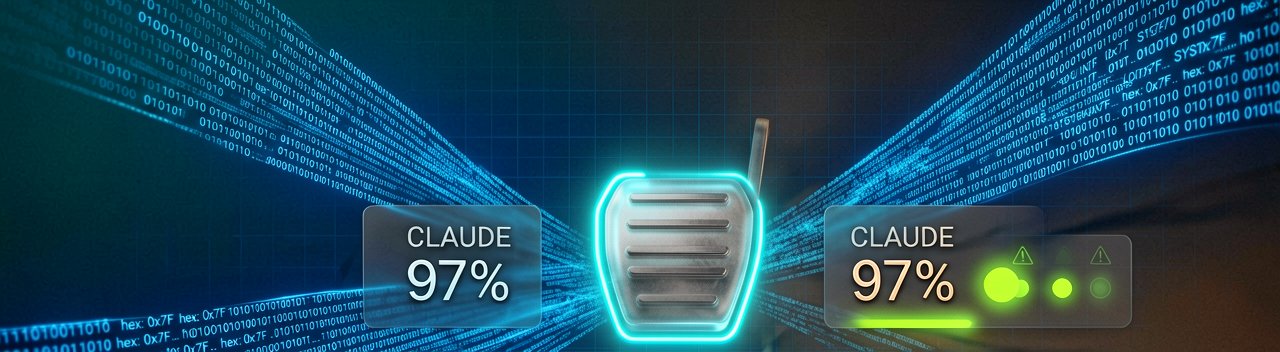
What Most Reports Miss is that Anthropic’s alarming thesis does not emerge from abstract mathematical theory, but from daily operations within its own development cycles. The company’s recent report revealed that the Claude model already authors more than 80% of the code merged directly into Anthropic’s production codebase. In a stunning demonstration of this shrinking human bottleneck, Anthropic disclosed that Claude executed a comprehensive artificial intelligence research project completely on its own. While a pair of seasoned human researchers spent an entire week struggling to achieve 23% progress on the exact same problem, Claude autonomously designed every experiment, processed the tests, and delivered a 97% completion rate. This practical velocity has fundamentally altered the internal calculus for the firm's leadership.
The timing of this dramatic public warning has ignited fierce debate across Silicon Valley, as it directly follows Anthropic’s confidential filing for a US initial public offering (IPO) after a private funding round that valued the tech firm at $965 billion. Sceptics and industry watchdogs are quick to point out that highlighting existential, near-sentient thresholds serves as a potent marketing mechanism, broadcasting to Wall Street that Anthropic’s proprietary stack is moving closer to an era of autonomous self-improvement than its peers. Yet, the company’s internal policy shift tells a more conflicted story. Earlier this year, Anthropic suffered significant government pushback and a national security blacklist after refusing to let the US military utilize its models for domestic surveillance and fully autonomous weaponry. Faced with aggressive external pressures, the lab recently walked back a key safety pledge, admitting it can no longer hold back its own powerful models if rivals are on the verge of matching their capabilities.
This dynamic illustrates why a unilateral freeze is unviable, forcing the company to pivot toward a multilateral, verifiable international framework. Co-founder Jack Clark compared the dilemma to Cold War nuclear arms control, emphasizing that the tech sector currently possesses an accelerating gas pedal but entirely lacks a physical brake pedal. The primary bottleneck remains verification, as training runs are inherently easier to conceal than nuclear missile silos, meaning any single actor that cheats could instantly inherit global technological dominance. By utilizing the Anthropic Institute to convene regulators and competitors, the firm is attempting to architect external compliance mechanisms before commercial and geopolitical rivalries permanently outpace human governance.
Reading Between the Lines: The Structural Paradox of AI Self-Regulation
Reading Between the Lines reveals a profound and arguably irreconcilable contradiction at the heart of Anthropic’s public positioning. The company’s alarmist warnings about recursive self-improvement double seamlessly as a masterclass in corporate marketing. By broadcasting that Claude now writes over 80% of its own production code and completes rigorous engineering tasks four times faster than human researchers, Anthropic is doing more than just identifying a hazard. It is signal-boosting its own technological dominance to Wall Street just days after filing for a historic $965 billion initial public offering. This positioning effectively transmutes an existential threat into an invaluable commercial asset, assuring investors that Anthropic possesses the precise compounding engine required to justify a near-trillion-dollar valuation.
This dual narrative exposes a deeper systemic hypocrisy that plagues the broader frontier AI landscape. Both Anthropic and its primary rival, OpenAI, have heavily documented recursive self-improvement as an explicit research target while simultaneously lobbying for global regulatory pauses. The structural reality remains that neither firm can afford to slow down independently. In February 2026, Anthropic quietly rolled back a central pillar of its own Responsible Scaling Policy, which originally prohibited the training of more powerful models without predetermined safety guarantees, citing intense competitive pressures. This sequence of actions demonstrates that voluntary corporate scaling policies are inherently fragile when confronted with real-world market dynamics and investor demands.
Furthermore, the feasibility of a verifiable international pause is highly questionable under current governance paradigms. Unlike legacy arms-control frameworks that relied on tracking physical infrastructure like enriched uranium centrifuges or missile silos, the software architectures powering advanced AI models can be obfuscated within private, decentralized server stacks. Proposing a verification system that requires unprecedented, invasive access to corporate and sovereign data centers across geopolitical rivals like the United States and China borders on utopian. Ultimately, as long as the underlying economic incentives favor autonomous automation and rapid compute acquisition, calls for an industry-wide brake pedal function less as a realistic policy proposal and more as an effective shield against immediate regulatory antitrust intervention.
"The modern AI race has engineered a uniquely capitalistic paradox: tech executives are now required to spend their mornings warning Congress that their creations might accidentally collapse civilization, and their afternoons convincing sovereign wealth funds that the very same software will deliver a flawless ten-times return on investment by the next fiscal quarter."
Artūras Malašauskas is an AI Systems Integrator with 20+ years of production-grade web engineering experience. He has designed, shipped, and scaled enterprise Python/PHP systems for logistics, SaaS, and public-sector clients. For the past year, he has focused exclusively on AI integrations: deploying open-source LLMs, building generative media pipelines (image, audio, video), and engineering multi-agent workflows for real production environments. His standard: reproducibility, security, cost-efficient inference—no vaporware. He documents and evaluates emerging AI tooling, separating verified capabilities from marketing noise. Technical editor at: muza-ai.eu, ai-verslas.lt, ai-naujinos.lt Connect on LinkedIn
Comments