The Architecture War: Why Custom AI Silicon Threatens to Dethrone NVIDIA
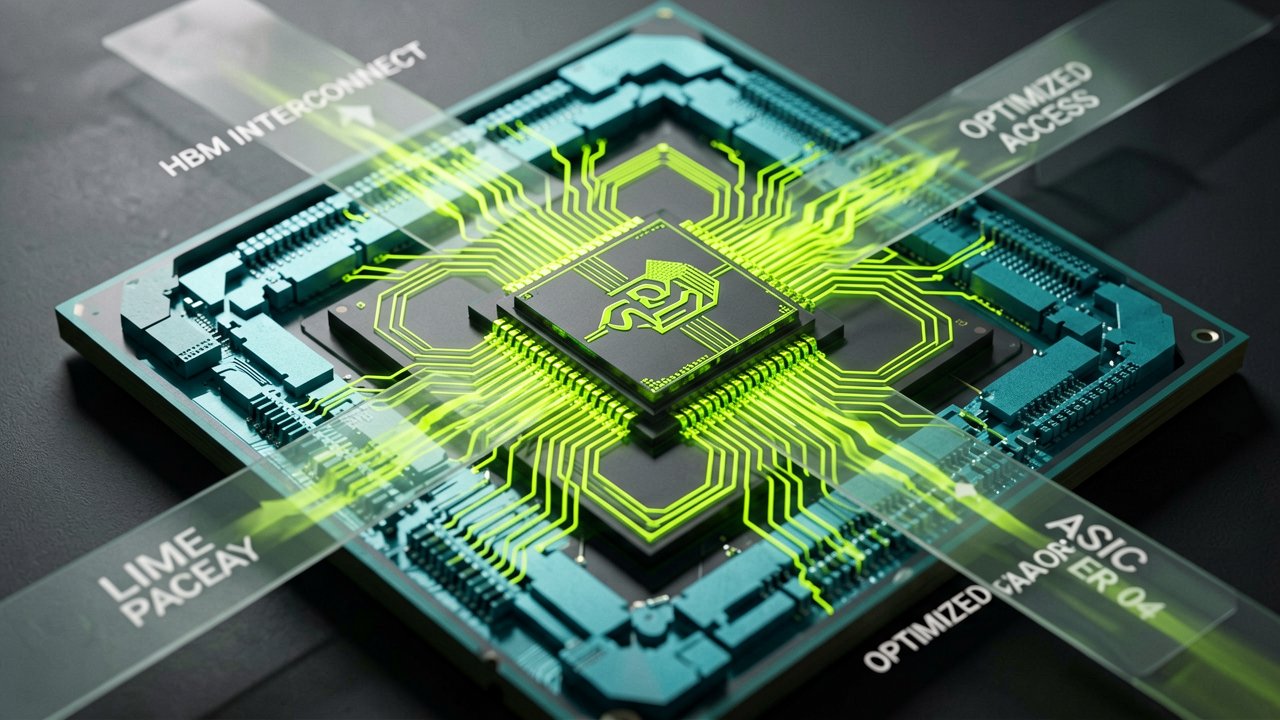
Wall Street has been treating NVIDIA as an untouchable titan, but the underlying tectonic plates of the semiconductor industry are starting to shift. Analysts are tracking a massive long-term rotation as hyperscalers attempt to break free from the expensive grip of proprietary graphics processing units (GPUs). In a series of forward-looking financial assessments published on Yahoo Finance and AOL in June 2026, market researchers outlined a bold five-year horizon where specific bespoke artificial intelligence chipmakers are positioned to outperform NVIDIA's market growth. The core of this challenge doesn't rely on matching NVIDIA chip-for-chip in raw horsepower, but rather on changing the entire playbook of how data centers handle large-scale machine learning workloads.
The emerging technological rivalry pits general-purpose computing processors against custom Application-Specific Integrated Circuits (ASICs) designed in tandem with big tech giants. Tech heavyweights like Broadcom have quietly built an empire around custom silicon infrastructure, securing massive design pipelines with cloud providers that want hardware tailored strictly to their software models. While standard architecture excels at the heavy lifting required for model training, specialized ASICs provide unmatched efficiency and lower operating costs for inference processing, which represents the daily operation of AI systems. This fundamental difference in hardware philosophy forms the baseline of a rapidly fragmenting hardware market.
The Scaling Wall and Energy Efficiency
As AI models grow exponentially, traditional monolithic processing chips face steep engineering constraints regarding power consumption and thermal dissipation. Custom silicon bypasses this roadblock by stripping away unnecessary silicon real estate, focusing entirely on multiplying matrices at maximum efficiency. By embedding deep learning algorithms directly into the hardware logic, these alternative semiconductor architectures deliver significantly higher performance-per-watt than standard graphics-derived accelerators. This economic advantage is forcing massive data center operators to reconsider their multi-billion dollar capital expenditure budgets over the next half-decade.
Co-Design Ecosystems vs. Proprietary Software Ecosystems
NVIDIA's strongest competitive moat has long been its mature software stack, which locked developers into a specialized ecosystem for over a decade. However, the open-source community along with major cloud infrastructure providers are rapidly advancing alternative software frameworks that seamlessly compile code across diverse hardware architectures. Custom semiconductor players are leveraging these open platforms to integrate their chips directly into existing cloud fabrics. This collaborative co-design strategy allows hyperscalers to deploy custom processors without forcing software engineers to learn a entirely new proprietary development environment.
Technical Specifications Matrix
| Metric | General-Purpose GPUs (NVIDIA) | Custom ASIC Architectures |
|---|---|---|
| Speed / Latency | High throughput for batch training; variable latency for real-time single-query inference. | Ultra-low deterministic latency; optimized for real-time streaming and immediate token generation. |
| Model Size / Parameters | Massive multi-trillion parameter scales distributed across extensive NVLink clusters. | Targeted model scales; highly efficient for dense workloads and specific quantized architectures. |
| Hardware Requirements | Complex cooling infrastructure, high-bandwidth interconnects, and substantial power delivery systems. | Streamlined die design, reduced auxiliary components, and specialized on-chip memory layouts. |
Decoding the Hardware Divergence
The operational divide highlighted in the matrix stems from how these competing silicon architectures allocate their physical transistor budgets. General-purpose graphics processors rely on massive arrays of parallel cores designed to handle any mathematical workload thrown their way, which makes them incredibly versatile but inherently power-hungry. Custom ASICs, by contrast, strip out the legacy logic gates required for graphics rendering and generic computing to focus exclusively on matrix multiplication and accumulation loops. This radical specialization means every square millimeter of silicon works directly toward accelerating specific neural network layers without wasting energy on unused hardware instructions.
This architectural variance directly influences real-time execution speeds and system latency during deployment. While a generic accelerator relies on complex software scheduling and huge data batches to achieve peak efficiency, custom silicon processes small batches or single queries almost instantly. By hardwiring specific algorithmic paths directly into the silicon pathways, bespoke chips avoid the processing overhead that traditionally plagues multi-purpose hardware. Consequently, cloud operators can deliver instantaneous responses for user-facing applications like real-time voice synthesis and interactive search agents without maintaining massive, hot-running server clusters.
Memory access patterns create another critical fork in the road for these competing hardware platforms. Big-iron graphics chips use extremely fast but expensive High Bandwidth Memory (HBM) stacked tightly around the processor die, forcing data to travel across a complex, high-power silicon interposer. Custom architectures frequently implement distributed on-chip SRAM caches positioned directly next to the execution units themselves. This arrangement minimizes the physical distance data must travel, slashing the thermal profile of the system and preventing the memory bandwidth bottlenecks that frequently slow down large-scale artificial intelligence processing workloads.
Ultimately, this technical shift redefines how large data centers scale their infrastructure investments over multi-year cycles. Relying on general-purpose silicon requires massive upfront capital for proprietary networking fabrics and specialized liquid-cooling loops to keep the power-dense clusters functional. Custom application-specific chips allow hyperscalers to deploy leaner, air-cooled server configurations that integrate seamlessly into standard rack architectures. As cloud giants face tightening energy grids and escalating operational costs, the transition toward these highly targeted silicon layouts offers an undeniable path toward sustainable economic scaling.
Editorial Pros & Cons
| Platform Type | Operational Advantages (Pros) | Operational Disadvantages (Cons) |
|---|---|---|
| General-Purpose GPUs (NVIDIA) | Unmatched algorithmic flexibility; immediate compatibility with brand-new model architectures; massive developer ecosystem. | Exorbitant upfront procurement costs; massive power consumption; crippling supply chain bottlenecks. |
| Custom ASIC Architectures | Exceptional performance-per-watt; rock-bottom operational expenses at scale; total architectural control for the cloud provider. | Extreme hardware rigidity; lengthy multi-year development cycles; high risk of obsolescence if software frameworks shift. |
The Strategic Tug-of-War
Reading Between the Lines: The semiconductor market is learning that raw processing power means very little if it melts your data center's power grid and drains your quarterly capital budget. NVIDIA built its multi-trillion-dollar empire on the fact that software developers are inherently lazy in the best way possible, preferring a mature, turn-key software ecosystem over building hardware interfaces from scratch. Yet, the economic gravity of the cloud means hyperscalers can no longer afford to pay a perpetual premium to a single hardware vendor. By funding bespoke custom chip programs, cloud titans are actively trading away universal flexibility to gain predictable, hard-coded operational efficiency.
This massive corporate migration reveals a sharp division in how artificial intelligence infrastructure will look over the next five years. Standard heavy-duty graphics processors will likely remain the undisputed champions of the foundational research lab, where data scientists constantly rewrite neural layer logic overnight. Conversely, the high-volume consumer web belongs entirely to application-specific silicon, because executing millions of identical search recommendations or automated customer interactions requires tight, repetitive economic efficiency rather than fluid programmable versatility.
The biggest gamble for the custom silicon camp lies in the agonizingly slow timeline required to print physical masks and manufacture chips. A custom chip designed for a specific mathematical model structure can become an expensive paperweight if a breakthrough research paper alters the underlying math while the silicon is still sitting inside a fabrication plant. Enterprise buyers are forced to balance the guaranteed savings of optimized hardware against the terrifying reality that the software ecosystem might simply outgrow their hardwired logic gates before the deployment pays for itself.
Designing a custom chip to save money on your AI bill is like building a highly specific, custom factory to manufacture a trendy consumer gadget; it is absolute financial genius right up until the consumer decides they want a completely different product.
Artūras Malašauskas is an AI Systems Integrator with 20+ years of production-grade web engineering experience. He has designed, shipped, and scaled enterprise Python/PHP systems for logistics, SaaS, and public-sector clients. For the past year, he has focused exclusively on AI integrations: deploying open-source LLMs, building generative media pipelines (image, audio, video), and engineering multi-agent workflows for real production environments. His standard: reproducibility, security, cost-efficient inference—no vaporware. He documents and evaluates emerging AI tooling, separating verified capabilities from marketing noise. Technical editor at: muza-ai.eu, ai-verslas.lt, ai-naujinos.lt Connect on LinkedIn
Comments