AI Agents' Ubiquity Threatens Telecom Industry Stability and Revenue Streams

The rapid proliferation of autonomous AI agents across modern enterprises is causing severe, structural disruptions to traditional telecommunications infrastructure models. As these automated systems increasingly handle complex, multi-step workflows with zero human intervention, they are fundamentally altering data consumption patterns and compressing operator margins. A significant portion of senior enterprise executives plan to spend over $10 million on agentic automation in 2026, according to investment research published by Cyntexa. This capital pivot toward machine-driven operations strips operators of high-margin consumer interactions and reconfigures network utilization around non-traditional, unpredictable machine-to-machine data exchanges.
Compounding this revenue exposure, global telecommunications providers are battling persistent infrastructure commoditization as data traffic volume surges out of sync with consumer monetization metrics. Market analysis from the PwC Global Telecom Outlook highlights that average revenue per user (ARPU) growth continues to lag behind global inflation rates, squeezing carriers into an unsustainable cycle of rising capital expenditure without corresponding top-line expansion. Faced with these conditions, over half of industry chief executives acknowledge that their current commercial business models will not remain economically viable over the next decade unless they natively integrate AI architecture deep into their core networks.
In response to these systemic threats, network operators are transitioning from passive connectivity pipelines into automated execution layers capable of hosting and managing distributed machine intelligence. Comprehensive tracking by McKinsey & Company reveals that more than half of major telecommunications firms are actively deploying agentic workflows across operational divisions to reset network economics and preserve margins. Simultaneously, industry-wide consortia are moving rapidly to establish baseline technical controls, fairness criteria, and accountability standards, utilizing frameworks like the Responsible AI Maturity Roadmap introduced by the GSMA to coordinate ethical deployment and stave off regulatory penalties.
Disruption of Traditional Traffic and Voice Revenue
The mass adoption of multi-agent AI ecosystems minimizes the necessity for conventional user-facing interfaces, leading to a steady drop in high-margin ambient browser data, cellular voice traffic, and direct SMS communication. Enterprise software platforms are evolving to utilize localized processing and condensed data protocols, which bypass standard carrier services and reduce premium billing opportunities. Telecom carriers are left supporting massive data payloads generated by machine-to-machine API calls, which yield significantly lower transactional margins than legacy consumer applications.
The Widening Gap Between Capital Outlay and Network Monetization
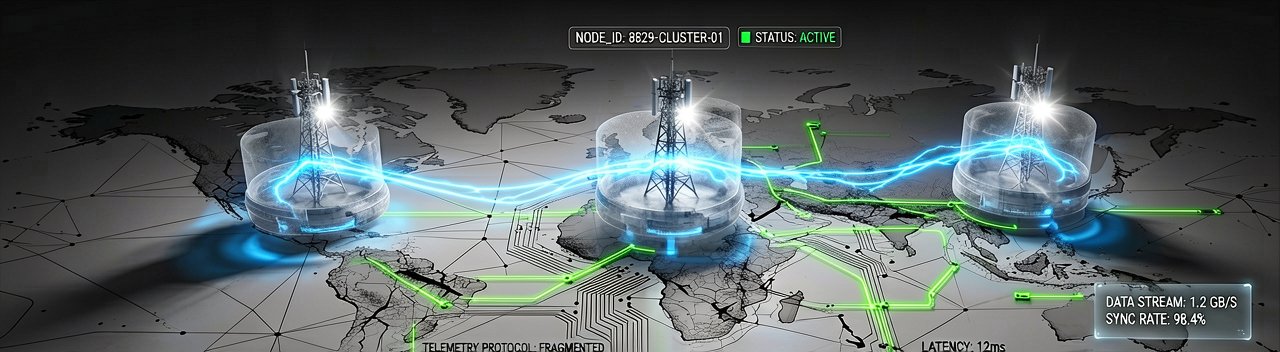
As AI agents demand continuous connectivity for real-time inference and analytical processing, telcos are pushed into a capital-intensive infrastructure investment cycle without clear mechanisms to extract matching premium fees. High-density data transport requires immense upgrades to edge capacity and fiber routing networks, yet corporate buyers expect these capabilities to be bundled within existing enterprise service level agreements. This infrastructure mismatch accelerates the risk of network operators being relegated to low-margin utilities while hyper-scalers capture the financial upside of the agentic economy.
Regulatory Pressures and Autonomous Governance Challenges
The expansion of autonomous network management agents introduces severe compliance risks concerning data sovereignty, privacy leaks, and unpredictable network behaviors. Regulatory bodies globally are reviewing how machine-driven decision engines manipulate public bandwidth allocation, demanding transparent auditing mechanisms that traditional legacy stacks cannot support. To prevent severe fines and operational blocks, operators must invest heavily in complex auditing protocols to monitor real-time security threats, such as malicious inputs designed to hijack autonomous network agents.
The Hidden Dynamics of Agentic Network Strain
What Most Reports Miss: The true crisis for telecommunications providers is not a simple drop in raw data usage, but a profound transformation in the structural nature of network traffic. Traditional telecommunications architecture was engineered around predictable human behavioral rhythms, balancing diurnal peaks in voice calls, text messaging, and video streaming. Autonomous AI agents completely erase these predictable peaks, generating continuous, synchronized machine-to-machine API calls that run uninterrupted through the night. This relentless baseline demand eliminates the historic "quiet hours" that network engineers traditionally relied upon to perform routine system maintenance, software updates, and hardware optimizations.
Compounding this mechanical strain is a severe economic misalignment within existing wholesale data agreements. Legacy enterprise contracts were negotiated under the assumption that data payloads consisted of predictable cloud backups or static media assets. AI agents, conversely, transmit highly fragmented, low-latency telemetry data and real-time vector embeddings that require immediate, jitter-free processing at the network edge. Telecom operators find themselves legally locked into multi-year enterprise service level agreements that force them to guarantee ultra-low latency for this complex traffic, yet they receive no incremental revenue for the massive processing overhead required to sustain it.
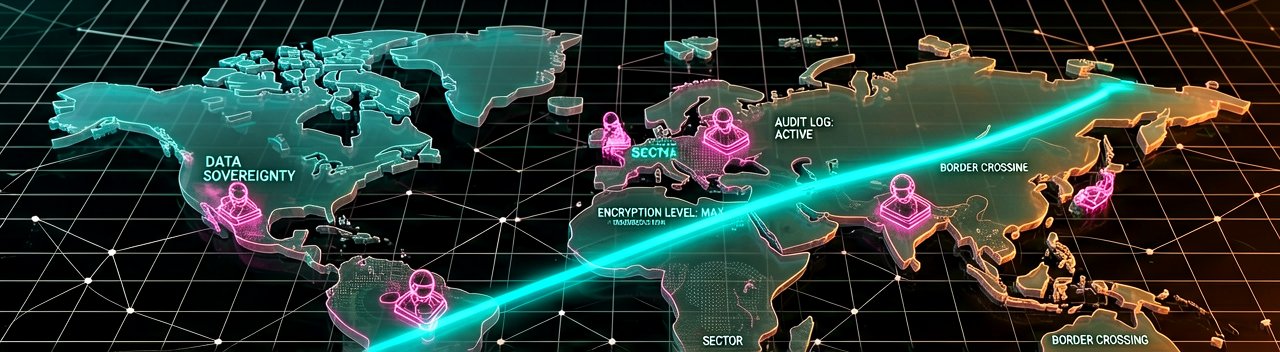
From the perspective of network architects, this shift is triggering an unbudgeted infrastructure race at the edge of the network. To prevent autonomous agent workflows from suffering catastrophic processing delays, carriers are being forced to deploy expensive localized compute clusters within their base stations. This capital expenditure effectively transforms standard cell towers into micro-data centers, skyrocketing localized electricity demands and cooling costs. While hyper-scalers and enterprise software developers reap the financial rewards of high-speed AI automation, the underlying telecommunications utility shoulders the soaring operational costs of the physical power grid.
The regulatory fallout from this automation wave presents an even more complex challenge for global carriers. As autonomous agents begin dynamically routing data payloads across international borders to optimize cloud processing costs, they frequently violate strict regional data sovereignty laws and privacy mandates. Telecommunications providers are caught in the crosshairs, as legacy regulatory frameworks often hold the network operator liable for illegal data transits occurring over their infrastructure. Consequently, compliance departments are scrambling to develop deep packet inspection tools capable of identifying and blocking unauthorized autonomous data routing before it triggers catastrophic regulatory fines.
The Paradox of Autonomous Connectivity
Reading Between the Lines: The prevailing industry narrative suggests that the deployment of autonomous network agents will seamlessly save carriers from their own spiraling operating expenses. Telecom executives routinely champion the idea that self-healing, AI-driven software will permanently reduce labor overhead and optimize spectrum efficiency. However, this optimistic outlook ignores a glaring internal contradiction: as networks become highly automated, predictable, and intelligent, they strip away the very complexity that allowed premium enterprise tiers to exist. When every network pipeline is perfectly optimized by algorithms, bandwidth becomes the ultimate undifferentiated commodity, destroying any remaining pricing power operators held.
Furthermore, the industry's rush to deploy internal AI agents to counter external agentic data loads creates an unpredictable loop of autonomous escalation. Carriers are effectively deploying AI algorithms to police, throttle, and shape the data traffic generated by their customers' AI algorithms. This creates an invisible, computationally expensive arms race occurring inside the network infrastructure itself. The energy and computing power required to constantly analyze and mitigate this machine-generated traffic threatens to wipe out the exact operational savings that the automation was originally deployed to achieve.
Projecting this trend forward reveals an uncomfortable strategic bottleneck for global operators. Telcos are aggressively investing billions into edge-computing infrastructure to satisfy the real-time processing demands of autonomous agent ecosystems, operating under the assumption that they will eventually find a way to monetize this premium access. Yet, history suggests otherwise; over the past two decades, every major network evolution from 3G to 5G has ultimately enriched over-the-top application developers while leaving the infrastructure providers holding the bill for the physical deployment. There is little structural evidence to suggest that the agentic economy will break this deeply entrenched historical cycle.
Ultimately, the regulatory scrutiny currently facing the telecom sector may serve as the final wedge driving operators into a purely utility-focused corner. Governments demanding transparent, non-discriminatory network access will likely view any attempt by telcos to charge premium algorithmic tolls on AI agents as a violation of net neutrality principles. Trapped between massive capital expenditure requirements on one side and rigid regulatory price caps on the other, the telecommunications industry faces a future where it powers the brains of global commerce while suffering from chronic financial malnutrition.
In a beautifully ironic twist of technological progress, the telecommunications industry has spent trillions of dollars building the most sophisticated, ultra-low-latency nervous system in human history, only to realize it has successfully designed itself out of the conversation.
Artūras Malašauskas is an AI Systems Integrator with 20+ years of production-grade web engineering experience. He has designed, shipped, and scaled enterprise Python/PHP systems for logistics, SaaS, and public-sector clients. For the past year, he has focused exclusively on AI integrations: deploying open-source LLMs, building generative media pipelines (image, audio, video), and engineering multi-agent workflows for real production environments. His standard: reproducibility, security, cost-efficient inference—no vaporware. He documents and evaluates emerging AI tooling, separating verified capabilities from marketing noise. Technical editor at: muza-ai.eu, ai-verslas.lt, ai-naujinos.lt Connect on LinkedIn
Comments