Finout AI Agent Suite Redefines Enterprise FinOps Efficiency Standards
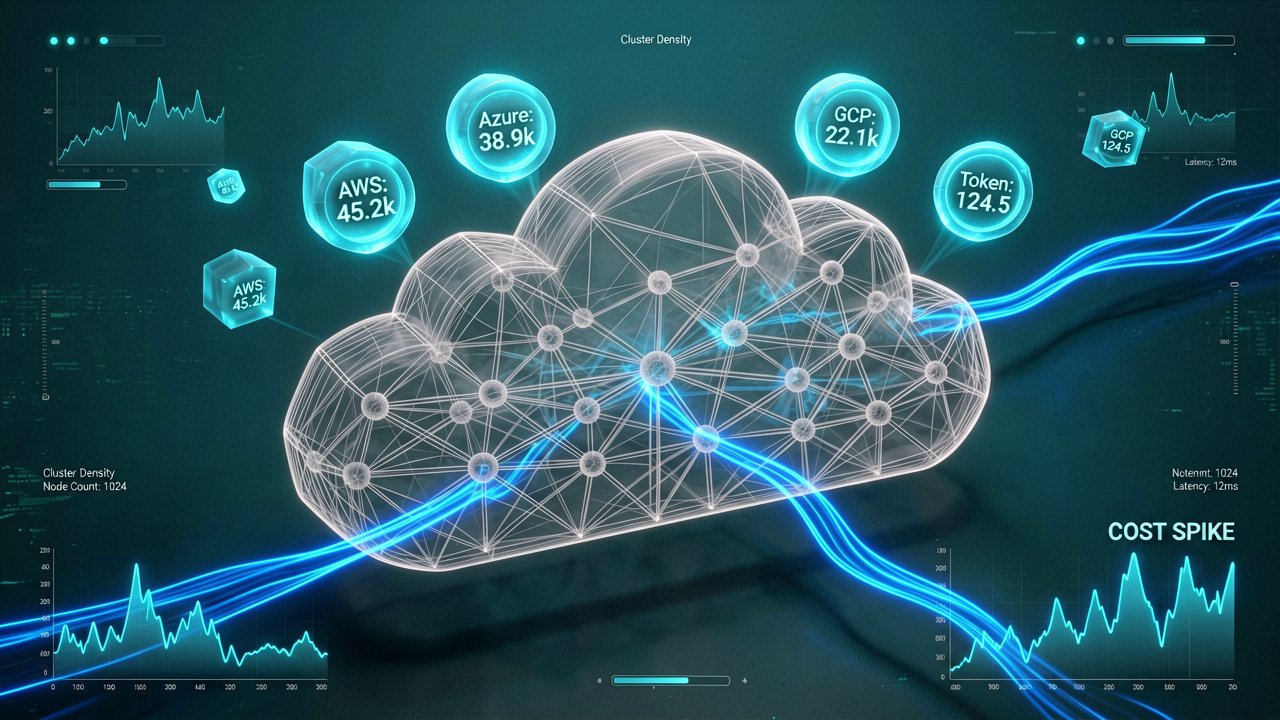
The enterprise cloud cost management landscape is undergoing a structural shift as organizations struggle with fragmented multi-cloud architectures, Kubernetes clusters, and volatile generative AI workloads. Managing these variable costs has outpaced human manual processing capacity, resulting in budgeting friction between finance and engineering teams. In response, enterprise FinOps platform provider Finout has unveiled its new AI Agent Suite, establishing a new operational standard designed to transition enterprise FinOps from a reactive monitoring loop into an automated, proactive optimization cycle.
Historically, the operational bottleneck in cloud financial management has not been data visibility, but rather an organization's capacity to investigate and execute remediations. The emergence of agentic AI workflows has simultaneously complicated this landscape and provided its solution. As cloud infrastructure and token-based AI consumption grow non-linearly, traditional cloud cost management tools fail to keep up with real-time volatility. Finout's agentic framework shifts the unit of economic accountability directly to the automated workflow layer, dramatically reducing the time-to-action for infrastructure anomalies from days down to minutes.
The Architecture of Autonomous Cost Governance
The newly introduced AI Agent Suite operates on top of the company's patented MegaBill, a unified data layer that aggregates multi-cloud expenses from AWS, Azure, and GCP alongside container and modern SaaS environments like Kubernetes, Snowflake, Databricks, and major AI providers including OpenAI and Anthropic. Rather than relying on simple virtual assistant capabilities, this suite deploys three specialized autonomous agents called Detector, Investigator, and Orchestrator to oversee the end-to-end FinOps lifecycle. According to details released via Yahoo Finance, these systems possess the reasoning capabilities necessary to continuously distinguish actual spend signals from noise before escalating infrastructure alerts.
Once an anomaly is flagged by the Detector agent, the Investigator agent takes over to trace the variation to its technical root cause. This includes cross-referencing deployment histories, ownership lineage, and historical spend parameters to output a comprehensive case file. The Orchestrator agent then drives the mitigation process by automatically deploying reversible cost fixes or routing potentially destructive changes directly to engineering teams through existing corporate channels like Slack or Jira. This closed-loop automated lifecycle aims to scale enterprise engineering capacity by up to ten times without adding overhead headcount.

Market Impact and Strategic FinOps Evolution
This product launch reflects a strategic market evolution where enterprise cloud observability requires deep integration with business unit economics. According to data tracked by The FinOps Foundation, corporate clients leveraging unified cost observability layers achieve up to a 30% reduction in annual cloud spend alongside a 50% time savings for engineering departments. By addressing the manual labor embedded within data mapping and virtual tagging, enterprises can allocate close to 100% of their complex compute and container infrastructure spending with minimal code modification.
The addition of native artificial intelligence capabilities addresses a core enterprise pain point: the high unpredictability of token-based billing and LLM workflow loops running unchecked. As noted in documentation by Finout Docs, automating the generation of allocation rules and spend breakdowns minimizes human error while maintaining definitive compliance trails. For modern enterprises juggling hybrid environments, shifting cost governance tasks to autonomous AI agents represents a mandatory upgrade for maintaining operational margins in highly scalable infrastructure environments.
Behind the Scenes: The Invisible Friction of Automated Remediation
While the theoretical promise of autonomous cost management paints a frictionless picture of corporate efficiency, the real-world integration of agentic FinOps exposes a deep-seated cultural tension between finance and engineering teams. Historically, DevOps and engineering leads have resisted automated platform adjustments due to the inherent risk of service disruptions or unexpected downtime. Granting an AI agent the authority to alter cloud resource allocations, scale down Kubernetes clusters, or modify cloud reservation models requires a level of institutional trust that cannot be built overnight. Consequently, early enterprise implementations of FinOps automation are prioritizing human-in-the-loop validation frameworks, ensuring that while the AI handles the complex root-cause discovery, the final execution of infrastructure modifications remains securely in human hands.
The urgency driving this shift stems from the sheer complexity of modern hyper-scaler billing, which has evolved into a specialized data engineering challenge. A single enterprise's daily cloud billing data can easily generate hundreds of millions of line items, particularly when factoring in short-lived microservices and dynamic containers. For years, companies relied on static tag-based systems to trace these costs back to specific business units, a process that frequently broke down during rapid deployment cycles. By delegating data mapping to specialized LLMs capable of interpreting contextual clues and architectural code patterns, organizations are finally bridging the gap between raw infrastructure telemetry and real-time business financial statements.
From a macroeconomic perspective, this transition marks the third distinct era of cloud financial management. The first era focused entirely on visibility, providing simple charts that mapped historical spend. The second era introduced basic anomaly detection, though these early rules-based engines plagued engineering workflows with high false-positive rates and alert fatigue. This new era of agentic reasoning shifts the burden of proof from the human operator to the software platform. Rather than merely alerting an administrator that costs have spiked, the system presents an actionable post-mortem alongside pre-calculated mitigation paths, shifting the focus from backward-looking auditing to real-time strategic economic modeling.
Furthermore, the rapid rise of enterprise generative AI initiatives has introduced an entirely new layer of fiscal volatility that traditional FinOps frameworks were fundamentally unequipped to handle. Training and fine-tuning large language models requires massive graphics processing unit clusters, where a single misconfigured training job can incur tens of thousands of dollars in overruns in a matter of hours. By integrating token-based spending and multi-provider AI api calls directly into a unified cost architecture, engineering teams gain the precise guardrails required to experiment safely with advanced AI workloads without risking catastrophic budget overruns before a product ever reaches production status.
Reading Between the Lines: The Cost of Calculating Savings
The industry’s rapid pivot toward agentic FinOps glosses over a fundamental contradiction: deploying advanced LLM suites to monitor cloud spend introduces its own complex, non-linear computing costs. Enterprise buyers are being told that the solution to volatile, token-based cloud bills is to install another layer of token-based, agentic software. This dynamic threatens to turn FinOps into a self-referential cycle where organizations expend significant compute resources just to calculate how much compute resource they should be saving. Until vendors provide absolute transparency regarding the operational overhead of the AI agents themselves, sophisticated enterprise procurement teams will remain inherently skeptical of the net return on investment.
Furthermore, the promise of full automation overlooks the shifting legal and operational liabilities inherent to infrastructure management. If an autonomous agent misinterprets a spike in user traffic as a malicious cost anomaly and unilaterally scales down a critical production database, the resulting downtime could easily eclipse any minor infrastructure savings achieved over a fiscal quarter. This reality exposes a core vulnerability in the marketing narrative of hands-free operations. Software vendors love to highlight the theoretical velocity of automated remediation, but the practical reality of corporate risk management means that enterprises will likely bottleneck these agents with manual approval gates, limiting their real-world speed to the pace of traditional human bureaucracy.
Longer term, the widespread democratization of agentic cost optimization tools may trigger a counter-response from the hyper-scalers themselves. Major cloud providers have historically relied on a degree of structural inefficiency—such as orphaned storage volumes, unoptimized instances, and unutilized capacity commitments—to bolster their predictable baseline margins. As autonomous software systematically strips this waste out of the enterprise ecosystem, cloud providers may be forced to alter their pricing models, adjust reservation mechanics, or increase baseline compute costs to protect their revenue streams. In this cat-and-mouse dynamic, the systemic financial advantage gained from AI tooling could prove to be entirely temporary.
"The ultimate irony of modern enterprise infrastructure is that we are now building incredibly sophisticated, multi-million dollar artificial brains tasked entirely with cleaning up the digital clutter left behind by human developers who simply forgot to turn off their testing servers over the weekend."
Artūras Malašauskas is an AI Systems Integrator with 20+ years of production-grade web engineering experience. He has designed, shipped, and scaled enterprise Python/PHP systems for logistics, SaaS, and public-sector clients. For the past year, he has focused exclusively on AI integrations: deploying open-source LLMs, building generative media pipelines (image, audio, video), and engineering multi-agent workflows for real production environments. His standard: reproducibility, security, cost-efficient inference—no vaporware. He documents and evaluates emerging AI tooling, separating verified capabilities from marketing noise. Technical editor at: muza-ai.eu, ai-verslas.lt, ai-naujinos.lt Connect on LinkedIn
Comments