Conversational AI on the Warehouse Floor: Amazon’s Strategic Shift in Industrial Automation
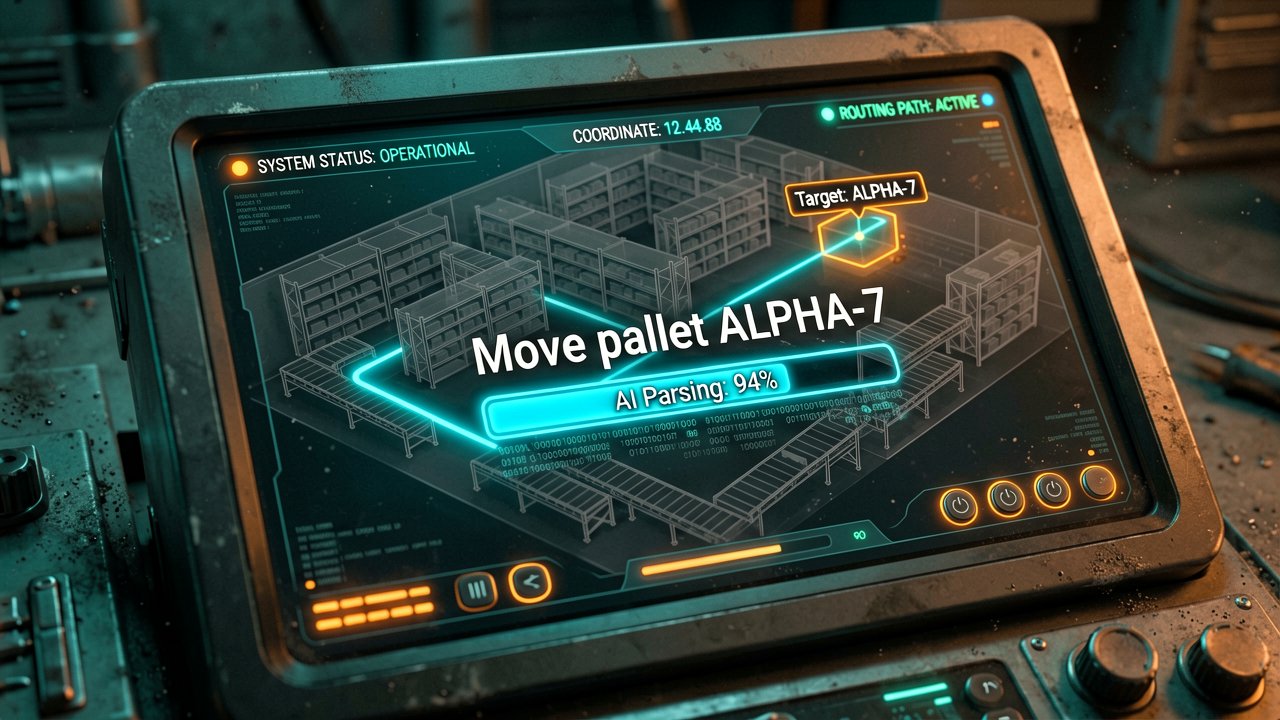
Amazon has unveiled a next-generation iteration of its fully autonomous Proteus warehouse robot, introducing generative AI capabilities that allow floor workers to issue direct, natural-language instructions. Rather than relying on specialized coding or dedicated software interfaces, employees can command the upgraded mobile platform using text-based conversational prompts, as reported by The Verge. The robot autonomously determines task prioritization, optimal routing, and scheduling to move heavy materials across fulfillment centers.
The tech giant showcased this advancement at its "Delivering the Future" event in Dartford, England, anchoring the technology within a massive €10 billion ($11.6 billion) logistics and infrastructure modernization initiative spanning its European network, according to Reuters . While the current generation of Proteus operates exclusively within designated loading dock zones across 25 U.S. fulfillment sites, the new AI-driven model is engineered to roam freely across full warehouse floors to transport multi-hundred-kilogram carts between active workstations.
By moving beyond rigid, predefined workflows toward goal-directed autonomy, Amazon is establishing a new baseline for human-robot interaction in commercial supply chains. The conversational interface significantly reduces the technical barriers and specialized training traditionally required for frontline workers to interact with fleet robotics. Detailed product roadmaps published by Amazon indicate that the next-generation Proteus will begin commercial deployment in Europe during the first half of 2027.
The Leap From Automation to Goal-Directed Autonomy
Traditional industrial robotics rely on deterministic software systems where routing, collision avoidance, and tasks are strictly mapped out by engineers beforehand. The integration of LLM-style parsing within the Proteus fleet marks a transition to agentic, physical AI. When a human worker inputs a generalized request, the underlying AI interprets the semantic meaning, isolates the specific asset to be moved, and computes variables like factory traffic and dock schedules in real time. This minimizes downtime caused by software updates or workflow reconfigurations, maximizing facility throughput.

Broader Supply Chain Implications and Fleet Multi-Tenancy
The conversational Proteus robot is not an isolated experiment but part of a multi-platform automation ecosystem. Amazon is simultaneously scaling its STARK tote-handling platform to 15 European sites and expanding Vulcan, its first robotic manipulator equipped with tactile sensing. This layered deployment demonstrates that high-volume fulfillment centers are transitioning into dynamic, multi-tenant environments where diverse robotic agents cooperate. Competitors in the e-commerce and logistics sectors face immediate pressure to integrate natural-language orchestration layers or risk falling behind on spatial efficiency and labor optimization.
What Most Reports Miss: The Spatial Politics of the Conversational Warehouse
The introduction of natural-language command systems on the warehouse floor represents a profound shift in the labor mechanics of modern fulfillment infrastructure. For more than a decade, the primary constraint of industrial automation was the digital divide between highly specialized software engineers and the frontline associates moving physical inventory. By introducing an LLM-driven orchestration layer directly onto mobile units like Proteus, the technological bottleneck shifts from software deployment to semantic clarity. Frontline workers are effectively elevated to the role of local dispatchers, translating immediate, physical bottlenecks into actionable robotic tasks without relying on centralized management consoles.
This transition introduces a new set of operational variables that enterprise logistics teams must now navigate. In traditional automated environments, robotic fleets operate within strictly geofenced, sterile zones designed to eliminate unpredictable human interference. The next-generation Proteus, however, is engineered to share dynamic corridors with human workers, navigating around shifting cart configurations and foot traffic. The conversational interface is not merely a convenience feature; it serves as a critical safety and coordination mechanism, allowing floor staff to verbally modify a robot’s immediate objectives when unexpected physical obstructions derail pre-computed routing models.
From an architectural standpoint, embedding agentic AI into industrial fleets forces a complete reevaluation of facility layout and compute infrastructure. Standard warehouse networks are optimized for predictable data packets, such as scanning barcodes and updating inventory databases. Processing real-time semantic intent and executing spatial calculations at the edge require significant localized computing power and low-latency local wireless networks. This investment reality explains why major e-commerce platforms are tying robotic rollouts to multi-billion-dollar infrastructure modernization packages rather than treating the hardware as a plug-and-play capital expense.
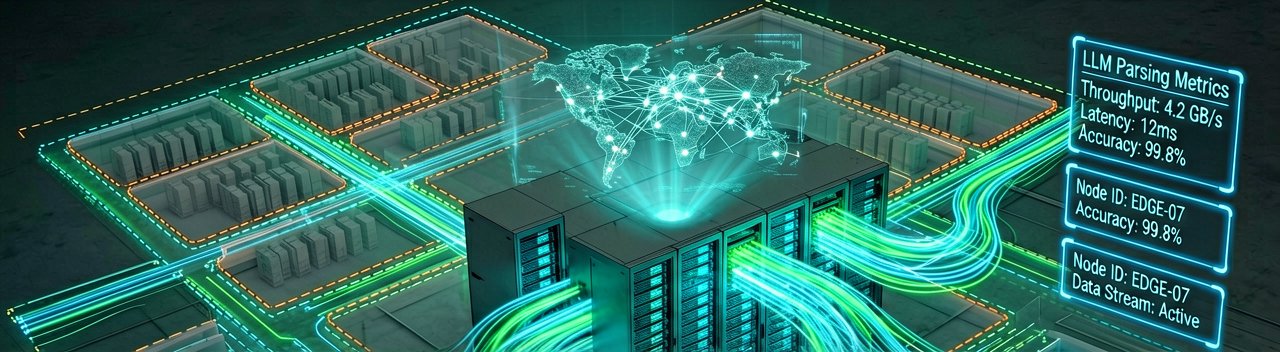
Industry analysts point out that this technological pivot carries long-term labor implications that extend far beyond initial productivity gains. While the reduction in training friction allows companies to onboard temporary or seasonal staff more rapidly, it simultaneously increases reliance on algorithmic decision-making. As these autonomous fleets become more deeply integrated into daily operations, the metrics for evaluating floor worker efficiency will inevitably evolve, shifting from manual sorting speeds to the optimization and oversight of the robotic assets assigned to their specific sector.
Reading Between the Lines: The Edge-Case Reality of Voice-Driven Fulfillment
The corporate narrative surrounding conversational warehouse robotics frequently glosses over the chaotic, high-decibel reality of industrial environments. Marketing materials depict seamless, natural-language exchanges between floor workers and autonomous machines, yet the typical fulfillment center operates under a persistent barrage of conveyor hums, backup beepers, and mechanical sorting clatter. Translating acoustic data or parsing low-latency text strings on ruggedized floor tablets amid this sensory noise introduces a significant margin for error. If an LLM-driven system misinterprets a critical spatial modifier or misallocates an asset ID due to ambient interference, the resulting gridlock could rapidly negate the efficiency gains promised by removing traditional software interfaces.
Furthermore, a distinct contradiction lies at the heart of this deployment strategy: the juxtaposition of hyper-rigid safety protocols against the unpredictable nature of generative AI. Industrial automation historically thrives on determinism, where every robotic movement is predictable, verifiable, and legally compliant. Introducing agentic AI that autonomously interprets intent and invents its own paths introduces an element of stochastic variability that safety regulators and insurance underwriters are ill-equipped to evaluate. While a conversational interface simplifies the initial command, the backend logic becomes a black box, making it exceedingly difficult to audit the root cause when a multi-hundred-kilogram unit inevitably compromises a safety boundary or misroutes a high-priority payload.
The economic justification for these massive infrastructure overhauls also warrants a degree of skepticism. Upgrading fulfillment centers with localized edge computing, high-density wireless arrays, and conversational robotic fleets demands capital expenditures that only an elite tier of global enterprises can sustain. For the rest of the logistics sector, this creates a deepening technological chasm rather than a democratized baseline for industry-wide automation. The long-term risk is not necessarily the immediate displacement of human workers, but the locking of smaller logistics providers into a permanent competitive disadvantage as the industry standard shifts toward capital-intensive, AI-orchestrated environments.
"We have successfully taught million-dollar industrial robots to understand plain English, meaning we can now politely ask them why the third-quarter inventory is trapped behind an autonomous forklift that decided to interpret a routine routing command as a philosophical suggestion."
Artūras Malašauskas is an AI Systems Integrator with 20+ years of production-grade web engineering experience. He has designed, shipped, and scaled enterprise Python/PHP systems for logistics, SaaS, and public-sector clients. For the past year, he has focused exclusively on AI integrations: deploying open-source LLMs, building generative media pipelines (image, audio, video), and engineering multi-agent workflows for real production environments. His standard: reproducibility, security, cost-efficient inference—no vaporware. He documents and evaluates emerging AI tooling, separating verified capabilities from marketing noise. Technical editor at: muza-ai.eu, ai-verslas.lt, ai-naujinos.lt Connect on LinkedIn
Comments