Gravitee Rolls Out Gamma Platform as UK Enterprise AI Agent Census Blows Past 713,000
The United Kingdom's corporate landscape is officially swarming with digital workers. In a market update published on June 4, 2026, API and identity governance pioneer Gravitee announced the launch of Gamma, a specialized agent management platform tailored to police autonomous systems. The product drop lands alongside eye-opening research indicating that British enterprises have collectively deployed 713,130 active AI agents—a massive spike that more than doubles the 250,000 agents recorded in January.
To put that number into perspective, Gravitee notes that this digital workforce now outnumbers the combined real-world headcount of Britain's GPs, police officers, and solicitors. The explosive data points to a decisive shift away from siloed, passive chatbots toward autonomous software capable of executing complex multi-step workflows, accessing sensitive software stacks, and speaking directly to other AI systems without human oversight.
Fencing the Frontier: What Gamma Brings to the Table
As corporate IT environments grapple with the rapid, unmonitored spread of shadow AI, managing these non-human identities has become a primary bottleneck for security teams. Gravitee's newly unveiled architecture tackles this by combining an enterprise AI gateway, a centralized catalog for Model Context Protocol assets, and an authorization layer to establish rigid boundaries for what an agent can and cannot touch. According to a market report by IT Brief UK, the system acts as a zero-trust policy filter monitoring every Large Language Model call and agent-to-agent transaction.
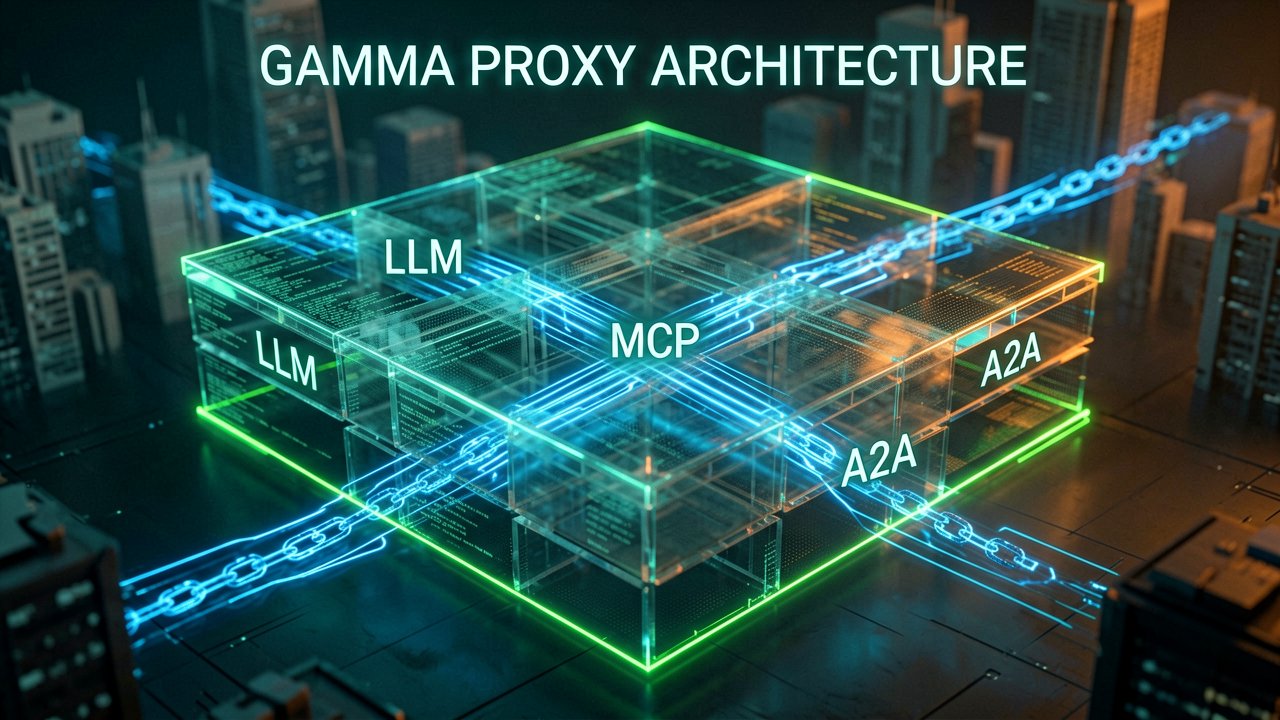
The underlying infrastructure utilizes three specialized proxy mechanics—LLM Proxy, MCP Proxy, and A2A Proxy—to bring cryptographic workload identities to automated workflows. An official technical overview by Gravitee details how the platform integrates native SPIFFE/SPIRE authentication to ensure every active bot interacting with enterprise systems is tracked, authorized, and logged in full audit trails. Early industry adopters, including transportation operator RATP Group and customer data hub Tealium, are already utilizing the framework to centralize access, track token expenditures, and block unregulated data exposure.

Market Saturation and the Risk of System Chaos
The sheer velocity of adoption revealed in Gravitee's polling—which surveyed 750 CTOs and engineering VPs at major enterprises—underscores severe anxiety regarding market saturation and regulatory compliance. When hundreds of thousands of autonomous agents interact simultaneously, the potential for unstructured feedback loops and systemic data leaks climbs exponentially. Without unified control planes like Gamma, organizations run the risk of escalating operational costs and triggering massive infrastructure overloads from rogue, chatty algorithms.
The Hidden Architecture of Non-Human Identity
Behind the infrastructure bottleneck: While corporate boardrooms celebrate the efficiency gains of a 713,000-strong digital workforce, security operations centers are quietly panicking over an entirely new vectors of risk. The traditional corporate security perimeter was built to authenticate humans sitting at keyboards using passwords and multi-factor tokens. AI agents, by contrast, operate at machine speed, making thousands of automated API requests per minute. When an autonomous agent spins up its own sub-agents to complete a task, it creates a chain of non-human identities that existing identity and access management tools simply cannot track or validate.
This visibility vacuum is precisely where systemic vulnerabilities emerge. If an agent tasked with financial forecasting pulls data from an unprotected internal database, it might accidentally expose sensitive payroll information to a third-party Large Language Model. Security engineers are realizing that treating an AI agent like a standard software application is a recipe for disaster. Because these systems possess agency—the ability to interpret data and make decisions on the fly—they require dynamic, context-aware guardrails rather than static firewall rules.
The engineering challenge shifts from merely connecting APIs to strictly governing the Model Context Protocol assets that dictate what an agent can see. By forcing all agent-to-agent communication through a zero-trust proxy layer, early adopters are attempting to map out the exact lineage of every automated decision. Knowing which prompt triggered which API call, and which cryptographic identity authorized the transaction, is becoming the baseline requirement for enterprise compliance.

Industry veterans point out that this explosion of digital entities mirrors the early days of microservices and containerization, where rapid adoption far outpaced governance. The difference today is the sheer autonomy of the workloads involved. As British enterprises race to out-automate each other, the line between a highly productive digital workforce and unmanaged software chaos hinges entirely on the maturity of these specialized control planes.
The Mirage of the Autonomous Workforce
Reading between the lines: The metrics surrounding the UK’s sudden AI agent population boom demand a heavy dose of realism. While a figure north of 713,000 agents sounds like a paradigm-shifting revolution, it likely conflates highly sophisticated, truly autonomous workflows with gloriously rebranded macro scripts. There is an ongoing marketing scramble among enterprise software vendors to re-label every basic automated pipeline, IFTTT recipe, and scheduled background task as an "AI agent" to capture premium enterprise budgets. If a significant percentage of these digital workers are merely glorified form-fillers, the proclaimed productivity miracle may be vastly overstated.
Even if we accept these deployment numbers at face value, they expose a glaring paradox in corporate efficiency strategies. Enterprises are aggressively deploying autonomous bots to slash human labor costs, yet they are simultaneously forced to spin up complex, expensive infrastructure like Gamma just to prevent those bots from hallucinating or leaking proprietary data. The cost savings achieved by replacing human administrative staff are quietly being funneled back into API token expenses, computing overhead, and specialized security software. In essence, organizations are building a complex digital bureaucracy that requires its own automated police force to function safely.
Furthermore, the regulatory landscape remains dangerously out of sync with this operational reality. While compliance frameworks like the EU AI Act and domestic UK guidelines heavily scrutinize front-facing foundational models, they offer very little concrete guidance on the chaotic choreography of agent-to-agent interactions. If an unmonitored agent purchases the wrong corporate asset or misinterprets a compliance clause during a multi-hop automated transaction, assigning legal liability remains an unresolved nightmare. This regulatory vacuum suggests that the current rush to deploy agents is less of a calculated strategy and more of a speculative gold rush, where the fear of falling behind outweighs the fear of systemic failure.
"We have successfully automated the office to the point where software bots are now holding meetings with other software bots to discuss problems caused by software bots. The corporate ladder of the future isn't a climb to the executive suite; it's just a taller stack of middleware trying to keep the algorithms from blowing the budget before the humans wake up."
Artūras Malašauskas is an AI Systems Integrator with 20+ years of production-grade web engineering experience. He has designed, shipped, and scaled enterprise Python/PHP systems for logistics, SaaS, and public-sector clients. For the past year, he has focused exclusively on AI integrations: deploying open-source LLMs, building generative media pipelines (image, audio, video), and engineering multi-agent workflows for real production environments. His standard: reproducibility, security, cost-efficient inference—no vaporware. He documents and evaluates emerging AI tooling, separating verified capabilities from marketing noise. Technical editor at: muza-ai.eu, ai-verslas.lt, ai-naujinos.lt Connect on LinkedIn
Comments