Gravitee's Gamma Launch Signals Strategic Shift in UK's Expanding AI Agent Market
The enterprise artificial intelligence landscape in the United Kingdom has passed a critical inflection point, transitioning from early-stage chatbot experimentation to the mass orchestration of autonomous systems. According to recent research commissioned by Gravitee and conducted by Opinion Matters, British businesses have deployed a staggering 713,130 AI agents across their corporate infrastructures. This milestone represents a massive surge, more than doubling the 250,000 agents recorded in January, and positions the digital workforce as a dominant operational variable that now outnumbers the country's combined headcount of general practitioners, police officers, and solicitors.
To address the architectural friction generated by this unprecedented scale, Gravitee launched its next-generation platform architecture, Gamma. The platform introduces a unified control plane designed to deliver zero-trust governance over enterprise agent ecosystems. As autonomous agents increasingly execute workflows, access critical databases, and interact via complex agent-to-agent protocols, enterprise technology leaders face severe challenges regarding token expenditures, corporate compliance, and data exposure. The launch of Gamma marks a major market maturation, steering organizations away from isolated AI deployments toward centralized infrastructure management.
As the enterprise footprint grows, the market dynamics are shifting from rapid deployment to strict systemic oversight. Technology executives are finding that conventional human-centric Identity and Access Management models are fundamentally incapable of regulating machine-speed systems. Without a specialized intermediary layer, companies face heightened exposure to unmonitored "Shadow AI" pipelines, unpredictable feedback loops, and cost overruns. This analysis explores how the introduction of protocol-aware management platforms alters the competitive framework of the UK software market amid building regulatory and structural shifts.
Centralized AI Gateways and the Rise of Protocol-Aware Governance
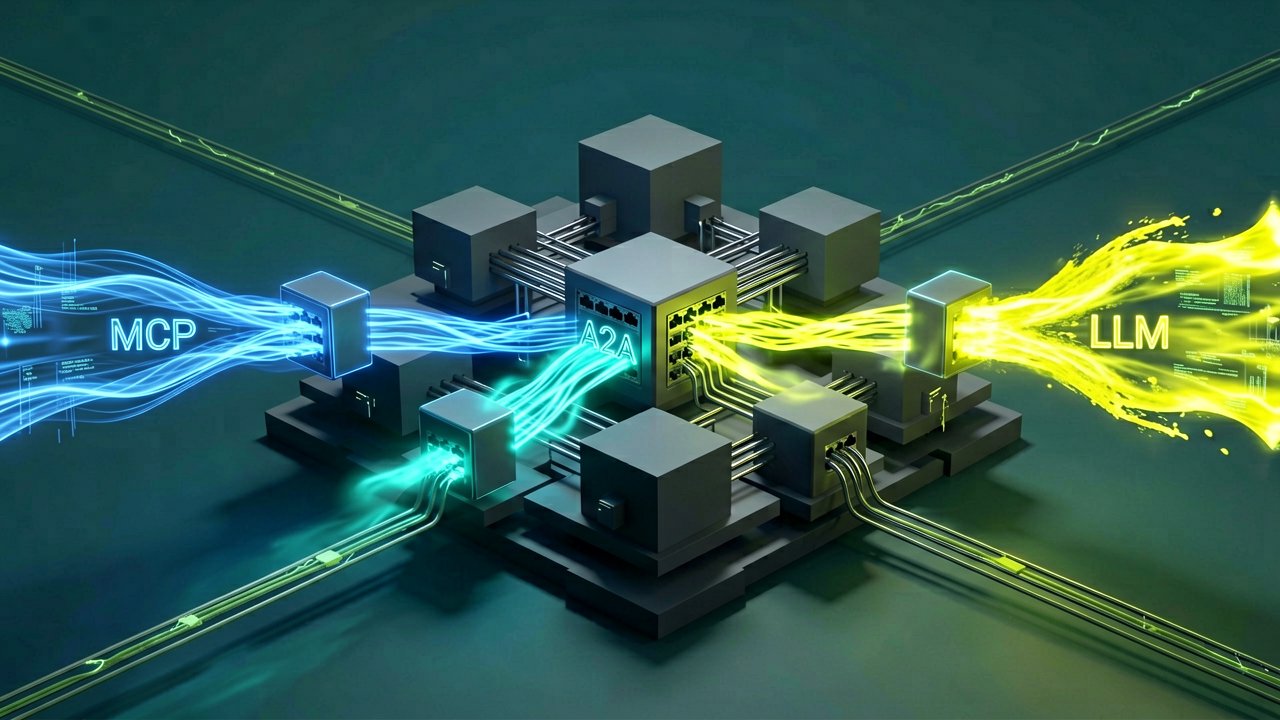
The core innovation behind the modern agent management category lies in the unification of disparate communications. Enterprise environments are moving fast to integrate the Model Context Protocol (MCP) alongside traditional Large Language Model (LLM) calls and specialized Agent-to-Agent (A2A) specifications. Platforms like Gravitee Gamma address this protocol fragmentation by embedding an active proxy substrate directly into production gateways, ensuring that every tool invocation and model interaction is inspected on the wire.
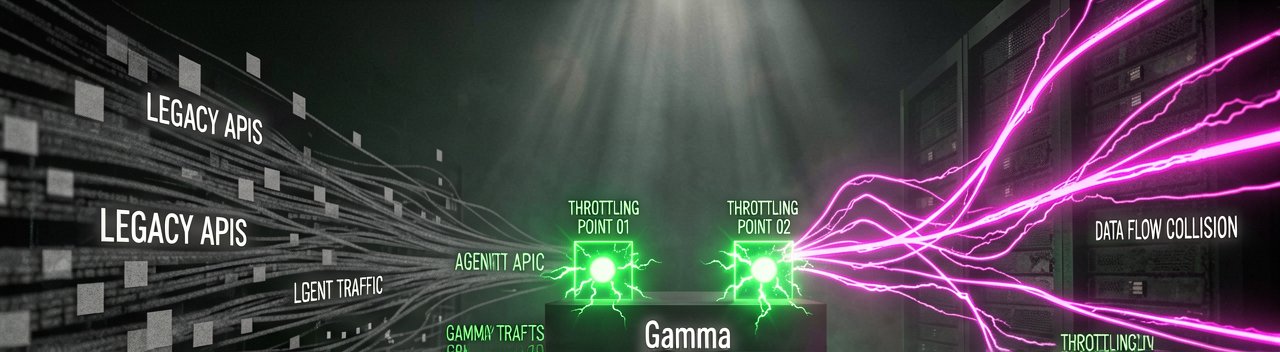
By mapping and cataloging internal capabilities into structured registries, technology teams can safely expose legacy systems and APIs as standard tools for autonomous consumption. According to deployment documentation from Gravitee, this methodology eliminates the security risks associated with custom-coded connectors and token pass-throughs. Treating machine agents as primary corporate identities with cryptographic workload verification enforces accountability across distributed software operations.
Market Saturation Dynamics and the Shift From Growth to Optimization
The doubling of deployed software agents within a single year indicates that the initial adoption phase in the UK enterprise market is reaching its peak. This rapid velocity shifts the technological battlefield from basic agent creation to structural optimization. Organizations that hurried to deploy department-specific chatbots are now experiencing administrative bottlenecks, fragmented data compliance, and severe visibility gaps.
This phase of market development favors enterprise software platforms that prioritize comprehensive audit trails, real-time observability, and granular traffic shaping over simple development frameworks. Enterprises are moving to consolidate siloed automation instances into unified corporate platforms to enforce centralized data guardrails. Organizations that fail to implement robust control mechanisms risk escalating infrastructure costs and complex operational vulnerabilities that can compromise the viability of broader digital transformation strategies.
Regulatory Implications and Compliance Challenges in Autonomous Ecosystems
The swift proliferation of hundreds of thousands of autonomous agents inside major UK enterprises is outpacing existing regulatory and compliance structures. Traditional risk frameworks assume direct human oversight, an assumption that collapses when autonomous nodes begin dynamically delegating subtasks to external machine agents. Regulatory scrutiny is intensifying around data residency, systemic transparency, and the liability mapping of automated software logic.
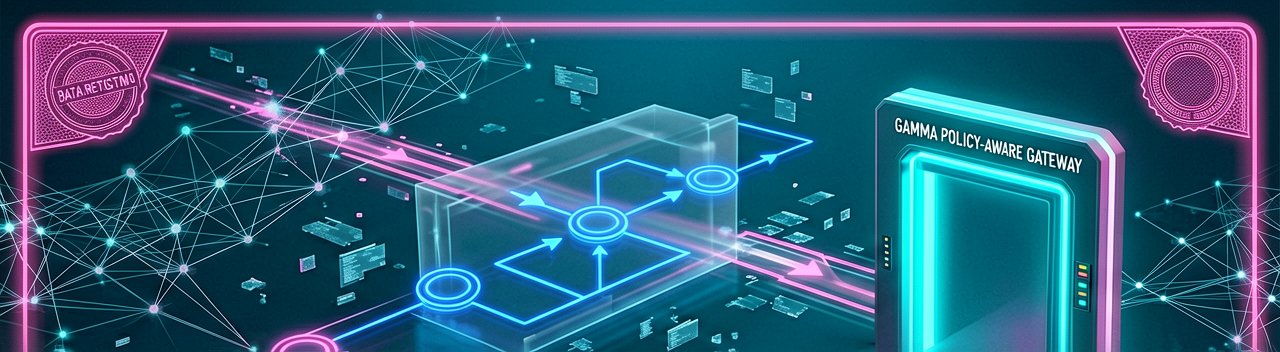
To survive strict compliance audits, companies must be capable of tracing the complete lineage of an agent's operational decisions back to an authorized human user. Industry research published by IT Brief notes that the current paradigm shift necessitates a control plane that integrates fine-grained access logic directly into the networking layer. As UK and European regulators enforce stricter compliance standards on algorithmic decision-making, specialized platform architectures will dictate which organizations can legally maintain large-scale autonomous operations.
Behind the Scenes: The Invisible Friction of the Digital Workforce
While industry headlines celebrate the explosive milestone of nearly three-quarters of a million AI agents operating within British commerce, engineering teams on the ground are grappling with an architectural crisis of telemetry and performance degradation. The initial rush to deploy autonomous nodes relied heavily on standard API integrations designed for human-driven, synchronous web applications. When hundreds of autonomous agents begin querying these legacy backends simultaneously, they generate non-linear traffic spikes and repetitive feedback loops that degrade core database infrastructure. This structural strain is forcing corporate technology officers to re-evaluate their entire compute budgets, as uncontrolled model calls rapidly inflate cloud bills without a linear increase in operational efficiency.
From the perspective of data protection officers, the current explosion of the digital workforce introduces an unprecedented level of exposure regarding data boundaries and compliance. Early enterprise deployments often granted agents broad read-and-write permissions to simplify integration across siloed platforms. However, when an autonomous system dynamically chains multiple external sub-agents to complete an internal workflow, sensitive corporate data can inadvertently flow into public processing pipelines. This hidden threat has turned the conversation away from model capabilities and toward strict perimeter containment, requiring a shift where agents are treated as volatile network workloads that must be monitored with the same security posture applied to untrusted external vendors.
Historically, enterprise software management evolved from managing physical servers to managing microservices, and each transition required a fundamental redesign of the underlying network proxy. The current pivot toward platforms like Gravitee's Gamma mirrors the mid-2010s adoption of service meshes, which were built to handle the complex communication demands of distributed cloud architecture. Instead of rewriting security policies inside every individual LLM wrapper or autonomous script, engineering teams are adopting an intermediary gateway layer that intercepts, inspects, and throttles machine communication on the fly. This historical transition demonstrates that long-term enterprise sustainability depends entirely on robust infrastructure rather than the fleeting intelligence of any single underlying model.
Looking ahead, the competitive battleground in the UK technology sector will be defined by how effectively organizations can transition from passive monitoring to active, policy-driven mediation. Companies that continue to run uncoordinated agent networks face accumulating structural debt, high operational risks, and inevitable compliance friction with modern data regulations. The emergence of specialized agent management substrates marks the end of the unmanaged automation era, drawing a clear line between organizations running chaotic internal experiments and those capable of scaling audited, secure digital workforces across global markets.
Reading Between the Lines: The Illusion of Autonomous Efficiency
The prevailing narrative surrounding the UK's massive surge in AI agent deployments relies on a flawed metric: that sheer volume equates to corporate productivity. Celebrating the existence of over 700,000 digital workers obscures a messy corporate reality where many of these agents exist as redundant, poorly optimized scripts running in institutional silos. In the rush to claim AI leadership, many enterprises have merely automated bad processes faster, creating an inflationary spiral of API calls that enriches cloud providers while yielding negligible gains in actual business outcomes. The assumption that more agents signify a more advanced economy collapses under close inspection of the systemic waste generated by uncoordinated machine loops.
Furthermore, a deep contradiction sits at the heart of the current governance rush. Platforms designed to manage this synthetic workforce are marketed as tools for risk reduction, yet their very deployment introduces a highly centralized point of failure. By routing all autonomous traffic, credential management, and protocol translations through a single gateway substrate, enterprises are inadvertently creating an incredibly lucrative target for adversarial exploitation. If an enterprise gateway layer is compromised, an attacker gains immediate, orchestrated control over the entire internal infrastructure, turning a tool meant for zero-trust compliance into an open back door for automated privilege escalation.
This architectural paradox highlights a broader skepticism regarding the software industry's self-regulation. Technology vendors are simultaneously fueling the anxieties of "Shadow AI" while offering the expensive antidote in the form of next-generation control planes. This cyclical market dynamic ensures that as long as autonomous systems remain inherently unpredictable, the market for platforms to police them will remain highly profitable. True operational maturity will not be achieved by piling more management software onto chaotic agent deployments, but by drastically scaling back autonomous access until the underlying models achieve deterministic reliability.
Ultimately, the projection that digital agents will seamlessly outnumber and outperform human professionals overlooks the stubborn reality of edge-case failures. When a machine workforce encounters an unprecedented systemic error, the resulting cascading failures require immediate, highly skilled human intervention, effectively shifting corporate expenditures from routine labor to expensive diagnostic engineering. The UK market is rapidly learning that managing a digital workforce does not eliminate overhead; it merely trades predictable salary lines for volatile infrastructure costs and specialized legal liabilities.
"We have successfully automated the office to the point where seven hundred thousand digital agents are now working around the clock, mostly to correct the compounding errors made by the other six hundred thousand."
Artūras Malašauskas is an AI Systems Integrator with 20+ years of production-grade web engineering experience. He has designed, shipped, and scaled enterprise Python/PHP systems for logistics, SaaS, and public-sector clients. For the past year, he has focused exclusively on AI integrations: deploying open-source LLMs, building generative media pipelines (image, audio, video), and engineering multi-agent workflows for real production environments. His standard: reproducibility, security, cost-efficient inference—no vaporware. He documents and evaluates emerging AI tooling, separating verified capabilities from marketing noise. Technical editor at: muza-ai.eu, ai-verslas.lt, ai-naujinos.lt Connect on LinkedIn
Comments