Meta Leaps Into the Enterprise AI Arena: A New Battleground Beyond Advertising
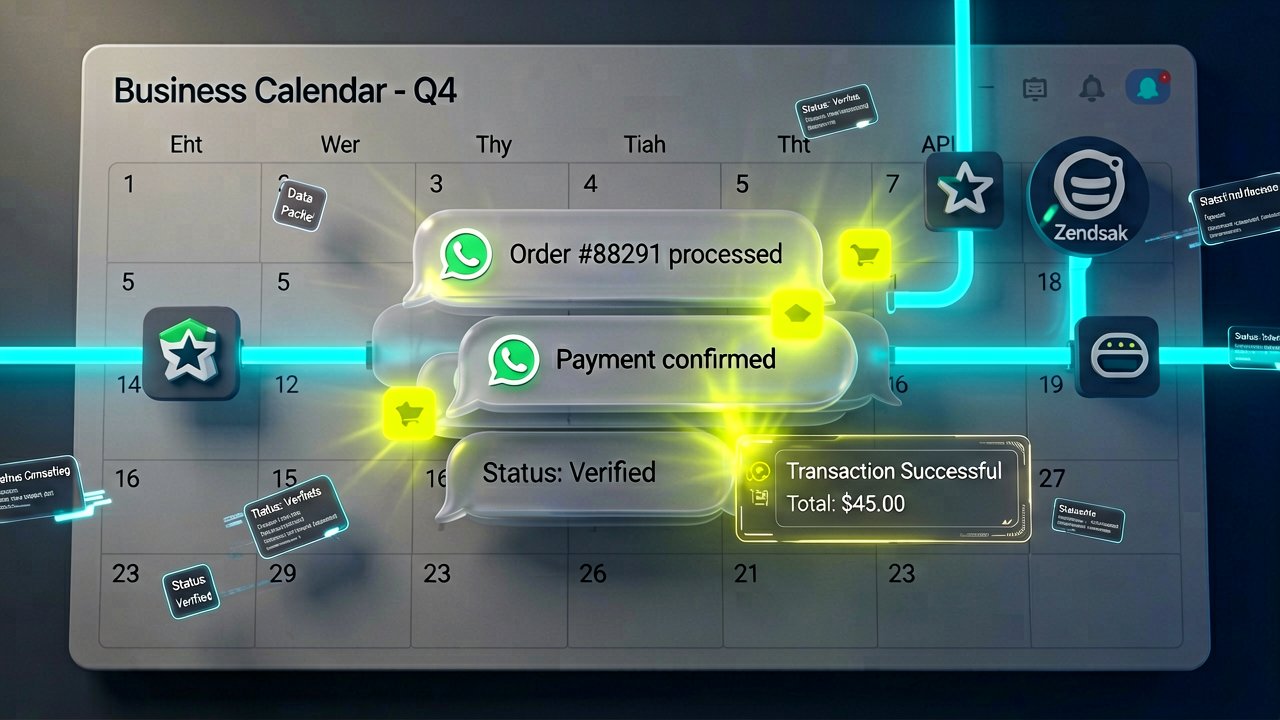
Meta Platforms formally threw its weight into the corporate software ring on Wednesday by unveiling its new, enterprise-focused Meta Business Agent at the company's WhatsApp-focused Conversations conference in London. The tech giant isn't just tweaking its consumer chatbots anymore; it's actively trying to rewrite the playbook for daily enterprise operations, sales, and backend automation. By expanding far beyond the targeted advertising models that historically generated 98% of its revenue, the social media juggernaut is turning its massive messaging channels into transactional digital storefronts.
The strategic shift pits Meta head-to-head against entrenched AI heavyweights like OpenAI, Google, and Anthropic. While those competitors have spent the last few years dominating corporate workflows through desktop productivity suites, custom API infrastructure, and raw foundational models, Meta is playing a entirely different hand. It's utilizing its immense, pre-installed global footprint across WhatsApp, Messenger, and Instagram to offer deep, out-of-the-box transactional capabilities that legacy text-generating bots simply can't match without heavy customization.
Initial rollouts are building upon the basic customer-service frameworks already utilized by more than one million companies worldwide. However, the engineering underlying this latest deployment marks a definitive shift from passive, rule-based answering machines to autonomous, agentic workflows. Instead of merely reciting a static FAQ, these tools are built to finalize sales, coordinate physical calendars, process immediate payments, and pass complex tickets smoothly back to human employees when a situation gets too messy.
The Architecture of Distribution Versus Raw Compute
From a purely technical perspective, the core differentiator between Meta and its enterprise rivals comes down to the battleground of distribution. Companies like OpenAI and Google rely heavily on corporate dashboards or custom-built internal applications. Meta, conversely, is treating conversational threads as the primary application runtime layer. Because over one billion active business threads happen daily on Meta’s applications, the underlying AI doesn't need to fight for corporate user adoption—it's already sitting directly inside the communication apps that consumers open out of habit every day, as detailed by TechCrunch.
Integration Ecosystems and Custom Deployments
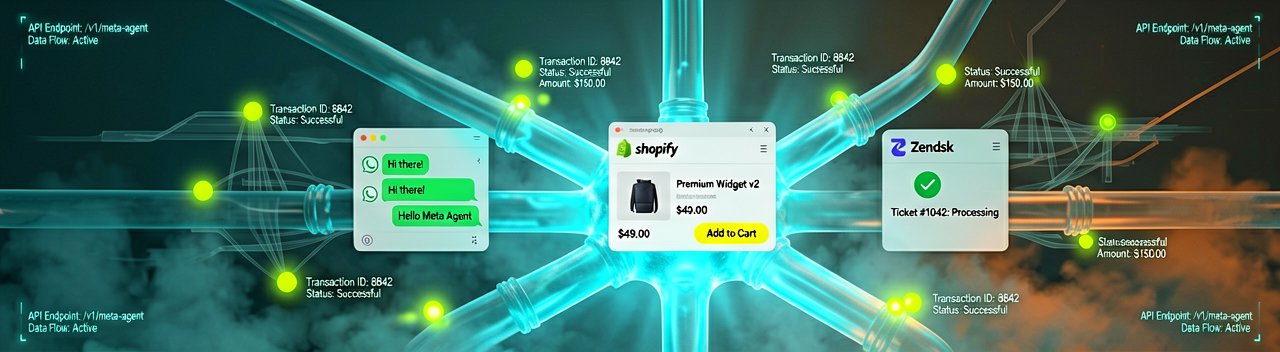
To truly crack the enterprise ecosystem, Meta is also looking beyond its own walled garden with the launch of its dedicated Business Agent Platform. The initiative hooks directly into mainstream third-party retail and service architectures, allowing custom-built agents to pull and push data across external pipelines like Shopify, Zendesk, and Shopee. According to an interview with Reuters , Meta is backing this architectural push by deploying specialized Enterprise Solutions engineering squads. These forward-deployed teams will embed directly with major corporate clients to write customized code, establish organizational guardrails, and implement advanced telemetry metrics, mirroring the high-touch enterprise deployment tactics used by top-tier AI labs.
Editorial Pros & Cons
| Platform Architecture | Operational Advantages (Pros) | Operational Disadvantages (Cons) |
|---|---|---|
| Meta Business Agent | Immediate access to pre-installed messaging audiences; lower self-hosting overhead; open-weights flexibility. | Heavy dependency on Meta social ecosystem; limited advanced multi-step scientific reasoning. |
| OpenAI Enterprise | Industry-leading creative reasoning; deep complex workflow orchestration; robust developer ecosystem. | High token-based operational costs; zero host network sovereignty; vendor lock-in risks. |
| Google Cloud Vertex AI | Massive native context window; seamless enterprise suite integration; unmatched multimodal data handling. | Rigid ecosystem integration constraints; steep learning curve for non-Google Cloud infrastructure. |
Ecosystem Realities and Operational Friction
Reading Between the Lines: The enterprise AI arms race is rapidly shifting from a battle over theoretical benchmark supremacy to a grueling war of operational distribution. Meta's calculated gambit is to intercept the corporate dollar exactly where consumer interactions already live, bypassing the hurdle of getting users to download a new app or visit a specialized web portal. By turning conversational threads into highly transactional engine rooms, they are betting that convenience and friction-free user acquisition will matter far more to everyday business operations than raw, academic reasoning capabilities.
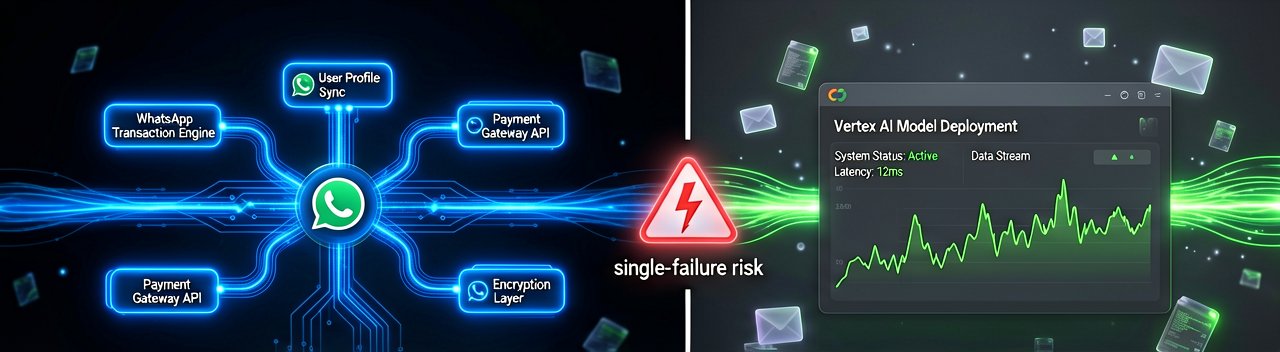
This strategy forces a stark operational compromise that corporate chief information officers must carefully evaluate before overhauling their IT stacks. Choosing Meta means locking your consumer-facing operations into a single social media ecosystem, tying vital business communication lines to the shifting sandbox policies of a platform aggregator. For developers accustomed to the absolute flexibility of building completely standalone, brand-owned software applications, this reliance on external chat networks presents a notable point of single-failure risk.
Meanwhile, the alternative paths offered by OpenAI and Google demand their own expensive sacrifices in corporate autonomy. Opting for these legacy cloud-first models means sending immense streams of proprietary corporate intelligence straight into remote data centers, generating recurring monthly API bills that scale sharply alongside customer adoption. Enterprise leaders are forced to choose between building on top of Meta's massive distribution rails or paying a continuous compute tax to the dominant clouds for the privilege of running deep, complex intelligence architectures.
"We are officially entering the era where conversational artificial intelligence is judged less by its ability to write passable poetry and more by its capacity to update an inventory database without breaking the entire corporate backend. The tech industry has spent years chasing an artificial general intelligence deity, only to discover that the most profitable market application is a highly reliable digital clerk that never takes a sick day."
Artūras Malašauskas is an AI Systems Integrator with 20+ years of production-grade web engineering experience. He has designed, shipped, and scaled enterprise Python/PHP systems for logistics, SaaS, and public-sector clients. For the past year, he has focused exclusively on AI integrations: deploying open-source LLMs, building generative media pipelines (image, audio, video), and engineering multi-agent workflows for real production environments. His standard: reproducibility, security, cost-efficient inference—no vaporware. He documents and evaluates emerging AI tooling, separating verified capabilities from marketing noise. Technical editor at: muza-ai.eu, ai-verslas.lt, ai-naujinos.lt Connect on LinkedIn
Comments