Meta's AI Business Agent Redefines Enterprise Automation Landscape

Meta Platforms has officially shifted its corporate gravity toward the highly competitive enterprise applications market with the global launch of its artificial intelligence-powered Meta Business Agent. Unveiled at the company's Conversations conference in London, the system moves beyond traditional rule-based chatbots to introduce autonomous "agentic" capabilities across WhatsApp, Instagram, and Messenger. By enabling these virtual employees to execute multi-step operations on behalf of brands, Meta is leveraging its massive social footprint to turn messaging threads into comprehensive storefronts, as detailed in a report by Reuters .
The strategic deployment directly challenges established enterprise tech leaders by consolidating marketing, discovery, support, and sales into a single, cohesive communications layer. Rather than operating as an isolated text generator, the Business Agent connects deeply with a company's product catalogs, historical social posts, and internal FAQs to learn its distinct brand tone. This integration allows the agent to conduct real-time interactions—such as qualifying incoming leads, making tailored product recommendations, and closing transactions entirely within the chat interface—minimizing friction before the point of checkout, according to the WhatsApp Business Blog.
This monetization shift marks a significant evolution for a company that has historically relied almost exclusively on consumer-facing advertising revenue. While earlier iterations of basic messaging bots were utilized by over one million businesses, this global rollout targets enterprises of all sizes with a decentralized architectural framework. Initially launched as a free service, Meta plans to transition the tool into a premium component of its paid business subscription models, explicitly setting up a direct market confrontation with specialized AI and software giants, as highlighted by The Wall Street Journal.
The Architecture of Agentic Commerce
Unlike previous automation tools that required manual scripting for basic keyword routing, the Meta Business Agent operates with advanced contextual reasoning. It acts as an interactive sales concierge capable of answering hyper-specific product queries, handling immediate customer objections, and orchestrating complex appointment bookings. The software is built to operate autonomously 24/7, adjusting dynamically to the customer's local language while maintaining strict enterprise guardrails. For business owners, the system generates automated morning briefings that summarize missed conversations, extract thread insights, and surface actionable business leads overnight.
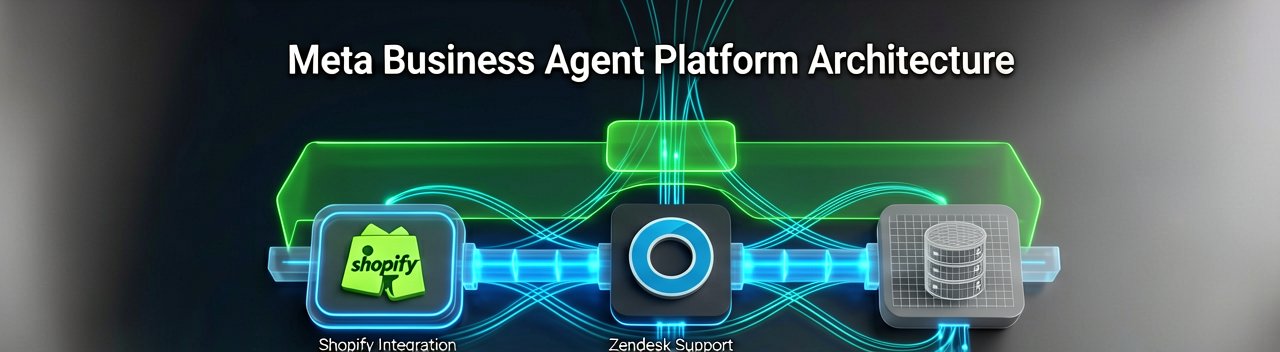
Infrastructure and Ecosystem Consolidation
To capture larger corporate clients who require deep data synchronization, the technology giant introduced the Meta Business Agent Platform. This backend infrastructure allows enterprises to build and deploy highly customized AI agents that bridge the gap between social communication and core backend operations. The system features native integrations with widespread third-party commerce and customer service platforms, including Shopify, Zendesk, and Shopee. By linking directly to these external databases, the agent can pull real-time inventory levels, dynamic pricing structures, and active shipping logs, ensuring that autonomous responses remain precise and contextually accurate.
Disrupting the Enterprise AI Value Chain
Meta's aggressive push into enterprise automation triggers a major realignment across the broader tech landscape, directly competing with the corporate application ecosystems of OpenAI, Anthropic, and Alphabet's Google. The structural advantage for Meta lies within its unrivaled distribution network, driven by more than one billion active business messaging threads handled daily across its application suite. By offering a comprehensive, turn-key automation pipeline directly inside the communication apps that global consumers already use, Meta eliminates the need for businesses to deploy fragmented, expensive third-party customer service software, fundamentally rewriting the economics of digital business workflows.
The Hidden Engine: Architectural Dominance Over App Disruption
What Most Reports Miss: The rollout of the Meta Business Agent is not a simple feature enhancement; it is a calculated architectural maneuver to bypass traditional mobile operating systems entirely. For nearly a decade, the technology giant has navigated the monetization bottlenecks imposed by app store duopolies and restrictive privacy frameworks. By embedding fully autonomous, transactional agentic capabilities directly into WhatsApp, Instagram, and Messenger, the organization is effectively building an alternative operating ecosystem. This system turns message threads into lightweight, dynamic applications that require no downloads, loading screens, or external authentication steps for the consumer.
From an enterprise engineering standpoint, the true technical milestone lies in how the agent manages state and memory across highly fragmented consumer touchpoints. Traditional customer relationship management platforms often struggle with data fragmentation when a buyer moves from an Instagram advertisement to a WhatsApp text thread. Meta's underlying infrastructure unifies these touchpoints, allowing the digital agent to retain precise context, past purchase intents, and individual communication preferences. This deep data integration ensures that enterprise interactions remain continuous and highly personalized, completely independent of the device or operating system the consumer is using.
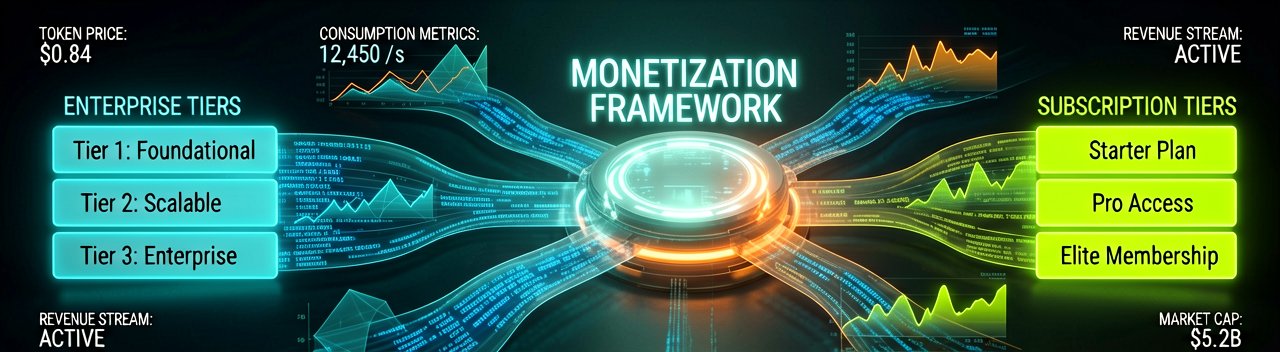
The operational shift is already causing a strategic recalibration among Chief Information Officers who have spent years building fragmented enterprise tech stacks. Companies are finding that instead of maintaining separate subscriptions for marketing automation, live chat widgets, and payment gateways, they can consolidate these workflows within a single, conversation-driven interface. This consolidation drastically reduces the total cost of ownership for digital storefronts, which explains the aggressive enterprise adoption rates across emerging markets where mobile messaging serves as the primary internet gateway.
However, this consolidation of data and transaction management raises significant concerns regarding platform lock-in and corporate dependency. Industry analysts point out that as companies offload their front-line revenue generation and customer data pipelines to Meta's infrastructure, transitioning away from the platform becomes exceedingly difficult. While the efficiency gains of deploying autonomous agents are immediate, enterprises are simultaneously making themselves vulnerable to future changes in API pricing, algorithm adjustments, and platform terms of service that could instantly alter their operational economics.
Ultimately, this rollout represents a profound philosophical shift in how modern businesses interact with their global audience. The traditional paradigm of driving traffic to a corporate website or a standalone mobile application is giving way to a decentralized model of commerce that meets consumers exactly where they spend their digital time. As these agents become increasingly indistinguishable from human sales representatives, the enterprise tech sector is forced to adapt to a reality where messaging networks are no longer just communication utilities, but the definitive operating systems of the modern digital economy.
The Friction of Autonomy: Skepticism in the Agentic Economy
Reading Between the Lines: The corporate enthusiasm surrounding the Meta Business Agent deliberately obscures a fundamental tension between absolute autonomy and corporate risk management. Silicon Valley frequently sells the vision of a completely frictionless, self-running storefront, yet enterprise reality rarely tolerates the unpredictable nature of large language models. While a hallucinated response from a consumer-facing chatbot results in a minor public relations headache, an autonomous agent altering pricing tiers, misinterpreting returns policies, or offering unauthorized discounts introduces immediate, legally binding financial liabilities that chief financial officers are entirely unprepared to accept.
Furthermore, Meta's push into enterprise automation presents a distinct structural contradiction with its core identity as an advertising machine. For years, the platform's monetization strategy has thrived on engagement loops—keeping users scrolling through feeds to maximize ad impressions. By contrast, a genuinely efficient enterprise agent is designed to solve a consumer's problem or finalize a transaction in as few steps as possible, actively reducing time spent inside the app suite. Balancing an ad-driven model that profits from user distraction with an utility-driven agentic framework that demands immediate efficiency requires a strategic tightrope walk that could easily compromise the user experience on both fronts.
There is also the unresolved question of data sovereignty and competitive espionage within a centralized ecosystem. When an enterprise connects its proprietary product catalogs, historical sales logs, and customer service playbooks to Meta's architecture, it is effectively handing over its operational blueprint to a direct market participant. Even with strict data-sharing firewalls and enterprise-grade privacy assurances, history suggests that aggregators eventually use the aggregate behavioral insights harvested from third-party businesses to optimize their own platform algorithms, inevitably flattening the unique competitive advantages of the brands that use them.
The long-term labor implications also demand a more pragmatic assessment than the sterile promise of "workforce optimization." Rebranding displaced customer support staff as higher-level supervisors of AI agents assumes a seamless upskilling pipeline that rarely manifests in large-scale corporate restructurings. As mid-sized enterprises realize that a single digital subscription can reliably replace an entire offshore support center, the resulting economic dislocation will likely spark a renewed regulatory focus on the gig economy and digital corporate accountability, particularly in regions where customer service remains a vital economic driver.
"We are rapidly moving toward a corporate future where an enterprise's entire consumer strategy consists of one company's AI talking directly to another company's AI. In this hyper-optimized marketplace, human beings will largely serve as the organic carbon units needed to provide the credit card numbers and occasionally clean up the digital hallucinations."
Artūras Malašauskas is an AI Systems Integrator with 20+ years of production-grade web engineering experience. He has designed, shipped, and scaled enterprise Python/PHP systems for logistics, SaaS, and public-sector clients. For the past year, he has focused exclusively on AI integrations: deploying open-source LLMs, building generative media pipelines (image, audio, video), and engineering multi-agent workflows for real production environments. His standard: reproducibility, security, cost-efficient inference—no vaporware. He documents and evaluates emerging AI tooling, separating verified capabilities from marketing noise. Technical editor at: muza-ai.eu, ai-verslas.lt, ai-naujinos.lt Connect on LinkedIn
Comments