The Operating System for the Agent Economy: How agnt8x’s Multi-LLM Workforce Orchestration Is Changing Enterprise Automation
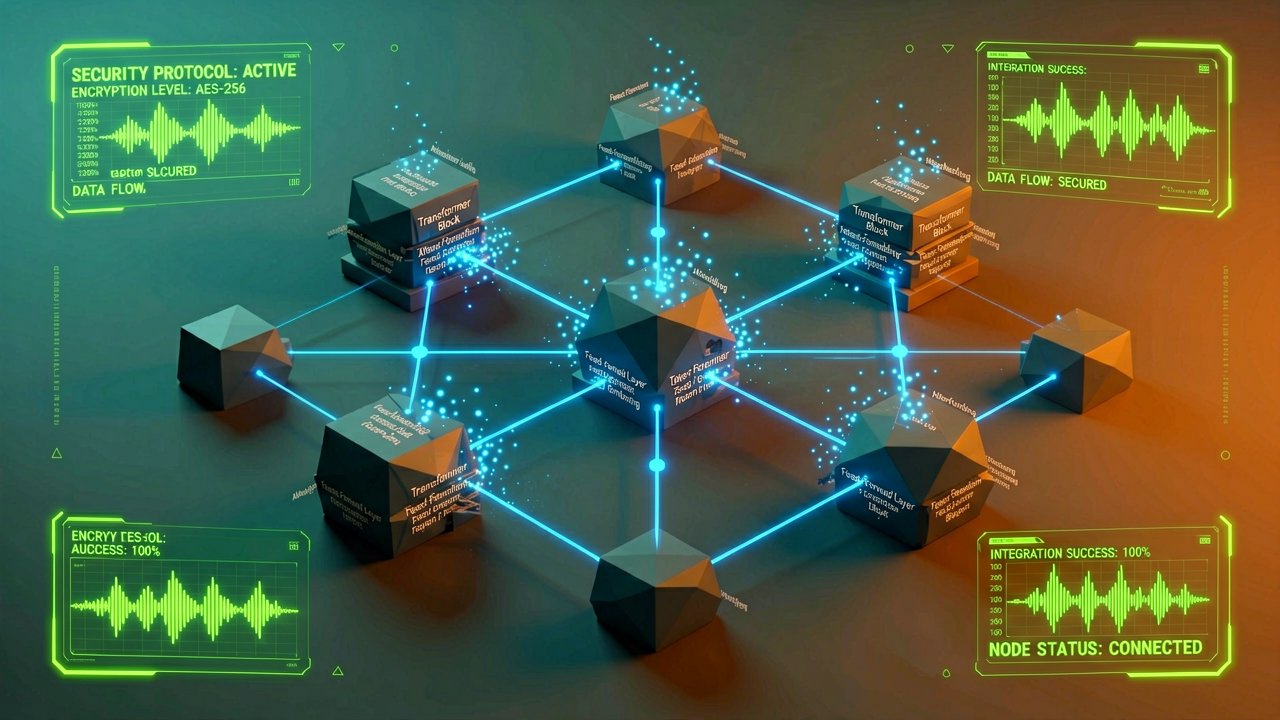
The enterprise automation market is facing an unprecedented structural shift as the initial wave of isolated AI agent deployments gives way to comprehensive workforce coordination platforms. While massive foundational model developers have aggressively launched standalone agents over the past year, corporate buyers are suffering from deep operational fragmentation across three or four conflicting LLM providers. Solving this foundational friction, Business Wire reported that EightX Labs Ltd has officially launched agnt8x, establishing the world’s first neutral, cross-provider recruitment and workforce management layer designed to operate human-style governance over digital workers.
Enterprise technology strategies are pivoting rapidly from basic generative text tools toward self-executing workflows that directly optimize business lines without heavy code intervention. According to industry tracking by DagangNews , the newly deployed agnt8x platform brings a consolidated framework utilizing unified procurement passports, unified audit trails, and single-contract governance to solve the messy proliferation of fragmented enterprise AI tools. This release directly transitions the automation conversation from experimental pilots into strict programmatic accountability, creating a cross-sector landscape where autonomous software agents can be hired, onboarded, and audited with human-resource discipline.
Solving the Cross-Provider Fragmentation Bottleneck
Corporate IT environments are increasingly unmanageable when individual business units deploy isolated agent systems from different AI labs without central oversight. The introduction of agnt8x provides a much-needed neutral integration layer that abstracts the underlying LLM infrastructure, turning separate machine learning tools into structured organizational components. By organizing the platform around specialized pillars—such as an ontological job board for matching agents to specific enterprise tasks and a private corporate catalog—the technology enables firms to safely deploy internal or third-party digital workers side by side.
From Simple Workflows to Autonomous Settlement
The strategic shift in agentic automation involves moving beyond simple digital workflows toward actual economic transaction capabilities among collaborating agents. By establishing open specifications like the EightX Agent Manifest under open-source licenses, software developers can now build portable agents that compile across every major runtime without vendor lock-in. Industry leaders indicate that as these systems prove their identity and reliability through secure protocols, the next major evolutionary phase will allow multi-vendor AI systems to securely transcat, query, and negotiate across different industries using open settlement standards.

Mitigating Corporate Risk and Architectural Accountability
Uncontrolled automation introduces severe architectural accountability risks, including hidden process debt, data security vulnerabilities, and unpredictable emergent behaviors. To combat these risks, the enterprise market is prioritizing platform verification structures that strictly classify agents by their real-world track records, automated security scans, and code escrow frameworks. Moving forward, successful enterprise automation relies heavily on granular audit trails and absolute verification, forcing vendors to treat autonomous software deployments with the same compliance, liability protections, and security boundaries as standard enterprise software applications.
Deep-Dive: Inside the Structural Reality of Agentic Workforce Governance
Behind the Corporate Veil: The rapid rollout of agnt8x highlights an uncomfortable truth regarding the current state of enterprise AI adoption: the modern corporate infrastructure was fundamentally designed for predictable human workflows, not autonomous software actors. Tech executives have spent the past eighteen months rushing to integrate generative tools, only to find that traditional role permissions, access control lists, and corporate data pipelines are ill-equipped to handle software that can independently edit documents, query customer records, and alter databases simultaneously. This sudden friction has shifted the focus of major IT departments away from pure model capabilities and toward the unglamorous mechanics of access management and operational control.
From the perspective of enterprise risk management, the core vulnerability of early agentic systems has been their unpredictable non-deterministic behavior. When an internal software tool hallucinates an answers or executes an invalid command, it introduces severe systemic errors into corporate databases that can take days of manual labor to trace and undo. This operational reality is what drove the development of the unified audit trail frameworks seen in platforms like agnt8x. By establishing a central governance engine that records every micro-transaction and decisions made by an AI agent, companies can finally enforce the same degree of accountability on digital workers that they expect from human employees.
Furthermore, the economic architecture of enterprise software procurement is undergoing a massive disruption. Historically, companies bought software through predictable multi-year licensing agreements, counting seats or data volume to forecast annual budgets. The introduction of open-source agentic manifests and multi-provider agent markets forces organizations to rethink software as an operational resource, akin to contractor labor or on-demand computing power. Procurement teams are now tasked with evaluating the cost-per-outcome of an automated worker against the traditional software licenses of legacy SaaS giants, heavily favoring open specifications that eliminate vendor lock-in.
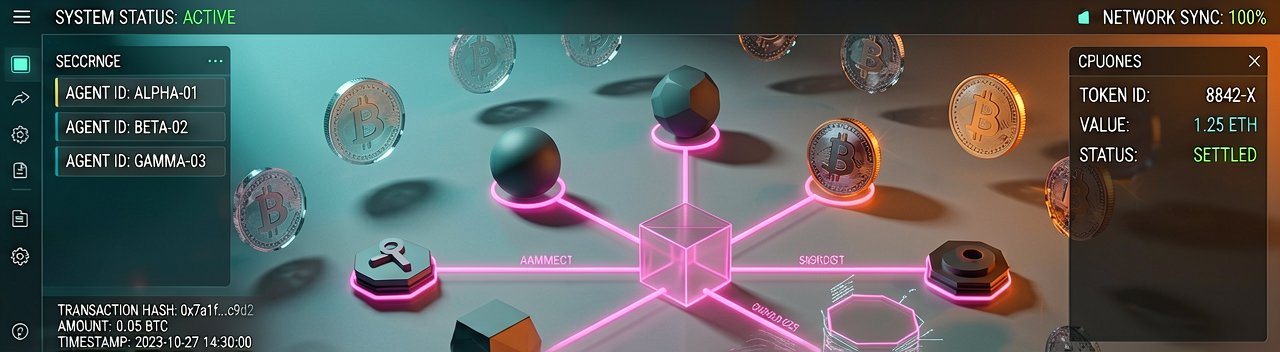
Ultimately, the long-term viability of this automated shift depends entirely on the establishment of shared communication and identity protocols between competing software frameworks. For an enterprise to function fluidly, a customer service agent built on one foundational model must seamlessly pass complex transaction parameters to an accounting agent running on an entirely different engine. Without universal standards governing digital worker identity and cryptographic verification, the market risks splitting into isolated corporate silos. The push toward open settlement and transparent job taxonomies is not merely a technical preference, but a strict economic prerequisite for scaling the next generation of business automation.
Reading Between the Lines: The Friction Between Agentic Autonomy and Corporate Reality
Reading Between the Lines: The prevailing industry narrative suggests that platforms like agnt8x will seamlessly transition enterprises into an era of frictionless, self-managing digital workforces. However, this optimistic outlook ignores a fundamental structural contradiction: corporations crave absolute predictability, while autonomous AI agents inherently thrive on variable, non-deterministic decision-making. Software procurement has spent decades mastering the art of sandboxing applications to prevent unexpected behaviors, yet the current wave of agentic deployment demands that IT leaders deliberately loosen these controls, granting software the autonomy to navigate corporate networks and modify systems on the fly. This ideological clash means that the initial implementation phase is more likely to result in bureaucratic gridlock than immediate operational velocity.
Furthermore, the concept of a decentralized, multi-vendor agent ecosystem introduces a massive liability vacuum that current legal frameworks are entirely unprepared to fill. If an autonomous agent operating under an open-source manifest executes a flawed financial transaction due to an unpredictable cascade of prompts between three different LLM backends, identifying the root cause of the failure becomes an engineering nightmare. Enterprise buyers are being told they can avoid vendor lock-in by utilizing cross-provider orchestration, but in doing so, they scatter accountability across a web of foundational model creators, middleware orchestrators, and third-party developers, leaving the enterprise itself to absorb the ultimate operational risk.
This dynamic will inevitably force a strategic retreat toward highly constrained, deterministic workflows disguised as autonomous agents. While marketing materials celebrate digital workers capable of open-ended problem solving, pragmatic chief information officers are quietly configuring these platforms with strict guardrails, hardcoded rules, and mandatory human-in-the-loop checkpoints. The grand vision of an independent digital workforce will, in the near term, look remarkably similar to traditional, rigid robotic process automation, wrapped in a more sophisticated conversational interface and a significantly higher compute bill.
"The ultimate irony of the autonomous enterprise is that after spending years trying to make software act more like human beings, we are now forced to build an incredibly complex administrative bureaucracy just to keep that software from behaving exactly like an unaccountable intern."
Artūras Malašauskas is an AI Systems Integrator with 20+ years of production-grade web engineering experience. He has designed, shipped, and scaled enterprise Python/PHP systems for logistics, SaaS, and public-sector clients. For the past year, he has focused exclusively on AI integrations: deploying open-source LLMs, building generative media pipelines (image, audio, video), and engineering multi-agent workflows for real production environments. His standard: reproducibility, security, cost-efficient inference—no vaporware. He documents and evaluates emerging AI tooling, separating verified capabilities from marketing noise. Technical editor at: muza-ai.eu, ai-verslas.lt, ai-naujinos.lt Connect on LinkedIn
Comments