NVIDIA's RTX Spark: The Arm-Based Superchip Set to Upend the Windows PC Landscape
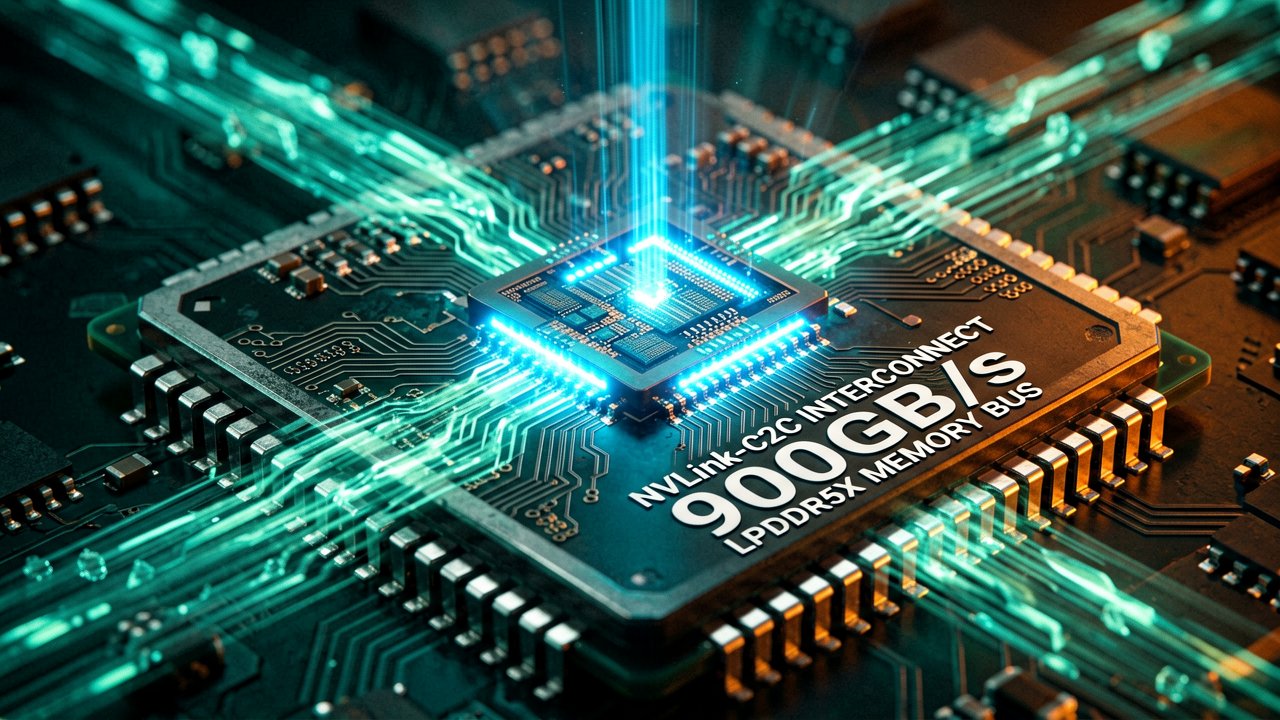
NVIDIA just dropped a bombshell at Computex that could fundamentally reshape consumer computing. The newly unveiled NVIDIA RTX Spark superchip is an Arm-based silicon powerhouse designed specifically for Windows PCs, built to break the long-standing x86 stranglehold held by Intel and AMD. By engineering a custom 20-core Grace CPU in close collaboration with MediaTek, the graphics giant isn't just making a component anymore; it's providing the entire brain for a new breed of ultra-efficient laptops and small-form-factor desktops. It's a massive, unified play for the future of local AI processing, gaming, and content creation, packaged to run cooler and last longer than traditional x86 setups.
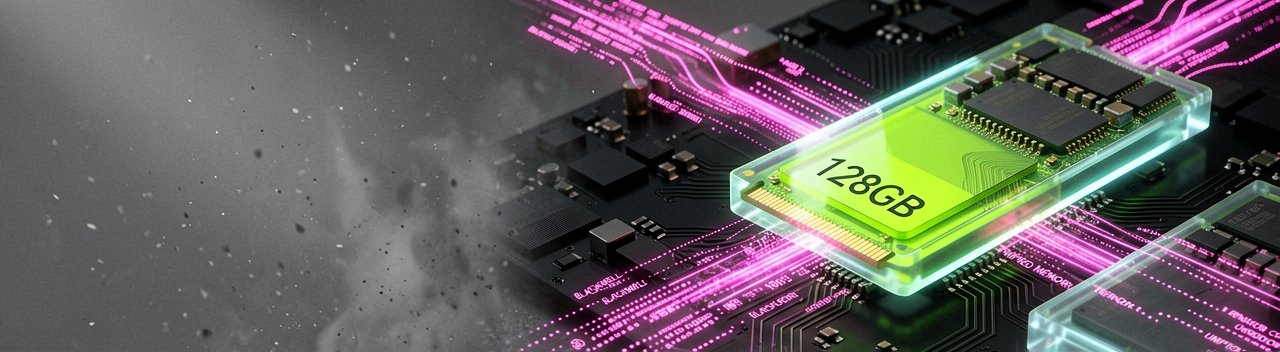
Under the hood, the architecture mimics the massive unified memory layouts that have given Apple's silicon such a distinct edge in recent years. The RTX Spark ties its 20 CPU cores directly to a heavy-duty Blackwell RTX GPU featuring 6,144 CUDA cores and fifth-generation Tensor Cores. According to details shared by Ars Technica, the components sit on a single piece of silicon connected via the ultra-fast NVLink-C2C interconnect, completely bypassing the latency bottlenecks that plague traditional PCIe lanes. This tight fusion supports up to 128GB of ultra-high-speed unified memory, delivering the massive bandwidth needed to manipulate enormous files and massive local datasets without breaking a sweat.
Unprecedented Metrics and Agentic AI Power
The performance metrics promised by this architecture shift from impressive to downright staggering. NVIDIA claims the platform cranks out a massive 1 petaflop of local AI compute, a milestone that turns the theoretical concept of an "AI PC" into an on-device reality. Hardware configurations utilizing the maximum specifications will have the muscle to run localized 120-billion-parameter large language models with up to a 1-million-token context window. Beyond text, creators can render massive 3D scenes exceeding 90GB or natively edit 12K video right on a slim notebook, liberating pro-grade workflows from the desktop tether.
Gamers aren't being left out of this silicon revolution either. The Blackwell-infused core brings full support for DirectX 12, hardware-accelerated ray tracing, and the complete DLSS suite for neural rendering. Preliminary targets suggest the top-tier chip can push modern AAA titles at 1440p resolution at well over 100 frames per second. Software translation will heavily rely on Microsoft's Prism emulator within Windows 11 to handle legacy x86 applications, while major anti-cheat engines like BattlEye and Easy Anti-Cheat are working on native Arm implementations to ensure multiplayer games run smoothly out of the gate when systems hit shelves this fall.
Behind the Scenes: Architectural Synergy and the Silicon Fabric
Behind the Scenes: Engineering a unified architecture that handles both massive parallel graphics workloads and linear CPU logic requires a total rejection of the classic PCIe bus standard. Systems engineers know that moving data across a standard PCIe Gen 5 x16 slot introduces a massive latency penalty, capping real-world bandwidth to roughly 63 GB/s per direction. NVIDIA bypasses this legacy barrier entirely by deploying an on-die NVLink-C2C (Chip-to-Chip) interconnect. This proprietary fabric elevates bi-directional bandwidth to an astonishing 900 GB/s while slashing energy consumption per transferred bit by orders of magnitude compared to traditional motherboard traces. By treating the entire chip layout as a single, coherent memory domain, the CPU and GPU can instantly read and write to the same physical memory space without expensive software copies or cache-flushing overhead.
This design shift profoundly alters memory management at the kernel level. Traditional Windows environments force developers to explicitly manage discrete VRAM allocations, utilizing APIs like DirectX 12 or Vulkan to stage assets from system RAM into the GPU’s dedicated memory pool. The RTX Spark upends this paradigm by implementing a Unified Memory Architecture (UMA) backed by LPDDR5X-8533 memory modules across a massive 512-bit bus. A systems engineer working with local large language models or extensive neural networks can allocate immense tensors directly within a unified virtual address space. The hardware-managed memory coherence ensures that the Tensor Cores can parse an input context window immediately after the Grace CPU cores finish tokenization, completely wiping out the serialization bottlenecks that cripple split x86-plus-discrete-GPU configurations.
Low-Level Optimizations and the Windows Arm Layer
Squeezing a full petaflop of AI compute from a consumer thermal envelope forces deep optimizations within the execution pipelines. The Blackwell-based graphics component introduces native support for low-precision FP4 and FP6 data formats, which are critical for running heavy, agentic local AI models without exhausting the memory subsystem. By halving the bit width from standard FP8 without a significant loss in model perplexity, the fifth-generation Tensor Cores double their effective math throughput while cutting memory bandwidth pressure directly in half. System microarchitectures also benefit from a hardware-level asynchronous execution engine. This engine allows compute kernels to run side-by-side with graphics rendering tasks, ensuring that background AI tasks, like real-time code completion or live voice translation, do not steal cycles from the main game-rendering thread.
The final, crucial piece of this architectural puzzle lies in how the hardware interfaces with the operating system layer. Because the RTX Spark runs on the Arm64 instruction set, legacy x86 instruction translation is handled by Microsoft’s optimized Prism emulation engine within Windows 11. To prevent emulation overhead from dragging down performance, NVIDIA and Microsoft implemented deep architectural hooks that allow the emulator to bypass translation for system-level graphics and compute calls. When an emulated x86 application requests a graphics pipeline or a DirectML execution context, the driver immediately marshals those instructions directly to the native Arm64 driver layer. This hybrid execution model ensures that while legacy application logic may run through an emulation layer, the heavy-lifting math always hits the Blackwell silicon at full native velocity.

Reading Between the Lines: The Reality of an Arm-Only Windows Future
Reading Between the Lines: While a local petaflop of AI compute sounds revolutionary on paper, the tech industry is littered with the carcasses of proprietary silicon platforms that failed to align with developer reality. NVIDIA's massive marketing push paints a seamless picture of an Arm-dominated Windows ecosystem, but the actual transition remains a minefield of compatibility issues. The underlying problem is that the vast majority of enterprise PC software and PC gaming history is hardcoded for x86 instruction sets. Relying on Microsoft's Prism emulator to bridge this generational gap is a gamble; even a highly optimized translation layer introduces an automatic performance tax and cannot magically solve deep-seated kernel-level driver incompatibility for specialized peripherals and legacy software.
There is also a fascinating contradiction in NVIDIA’s consumer hardware strategy here. For a decade, the company has dictated that premium PC gaming requires massive, power-hungry desktop cards feeding off beefy power supplies and heavy cooling blocks. By shifting to an integrated, Arm-based superchip, NVIDIA is essentially admitting that the traditional x86 motherboard layout is becoming too inefficient to sustain future performance leaps. Yet, by locking the CPU, GPU, and memory into a single, un-upgradable piece of silicon, they are stripping away the exact modularity that built the PC gaming community in the first place. Consumers accustomed to swapping out a graphics card every two years will now face an ecosystem where upgrading means throwing away the entire machine.
Furthermore, the competitive landscape is far from a vacuum. Qualcomm has already established a foothold in the Windows-on-Arm market, and AMD and Intel are not sitting idly by while their duopoly is challenged. Both x86 giants are rapidly shrinking their fabrication nodes and heavily redesigning their architectures to integrate competitive neural processing units directly onto their dies. NVIDIA's RTX Spark might hold the raw performance crown in synthetic AI workloads, but if Intel and AMD can deliver eighty percent of that capability within a standard, highly compatible x86 architecture, enterprise IT buyers and mainstream consumers will almost certainly choose the path of least resistance.
Market Friction and Developer Inertia
The success of the RTX Spark ultimately hinges on developer willingness to recompile their software natively for Arm64. While creative suites like Adobe and major web browsers have made the leap, the broader long-tail of Windows software remains stubbornly stuck in the x86 past. Developers are businesses, and they will only invest engineering hours into native Arm optimization if there is a massive installed base of users waiting for it. This creates a classic chicken-and-egg dilemma: consumers will hesitate to buy the hardware until the software runs flawlessly, while software studios will delay native development until the hardware sales justify the expense.
Even in the gaming space, where NVIDIA holds immense sway, the hurdles are formidable. Beyond simple code compilation, modern PC games rely heavily on sophisticated anti-cheat software, digital rights management (DRM) layers, and complex physics engines that hook deeply into specific CPU behaviors. Porting these systems to a new architecture involves more than just clicking a button in an IDE; it requires fundamental recoding and rigorous QA testing. Until the industry's most popular multiplayer titles run natively without triggering false bans or crashing the translation layer, the RTX Spark will remain an expensive novelty for elite power users rather than the mass-market savior of the Windows PC.
"We are being promised a future where our laptops can think like supercomputers, provided we don't ask them to run a corporate VPN from 2018 or a decade-old multiplayer shooter that still thinks an Arm is just something attached to your shoulder."
Artūras Malašauskas is an AI Systems Integrator with 20+ years of production-grade web engineering experience. He has designed, shipped, and scaled enterprise Python/PHP systems for logistics, SaaS, and public-sector clients. For the past year, he has focused exclusively on AI integrations: deploying open-source LLMs, building generative media pipelines (image, audio, video), and engineering multi-agent workflows for real production environments. His standard: reproducibility, security, cost-efficient inference—no vaporware. He documents and evaluates emerging AI tooling, separating verified capabilities from marketing noise. Technical editor at: muza-ai.eu, ai-verslas.lt, ai-naujinos.lt Connect on LinkedIn
Comments