Krea 2 Launches for Pro Users: The Dawn of Real-Time Aesthetic Control
The Next Evolution of Real-Time Creation
The generative AI landscape is moving at breakneck speed, and today marks a significant milestone for visual creators. Krea AI has officially pulled the curtain back on Krea 2, launching the platform specifically for its Pro user base. This isn't just a minor iteration; it represents a fundamental shift in how professionals interact with latent space, moving away from "wait-and-see" prompting toward a more tactile, instantaneous creative flow.
For those who have been following the space, Krea made waves last year with its "Real-Time Generation" engine, which allowed users to see images evolve as they moved shapes or typed words. According to Krea AI, the new version doubles down on this speed while significantly enhancing the structural integrity and aesthetic quality of the output. The goal is to eliminate the friction between a creator's intent and the final pixels on the screen.
A Suite of Professional Upgrades
One of the standout features of Krea 2 is the improved "Enhancer" tool. While the previous version was already a favorite for designers looking to upres low-quality drafts, the new model offers a more sophisticated understanding of textures and fine details. As noted by early reports from VentureBeat, the ability to maintain consistency across different frames and styles is a key differentiator that makes this tool viable for professional production pipelines rather than just social media experimentation.
The interface has also received a major facelift. The developers have focused on a "spatial" workflow, where the canvas acts more like an infinite whiteboard than a traditional image editor. Pro users can now manage multiple generations, referential images, and real-time tweaks in a single workspace. This architectural choice reflects a growing trend in AI tools to prioritize "flow state" over the static, boxy UI designs of the past decade.
The Strategy Behind the Pro Launch
By limiting the initial rollout to Pro users, Krea is following a common "stability first" strategy. This allows the team to stress-test their revamped servers and gather high-fidelity feedback from power users who rely on these tools for their livelihood. This phased approach, often discussed by tech analysts at TechCrunch, helps startups manage the massive compute costs associated with real-time video and image synthesis while building a sustainable business model.
The competitive pressure is certainly mounting. With Black Forest Labs and Midjourney constantly pushing the boundaries of realism, Krea's niche remains its speed and interactivity. Krea 2 isn't trying to be the most "photorealistic" model in a vacuum; it’s trying to be the most responsive tool in a designer's toolkit. For the Pro community, that responsiveness is often more valuable than a perfect single-frame generation.
What This Means for the Future of Design
As Krea 2 begins to permeate the workflows of photographers, concept artists, and art directors, we are likely to see a shift in "prompt engineering." Instead of writing long, descriptive paragraphs, users are becoming "conductors" of a live system. The move toward real-time feedback loops suggests that the future of AI isn't just about generation, but about collaborative iteration between human and machine.
While the broader public waits for a general release, the Pro launch today serves as a bellwether for the industry. It signals that we are moving past the novelty phase of AI art and into an era of utility. If Krea 2 lives up to the hype surrounding its upgraded engine, it may well become the standard for rapid prototyping in the creative industry.
The Architects of Latent Control
From Research to Reality: The story of Krea 2 is inextricably linked to the vision of its founders, Victor Perez and Diego Rodriguez. The duo, who met as engineering students in Barcelona, launched Krea AI in 2022 after abandoning graduate studies at Cornell University to pursue their hypothesis: that artists should control AI, not just prompt it. According to Contrary Research, the platform's genesis was born from Perez’s frustration with Python as a creative interface, leading him to build a real-time visual "co-pilot" that bridges the gap between rough sketches and polished professional assets.
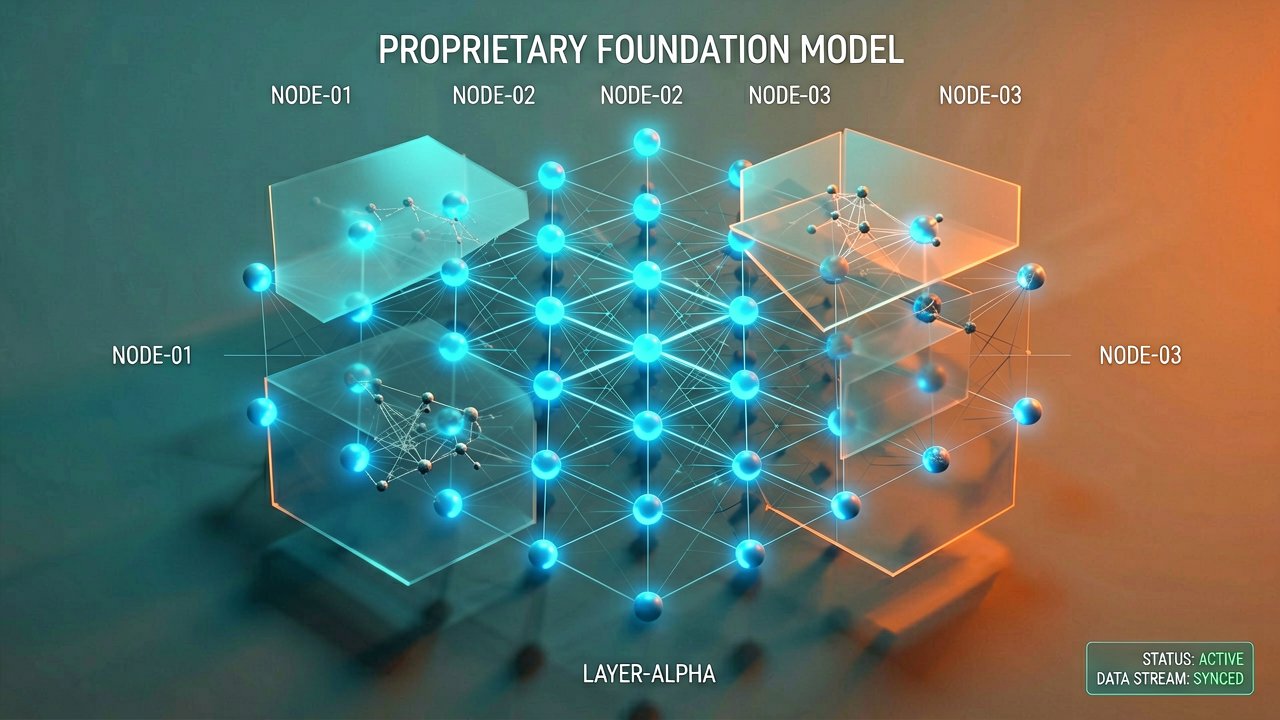
The technical foundation of Krea 2 marks a significant departure from their previous work. While earlier versions leveraged a mix of over 20 different models, Krea 2 is the company's first proprietary "foundation model" built entirely from scratch. As reported by MindStudio, the model—internally known as K2—prioritizes aesthetic coherence and style transfer over literal prompt adherence. This design choice targets the "visually flat" problem common in generic models, offering a tool specifically tuned for high-end editorial photography, fine art, and complex brand mood boards.
A Half-Billion Dollar Vision for Creative Teams
This technical evolution is backed by substantial financial firepower. In April 2025, Krea closed a $47 million Series B funding round led by , bringing its total capital raised to $83 million. With a post-money valuation of $500 million, the startup is aggressively moving beyond its original base of independent creators to secure a foothold in the enterprise market. Investors like Andreessen Horowitz have highlighted Krea's ability to maintain an incredibly fast UI while centralizing disparate tasks like video generation, 3D manipulation, and upscaling.
The industry adoption of Krea's toolset has already reached major creative hubs. Designers at companies including Forbes mentioned brands like Pixar, LEGO, Samsung, and Perplexity are utilizing the platform to accelerate their conceptual phases. By launching Krea 2 with a focus on "Business" tier features—including private collaborative apps, custom LoRA training for up to 20,000 images, and SOC 2 compliance—the company is positioning itself as a direct competitor to established giants like Adobe in the professional generative pipeline.
As of May 2026, Krea has grown its user base to over 30 million individuals and teams globally, as noted on their LinkedIn profile. The rollout of Krea 2 for Pro users today is not just a software update; it is the culmination of a four-year mission to transform AI from a "magic box" into a neo-creative medium that respects the iterative, tactile nature of human design.
The Strategic Pivot to Personal Aesthetic
Beyond the Prompt-and-Wait Paradigm: The rollout of Krea 2 signifies a critical maturation in the generative AI market, moving away from "black box" models that dictate style toward tools that act as high-fidelity mirrors for human intent. While competitors have focused on increasing parameters to achieve "perfect" photorealism, Krea AI has pivoted toward a style-transfer architecture that prioritizes consistency and creative range. This approach treats style not as a superficial prompt garnish, but as the fundamental material of digital work, allowing professionals to maintain brand integrity across thousands of generated assets.
From a market standpoint, the decision to prioritize Pro users in this launch is a calculated move to solidify Krea's position within the enterprise creative stack. By offering features like custom LoRA training with up to 20,000 images and private "Node Apps" for team collaboration, Krea is directly challenging the historical dominance of the Adobe Creative Cloud. According to analysts at TechCrunch, the company's $500 million valuation is built on the premise that the next generation of designers will value "flow state" and real-time iteration over the static, labor-intensive workflows of the past decade.
The technical achievement of the K2 model also reflects a broader industry shift toward proprietary foundation models. By building its first model from scratch, Krea has decoupled itself from the aesthetic limitations and "plastic" look often associated with open-source base models. As noted in recent evaluations by Contra Labs, Krea 2 Large has already closed the gap on industry leaders in style fidelity, proving that a specialized, smaller team can outmaneuver tech giants by focusing on the specific emotional and textural needs of the artist community.
Ultimately, Krea 2 proves that the future of design isn't about AI replacing the artist, but about the artist finally having a brush that doesn't argue with them—though we’re still waiting for a model that can figure out why the "Undo" button is the most used tool in human history.
Artūras Malašauskas is an AI Systems Integrator with 20+ years of production-grade web engineering experience. He has designed, shipped, and scaled enterprise Python/PHP systems for logistics, SaaS, and public-sector clients. For the past year, he has focused exclusively on AI integrations: deploying open-source LLMs, building generative media pipelines (image, audio, video), and engineering multi-agent workflows for real production environments. His standard: reproducibility, security, cost-efficient inference—no vaporware. He documents and evaluates emerging AI tooling, separating verified capabilities from marketing noise. Technical editor at: muza-ai.eu, ai-verslas.lt, ai-naujinos.lt Connect on LinkedIn
Comments