The Digital Intern: Adobe Moves Firefly AI Directly into the Creative Cloud Workflow
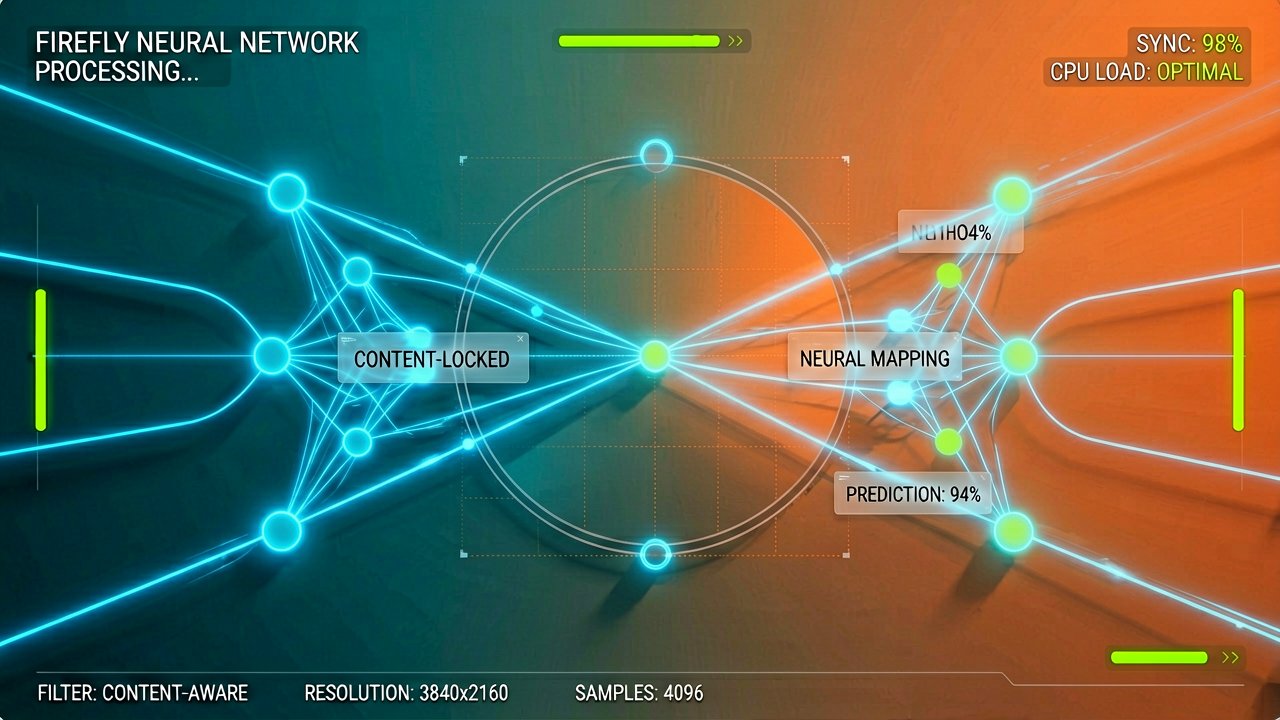
Adobe has just dropped a massive update that feels less like a simple patch and more like a total rethink of how we use creative tools. The company’s Firefly AI assistant is officially moving into the big house, embedding itself directly across the Creative Cloud ecosystem. It’s a bold play that aims to turn the standard "blank canvas" anxiety into a collaborative chat, and honestly, it’s about time.
For months, we’ve seen Firefly live as a standalone web experiment or tucked into specific Photoshop betas. Now, as reported by Wikipedia , this generative AI suite is being woven into the fabric of flagship apps like Premiere Pro and Illustrator. This isn't just about making pretty pictures with text prompts anymore; it’s about having an assistant that understands the context of your project and helps you navigate the technical hurdles that usually slow down the creative flow.
The End of the Menu Hunt
If you've ever spent twenty minutes digging through nested menus to find a specific masking tool, you’ll appreciate what’s happening here. The new AI assistant allows for conversational commands. Instead of remembering the exact shortcut for "content-aware fill," you can simply tell the assistant what you want to achieve. According to insights from , users are already seeing a shift toward a "create anything with a conversation" workflow that drastically lowers the barrier to entry for complex edits.
What makes this iteration of Firefly stand out in a crowded AI market is Adobe’s commitment to "commercial safety." While other models have played fast and loose with training data, Adobe built Firefly using its own Stock library and public domain content. This means professional designers don’t have to worry about copyright trolls knocking on their door six months after a project goes live. It’s a "legal-first" approach that actually makes sense for the enterprise world.
Video Editing Gets a Brain Upgrade
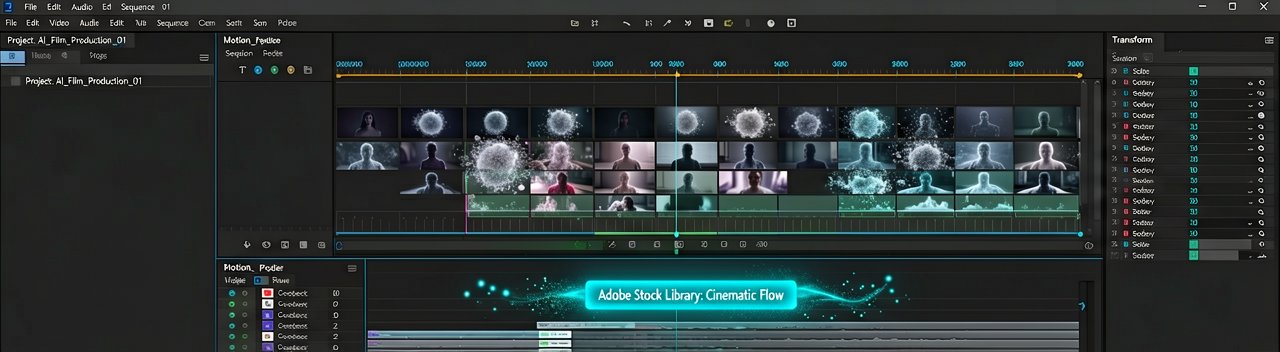
The implications for video editors are particularly massive. In Premiere Pro, the AI assistant is moving beyond simple color grading. We’re looking at a future where Firefly can help with tedious tasks like finding specific b-roll or even generating entire segments of footage to bridge gaps in a timeline. As noted by , Adobe is looking at "AI agents" that can automate complex workflows, essentially acting as a digital intern that never sleeps.
Adobe isn’t stopping at its own tech, either. They’ve signaled an uncharacteristically open ecosystem, suggesting that partner models from the likes of OpenAI or Google might eventually plug into the Creative Cloud. This flexibility is a game-changer. It says that Adobe knows it can’t build every single AI tool itself, so it’s building the platform where all those tools can live together in harmony.
Of course, it isn’t all sunshine and rainbows. The community is already pushing for more. Users on the Adobe Community forums are asking for even "bigger brains," like the ability to upload entire PDF briefs so the AI can understand a brand's style guide before it even starts generating. It’s a reminder that while this launch is a huge leap forward, the "perfect" AI assistant is still a work in progress.
At the end of the day, this move solidifies Adobe’s position at the top of the food chain. By making AI an assistant rather than a replacement, they’re betting on the idea that humans still want to be the ones in the driver's seat—they just want the car to be a lot easier to drive.
The Real-World Friction: While the marketing gloss paints a picture of seamless creative bliss, any veteran of the "exporting..." progress bar knows that the true story lies in the plumbing. Adobe’s pivot to a deeply integrated Firefly assistant isn't just about flashy generative fills; it’s a strategic defense mechanism against the encroaching tide of browser-based, AI-native startups that have been nipping at the heels of the Creative Cloud for years.
Historically, Adobe has been the undisputed king of "the professional grind." Their software was built for precision, often at the cost of a steep learning curve. However, as lightweight competitors began offering one-click AI solutions, the Adobe ecosystem started to look a bit like a legacy mainframe. By injecting Firefly directly into the workspace, Adobe is attempting to merge that high-end precision with the "instant gratification" culture of modern AI. It’s a delicate balancing act: making the software accessible enough for a social media manager without alienating the power user who has spent twenty years mastering the Pen Tool.
The "Black Box" Problem and Creative Control
One nuance that seasoned reporters are watching closely is the tension between AI automation and creative intent. There is a growing concern among the veteran design community that relying on a conversational assistant might lead to a "homogenization of style." If every designer is asking the same Firefly assistant for a "modern, minimalist layout," do we lose the happy accidents that define great art? Adobe’s counter-argument is that Firefly is an "assistant," not an "author," but the line between the two gets blurrier with every update.
Stakeholders, particularly those in large-scale agencies, are looking at this through the lens of billable hours. If an AI assistant can handle the grunt work—resizing assets for fifteen different aspect ratios or color-matching a hundred photos in seconds—the business model of the "production designer" shifts overnight. We are seeing a historical pivot where the value of a creative pro is moving away from *execution* and almost entirely toward *curation* and *strategy*.
The Trust Deficit and Data Ethics
We also have to talk about the elephant in the room: trust. As highlighted by discussions on the Adobe Community, there is a massive hunger for "Custom Models." Professionals don’t just want a generic AI; they want an assistant that has been trained on their specific brand’s history, colors, and quirks. Yet, Adobe remains cautious. They know that opening the floodgates to user-trained models brings a host of ethical and legal headaches regarding data privacy.
Finally, there is the historical context of Adobe’s transition to the subscription model. For years, the "Creative Cloud" was seen as a way to ensure steady revenue. Now, with the heavy compute costs of generative AI, that subscription model is being tested. We are seeing the introduction of "Generative Credits," a move that has sparked some grumbling among users who feel that their "all-access" pass is starting to feel a bit more like a metered utility. It’s a reminder that while the AI future is exciting, someone—somewhere—has to pay for the massive server farms making it all possible.
Reading Between the Lines: For all the talk of "democratizing creativity," we have to ask whether Adobe is actually streamlining the process or just adding another layer of digital noise to an already cluttered workspace. The industry loves a "game-changer" narrative, but the reality of an AI assistant living inside Creative Cloud might be less about liberation and more about a sophisticated form of vendor lock-in. By making the AI the primary interface, Adobe is ensuring that the path of least resistance always leads back to their proprietary cloud, regardless of whether their tools are the best fit for the job.
There is also a glaring contradiction in the "commercial safety" pitch. While Adobe prides itself on training Firefly on its own Stock library, this creates a closed-loop ecosystem that potentially cannibalizes the very contributors it claims to support. As noted in discussions surrounding Adobe Firefly, the ethical high ground is a difficult place to stand when your AI is essentially being trained to replace the stock photographers and illustrators who provided the data in the first place. It’s a "safety" that protects the corporate client but offers little more than a "thank you for your service" to the human creators.
The Computational Tax and the Speed Illusion
Furthermore, we need to address the "speed" myth. Yes, generating a background in seconds feels fast, but the iterative cycle of "prompt, wait, reject, repeat" often takes just as long as doing the work manually for a skilled professional. We risk trading "active creation time" for "passive waiting time." This shift could lead to a generation of designers who are experts at talking to machines but struggle to understand the fundamental principles of composition or color theory when the "assistant" isn't there to hold their hand.
Then there’s the question of technical bloat. Creative Cloud apps are already notorious resource hogs; adding a real-time, conversational AI layer suggests that the hardware requirements for "professional" work are about to skyrocket again. As users on the Adobe Community keep pushing for more complex capabilities, we may find ourselves in a cycle where the time saved by AI is immediately lost to the lag of a cloud-dependent interface. If the assistant takes five seconds to understand a command that a keyboard shortcut handles in half a second, who is really winning?
Projecting the Creative Ceiling
In the long run, the most significant risk is the creation of a "creative ceiling." If every designer uses the same AI assistant to solve the same problems, the visual language of the internet will inevitably gravitate toward a middle-of-the-road "AI aesthetic." Adobe’s challenge isn't just making the AI work; it's ensuring the AI doesn't become a straitjacket for original thought. Right now, Firefly is an impressive parlor trick woven into a professional suite, but it has yet to prove it can handle the messy, illogical, and truly groundbreaking intuition that defines high-level art.
"We’ve officially entered the era where you can tell your computer to 'make it pop' and it might actually listen—though don't be surprised when the AI starts asking for its own coffee break and a percentage of your royalties."
Artūras Malašauskas is an AI Systems Integrator with 20+ years of production-grade web engineering experience. He has designed, shipped, and scaled enterprise Python/PHP systems for logistics, SaaS, and public-sector clients. For the past year, he has focused exclusively on AI integrations: deploying open-source LLMs, building generative media pipelines (image, audio, video), and engineering multi-agent workflows for real production environments. His standard: reproducibility, security, cost-efficient inference—no vaporware. He documents and evaluates emerging AI tooling, separating verified capabilities from marketing noise. Technical editor at: muza-ai.eu, ai-verslas.lt, ai-naujinos.lt Connect on LinkedIn
Comments