Pocket-Sized Arc vs. Constellation Titan: MSI Tears Open the 2026 Mobile Gaming Divide
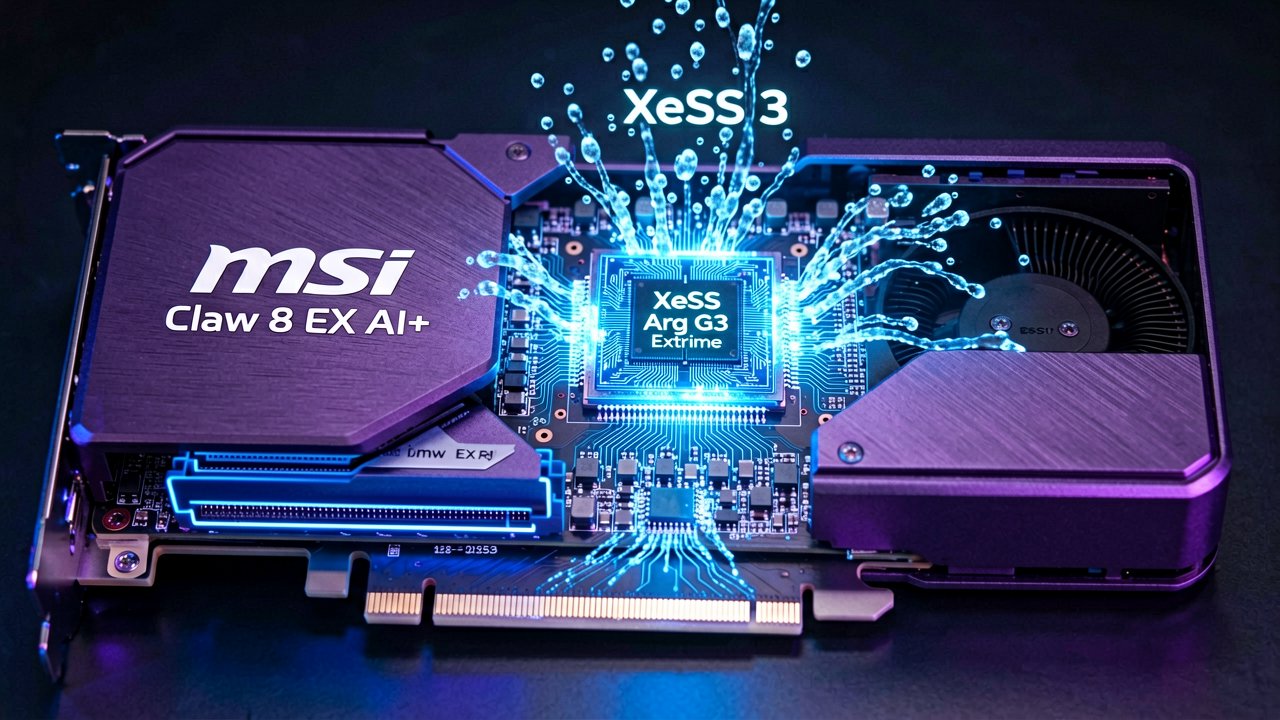
The annual tech pilgrimage to Taipei just wrapped its opening acts, and MSI chose Computex 2026 to firmly split the portable PC gaming world into two distinct realities. Rather than iteratively nudging last year's designs forward, the hardware heavyweight dropped a massive gauntlet by showing off the radically redefined Claw 8 EX AI+ handheld right alongside its monstrously engineered Titan 18 HX Dragon Edition Draco Epic. It's a clash of fundamental philosophies: absolute unmitigated desktop-replacement power vs. optimized frame-generation you can comfortably slide into a backpack.
Seeing them share a single stage highlights just how wildly different our computing futures look depending on your desk space. On one side, you have a pocketable device breaking fresh silicon ground with Intel's brand-new handheld-targeted architecture, trying to right the wrongs of early portable PC attempts. On the other stands an uncompromising 18-inch titan that basically flips a middle finger to the concept of battery preservation in favor of raw, unadulterated graphical luxury to celebrate the company’s 40th anniversary in the industry.
The Claw 8 EX AI+ Pushes Arc to the Palm
If you felt the original handheld efforts were more of a public beta, the new Claw 8 EX AI+ reads like the polished vision MSI wanted from the start. Under the hood of its new "void purple" shell lies the Intel Arc G3 Extreme processor, making it a pioneer for this particular handheld-optimized platform. Instead of relying purely on raw thermal muscle to push pixels to its 8-inch 120Hz variable refresh rate display, it leans heavily into XeSS 3 and hardware-level Multi-Frame Generation to squeeze fluid AAA frame rates out of a remarkably modest power envelope. Coupled with massive ergonomics upgrades—including flaring handles inspired by traditional console controllers and precise Hall-effect sticks—it’s clear MSI spent the last year listening to feedback from disgruntled road warriors who wanted better physical control and fewer micro-stutters during extended on-the-go sessions.
Titan 18 HX Draco Epic Reclaims the Desktop Crown
While the handheld plays the efficiency game, the Titan 18 HX Dragon Edition Draco Epic exists to vaporize benchmarks. MSI isn't playing around here; they’ve stuffed this limited-edition monster with a staggering Intel Core Ultra 9 290HX Plus processor and NVIDIA’s absolute top-tier GeForce RTX 5090 laptop GPU packed with 24GB of blistering GDDR7 VRAM. Looking at its gorgeous, custom-etched constellation chassis, you realize this isn't just a machine built for casual gaming—it’s an outright professional workstation that happens to have a per-key RGB mechanical keyboard and a haptic trackpad. The massive 4K 240Hz Mini LED panel demands a ludicrous amount of thermal headroom, which is exactly why the chassis relies on a heavy-duty vapor chamber cooling array to prevent the system from melting down when both the CPU and GPU are pulling maximum wattage. For a closer look at the full breakdown of everything revealed at the show, check out the deep dive hosted on the official MSI Newsroom.
Technical Specifications Matrix
| Feature | MSI Claw 8 EX AI+ | MSI Titan 18 HX Dragon Edition |
|---|---|---|
| Speed / Latency | LPDDR5X-8533 memory for ultra-low bus latency; sub-10ms display response optimized for handheld frame-pacing. | Blistering system throughput; PCIe Gen5 storage speeds up to 14,000 MB/s; desktop-class desktop-replacement responsiveness. |
| Model Size / Parameters | Compact 8-inch chassis; under 900 grams; ergonomic handheld form factor with 80Whr high-capacity battery cell. | Massive 18-inch frame; 4K 240Hz Mini LED panel; full desktop footprint weighing over 3.6 kilograms. |
| Hardware Requirements | Intel Arc G3 Extreme processor; integrated Xe LPG graphics; highly optimized 15W–30W thermal envelope. | Intel Core Ultra 9 290HX Plus; NVIDIA GeForce RTX 5090 (24GB GDDR7); requires dual external power bricks for peak draw. |
Engineering the Architecture of Mobile Power
The vast architectural gulf between these two machines dictates everything from their underlying silicon layout to how they manage memory latency. In the Claw 8 EX AI+, the integration of tightly pooled LPDDR5X memory directly alongside the Intel Arc G3 Extreme processor is an absolute necessity to eliminate system bus bottlenecks within a restricted power limit. Because handheld gaming relies heavily on immediate asset streaming to prevent micro-stutters, MSI tuned the memory controller to favor rapid-fire read cycles over massive bandwidth bursts. This engineering decision keeps the system exceptionally responsive even when the processor is dialed down to its minimum operational wattage during long transit sessions.
The Titan 18 HX Dragon Edition takes a completely unrestricted path by deploying desktop-class SO-DIMM slots and cutting-edge PCIe Gen5 storage lanes. This massive bus architecture allows the Core Ultra 9 290HX Plus to shift gargantuan datasets between the system memory and the massive 24GB GDDR7 frame buffer of the RTX 5090 GPU without hitting a single throughput ceiling. Where the handheld must carefully budget every single cycle to preserve its 80Whr battery, the Titan treats power consumption as an afterthought, prioritizing raw parallel computing throughput that allows it to crunch complex machine learning models or render real-time ray-traced lighting landscapes at native 4K resolutions.
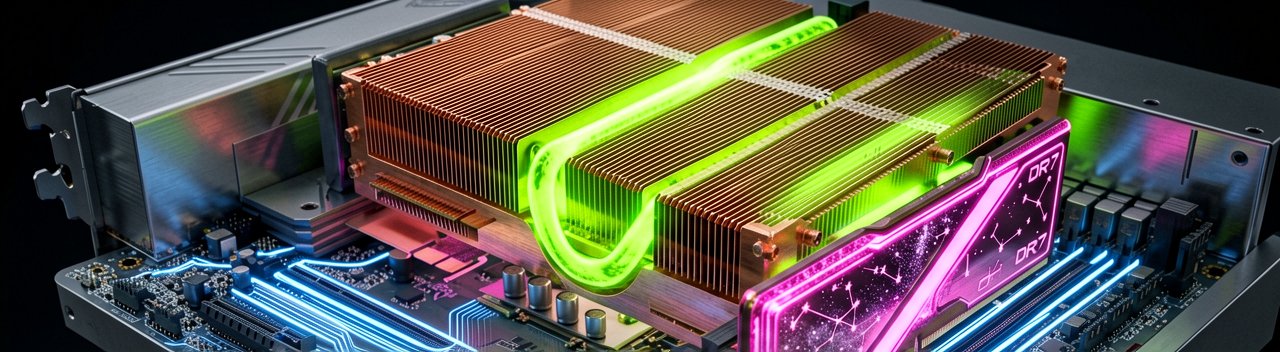
Thermal management shapes the physical boundaries of these internal designs in radically different ways. The Claw 8 utilizes a miniaturized dual-fan setup that vents heat efficiently away from the user's palms while maintaining a whispering noise profile during sustained workloads. By contrast, the Titan's interior is dominated by a monstrous vapor chamber cooling array that spans almost the entire width of the motherboard, relying on dense copper fin stacks and high-velocity exhaust ports to dissipate upwards of 270W of combined thermal energy. This relentless cooling infrastructure ensures that the peak clocks of both the massive CPU and GPU stay locked at maximum frequency without triggering the dreaded thermal throttling that plagues smaller form factors.
Editorial Pros & Cons
| Model | Operational Advantages (Pros) | Operational Disadvantages (Cons) |
|---|---|---|
| MSI Claw 8 EX AI+ | Exceptional 80Whr battery longevity for a handheld; highly ergonomic chassis with tactile Hall-effect controls; efficient XeSS 3 frame generation. | Integrated Arc graphics cannot match dedicated GPUs; limited display real estate for complex productivity tasks; software optimization remains ecosystem-dependent. |
| MSI Titan 18 HX Dragon Edition | Unrivaled desktop-grade computing power; gorgeous 4K 240Hz Mini LED visual canvas; future-proof 24GB GDDR7 VRAM overhead. | Prohibitive weight and massive footprint destroy true portability; requires dual power bricks; extreme thermal output and loud fan acoustics under full load. |
Decoding the Real-World Trade-Offs
Reading Between the Lines: The tech industry loves to pitch a narrative of universal convergence, but looking at these machines proves that specialized engineering is far from dead. Choosing between them is not a matter of budget, but rather an honest audit of your daily lifestyle and spatial limitations. The Claw 8 EX AI+ represents the ultimate liberation from the desk, turning boring airport layovers and long train commutes into high-fidelity gaming sessions without forcing you to constantly scan the walls for an open electrical outlet. It compromises on peak graphical settings to deliver a beautifully fluid, highly optimized experience that fits comfortably right in your hands.
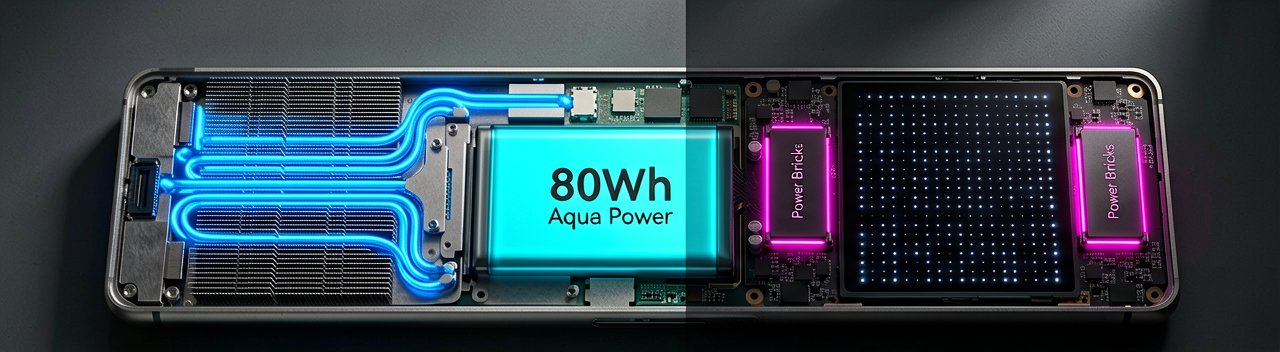
Conversely, the Titan 18 HX Dragon Edition Draco Epic completely abandons the pretense of casual mobility in a relentless pursuit of pixel-pushing supremacy. This is an imposing physical presence on any desk, trading away your shoulder health and a quiet room for the ability to crush demanding professional rendering workloads and ray-traced AAA gaming titles simultaneously. Its massive power draw and dual-charging brick requirement essentially turn it into a transportable workstation rather than a traditional laptop, making it perfect for the digital nomad who needs uncompromised hardware at a temporary destination but rarely opens a computer on an airplane tray table.
Ultimately, MSI's split lineup forces hardware enthusiasts to choose their poison: the agile efficiency of modern system-on-chip architectures or the brute force of traditional desktop-replacement engineering. The handheld relies on clever machine learning algorithms and software-side frame pacing to mimic the big iron, proving just how far mobile optimization has matured. Meanwhile, the luxury flagship reminds us that nothing beats raw silicon surface area and a massive thermal dissipation path when you absolutely refuse to compromise on your frames-per-second target.
"We have officially reached the point in mobile computing history where you must either choose a laptop that requires its own dedicated rolling suitcase or a handheld that makes you look like you are secretly texting under the dinner table."
Artūras Malašauskas is an AI Systems Integrator with 20+ years of production-grade web engineering experience. He has designed, shipped, and scaled enterprise Python/PHP systems for logistics, SaaS, and public-sector clients. For the past year, he has focused exclusively on AI integrations: deploying open-source LLMs, building generative media pipelines (image, audio, video), and engineering multi-agent workflows for real production environments. His standard: reproducibility, security, cost-efficient inference—no vaporware. He documents and evaluates emerging AI tooling, separating verified capabilities from marketing noise. Technical editor at: muza-ai.eu, ai-verslas.lt, ai-naujinos.lt Connect on LinkedIn
Comments