The Mind of the Machine: NVIDIA Escalates the Robotaxi AI War with Alpamayo 2 Super

The race for truly reliable autonomous navigation hit a critical milestone this week as NVIDIA pulled back the curtain on its newest heavyweight AI architectural model. Announced at GTC Taipei on May 31, 2026, the tech giant officially introduced Alpamayo 2 Super, an open-weight, 32-billion-parameter Vision-Language-Action (VLA) model meticulously tailored for Level 4 robotaxi platforms. The unveiling shakes up an industry historically plagued by complex, edge-case road conditions that rigid, rule-based software simply cannot handle. By tripling the size of its first-generation 10-billion-parameter predecessor, NVIDIA is making a definitive bet that sheer cognitive scale, rather than hardcoded logic, is the key to unlocking safe driverless deployment.
Instead of relying purely on front-focused camera data or standard imitation learning, the new system upgrades robotaxi reasoning by managing the entire driving stack simultaneously. The architecture integrates a full 360-degree surround perception with high-level decision outputs called "Meta-Actions." Rather than just plotting a geometrical path through traffic, the vehicle can now natively process macro commands like yielding, changing lanes, or stopping, while explicitly mapping out its underlying chain of causation. This shift bridges the massive gap between basic computer vision and the adaptive, contextual logic required to successfully navigate unpredictable urban environments.
Challenging the Proprietary Autonomy Paradigm
This release does more than just push technical boundaries; it directly challenges the walled-garden approach favored by several leading autonomous vehicle developers. By opting to distribute the model weights openly on platforms like Hugging Face and GitHub later this summer, NVIDIA aims to anchor the global robotaxi developer ecosystem to its foundational tech stack before proprietary alternatives can lock them out. It is a calculated infrastructure play backed by heavy companion tools, including a closed-loop reinforcement learning framework named AlpaGym and a photorealistic scenario generator called OmniDreams, designed to simulate long-tail traffic anomalies safely in digital environments.
According to official details shared by NVIDIA News, the prior version of the Alpamayo framework secured nearly 400,000 downloads, demonstrating a massive developer appetite for open, reasoning-capable tools. While traditional development pipelines routinely spend months hand-labeling complex video data, Alpamayo 2 Super introduces automated reasoning labeling that condenses annotation cycles down to days. This shift alters the baseline economics of building autonomous fleets, lowering the barrier to entry for smaller manufacturers trying to catch up with deep-pocketed pioneers in the driverless ride-hailing space.
Editorial Pros & Cons
| Model Platform | Operational Advantages (Pros) | Operational Disadvantages (Cons) |
|---|---|---|
| NVIDIA Alpamayo 2 Super | Open-weight flexibility drives rapid ecosystem innovation; superior 360-degree causal reasoning drastically reduces long-tail edge-case failures. | Massive 32B parameter footprint demands costly dual-Thor hardware configurations; increases initial vehicle production costs and thermal loads. |
| Legacy Alpamayo 1 Baseline | Highly optimized low latency runs efficiently on affordable, widely deployed single-Orin hardware; proven commercial track record. | Lacks advanced multi-modal contextual reasoning; struggles with complex, unpredictable urban traffic scenarios without manual intervention. |
| Proprietary Competitor VLA | Optimized tailored software-hardware integration minimizes physical footprint inside the vehicle; lower localized power consumption. | Severe cloud dependency risks systemic failure during network drops; closed ecosystem locks developers into strict vendor licensing. |
Navigating the Strategic Trade-offs
Reading Between the Lines: The transition from rule-based safety scripts to massive, multi-modal reasoning models highlights a structural divide in the autonomous vehicle industry. NVIDIA is banking heavily on open infrastructure, gambling that developers will choose high-compute, open-weight models over restrictive, closed ecosystems. By offering the weights openly, they are actively aiming to commoditize the software layer while securing a lucrative monopoly on the hyper-dense hardware silicon required to actually run it on the streets.
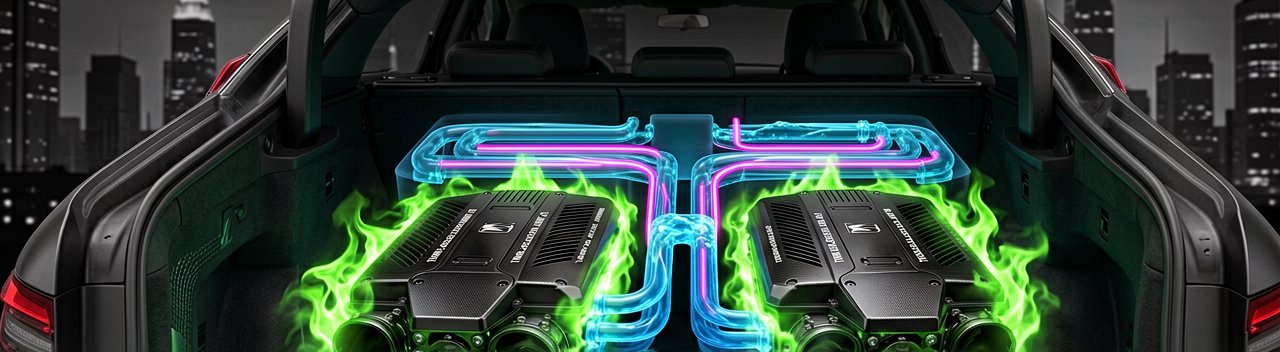
This aggressive push toward localized, 32-billion-parameter intelligence alters the physical design realities for fleet operators trying to scale up driverless deployment. Deploying dual-Thor setups means accommodating increased power draw and creating specialized liquid-cooling loops inside the trunk of a standard sedan. Operators must choose between paying a heavy upfront hardware premium for reliable, independent intelligence, or risking the erratic latency spikes that come with a competitor's cheaper, cloud-tethered system.
Furthermore, the structural shift toward automated reasoning labeling fundamentally undercuts the traditional data-moat advantage that early pioneers spent a decade building. When a vision-language-action architecture can automatically parse, understand, and categorize complex traffic situations in days rather than months, raw data accumulation ceases to be the ultimate barrier to entry. The battlefield has definitively shifted from who possesses the largest library of recorded driving hours to who can field the most compute-efficient logic engine at the intersection.
"We are rapidly approaching an era where your driverless taxi can effortlessly debate the finer points of traffic law with a pedestrian, yet the entire trip might still be delayed because the onboard supercomputer requires a cooling system robust enough to chill a small industrial meat locker."

Artūras Malašauskas is an AI Systems Integrator with 20+ years of production-grade web engineering experience. He has designed, shipped, and scaled enterprise Python/PHP systems for logistics, SaaS, and public-sector clients. For the past year, he has focused exclusively on AI integrations: deploying open-source LLMs, building generative media pipelines (image, audio, video), and engineering multi-agent workflows for real production environments. His standard: reproducibility, security, cost-efficient inference—no vaporware. He documents and evaluates emerging AI tooling, separating verified capabilities from marketing noise. Technical editor at: muza-ai.eu, ai-verslas.lt, ai-naujinos.lt Connect on LinkedIn
Comments