NVIDIA Lowers the Humanoid Barrier by Handing the Keys to Academia
Building a humanoid robot from scratch is a notoriously fragmented, prohibitively expensive nightmare that has long kept frontier robotics locked behind the closed doors of mega-corporations. NVIDIA smashed that barrier on June 1, 2026, by introducing its Isaac GR00T Reference Humanoid Robot at GTC Taipei, a move explicitly engineered to democratize the field for academic research. By delivering a standardized hardware-software blueprint, the tech giant is shifting the industry's focus away from basic mechanical assembly and directly toward the actual development of physical AI intelligence.
The Anatomy of an Open Ecosystem
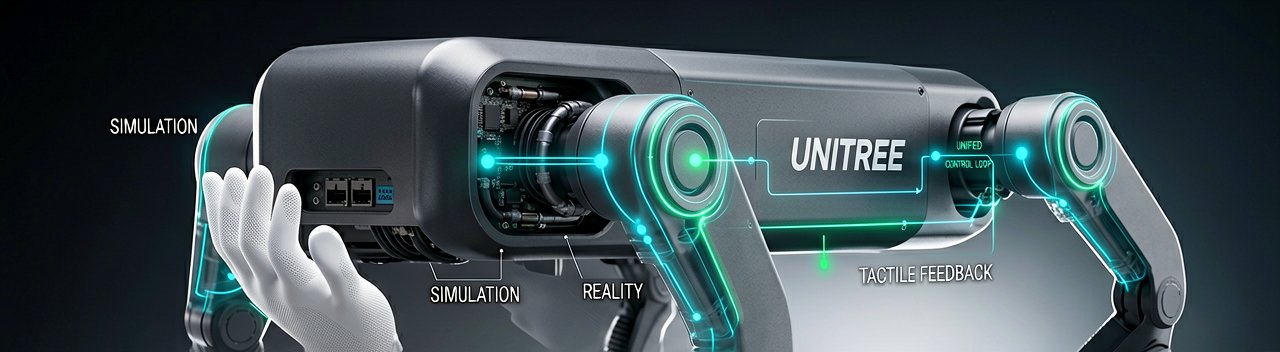
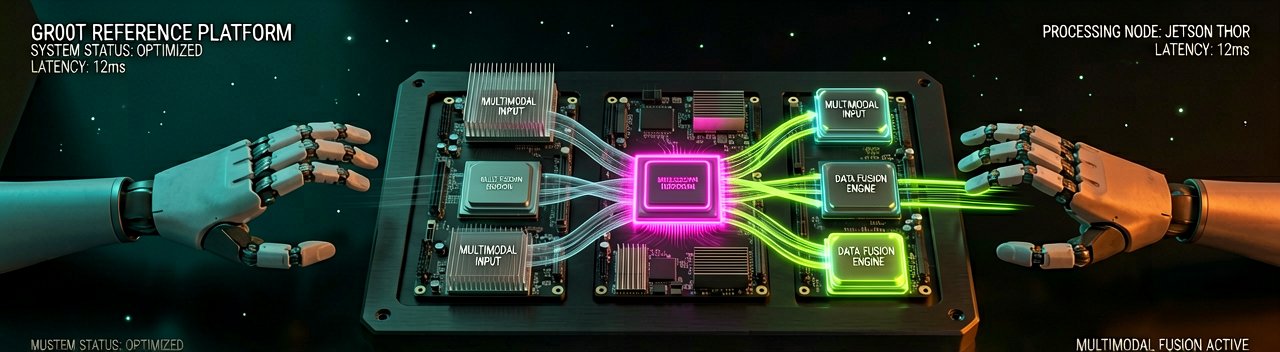
The platform establishes an integrated framework by pairing the Unitree H2 Plus chassis with dual Sharpa Wave tactile five-finger hands to handle physical manipulation. Rather than forcing research labs to spend months wrestling with custom telemetry and proprietary hardware interfaces, this design introduces a uniform physical standard. The real heavy lifting, however, takes place inside the silicon, where NVIDIA has positioned its Jetson Thor AI superchip to act as the centralized onboard brain capable of processing real-time multimodal inputs and managing complex motor control.
A Direct Contrast to Siloed Robotics
This open-source philosophy marks a massive departure from traditional, heavily guarded commercial robotics architectures. While proprietary projects focus on delivering finalized, single-vendor commercial products, this ecosystem focuses entirely on collaborative evolution across data capture, simulation, and deployment. Elite research facilities like the Stanford Robotics Center and ETH Zurich are already adopting the framework, allowing teams to instantly test and trade complex behaviors across a shared infrastructure.
Technical Specifications Matrix
| Specification Feature | NVIDIA Isaac GR00T Ecosystem | Proprietary Commercial Systems |
|---|---|---|
| Speed & Latency | Deterministic low-latency control loop via unified Jetson Thor architecture. | Variable latency caused by bridging mismatched hardware with custom middleware layers. |
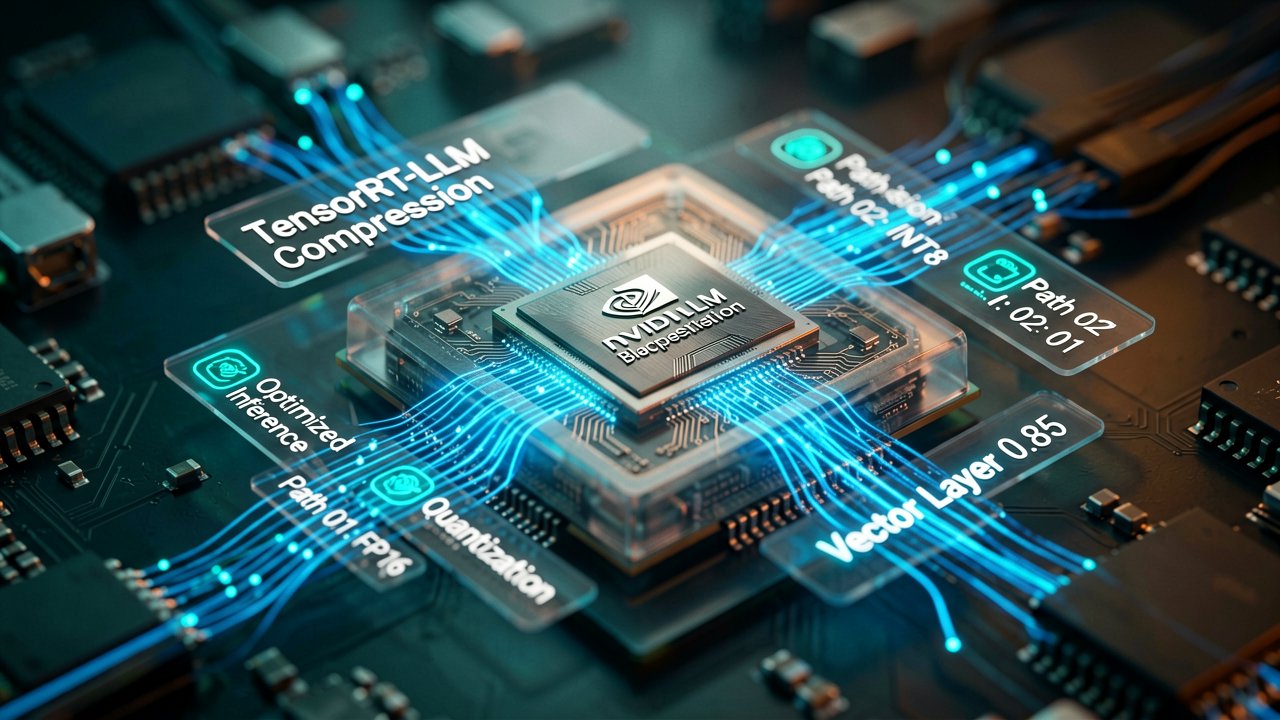
| Model Size & Parameters | Scalable multimodal foundation models optimized via TensorRT-LLM compression. | Fixed-size proprietary models optimized exclusively for single-platform hardware. |
| Hardware Requirements | Jetson Thor AI Superchip (Blackwell GPU), Unitree H2 Plus, Sharpa Wave hands. | Custom proprietary ASICs, bespoke actuators, and closed-source sensor arrays. |
Bridging the Silicon Divide
The starkest contrast between the open Isaac GR00T architecture and proprietary alternatives lies in how compute power is consolidated. Traditional humanoid systems often rely on a fragmented internal network, separating high-level computer vision processors from low-level motor controllers. This setup introduces significant data translation overhead, causing unpredictable latency spikes when the robot attempts complex, real-time spatial adjustments. NVIDIA avoids this performance trap by centralizing both modal perception and physical execution onto a single, high-throughput system-on-chip.
At the center of this standardization is the Jetson Thor AI superchip, built on the advanced Blackwell GPU architecture. This chip provides the raw computational bandwidth needed to run complex humanoid foundation models directly on the edge. Instead of stripping down AI models to fit weaker processors, researchers can run multi-billion parameter networks locally. This localized power allows the robot to process language, visual data, and tactile feedback at the same time without relying on slow cloud connections.
On the physical side, the platform pairs this intense compute power with standardized components like the Unitree H2 Plus chassis and Sharpa Wave tactile hands. In proprietary systems, software is locked to custom-built actuators, meaning any hardware tweak requires rewriting the core control code. The GR00T framework removes this friction by providing pre-configured hardware abstraction layers. This lets academic teams swap out sensors or upgrade mechanical joints without breaking their underlying AI models.
This hardware harmony directly impacts how efficiently these systems learn in simulated environments. Because the physical parameters of the reference design are well-documented, virtual training in Isaac Lab transfers seamlessly to the real world. Proprietary platforms often struggle with this transition, requiring tedious, manual tuning to fix discrepancies between simulation and reality. By anchoring the software to a reliable hardware baseline, the platform ensures that a breakthrough made in a virtual lab will behave exactly the same way on a physical research floor.
Editorial Pros & Cons
| Platform Type | Operational Advantages | Operational Disadvantages |
|---|---|---|
| NVIDIA Isaac GR00T | Rapid deployment, lower research costs, massive community support, and seamless simulation-to-reality transfer. | Heavy reliance on a single vendor's silicon ecosystem and predictable hardware limitations of standard components. |
| Proprietary Systems | Highly optimized mechanical performance, custom-tailored form factors, and tight control over security. | Extreme financial barriers, prolonged development cycles, and isolated data silos that slow down innovation. |
The Strategy Behind the Open Blueprint
Reading Between the Lines: NVIDIA is not suddenly acting out of pure academic altruism; this is a calculated chess move to capture the foundational developer layer of the next computing paradigm. By giving universities a ready-to-use blueprint, the tech giant ensures that the next generation of roboticists will learn, build, and innovate entirely within an environment powered by its own silicon. It is the classic operating system playbook rewritten for the physical AI era, aiming to make their software and chips the indispensable backbone of the entire industry.
For research labs, the immediate benefits of this shift are impossible to ignore. Historically, a robotics PhD student could easily spend three years of a four-year program simply trying to get custom actuators to talk to a vision processing unit, leaving precious little time for actual algorithmic breakthroughs. This standardized reference design effectively skips that tedious setup phase, allowing researchers to deploy advanced AI models onto a functioning physical chassis on day one. The resulting acceleration in academic output will likely outpace what any single closed-door corporate lab could achieve on its own.
However, outsourcing the hardware baseline to a single corporate entity introduces its own set of long-term vulnerabilities. When a research ecosystem aligns so heavily with one vendor, it inherits every architectural limitation and supply chain bottleneck of that specific manufacturer. If alternative compute architectures emerge that are better suited for specific bio-inspired movements or low-power operations, porting a massive library of GR00T-centric research could prove to be an uphill battle. Academic freedom is a lot easier to maintain when you are not entirely dependent on a single company's hardware update schedule.
Ultimately, this tension highlights a fundamental split in how the industry approaches the future of automation. Closed-source pioneers will continue to push the absolute limits of mechanical engineering, creating specialized, highly polished machines that operate flawlessly within strict boundaries. Meanwhile, the open-source collective will lean on messy, rapid, and scaled data sharing to build broader, more adaptable intelligence. While the proprietary model builds isolated digital fortresses, the open ecosystem builds a massive, interconnected city.
"We are fast approaching a future where a robot will flawlessly translate poetry into sign language while making eye contact, only to completely freeze up because its proprietary elbow joint received a software update that requires a different corporate license key."
Artūras Malašauskas is an AI Systems Integrator with 20+ years of production-grade web engineering experience. He has designed, shipped, and scaled enterprise Python/PHP systems for logistics, SaaS, and public-sector clients. For the past year, he has focused exclusively on AI integrations: deploying open-source LLMs, building generative media pipelines (image, audio, video), and engineering multi-agent workflows for real production environments. His standard: reproducibility, security, cost-efficient inference—no vaporware. He documents and evaluates emerging AI tooling, separating verified capabilities from marketing noise. Technical editor at: muza-ai.eu, ai-verslas.lt, ai-naujinos.lt Connect on LinkedIn
Comments