Global Industries Bracing for 'Abundant Intelligence' as SCBX Outlines AI's New Era
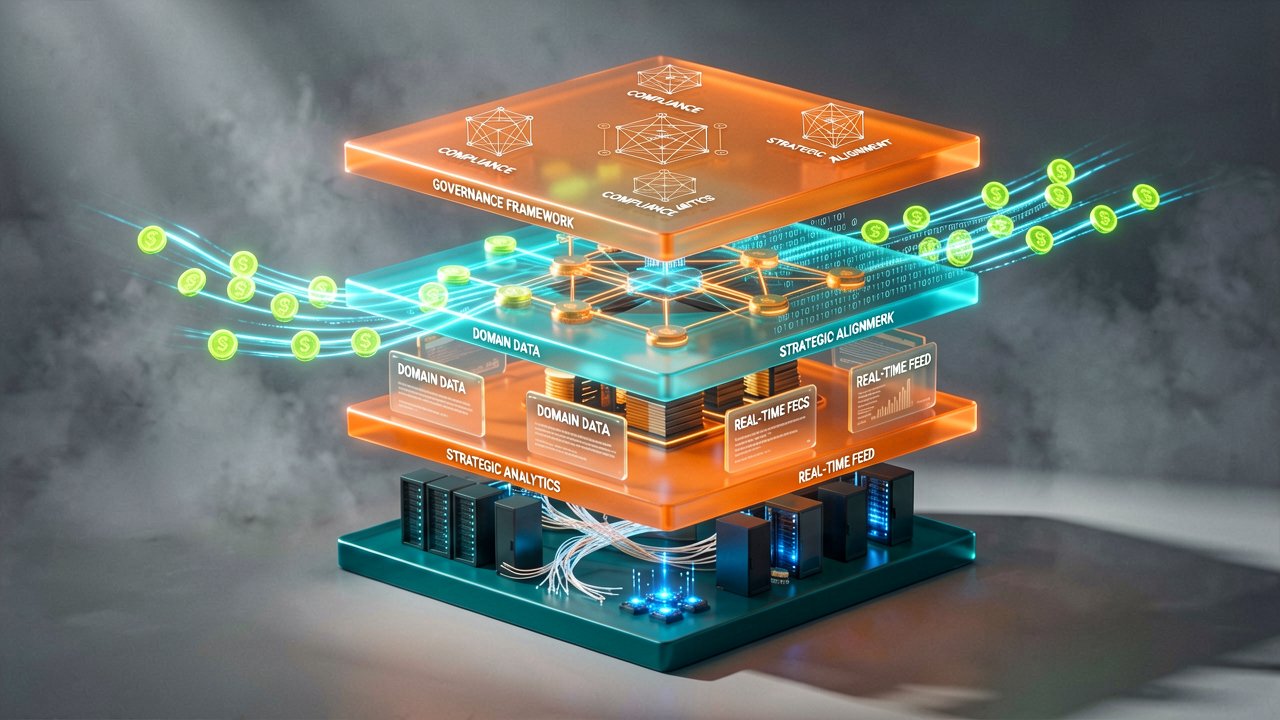
The global enterprise ecosystem is crossing a critical threshold where the metric of success is no longer the ownership of proprietary large language models, but the sophisticated orchestration of a commoditized asset. According to the groundbreaking report published by SCBX, the corporate landscape has transitioned into the "Age of Abundant Intelligence." In this new paradigm, advanced reasoning capabilities have transformed from scarce, premium tech products into ubiquitous infrastructure layers, driving down the unit cost of machine intelligence and shifting market power toward organizations that can seamlessly deploy agentic workflows at scale.
This fundamental paradigm shift introduces what tech leaders call the "New Economics of Intelligence," where computational tokens function as the primary currency for allocating reasoning capacity across business lines. Companies are abandoning isolated digital experiments in favor of holistic "value stacks" that unify infrastructure, specialized domain data, fine-tuned models, and rigid automated governance frameworks. Rather than replacing the workforce, this pervasive availability of intelligence requires a rapid structural evolution, shifting employee responsibilities away from manual task execution and toward high-level AI orchestration and quality assurance.
As standard foundation models become accessible utilities, enterprise differentiation depends entirely on an organization's agility in rewiring its operational fabric. The market is witnessing a divergence between legacy firms burdened by technological debt and forward-thinking enterprises that treat intelligence as a continuous flow. This transition demands a massive commitment to comprehensive organizational transformation, combining deep technical innovation with baseline workforce data literacy to navigate the complex compliance, security, and integration challenges of a decentralized, AI-native global economy.
The Architecture of Enterprise Value Stacks
Modern corporate strategies are evolving past standalone applications to focus on multi-layered intelligence ecosystems. Silicon valley infrastructure investments are standardizing the lower levels of the tech stack, forcing enterprises to capture margin through proprietary datasets and localized orchestration. By integrating data lakes directly into active agent networks, businesses can automate real-time decision-making loops without human bottlenecks, converting traditional sunk costs in storage into proactive margin expansion.

The Rise of Agentic Frameworks and Task Orchestration
Autonomous agents capable of multi-step planning, reasoning, and independent execution are quickly replacing basic chat interfaces across key corporate sectors. These digital workers operate continuously across complex business pipelines, evaluating variables, managing financial parameters, and executing cross-border programmatic actions without step-by-step human prompts. This operational autonomy shifts the role of human capital toward managing systemic guardrails and overseeing ethical compliance frameworks.
Geopolitical Realities and the Push for Sovereign AI
As machine intelligence integrates into critical national infrastructure, organizations face complex regulatory requirements tied to digital borders and data residency laws. Relying solely on centralized, foreign cloud platforms introduces significant compliance and supply chain risks for financial institutions and public utilities. Consequently, corporations and regional syndicates are investing heavily in local infrastructure and regional language models to secure operational sovereignty and safeguard local customer trust.
Mitigating Complex Risks in Abundant Systems
The hyper-tokenized digital economy accelerates productivity while simultaneously amplifying vulnerabilities to sophisticated adversarial manipulation and intellectual property exposure. Securing scalable enterprise workflows requires the immediate implementation of advanced zero-trust architectures, real-time boundary monitoring, and comprehensive audit trails. Organizations must balance autonomous efficiency with continuous human oversight to ensure complex model outputs remain transparent, predictable, and legally compliant.
Deep Dive: The Unseen Friction of the Tokenized Economy
Beneath the Strategic Rhetoric: The transition to this era of pervasive machine intelligence reveals a stark operational paradox that few corporate boardrooms are fully prepared to navigate. While the marginal cost of raw computational reasoning is dropping toward zero, the hidden overhead of integration, data sanitization, and continuous alignment is skyrocketing. Seasoned chief technology officers note that replacing traditional middleware with non-deterministic neural networks introduces a level of systemic volatility that standard enterprise software architectures were never designed to handle. The challenge is no longer acquiring intelligence, but taming its unpredictable behavioral drift across interconnected corporate networks.
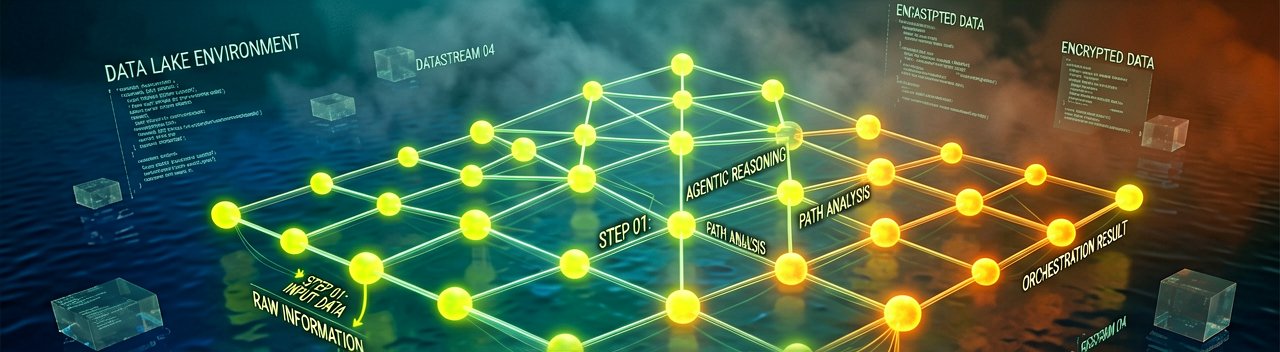
Historically, enterprise technology shifts relied on predictable, rule-based systems where input consistently matched output. In the current agentic landscape, however, companies are deploying autonomous clusters that interpret commands contextually, leading to emergent workflows that frequently bypass traditional compliance checkpoints. Risk officers are sounding alarms over "cascading model failures," where a subtle algorithmic shift in a vendor's upstream foundation model triggers a domino effect of flawed automated decisions across downstream logistics, pricing, and customer service nodes. This lack of deterministic predictability has turned legal liability into a major battleground, forcing corporate counsels to rewrite vendor contracts to account for autonomous machine errors.
From the perspective of data engineers on the ground, the commoditization of models has fundamentally altered the value of corporate assets. The competitive moat has shifted entirely to real-time telemetry and proprietary operational exhaust—the granular, moment-to-moment data generated by daily business processes. Companies that spent the last decade building massive, static data lakes are finding that stale data is of limited use for training highly specialized, real-time agent networks. Victory belongs to organizations that can build continuous feedback loops, where agent decisions are instantly evaluated by human experts to create a premium, localized dataset that competitors cannot replicate or buy off the shelf.
Furthermore, the human element of this transformation is proving far more complex than simple workforce reduction models predicted. Labor economists observe that instead of eliminating jobs, the sudden abundance of intelligence creates an acute talent bottleneck at the orchestration layer. Organizations require a new class of hybrid professionals—part systems engineer, part domain specialist—capable of auditing autonomous workflows and diagnosing abstract reasoning failures. The current labor market faces an intense shortage of these specialized architects, leaving many legacy enterprises with expensive, cutting-edge AI infrastructure that runs at a fraction of its potential capacity due to a lack of sophisticated human oversight.
Reading Between the Lines: The Illusion of Frictionless Scale
The Great Algorithmic Mirage: Corporate press releases consistently equate the abundance of cheap computational reasoning with an immediate leap in macroeconomic productivity, yet this assumption ignores the stubborn reality of institutional inertia. Market optimists treat machine intelligence as a plug-and-play resource, overlooking the truth that software agility cannot easily override physical supply chain bottlenecks, union contracts, or rigid regulatory frameworks. The romantic vision of a fully autonomous enterprise operating at zero marginal cost collapses when confronted with old-world operational realities, revealing that the true bottleneck to growth is not the scarcity of intelligence, but the friction of the physical world.
A deeper contradiction lies within the economic models driving the tech sector's current capital expenditure boom. Venture capitalists and hyperscalers are spending hundreds of billions of dollars on infrastructure under the assumption that enterprise demand for tokens will expand indefinitely. However, as foundation models become highly commoditized and indistinguishable from one another, the pricing power of these tech giants faces a rapid downward spiral. This reality creates a bizarre market dynamic where the core infrastructure providers risk destroying their own profit margins through oversupply, even as the enterprise clients they serve struggle to find profitable, repeatable use cases that justify the massive architectural migration costs.
Furthermore, the widespread push for corporate autonomy creates an unseen systemic fragility by encouraging operational monoculture. As diverse industries adopt the same dominant open-source foundation models and fine-tuning methodologies, competitive differentiation begins to flatten. When competing enterprises utilize identical algorithmic cores to optimize their pricing, marketing, and logistics, their market strategies inevitably converge. Instead of fostering dynamic innovation, the abundance of intelligence risks creating highly volatile, synchronized market behaviors where automated systems simultaneously exploit the same algorithmic loopholes, leading to flash crashes and sudden structural instability across entire sectors.
Ultimately, the corporate rush toward total automation exposes a profound misunderstanding of how institutional trust is built and maintained. Customers, partners, and regulators do not interface with abstract mathematical probabilities; they demand accountability, consistency, and a human point of contact when complex systems inevitably break down. Organizations that over-automate their relationship layers in pursuit of short-term efficiency gains risk alienating their core audiences, turning their highly optimized, AI-native ecosystems into sterile environments that lack the nuanced human judgment required to handle unique, edge-case crises.
"We are spending trillions of dollars to build an automated corporate wonderland where flawless machine intelligence perfectly optimizes every business metric, only to realize that the entire apparatus is ultimately being run to sell marginally better widgets to exhausted humans who are too busy managing AI workflows to actually buy them."
Artūras Malašauskas is an AI Systems Integrator with 20+ years of production-grade web engineering experience. He has designed, shipped, and scaled enterprise Python/PHP systems for logistics, SaaS, and public-sector clients. For the past year, he has focused exclusively on AI integrations: deploying open-source LLMs, building generative media pipelines (image, audio, video), and engineering multi-agent workflows for real production environments. His standard: reproducibility, security, cost-efficient inference—no vaporware. He documents and evaluates emerging AI tooling, separating verified capabilities from marketing noise. Technical editor at: muza-ai.eu, ai-verslas.lt, ai-naujinos.lt Connect on LinkedIn
Comments