Beyond the Magnificent Seven: Emerging AI Stocks Spark a Structural Market Shift
The monolithic era of the "Magnificent Seven" trade is fracturing as Wall Street enters a more discerning phase of the artificial intelligence boom. For the past several years, investors safely treated mega-cap tech giants as a unified vehicle for AI exposure, riding a wave driven by sheer capital scale and index tracking. Recent market data from Forbes indicates that this tight symmetry is breaking apart, forcing a capital rotation into specialized infrastructure and mid-cap alpha generators that offer direct exposure to enterprise-level monetization.
While mega-cap pioneers face increased pressure regarding the immediate return on investment for their astronomical capital expenditures, a secondary tier of high-growth tech companies is capturing substantial market share. Global analysts at J.P. Morgan Asset Management highlight that the AI trade has formally broadened beyond initial foundational tech builders, transitioning toward firms that solve critical bottlenecks in the physical architecture, memory allocation, and regional cloud provisioning of AI networks.
Physical Infrastructure Bottlenecks Elevate Photonic Integration
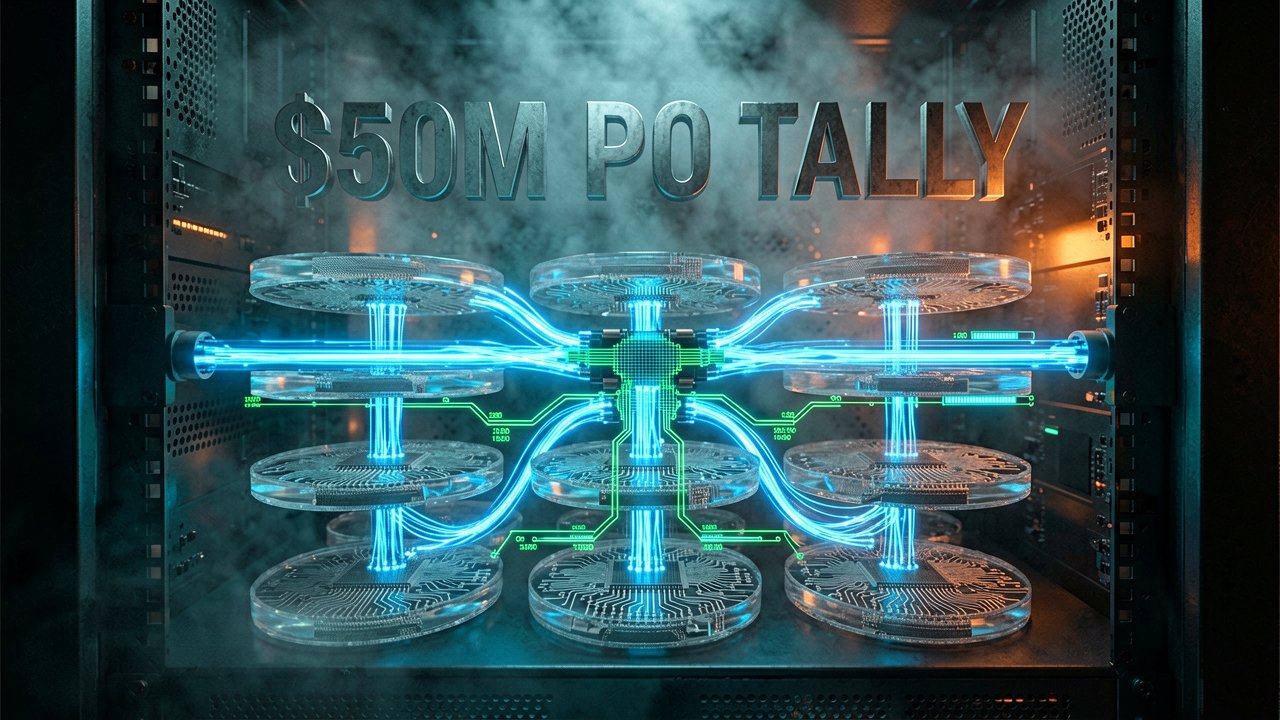
As clusters of graphics processing units expand, standard electrical interconnects are failing to handle the immense data throughput without suffering severe latency and energy penalties. This has accelerated institutional interest in specialized component makers like POET Technologies, which develops high-speed optical engines and integrated circuits. According to a commercial update tracked by Insider Monkey , the company secured a substantial $50 million purchase order from Lumilens, establishing a multi-year development pathway that could scale to over $500 million. This structural move underscores how hardware demands are shifting from generic computation toward specialized optical data center routing.
The Rise of "Neocloud" Alternatives Challenges Hyperscaler Dominance
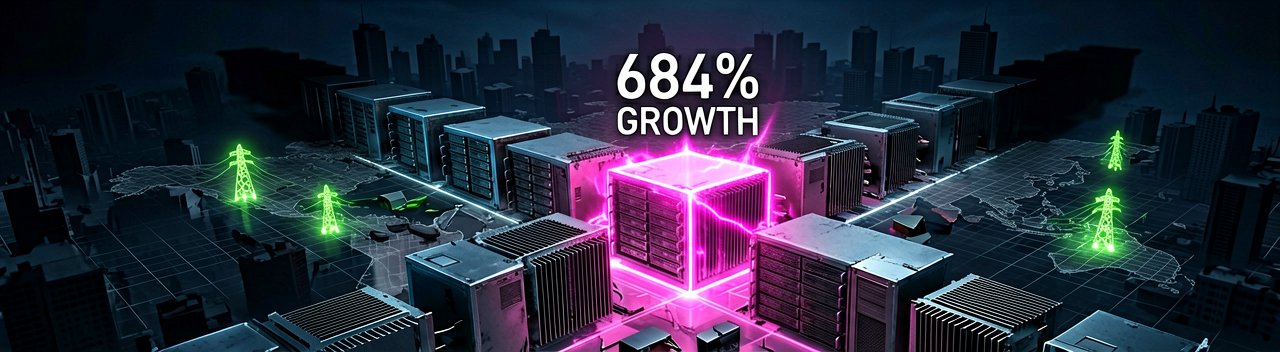
Traditional hyperscalers like Microsoft Azure, Amazon Web Services, and Google Cloud no longer hold an absolute monopoly on AI-centric hosting solutions. Specialized "neocloud" providers are building highly optimized, AI-first data architectures that cater specifically to large language model training and inference. A financial analysis by The Globe and Mail details that challenger Nebius achieved a staggering 684% year-over-year revenue increase in the first quarter, driven by severe global hardware shortages and agile data center rollouts. Wall Street consensus projections expect its revenue to scale by roughly twenty-fold between late 2025 and 2027, illustrating how nimble infrastructural plays are capturing enterprise customers left waiting by larger tech conglomerates.
Data Center Capacity Expansion Disables Single-Stock Monopolies
The aggressive decentralized deployment of advanced data computing units is transforming regional infrastructure networks into high-growth investment vehicles. Companies focusing on physical high-performance computing facilities and proprietary chip integration are drawing significant capital from risk-tolerant portfolios. Market evaluations reported by Investing.com emphasize that smaller infrastructure operators, such as WhiteFiber, are aggressively expanding their hardware footprints to absorb spillover demand. This broader distribution of infrastructure capital indicates that the next leg of AI equity growth will favor specialized hardware providers over traditional index heavyweights.
The Hidden Bottleneck: Data Center Power and Physical Real Estate
What Most Reports Miss: The primary constraint on the expansion of next-generation artificial intelligence is no longer software engineering or even raw silicon availability, but rather the stark physical limitations of electric grids and commercial land. As tech giants and emerging challengers race to deploy massive computing clusters, they are colliding with a severe deficit in localized power generation. Industry consultants note that the energy requirements for training a single cutting-edge large language model can surpass the annual electricity consumption of thousands of average households. Consequently, the true value in the AI ecosystem is rapidly shifting toward entities that hold pre-approved power allocations and strategic physical infrastructure footprint.
This reality has triggered a quiet but intense geopolitical and corporate scramble for secondary data center hubs outside traditional technology corridors. Legacy operators in northern Virginia or Silicon Valley face prolonged regulatory delays and grid overcapacity, which forces developers to seek alternative zones across Europe and midwestern North America. Institutional investors are actively reassessing real estate investment trusts and regional utility providers that possess underutilized power access. Analysts from major investment banks indicate that the speed at which a new market entrant can secure a grid connection has become a primary metric for determining its long-term equity valuation.
Furthermore, this infrastructure strain is driving a massive technological pivot toward structural efficiency at the hardware level. Software optimization can only mitigate so much resource consumption, forcing data center architects to redesign the physical cooling and power distribution systems from the ground up. Companies specializing in liquid cooling technologies and advanced power transformation modules are experiencing unprecedented backlog growth. For a seasoned market observer, the trajectory closely mirrors historical infrastructure booms, where the manufacturers of specialized tools and baseline components ultimately achieved more stable, predictable margins than the high-profile miners themselves.

The Sovereign AI Imperative and Regulatory Realities
Reading Between the Lines: The prevailing market narrative suggests that agile secondary players will seamlessly erode the dominance of the tech megacaps by virtue of speed and specialization. However, this thesis fundamentally overlooks the emerging reality of "sovereign AI" and localized regulatory fragmentation. While mid-cap infrastructure providers can scale rapidly during a localized capacity deficit, they lack the vast geopolitical lobbying apparatus and multi-regional compliance frameworks that insulate the largest technology conglomerates. As national governments increasingly treat AI infrastructure as a matter of critical national security, smaller market entrants will likely face severe regulatory scrutiny regarding data residency, supply chain origin, and foreign equity ownership.
Furthermore, an unexamined contradiction lies within the revenue models of these hyper-growth infrastructure plays. A significant portion of the capital fueling their exponential growth does not originate from sustainable commercial enterprise software sales, but rather from venture capital-backed startups that are themselves burning through runway. If the broader market experiences a cooling period for early-stage AI applications, the secondary infrastructure layer will feel the contraction instantly. The massive capital expenditures committed to building specialized data centers could rapidly transform into fixed-cost liabilities, turning today’s capacity constraints into tomorrow's supply glut.
The institutional rush to crown the next generation of market leaders also assumes a level of technological predictability that simply does not exist in a shifting hardware landscape. An architecture optimized for the current generation of transformer models could face sudden obsolescence if neuromorphic computing or alternative algorithmic structures gain mainstream commercial traction. Investors paying steep premiums for specialized component manufacturers are essentially wagering that the underlying engineering paradigms will remain static. In a sector where foundational breakthroughs occur on a monthly basis, the safest bet remains on companies with enough balance sheet liquidity to completely scrap and replace their hardware stacks without facing immediate insolvency.
"Wall Street's endless quest to find the 'next' tech monopoly always follows a familiar pattern: we spend billions building an infrastructure complex large enough to power civilization, only to realize the real money is being made by a teenager in a suburban garage who figured out how to use it all to generate hyper-realistic videos of talking cats."
Artūras Malašauskas is an AI Systems Integrator with 20+ years of production-grade web engineering experience. He has designed, shipped, and scaled enterprise Python/PHP systems for logistics, SaaS, and public-sector clients. For the past year, he has focused exclusively on AI integrations: deploying open-source LLMs, building generative media pipelines (image, audio, video), and engineering multi-agent workflows for real production environments. His standard: reproducibility, security, cost-efficient inference—no vaporware. He documents and evaluates emerging AI tooling, separating verified capabilities from marketing noise. Technical editor at: muza-ai.eu, ai-verslas.lt, ai-naujinos.lt Connect on LinkedIn
Comments