Sweeney vs. Newell: The Strategic Subtext of Epic’s Attack on the Handheld Market

The handheld gaming market experienced an unprecedented disruption after Valve enacted a massive price hike across its hardware lineup. The 512GB Steam Deck OLED surged by over 43 percent to $789, while the premium 1TB variant jumped to an eye-watering $949. Valve officially attributed this sharp correction to skyrocketing memory and storage costs alongside broader global logistical challenges. This dynamic is primarily driven by the intense artificial intelligence infrastructure build-out, which continues to consume consumer-side silicon allocations.
Epic Games CEO Tim Sweeney capitalized on the widespread consumer backlash to publicly condemn Valve and its co-founder, Gabe Newell. In a highly sarcastic post on social media, Sweeney mocked the price increases by blaming them on "severe disruptions in the component parts supply chain for megayachts," taking a direct swipe at Newell’s personal wealth. The commentary quickly ignited a fierce debate across the industry, though much of the initial public reaction shifted back onto Epic itself, with critics pointing out the hypocrisy of the statement following Epic’s own historical layoffs and digital item price increases.
As analyzed by reporters at Tom's Hardware, this ongoing feud underscores a deeper, structural conflict over digital distribution dominance. While Valve claims the price adjustment reflects real macro-economic pressures on low-margin hardware, Sweeney’s public criticism serves a broader corporate narrative aimed at destabilizing the absolute market control of the Steam platform.
The Realities of the Hardware Supply Chain Crunch
Valve’s aggressive hardware repricing highlights the vulnerability of specialized portable electronics in an enterprise-dominated semiconductor landscape. Component manufacturers have systematically reallocated production lines away from consumer electronics toward high-margin AI data center hardware, driving up the cost of LPDDR5 RAM and flash storage. Because Valve operates at a much lower production scale than traditional console manufacturers like Sony or Nintendo, it lacks the purchasing leverage necessary to absorb these multi-year supply chain distortions without passing costs onto the consumer.

A Proxy War for Digital Ecosystem Control
The public sparring between Epic and Valve goes far beyond the retail cost of a portable console. Epic Games has spent years spending heavily on exclusive titles and free incentives to expand the Epic Games Store footprint, yet Steam retains its definitive position as the default ecosystem for PC gamers. Handheld PCs function as physical gateways to digital storefronts, meaning that a more expensive Steam Deck directly alters the accessibility of Valve's closed loop, offering competing hardware manufacturers using open operating systems a brief window to capture priced-out enthusiasts.
The Fragmented Reality of Handheld Ecosystem Economics
Behind the Corporate Rhetoric: The economic reality of PC gaming handhelds is vastly different from traditional home consoles, leaving hardware vendors exposed to rapid market shifts. Sony and Microsoft traditionally offset thin hardware margins or outright losses with guaranteed long-term returns from mandatory licensing fees on every digital game sold. Valve attempted to replicate this ecosystem model with the original Steam Deck pricing, relying on its massive digital storefront to subsidize the hardware. However, because PC users can easily bypass the Steam client to install alternative launchers, the connection between hardware sales and long-term ecosystem monetization remains far more volatile than it is for closed platforms like Nintendo.
This dynamic explains why Epic Games views the Steam Deck's pricing structure through a hyper-competitive lens rather than a purely macroeconomic one. Every Steam Deck shipped acts as an idealized billboard for Valve’s digital storefront, reinforcing Steam’s market dominance directly in the user's hands. By positioning the price increase as corporate greed rather than a response to supply chain realities, Epic is attempting to chip away at the consumer goodwill that Valve has cultivated over decades. For Epic, destabilizing the perception of the Steam Deck as an affordable, pro-consumer device is a strategic necessity to help clear a path for competitive hardware running alternative operating systems.
The timing of this public spat is also deeply tied to Epic’s ongoing legal and corporate strategy to force open digital ecosystems worldwide. Having spent years fighting Apple and Google over store fees and sideloading restrictions, Sweeney views any manifestation of a closed marketplace as a target. While the Steam Deck technically allows users to install the Epic Games Store through desktop workarounds, the default user interface actively prioritizes the Steam library. Epic recognizes that hardware convenience dictates consumer habits, meaning that high hardware entry barriers might slow down the adoption of mobile PC gaming altogether, preserving the desktop status quo where Valve is safest.
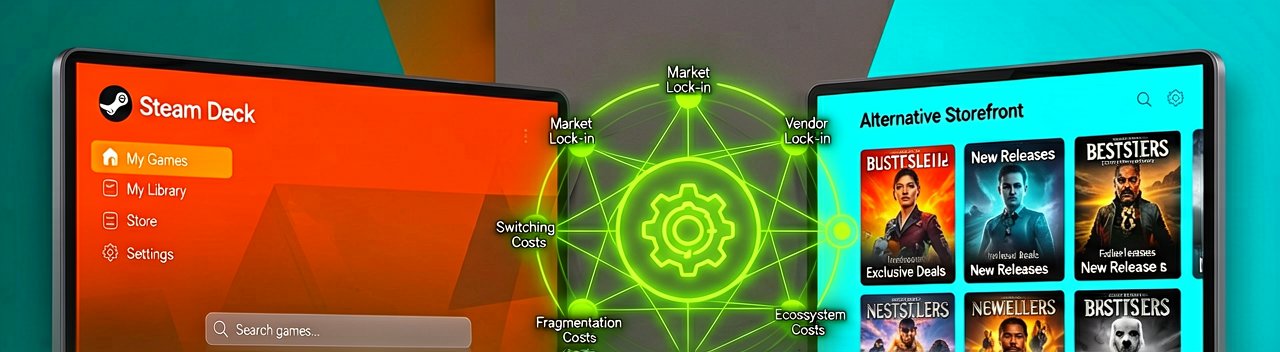
Meanwhile, alternative hardware manufacturers find themselves caught in the crossfire of this marketplace proxy war. Companies utilizing standard Windows operating systems, such as Asus and Lenovo, have historically struggled to match Valve's aggressive baseline pricing because they cannot subsidize their devices with digital software sales. Valve's steep price correction effectively levels the playing field, closing the artificial pricing gap between proprietary Linux devices and open Windows handhelds. Industry analysts note that this shift could inadvertently benefit Epic in the long run, as users buying non-Valve devices face fewer frictional barriers when choosing alternative storefronts.
Ultimately, this public fallout reveals a fundamental shift in how the industry views the future of PC gaming accessibility. What began as an experimental niche for enthusiasts has evolved into a vital battleground for ecosystem gatekeeping, where the control of the physical device is just as critical as the digital platform it runs. As component scarcity continues to plague mid-tier hardware manufacturing, the conflict between Epic and Valve will increasingly focus on who dictates the financial rules of mobile PC ecosystems.
The Paradox of Open Platforms and Closed Ambitions
Reading Between the Lines: The public moralizing surrounding the Steam Deck pricing structure exposes a deeper ideological contradiction at the heart of the modern PC ecosystem. Tim Sweeney’s populist critique relies on the assumption that Valve operates purely as an exploitative monopoly, yet this framing conveniently ignores Epic’s own corporate realities. Epic has routinely adjusted its own digital pricing structures, raised the cost of its virtual currencies, and restructured its workforce when macroeconomic pressures demanded fiscal discipline. To suggest that Valve should uniquely absorb massive global inflationary costs in the name of consumer altruism is a tactical distortion designed to score public relations points rather than an honest assessment of hardware manufacturing.
Furthermore, Epic’s ongoing crusade for open ecosystems contains its own structural irony. While Sweeney champions a decentralized future where multiple storefronts compete seamlessly on portable hardware, Epic’s primary mechanism for growth has historically relied on aggressive exclusivity deals that deliberately restrict player choice. By paying third-party developers to keep their titles off Steam, Epic has utilized its capital to build artificial walls within the PC landscape. This makes the corporate outcry over Valve's hardware pricing ring hollow to a consumer base that recognizes both entities are ultimately fighting for the exact same prize: a locked-in audience tied to a single payment processor.
Projecting the long-term implications of this hardware correction suggests a fragmented future for the handheld market rather than the open utopia Epic envisions. If Valve's price hike signals the death of heavily subsidized PC hardware, the portable gaming sector will likely bifurcate into ultra-premium niche devices and lower-powered streaming portables. This shift would fundamentally alter the competitive landscape, potentially pushing the mass market back toward traditional home consoles or heavily locked mobile ecosystems. Epic’s strategy of destabilizing Valve’s hardware reputation may succeed in tarnishing Gabe Newell’s pro-consumer image, but it risks dismantling the very hardware category that was actively expanding the addressable market for PC software.
"In the grand theater of PC gaming dominance, we are asked to choose between a digital landlord raising the rent on its front porch and an aspiring revolutionary who wants to tear down the gates just so they can build their own tollbooth. Ultimately, the gamer is left holding a much lighter wallet, discovering that whether a platform is open or closed, the cost of admission always finds a way to go up."
Artūras Malašauskas is an AI Systems Integrator with 20+ years of production-grade web engineering experience. He has designed, shipped, and scaled enterprise Python/PHP systems for logistics, SaaS, and public-sector clients. For the past year, he has focused exclusively on AI integrations: deploying open-source LLMs, building generative media pipelines (image, audio, video), and engineering multi-agent workflows for real production environments. His standard: reproducibility, security, cost-efficient inference—no vaporware. He documents and evaluates emerging AI tooling, separating verified capabilities from marketing noise. Technical editor at: muza-ai.eu, ai-verslas.lt, ai-naujinos.lt Connect on LinkedIn
Comments