The Handheld Paradigm Shift: Why Valve’s Bitter Pill Triggered an Industry Civil War
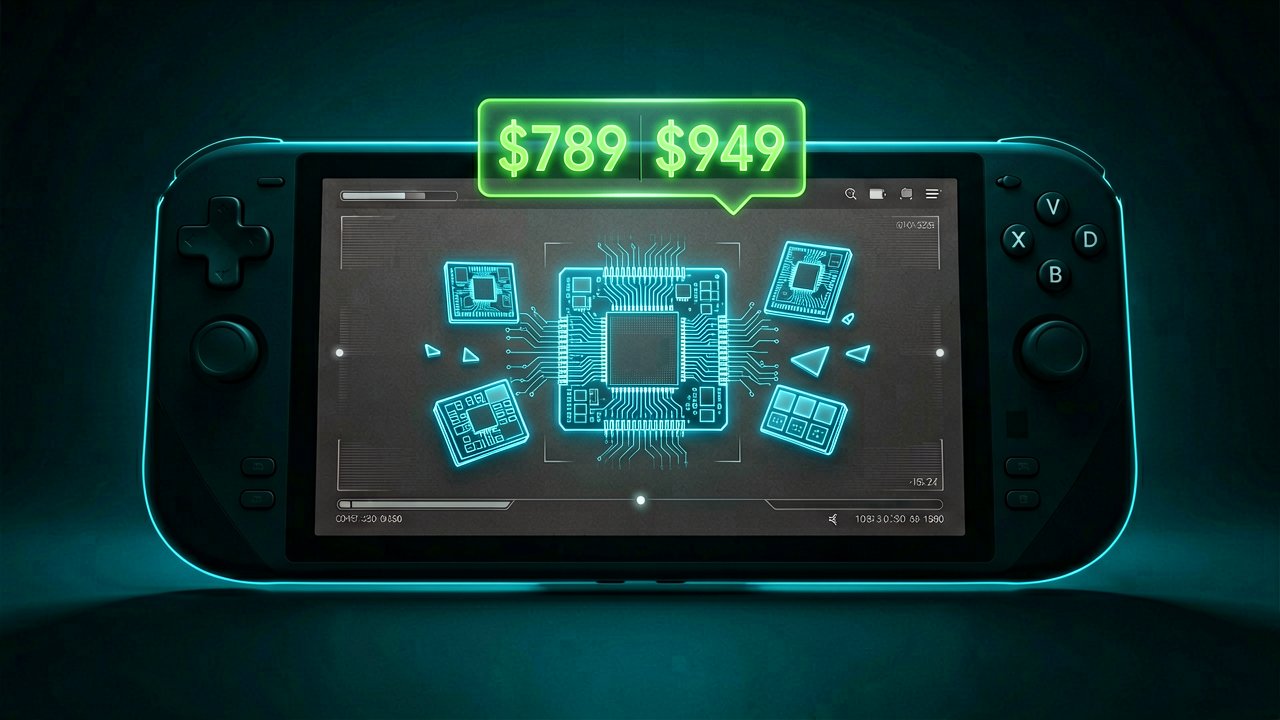
Valve’s abrupt decision to radically adjust its hardware strategy has sent shockwaves through the gaming sector. The manufacturer raised the price of its 512GB Steam Deck OLED from $549 to $789, while the premium 1TB configuration surged from $649 to an eye-popping $949. This represents an unprecedented price increase of up to 46% on aging consumer hardware. Epic Games Chief Executive Officer Tim Sweeney publicly condemned the corporate maneuvering on social media, drawing a direct line between the pricing update and broader execution priorities at the privately held gaming giant. The swift escalation highlights a deepening philosophical rift between platform holders regarding who should shoulder the escalating burden of component procurement in a heavily supply-constrained hardware ecosystem.
The strategic justification offered by Valve rests heavily on structural macroeconomic pressures rather than arbitrary revenue optimization. Silicon fabrication pipelines are facing extreme constraints as artificial intelligence infrastructure demands absorb global supplies of high-speed memory and high-density NAND flash storage. Industry tracking shows flash memory components experiencing multi-hundred percent wholesale cost increases over the past year. This rapid escalation effectively dismantled the standard platform model of subsidizing portable x86 hardware through digital software margins. While smaller, low-margin manufacturers have been forced to cancel unreleased product lines altogether due to these unsustainable market shifts, Valve has instead chosen to abandon its initial loss-leader distribution model entirely to preserve immediate device availability.
The Economics of Platform Subsidies and Supply Chain Volatility
For several fiscal quarters, market analysis suggested that consumer electronics would benefit from standard manufacturing efficiencies over time. Instead, an aggressive build-out of enterprise data centers has dramatically altered the baseline economics of localized computing. Legacy hardware components are no longer experiencing historical cost-reduction curves. Platform operators are now forced to navigate an environment where continuous component sourcing requires competing directly against heavily capitalized hyperscale cloud providers for critical silicon space.
This dynamic has forced consumer tech brands into an uncomfortable strategic trade-off between baseline product accessibility and long-term operating margins. Platforms that historically absorbed multi-million dollar manufacturing shortfalls to scale their active digital storefront user base are finding that sustained market volatility makes extended loss-protection unsustainable. By resetting its baseline retail price near the $1,000 threshold, Valve has shifted the premium handheld segment away from high-volume mainstream adoption, explicitly repositioning the product category as a specialized boutique ecosystem.
Competitive Responses and Storefront Rivalries
The aggressive public pushback from Epic Games reveals deep anxiety regarding how these hardware distribution shifts impact alternative digital marketplaces. Platform architecture changes have traditionally served as a critical mechanism for breaking down legacy software distribution monopolies. When affordable open-platform handheld devices are priced out of the mainstream market, consumers naturally migrate back toward lower-cost closed ecosystems that limit third-party digital storefront integration entirely.
The evolving ecosystem is analyzed thoroughly in comprehensive hardware breakdowns provided by Tom's Hardware, showcasing how high-end mobile computing segments are reacting to extreme manufacturing volatility. The broader industry implications extend far beyond a single line of handheld devices. The shifting price floor directly recalibrates the commercial viability of upcoming home console revisions and hybrid hardware platforms. Manufacturers across the gaming landscape must now determine whether to test consumer price elasticity with unprecedented premium retail pricing or permanently scale back the architectural ambitions of their next-generation silicon designs.
The Hidden Math of the Handheld Market Collapse
What Most Reports Miss: The public sparring match between Tim Sweeney and Valve obscures a far more systemic reality regarding how today's PC hardware supply chains are fundamentally broken. For the past four years, the handheld gaming sector operated on an unsustainable financial fiction, buoyed by the assumption that the high-volume production of custom Accelerated Processing Units (APUs) would mirror the predictable cost-reduction curves of traditional home consoles. Instead, the sudden global pivot toward artificial intelligence infrastructure has effectively weaponized the semiconductor foundry landscape. Manufacturers like TSMC are prioritizing high-margin AI accelerators over consumer silicon, leaving niche form factors like handheld PCs to battle for whatever packaging capacity remains at significantly inflated premiums.
This resource bottleneck explains the architectural paralysis currently gripping Valve’s closest competitors in the open ecosystem. While ASUS and Lenovo initially captured headlines by iterating rapidly on their respective portable lines, their subsequent development cycles have noticeably slowed as component costs ballooned out of reach. Industry insiders indicate that the wholesale cost of high-bandwidth LPDDR5X memory and custom cooling arrays has risen steadily since late 2024. By escalating its retail pricing so aggressively, Valve didn't merely adjust for inflation; it signaled to the entire hardware ecosystem that the era of aggressive platform subsidies for specialized PC gaming devices has come to an unceremonious end.
The resulting strategic fallout is exposing deep ideological fault lines over digital storefront sovereignty. Epic Games has invested hundreds of millions of dollars attempting to position its marketplace as a viable cross-platform alternative, viewing open handhelds as the ultimate vehicle to bypass traditional ecosystem gatekeepers. When portable PCs are priced as luxury items rather than mainstream consoles, that grand democratic vision for mobile software distribution evaporates. Consumers forced out of the $400 hardware market naturally default back to heavily subsidized, locked-down ecosystems where alternative storefront installation is deliberately obstructed by corporate policy.
Ultimately, this economic recalibration forces a complete reassessment of what defines a sustainable hardware business model in the modern era. Valve's unique position as a privately held entity allows it to absorb public relations backlash that would instantly destabilize a publicly traded competitor. By choosing margin preservation over market share expansion, the company has insulated its hardware division against future semiconductor price shocks, even if it means ceding the mass-market territory it worked so hard to establish. The broader tech sector is left watching an involuntary experiment in consumer price elasticity, where the premium handheld is no longer a catalyst for software growth, but a boutique hardware anomaly.
The Counter-Intuitive Reality of Ecosystem Lock-In
Reading Between the Lines: The prevailing narrative casts Valve as a defensive monopoly protecting its turf and Epic Games as the righteous defender of open computing, but this binary framing ignores a glaring strategic hypocrisy. Epic’s vocal outrage over the Steam Deck price hike conveniently glosses over the fact that its own business model relies entirely on leveraging high-margin software ecosystems to subsidize aggressive corporate maneuvers. By demanding that Valve maintain an artificially low hardware price floor during a global supply chain crisis, critics are essentially asking a hardware manufacturer to run a perpetual charity. The assumption that platform holders owe the industry a permanently subsidized gateway to the open web collapses under the weight of basic macroeconomic reality.
This conflict also exposes a fundamental contradiction in how the tech industry measures market success. For years, analysts insisted that the only way for handheld PCs to survive was to chase mainstream, console-like adoption numbers through razor-thin margins. However, Valve’s sudden pivot toward boutique pricing proves that the goal was never to replace the home console, but rather to lock affluent enthusiasts deeper into the Steam ecosystem. The consumers willing to pay nearly a thousand dollars for an incremental hardware refresh are the exact high-spending power users who generate the highest lifetime software value, rendering mass-market volume entirely irrelevant to Valve's bottom line.
Looking ahead, the long-term implications of this premium repositioning will likely stifle the very innovation that birthed the handheld boom. Independent component manufacturers who previously pivoted toward optimizing low-power displays and compact cooling solutions are already shifting resources back toward standard laptop and desktop segments where pricing margins are more predictable. By retreating from the mainstream pricing sweet spot, Valve has inadvertently signaled to the broader component supply chain that portable PC gaming will remain a high-cost, low-volume playground for the foreseeable future, rather than the mass-market revolution it originally promised.
"In the end, the grand corporate battle for the soul of open gaming has yielded a remarkably predictable result: the open ecosystem remains completely free for anyone who can afford a thousand-dollar ticket to enter."
Artūras Malašauskas is an AI Systems Integrator with 20+ years of production-grade web engineering experience. He has designed, shipped, and scaled enterprise Python/PHP systems for logistics, SaaS, and public-sector clients. For the past year, he has focused exclusively on AI integrations: deploying open-source LLMs, building generative media pipelines (image, audio, video), and engineering multi-agent workflows for real production environments. His standard: reproducibility, security, cost-efficient inference—no vaporware. He documents and evaluates emerging AI tooling, separating verified capabilities from marketing noise. Technical editor at: muza-ai.eu, ai-verslas.lt, ai-naujinos.lt Connect on LinkedIn
Comments