AI Infrastructure Stocks Redefine Market Dynamics as Micron Faces Stiff Competition
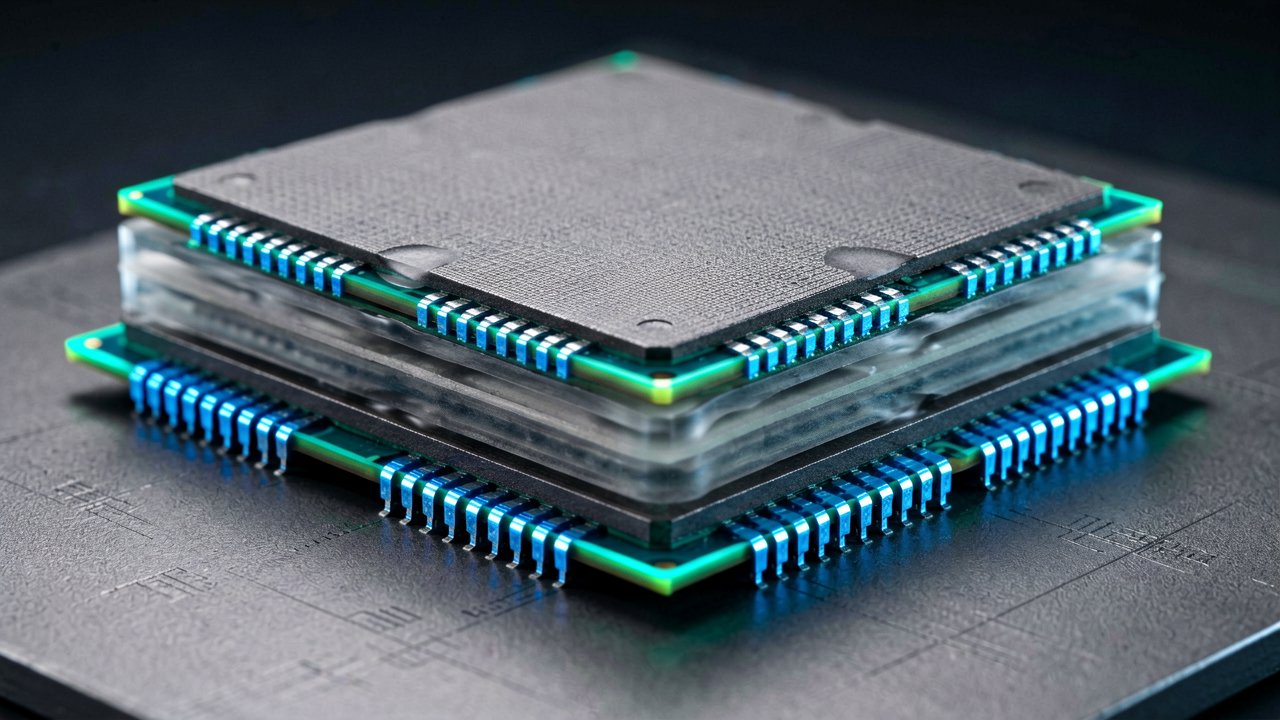
The artificial intelligence infrastructure boom has triggered a sweeping transformation across global equity markets, vaulting hardware providers into unprecedented valuation territory. High-bandwidth memory (HBM) has shifted from a specialized hardware niche to the ultimate gatekeeper of AI data center throughput, heavily dictating the performance of next-generation graphics processing units. This surge in demand has sparked a massive capital injection into the semiconductor supply chain, pushing memory manufacturers into the epicenter of the broader technology rally.
While U.S.-based Micron Technology has enjoyed exponential financial growth and soaring quarterly revenues from this structural shift, the company faces an uphill battle against deeply entrenched East Asian rivals. South Korea's SK Hynix continues to leverage its early technological dominance, retaining a commanding lead in revenue share and locking down a substantial portion of premium multi-year supply contracts. The intensely competitive landscape forces all major hardware producers to constantly innovate, rendering prior market-share baselines obsolete with each developmental cycle.
According to an in-depth financial assessment published by Benzinga, SK Hynix captured a significant portion of global HBM revenue, driven largely by its status as a primary partner for leading AI chip designers. This formidable head start leaves Micron fighting alongside a rapidly recovering Samsung Electronics to capture the remaining open market allocation.
The Architecture Transition and Foundry Partnerships
The transition to advanced HBM4 architectures represents a critical inflection point that is completely reorganizing historical chipmaker relationships. Unlike previous iterations, next-generation memory stacks require direct integration with advanced foundry logic dies, compelling traditional memory firms to build deeper alliances with pure-play manufacturing foundries. Companies that fail to optimize these cross-industry partnerships risk severe yield penalties and lengthy qualification delays at major hyperscale clients.

Supply Constraints and Capital Expenditure Risks
Extremely tight production capacity across the industry has granted unprecedented pricing power to component suppliers, insulating their gross margins from typical cyclical downturns. However, the sheer volume of capital expenditure required to build out specialized packaging facilities introduces long-term financial risk if hardware demand experiencing any unexpected stabilization. Investors are increasingly evaluating these infrastructure equities based on technical roadmap execution rather than mere production volume.
Behind the Scenes of the Silicon Arms Race
The race to dominate the artificial intelligence infrastructure landscape extends far beyond raw manufacturing capacity, anchoring itself in a complex web of proprietary advanced packaging technologies. For years, conventional memory was treated as a cyclical commodity, bought and sold based on macro supply gluts and shortages. The arrival of generative AI shattered this model, forcing memory architects to rethink how silicon dies communicate. Today, proprietary stacking techniques—such as thermal compression non-conductive film and advanced mass reflow molded underfill—serve as the closely guarded intellectual property separating market leaders from industry laggards.
This technical divide has created distinct camps among institutional investors and industry stakeholders. Silicon Valley chip designers require memory modules that operate at near-zero latency while withstanding extreme thermal stress inside dense server racks. Because early movers secured exclusive access to specialized production machinery, the barrier to entry has risen exponentially. Latecomers face a dual penalty: they must simultaneously invent comparable stacking chemistry and wait in multi-year queues for the specialized tool machinery needed to scale production.
Historically, semiconductor supply chains functioned through arms-length transactional relationships, but the current infrastructure crunch has forced an unprecedented level of co-engineering. Hyper-scale cloud providers no longer simply purchase off-the-shelf components; they embedded engineering teams directly within memory fabrication facilities to co-design customized silicon architectures. This deep integration alters the traditional corporate power dynamics, effectively giving a handful of elite tech conglomerates a powerful say over the product roadmaps and strategic priorities of global memory suppliers.
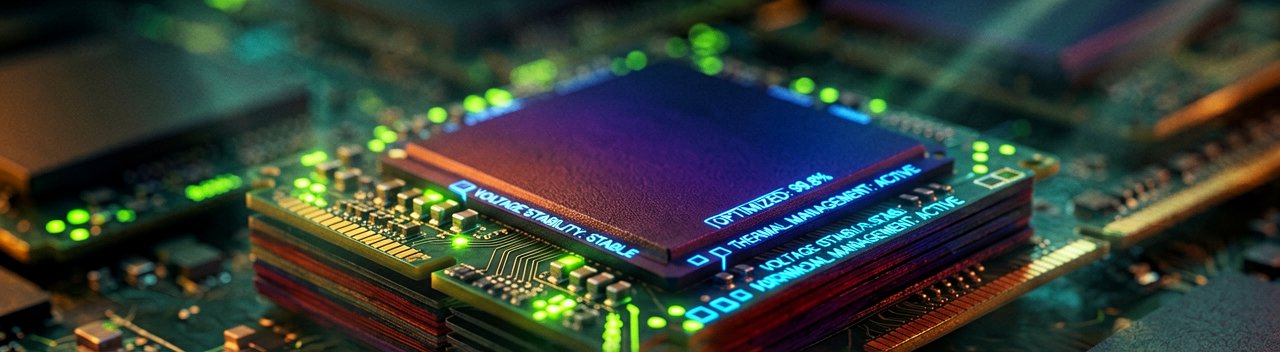
Furthermore, geopolitical considerations heavily complicate the competitive outlook for memory manufacturers striving to diversify their geographic footprints. Building advanced fabrication plants in new regions requires navigating complex subsidy frameworks, localized labor shortages, and unproven regional supply networks. While these multi-billion-dollar expansions aim to mitigate supply chain disruptions, they simultaneously introduce immense execution risks that could depress corporate margins if initial manufacturing yields fall short of expectations during the critical launch phases.
Ultimately, the upcoming transition to entirely new architectural standards will test the agility of every major player in the semiconductor ecosystem. As memory layers stack higher and integration with primary processors becomes more intimate, the boundary between standard component manufacturing and advanced foundry logic will blur entirely. The winners of this next phase will not necessarily be the companies with the largest capital expenditure budgets, but those that master the intricate physics of sub-micron packaging while maintaining stable commercial yields.
Reading Between the Lines of the AI Supercycle
The prevailing Wall Street narrative treats the demand for AI infrastructure as an infinite runway, yet this consensus overlooks a fundamental structural contradiction. Hyperscalers are expanding capital expenditure at a pace that far outstrips the current revenue generated by consumer-facing generative AI applications. Memory manufacturers are rapidly converting standard dynamic random-access memory lines into high-bandwidth memory capacity to chase these staggering infrastructure margins. This massive pivot creates a dual vulnerability: a sudden deceleration in data center buildouts would leave suppliers with immense overcapacity, while simultaneously triggering artificial supply shortages and volatile price spikes in the neglected consumer device markets.
Furthermore, the assumption that technological superiority guarantees long-term market dominance ignores the brutal realities of hardware qualification timelines. A manufacturer can design an architecturally flawless memory stack on paper, but the enterprise validation process introduces months of rigorous testing where even minor yield variances lead to total disqualification. This creates an environment where legacy market share acts as a powerful moat. Incumbents who deliver reliable, mediocre yields often secure lucrative, multi-quarter contracts over competitors offering superior theoretical performance that suffers from unproven manufacturing consistency.
This dynamic shifts the real corporate battlefield from pure engineering innovation to the unglamorous logistics of yield optimization and supply chain resilience. As memory architectures scale to greater layer densities, the physical margins for error shrink to atomic levels, rendering traditional fabrication methods economically non-viable. The massive capital outlays required to pioneer these next-generation packaging techniques mean that a single miscalculated architectural shift can wipe out multiple quarters of profitability, transforming yesterday's market darling into an existential cautionary tale.
Looking ahead, the eventual stabilization of the initial AI infrastructure buildout will expose which semiconductor firms built sustainable ecosystems and which merely rode the coattails of a historic liquidity wave. When hardware replacement cycles inevitably lengthen and optimization software reduces the raw volume of silicon required to train large models, the premium pricing power currently enjoyed by component manufacturers will evaporate. The true test of resilience will not be who grew the fastest during the peak of the hype cycle, but who managed their capital allocations carefully enough to survive the inevitable margin normalization.
Building the physical infrastructure for the future of human intelligence turns out to be an incredibly messy business, proving that even the most advanced digital brains remain entirely at the mercy of silicon, copper, and whether a factory half a world away can stack microchips straight without melting them.
Artūras Malašauskas is an AI Systems Integrator with 20+ years of production-grade web engineering experience. He has designed, shipped, and scaled enterprise Python/PHP systems for logistics, SaaS, and public-sector clients. For the past year, he has focused exclusively on AI integrations: deploying open-source LLMs, building generative media pipelines (image, audio, video), and engineering multi-agent workflows for real production environments. His standard: reproducibility, security, cost-efficient inference—no vaporware. He documents and evaluates emerging AI tooling, separating verified capabilities from marketing noise. Technical editor at: muza-ai.eu, ai-verslas.lt, ai-naujinos.lt Connect on LinkedIn
Comments