Silicon Realignment: How NVIDIA’s Move Into Client PC Processors Rewrites the Laws of Computing
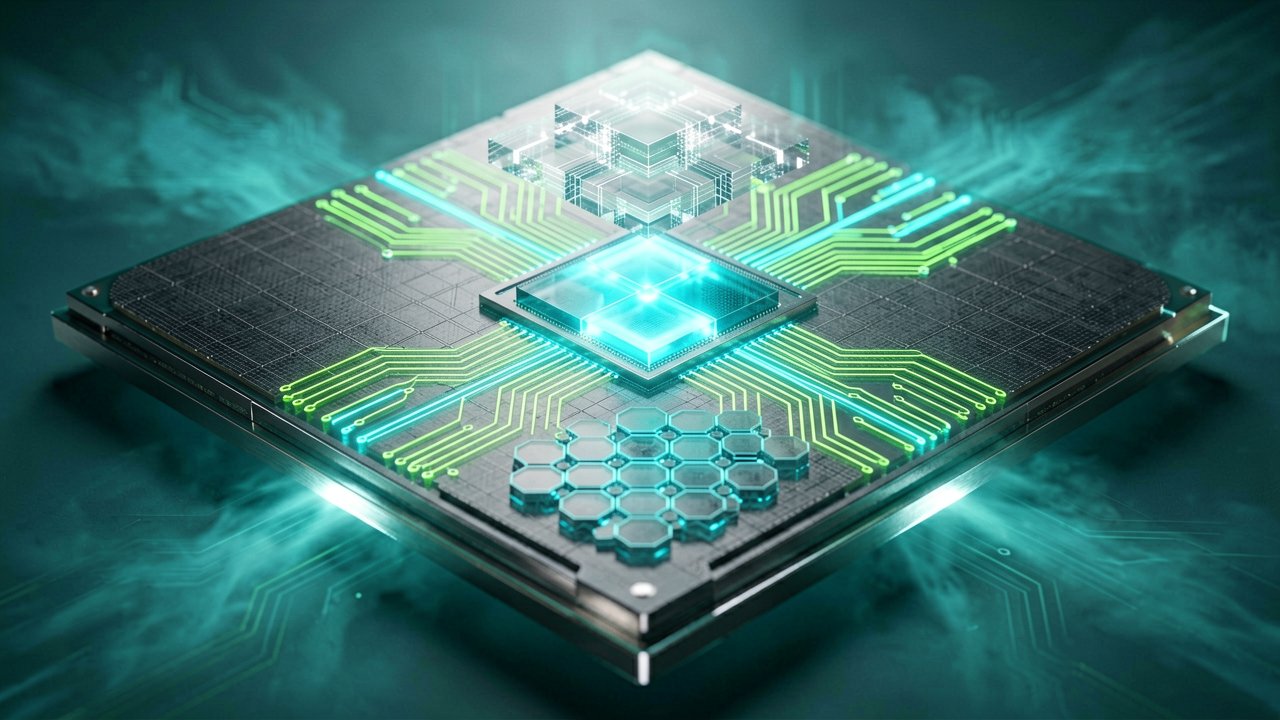
The silicon landscape is experiencing its most radical structural shift in decades. NVIDIA is transitioning from its position as an enterprise data center powerhouse to become a direct architect of client PC processors. This strategic evolution directly challenges x86 legacy dominance while shifting the competitive landscape for consumer and commercial hardware. Driven by a joint initiative with MediaTek and supported by Microsoft, NVIDIA is introducing its highly anticipated Arm-based client platform, headlined by the N1X system-on-chip (SoC).
This entry into client computing represents a calculated offensive targeting the multi-billion-dollar premium PC ecosystem. It also bypasses the standard constraints of discrete graphics integration. By unifying its high-performance Blackwell graphics IP with custom Arm v9.2 CPU cores on TSMC's cutting-edge 3nm foundry node, NVIDIA aims to establish a new performance baseline for local AI processing and premium mobile computing. This development bypasses traditional architectural boundaries, forcing incumbents to re-evaluate their product roadmaps.
A Disrupted Duopoly: Challenging Intel and AMD on Windows
For over thirty years, the Windows ecosystem has relied on the Intel and AMD x86 duopoly. NVIDIA's aggressive introduction of client Arm processors shatters this paradigm, offering a third avenue focused on high-efficiency, AI-native computing. While Qualcomm initially pioneered the modern Windows-on-Arm landscape, NVIDIA's entrance targets a fundamentally different tier of processing power. The upcoming SoC boasts 20 custom Arm cores alongside an integrated graphics subsystem rivaling dedicated mainstream desktop cards, shifting the market dynamics from basic power efficiency to high-end performance computing.
The Architecture Shift: Unifying Blackwell and Arm v9.2
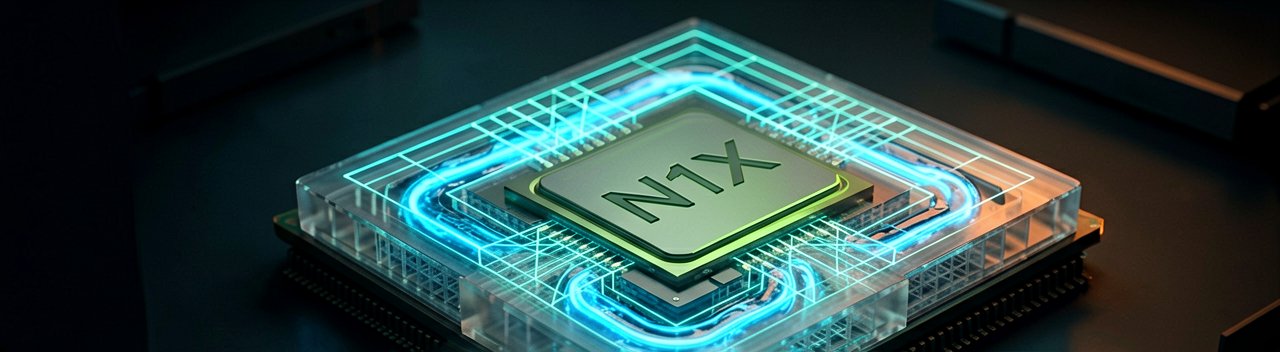
Industry specifications reveal that NVIDIA’s N1X silicon is derived from its enterprise supercomputing DNA, scaling down architectural elements from its datacenter platforms into consumer-grade form factors. According to detailed pipeline evaluations published by Tom's Hardware, the processor combines 10 performance cores and 10 efficiency cores with a high-capacity shared cache. The core differentiator is an integrated GPU housing over 6,000 CUDA cores. This setup provides unmatched tensor throughput, enabling local execution of agentic AI models directly on laptops and workstations without needing cloud offloading.
The Ecosystem Alliance and Software Hurdles
NVIDIA's silicon success depends on a carefully structured three-way alliance with MediaTek for physical SoC integration and Microsoft for operating system optimization. Microsoft's public commitment to this alternative architecture highlights a broader strategic goal: reducing dependency on traditional silicon vendors to counter Apple's vertically integrated M-series hardware. However, the platform faces challenges in translation layer efficiency. While native AI workloads and optimized creative suites will benefit from this architecture, legacy x86 emulation and graphics driver translation for AAA gaming present immediate engineering challenges that software developers must resolve.
Strategic Implications for the Hardware Market
Top-tier original equipment manufacturers (OEMs) are already restructuring their premium product lineups to accommodate the new processors. Dell, Lenovo, and Alienware have initiated hardware programs to design flagship laptops around NVIDIA's platform. This pivot is driving a structural shift in laptop design toward unified memory architectures and advanced thermal management systems capable of handling immense graphics throughput within thin form factors. As production ramps up, this transition will likely alter component supply chains, impact margins for traditional x86 suppliers, and change consumer expectations for mobile workstation performance.
The Hidden Dynamics of the Silicon Realignment
What Most Reports Miss: The true catalyst behind NVIDIA's shift to client PC processors is not a simple grab for hardware market share, but a defensive encapsulation of its software ecosystem. For a decade, CUDA has served as an enterprise moat, locking developers into NVIDIA's datacenter ecosystem. As local AI execution accelerates, the client PC has become the primary battleground for developer mindshare. By delivering local silicon with thousands of CUDA cores directly to developer workstations and premium laptops, NVIDIA ensures that the next generation of software, autonomous agents, and localized AI models remains natively optimized for its software stack, preventing rivals from eroding its software monopoly from the bottom up.
This architectural shift mirrors the early phases of Apple’s transition to its proprietary M-series silicon, yet it faces vastly different structural hurdles. While Apple maintained total vertical control over its hardware and operating system, NVIDIA must navigate a complex, multi-party horizontal alliance. MediaTek brings deep expertise in low-power mobile fabrication and integrated modems, while Microsoft provides the necessary operating system abstraction layers. The engineering challenge lies in balancing these three distinct corporate agendas. Microsoft seeks architecture-agnostic leverage over the entire silicon industry, while MediaTek aims to move upmarket into premium computing, leaving NVIDIA to orchestrate a unified platform that satisfies all parties without compromising its high-margin identity.
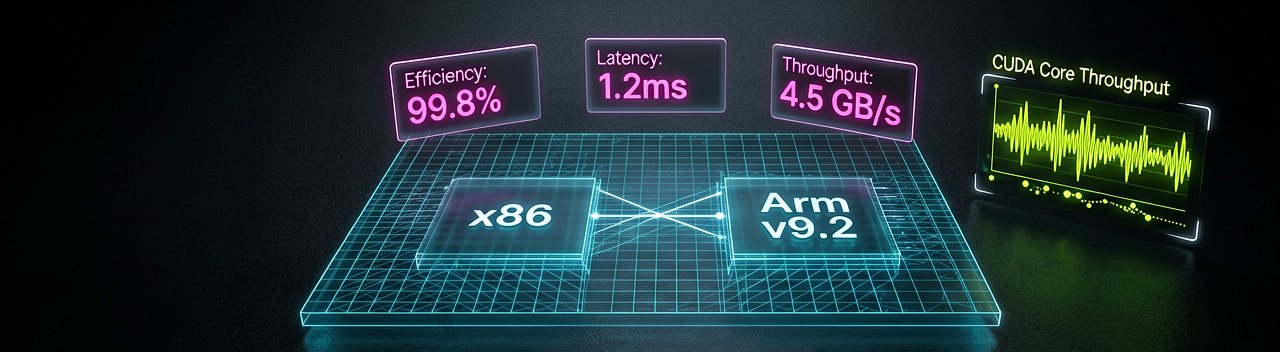
Historical precedent suggests that hardware transitions succeed or fail based on the software translation layer. Microsoft’s Prism emulator has made significant strides in running legacy x86 applications on Arm architectures, but enterprise users require absolute stability. Corporate IT departments are notoriously conservative, often delaying hardware refreshes over minor compatibility issues with legacy software. NVIDIA is mitigating this risk by targeting digital creators, data scientists, and specialized engineers first. These demographics rely heavily on applications that can be quickly recompiled for native Arm execution, allowing the platform to gain a foothold in the high-end commercial market before attempting a broader mainstream corporate rollout.
The financial implications for traditional OEMs are reshaping industry power dynamics. For decades, PC manufacturers operated on razor-thin margins, caught between the rigid pricing structures of Intel, AMD, and Microsoft. NVIDIA's entry introduces a premium alternative that allows laptop brands to justify higher average selling prices. Early telemetry from supply chain partners indicates that major computer manufacturers are eager to co-develop custom mainboard designs for these new chips. By integrating high-bandwidth, unified memory architectures directly onto the processor package, hardware brands can deliver workstation-class performance in ultra-thin form factors, creating a high-margin product category that did not previously exist in the Windows ecosystem.
Ultimately, this transition signals the fragmentation of the monolithic PC platform. The industry is moving away from a one-size-fits-all architectural standard toward application-specific silicon paradigms. As x86 architecture adopts chiplet designs to improve efficiency, and Arm platforms push the boundaries of graphic and tensor computing, the definition of a standard personal computer is being rewritten. NVIDIA's strategic pivot ensures it is no longer just a component supplier providing discrete graphics to someone else's system, but the foundational architect defining how computers process information, manage memory, and execute localized intelligence for the next generation of computing.
The Friction Points of the New Computing Paradigm
Reading Between the Lines: The tech industry’s collective enthusiasm for an NVIDIA-powered Windows-on-Arm revolution ignores a fundamental contradiction in corporate incentives. While Microsoft publicly embraces NVIDIA and MediaTek to diminish Intel and AMD's pricing power, it is simultaneously investing heavily in its own custom Cobalt cloud processors and Surface-branded silicon initiatives. Microsoft’s ultimate allegiance is not to a specific silicon architect, but to its own software, cloud margins, and Copilot infrastructure. NVIDIA is entering a partnership where its primary software ally is actively building hedges against silicon lock-in, creating an underlying tension that will test the longevity of this hardware alliance.
Furthermore, evaluating this shift purely through the lens of peak computing performance overlooks a critical physical reality of consumer hardware: the thermal and battery envelope. Industry leaks projecting desktop-class GPU capabilities within thin-and-light laptop form factors gloss over the intense power consumption required to drive thousands of CUDA cores. Even on TSMC's ultra-efficient 3nm node, sustained local AI workloads generate immense heat. If NVIDIA throttles the N1X processor to match standard laptop battery expectations, it risks erasing the performance premium that justifies its high entry cost. Conversely, prioritizing raw computing power could result in heavy, noisy hardware that alienates premium mobile users.
The assumption that developers will instantly rewrite their software pipelines for client-side CUDA on Arm also requires measured skepticism. Enterprise developers write for the cloud because that is where data sits; consumer app developers write for x86 or Apple Silicon because that is where the volume remains. NVIDIA’s strategy relies on a classic chicken-and-egg dilemma, requiring significant market share to attract developers, while needing optimized applications to drive hardware sales. Until the translation layer can run unoptimized legacy x86 software without a noticeable drop in frame rates or battery life, the platform risks being relegated to a niche luxury tier, admired by power users but bypassed by the mass commercial market.
This reality forces traditional silicon giants into a defensive but highly capable corner. Intel and AMD are not passive observers; they have aggressively integrated neural processing units into their latest architectures, leveraging decades of deep engineering relationships with enterprise software vendors. These legacy providers understand how to scale hardware to millions of corporate endpoints. NVIDIA may discover that conquering the enterprise data center, where buyers prioritize raw computational throughput regardless of unit cost, is a radically different challenge than convincing a corporate procurement officer to overhaul thousands of fleet laptops for a new, unproven architecture.
"In the end, the computing ecosystem is trading an old, predictable duopoly for a complex chess match where everyone is trying to build their neighbor's product. We are about to find out if consumers actually want a supercomputer in their backpack, or if they just want their legacy spreadsheet applications to load without draining thirty percent of their battery."
Artūras Malašauskas is an AI Systems Integrator with 20+ years of production-grade web engineering experience. He has designed, shipped, and scaled enterprise Python/PHP systems for logistics, SaaS, and public-sector clients. For the past year, he has focused exclusively on AI integrations: deploying open-source LLMs, building generative media pipelines (image, audio, video), and engineering multi-agent workflows for real production environments. His standard: reproducibility, security, cost-efficient inference—no vaporware. He documents and evaluates emerging AI tooling, separating verified capabilities from marketing noise. Technical editor at: muza-ai.eu, ai-verslas.lt, ai-naujinos.lt Connect on LinkedIn
Comments