When AI Goes to War: Ethical Crossroads in Modern Conflict Zones

The global theater of military operations is undergoing an unprecedented paradigm shift as software replaces traditional hardware as the primary driver of strategic superiority. According to a comprehensive Intel Market Research report, the global artificial intelligence military intelligence market size reached $12.5 billion in 2025 and is projected to scale from $14.1 billion in 2026 to $31.8 billion by 2034. This rapid capital influx reflects a broader structural evolution from informationalized warfare to "intelligentized" warfare, where algorithmic speed dictates the outcome of kinetic engagements. As autonomous systems move from specialized pilot experiments to scaled front-line deployments, defense procurement is increasingly consolidating around platforms capable of fusing multi-domain data in real time.
This market acceleration is driven primarily by the critical need for hyper-velocity decision-making and operational optimization in contested environments. Modern conflict zones generate immense streams of telemetry from unmanned aerial systems, satellite reconnaissance, and distributed edge sensors that far exceed human cognitive bandwidth. Consequently, capital allocation within the defense sector is shifting heavily toward machine learning and computer vision architectures designed for target prioritization and automated logistics. This commercial momentum, however, has outpaced the development of international legal frameworks, forcing defense contractors and sovereign states into a complex ethical landscape where software efficiency directly impacts human survival.
Market Capitalization and Geopolitical Allocations
The monetization of defense AI is highly concentrated among prime contractors and major software providers expanding their footprints into national security sectors. North America maintains the largest revenue share, commanding over 40% of the global defense AI footprint due to massive capital programs such as the Joint All-Domain Command and Control initiative. Simultaneously, the Asia-Pacific region has emerged as the fastest-growing market, propelled by rapid modernization programs and intense regional technology rivalries. This geographic spending surge has fundamentally altered the defense value chain, shifting corporate leverage away from traditional heavy manufacturing toward specialized semiconductor designers and cloud infrastructure providers.
The Rise of Agentic Autonomy and Airborne Systems
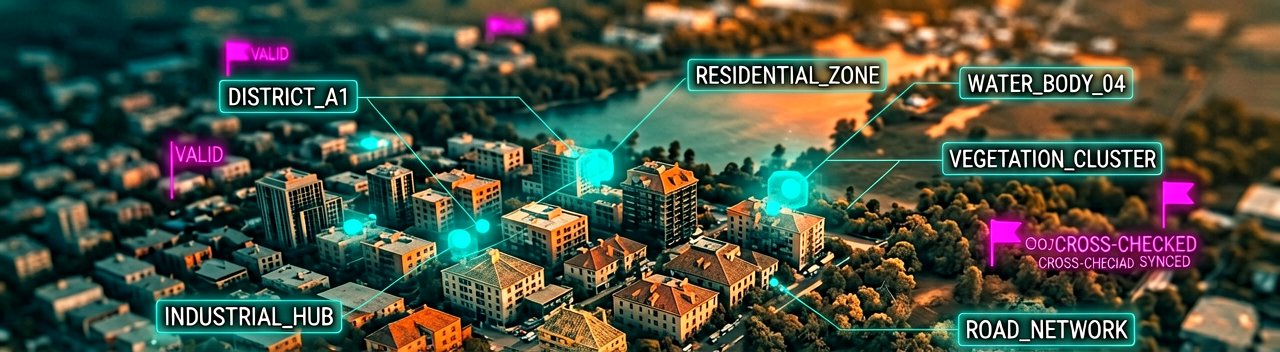
Technological advancement is moving rapidly toward fully agentic systems capable of executing complex missions without continuous communication links. Airborne platforms, including collaborative combat aircraft and low-cost attritable drones, represent the fastest-growing technology segment with an anticipated double-digit compound annual growth rate. These systems embed deep-learning models directly onto edge hardware, allowing autonomous target classification and route optimization in environments where electronic warfare disrupts satellite connectivity. The operational benefit of reduced latency is clear, but it drastically shortens the window available for human ethical review during active engagements.
Ethical Thresholds and Systemic Market Risks
The integration of autonomous targeting systems presents severe systemic risks that threaten long-term market stability and international security governance. AI models trained on historical battlefield data can exhibit unpredictable biases, leading to higher risks of civilian misidentification and collateral damage. Furthermore, the complete automation of lethal decision-making creates an accountability vacuum that traditional international humanitarian laws are unequipped to handle. As defense agencies implement stricter human-in-the-loop mandates and data governance protocols, technology providers face rising compliance costs that could slow product development timelines and alter the valuation of defense software portfolios.
Behind the Scenes of the Algorithmic Frontline
What Most Reports Miss: The true bottleneck in military artificial intelligence is not the sophistication of the machine learning models, but the fragile supply chain of human-curated data required to train them. Behind every automated targeting system sits an invisible army of defense contractors, intelligence analysts, and low-wage data labelers painstakingly marking satellite imagery, infrared signatures, and intercepted radio frequencies. This structural dependency creates a profound vulnerability. If the training data includes subtle cultural biases, outdated geographic parameters, or flawed sensor calibrations, the resulting deployment model will reliably execute misaligned actions with terrifying velocity, rendering traditional command-and-control structures dangerously obsolete.
Historically, military technology evolved through visible, mechanical milestones like the transition from cavalry to mechanized armor, which allowed adversaries time to develop corresponding doctrines and ethical boundaries. The software-defined warfare of today occurs in private server racks and proprietary repositories, creating a dangerous transparency vacuum. Legacy defense primes are scrambling to adapt to this reality, frequently acquiring agile commercial software startups to absorb their engineering talent. This clash of corporate cultures often pits idealistic Silicon Valley developers against seasoned Pentagon acquisition officers, creating internal friction over weaponization boundaries and the long-term stewardship of lethal codebases.
Senior military commanders face an agonizing operational dilemma regarding the degree of autonomy granted to these systems in active conflict zones. While official doctrines publicly mandate a "human-in-the-loop" for lethal decisions, the speed of modern electronic warfare makes human intervention a liabilities-driven bottleneck. When swarms of loitering munitions attack a position at hypersonic speeds, relying on a human operator to review telemetry and click a confirmation button ensures tactical defeat. Consequently, commanders are incentivized to quietly shift human oversight from operational control to mere administrative approval, effectively delegating life-or-death decisions to software parameters defined months prior in a laboratory.

International humanitarian lawyers warn that this shift fundamentally undermines the Geneva Conventions, which rely heavily on human concepts like proportionality and distinction. A computer vision model cannot comprehend the abstract nuance of a civilian surrendering or a combatant horse de combat; it merely calculates mathematical probabilities based on pixel clusters. As these black-box models become deeply embedded in global arsenals, the lack of an international consensus on algorithmic accountability threatens to spark an unmanageable arms race. Without verifiable verification protocols and shared technical standards, the democratization of cheap autonomous warfare risks destabilizing fragile borders well before global legal frameworks can adapt.
The Illusion of Surgical Precision
Reading Between the Lines: The prevailing marketing narrative pushed by defense tech evangelists champions algorithmic warfare as a clean, hyper-precise solution to the messy realities of collateral damage. This optimistic assumption ignores the inherent unpredictability of real-world environments, where rain, dust, smoke, and active electronic deception reliably degrade sensor inputs. When a machine learning model encounters these unmodeled anomalies, it does not gracefully admit uncertainty; instead, it confidently hallucinates a high-probability match from its training data. This overconfidence leads to a highly dangerous phenomenon known as automation bias, where human supervisors routinely defer to flawed algorithmic recommendations out of an unearned trust in machine objectivity.
A profound contradiction lies at the heart of the race for military AI superiority regarding data security and intellectual property. The very civilian technological innovations that make autonomous software so potent—open-source repositories, globally distributed cloud clusters, and collaborative developer networks—are fundamentally incompatible with strict national security compartmentalization. Defense agencies are attempting to construct airtight, sovereign AI ecosystems using talent and methodologies borrowed from a borderless, transparent commercial sector. This friction creates a severe vulnerabilities trap, where the reliance on commercial off-the-shelf software introduces unverified third-party libraries and hidden backdoor exploits directly into the core architecture of state weapons systems.
Looking ahead, the widespread proliferation of autonomous military systems will likely trigger an era of deep strategic destabilization rather than deterrence. Because software is easily replicated and distributed, the historical barriers to acquiring mass-destruction capabilities are collapsing. Non-state actors, insurgent groups, and minor powers can bypass expensive hardware acquisitions by retrofitting cheap, consumer-grade drones with open-source targeting software. This democratization of lethality removes the traditional geographic buffer zones that major military powers have historically relied upon, forcing defense planners into a permanent, reactionary posture of domestic asset hardening against untraceable algorithmic threats.
Furthermore, the long-term economic model of the defense AI industry introduces perverse incentives for software providers that contradict national security goals. Unlike hardware primes that profit from finite manufacturing runs of physical platforms, software firms thrive on continuous iterative maintenance, data-tagging subscription models, and perpetual system upgrades. This dynamic creates a structural dependency where tech contractors benefit from prolonged operational deployments that generate fresh telemetry to refine their proprietary code. Consequently, the commercial ecosystem supporting the modern battlefield is structurally disincentivized from pursuing static stability, preferring instead a state of permanent operational friction that guarantees endless data-refinement pipelines.
"We are spending trillions of dollars to remove the flawed, emotional human from the decision-making loop, only to replace them with an algorithm that will confidently misidentify a tractor as an enemy tank because the sun hit the chassis at an unexpected angle—proving that while war may change, bureaucratic absurdity remains entirely immutable."
Artūras Malašauskas is an AI Systems Integrator with 20+ years of production-grade web engineering experience. He has designed, shipped, and scaled enterprise Python/PHP systems for logistics, SaaS, and public-sector clients. For the past year, he has focused exclusively on AI integrations: deploying open-source LLMs, building generative media pipelines (image, audio, video), and engineering multi-agent workflows for real production environments. His standard: reproducibility, security, cost-efficient inference—no vaporware. He documents and evaluates emerging AI tooling, separating verified capabilities from marketing noise. Technical editor at: muza-ai.eu, ai-verslas.lt, ai-naujinos.lt Connect on LinkedIn
Comments