The Silicon Siege: Nvidia and Microsoft Co-Author the Next Chapter of Windows
For years, Nvidia has been the undisputed king of the data center, minting money while fueling the global artificial intelligence boom. But the green team has always harbored a lingering ambition to conquer the consumer desktop, and that moment is finally arriving. In a highly coordinated series of cryptic teasers dropped across social media, Nvidia, Microsoft, and Arm revealed they are prepared to unveil a brand-new era of Windows laptops running on custom Nvidia silicon. The official reveal is set for next week at the Computex 2026 conference in Taipei, marking a massive shift in how consumer PCs are built and powered.
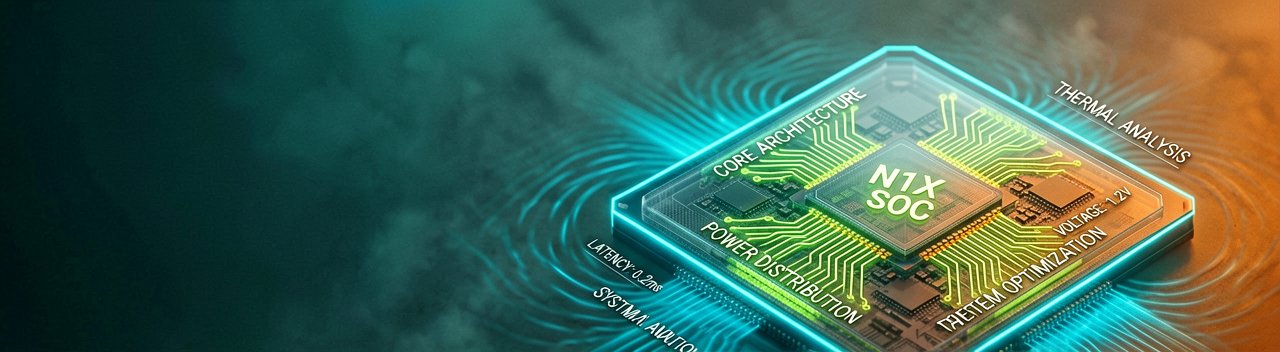
This is not just another incremental hardware refresh; it is a fundamental restructuring of the ecosystem. The joint announcement represents Nvidia's first major foray into consumer central processors in over a decade. By moving away from traditional x86 architecture and building a system-on-chip with Arm technology, the company is aiming squarely at the premium silicon throne. The initial wave of hardware will feature a flagship processor codenamed the N1X, which pairs 20 high-performance Arm cores with integrated graphics rumored to rival mid-range desktop cards. Major manufacturers are already lined up to debut these machines, with leaked media materials showing that Dell, Lenovo, and Asus are prepared to show off new flagship designs on the show floor.
Breaking the Duopoly
For decades, the consumer PC market has been a predictable tug-of-war between Intel and AMD. Microsoft's previous attempts to foster an alternative under the "Windows on Arm" banner always felt like a compromise, held back by lackluster emulation and an exclusive licensing agreement with Qualcomm that limited broader industry adoption. That exclusivity is gone, and Nvidia is bringing its massive engineering weight to the table. According to reports from The Verge, this entry shatters the old licensing status quo, injecting intense competition into a laptop market that has desperately needed a jolt of energy.
A Bet on Local AI and Extreme Efficiency
The motivation behind this partnership extends far beyond basic frame rates or battery life metrics. Up until now, most complex AI workloads have been outsourced to the cloud, processed on the very server farms Nvidia controls. By packing thousands of its proprietary CUDA cores and a heavy-duty neural processing unit onto a single laptop chip, the company wants to bring that immense computational power directly to local hardware. The timing aligns perfectly with Microsoft’s deep integration of local AI features within Windows, meaning these machines will likely serve as the premier showcase for next-generation on-device software experiences.
Building high-end chips on cutting-edge manufacturing processes is never an easy task, and supply chain rumors suggest the journey to this launch was plagued by silicon redesigns and software optimization delays. However, the coordinated marketing blitz indicates those hurdles are firmly in the rearview mirror. When Jensen Huang takes the stage in Taipei next week, the tech world will be watching to see if this new hardware can finally deliver a true alternative to Apple's dominant premium laptops.
Reading Between the Lines
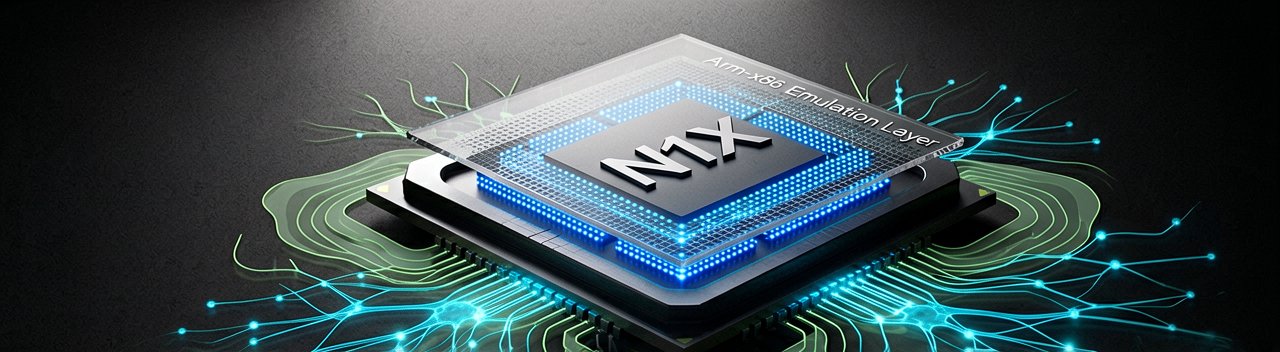
The tech industry loves a triumphant narrative of disruption, but the reality of replacing a forty-year-old computing architecture is rarely smooth. While Nvidia’s entrance into the premium laptop market promises to shatter the stale Intel-AMD duopoly, it introduces a massive architectural paradox. Microsoft has spent years reassuring consumers that its software translation layers can seamlessly run old x86 applications on ARM chips, yet anyone who has actually deployed these machines in an enterprise environment knows that legacy software, proprietary corporate databases, and anti-cheat software in popular video games frequently break under emulation.
There is also a glaring contradiction in Nvidia’s local AI pitch. The company is marketing the N1X processor as a breakthrough for privacy and efficiency by shifting AI workloads from remote data centers to local laptop silicon. However, Nvidia’s financial empire is built entirely on selling massive AI chips to those exact cloud data centers. If consumer laptops become powerful enough to handle complex neural networks locally, Nvidia risks decentralizing the very cloud-computing demand that drove its trillion-dollar market valuation, suggesting this move is less about a cohesive corporate vision and more about a defensive hedge to prevent Apple and Qualcomm from locking them out of the edge-computing market.
Furthermore, the physical reality of laptop thermals and power limits could clash with Nvidia’s corporate DNA. For decades, the green team has solved performance bottlenecks by simply throwing more wattage at the problem, resulting in massive, power-hungry desktop graphics cards that require heavy cooling fans. Engineering a highly constrained, fanless premium laptop chip requires a level of restraint that Nvidia has not had to demonstrate in the consumer space for over a decade, meaning the initial benchmarks might reveal a chip that either throttles aggressively or drains batteries far faster than advertised.
Even if the hardware delivers on every promise, the pricing strategy could alienate the very consumers Nvidia needs to win over. Early supply chain leaks indicate that the initial wave of laptops from Asus, Dell, and Lenovo will carry a massive premium, pushing these machines well past the two-thousand-dollar mark. In an uncertain economic climate, forcing consumers to pay a luxury tax just to act as beta testers for a first-generation operating system transition is a risky gamble that could relegate these machines to a niche enthusiast curiosity rather than the mass-market revolution the marketing hype claims.
After decades of telling us that true computing power requires a desktop power supply that doubles as a space heater, the industry is suddenly asking us to believe that the future of AI can be comfortably throttled on our laps—provided we are willing to pay the price of a decent used car for the privilege of finding out which of our favorite apps no longer open.
Artūras Malašauskas is an AI Systems Integrator with 20+ years of production-grade web engineering experience. He has designed, shipped, and scaled enterprise Python/PHP systems for logistics, SaaS, and public-sector clients. For the past year, he has focused exclusively on AI integrations: deploying open-source LLMs, building generative media pipelines (image, audio, video), and engineering multi-agent workflows for real production environments. His standard: reproducibility, security, cost-efficient inference—no vaporware. He documents and evaluates emerging AI tooling, separating verified capabilities from marketing noise. Technical editor at: muza-ai.eu, ai-verslas.lt, ai-naujinos.lt Connect on LinkedIn
Comments