The Arm Invasion: How NVIDIA’s Consumer PC Leap is Rewriting Silicon Supremacy
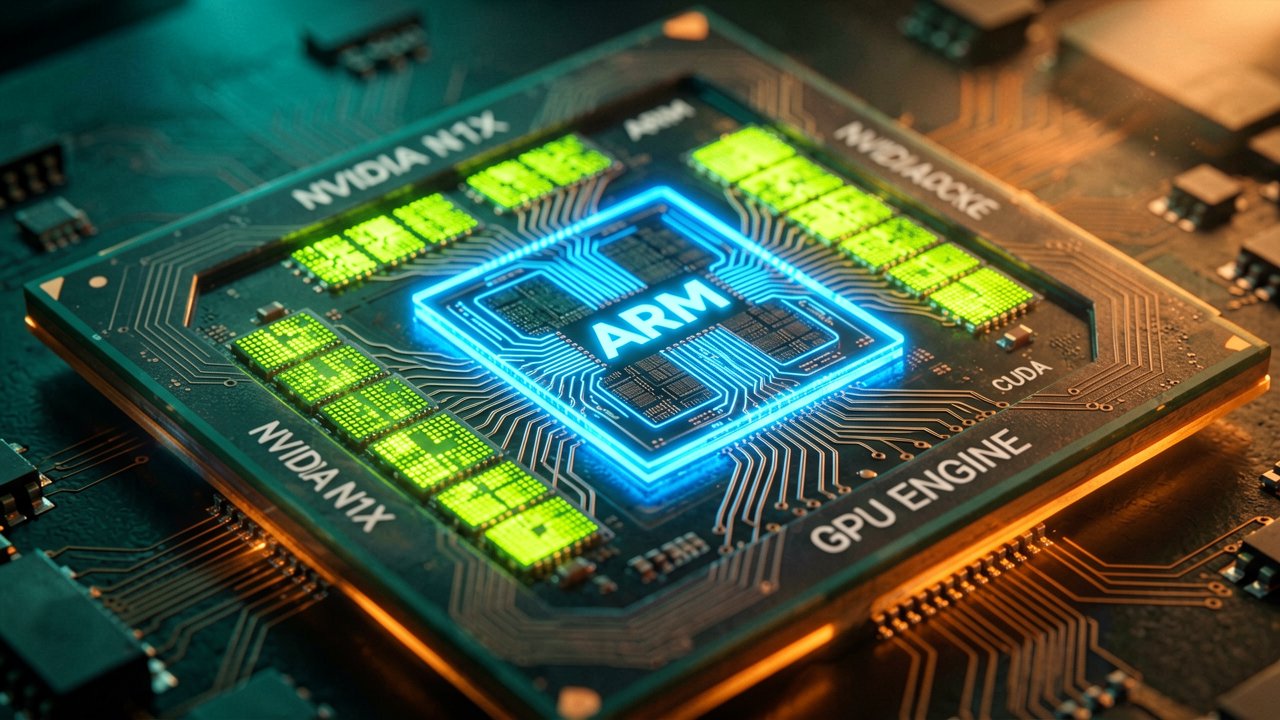
For years, the personal computer market maintained a comfortable, predictable rhythm. Intel and AMD fought their endless x86 price wars, while NVIDIA happily sat in its corner, selling increasingly expensive graphics cards to gamers and corporate AI farms. That cozy arrangement has officially blown up. In late May 2026, a coordinated wave of product leaks and official teasers from NVIDIA, Microsoft, and Arm ahead of the Computex trade show in Taipei confirmed what the industry had long feared and anticipated: the green team is officially entering the Windows client processor space with its own Arm-based system-on-chip.
This is not a mere side hustle or a minor product iteration. Code-named the N1 and N1X, these upcoming processors represent a deliberate, full-scale invasion of the premium laptop market. According to comprehensive leaks published by tech outlets like Liliputing, the flagship N1X chip is a powerhouse packing a 20-core Arm CPU alongside a monster integrated Blackwell-based graphics engine boasting 6,144 CUDA cores. This setup brings discrete desktop-class gaming performance and massive local AI compute capabilities directly onto a single piece of silicon, radically altering what users can expect from thin-and-light form factors.
Breaking the x86 Duopoly
By moving aggressively into the consumer PC space, NVIDIA is attacking the traditional x86 duopoly right where it hurts. For decades, Intel and AMD held an iron grip on Windows hardware because alternative architectures couldn't emulate legacy software efficiently enough to matter. Apple successfully proved that Arm architecture could humiliate x86 in efficiency and performance with its M-series chips, but Windows users were left waiting. Qualcomm made a valiant first stand with its Snapdragon laptop processors, but NVIDIA brings something completely different to the table: undisputed graphics clout and a developer ecosystem that practically owns the modern artificial intelligence landscape.
Major PC manufacturers are already lining up to dump traditional silicon in favor of the new platform. Early shipping manifests and product previews indicate that industry giants like Dell, Lenovo, and Asus are prepping premium hardware lines built entirely around the N1X. A leaked Dell XPS laptop showcase scheduled for the end of May 2026 confirms that these machines are ready for the prime time, promising battery life that rivals MacBooks without sacrificing the raw, unadulterated gaming power that x86 laptops historically required bulky cooling systems to achieve.
A Massive Shift in Market Value
The broader financial implications of this strategic pivot are staggering. Having recently crossed an unprecedented $5 trillion market capitalization threshold due to insatiable data center demand, as detailed by Intellectia.ai, NVIDIA is deploying its massive capital reserves to diversify its revenue streams before the hyper-scaler data center buildout eventually cools down. By embedding its cutting-edge Blackwell architecture into consumer laptop motherboards, the chipmaker is cleverly bypassing traditional desktop GPU component shortages while creating an entirely new category of high-margin "AI PCs."
This aggressive push forces a brutal defensive realignment for the rest of the industry. Intel, already facing headwinds in its foundry business, and AMD, which has been leaning heavily on its data center growth, must now defend their core laptop markets against a rival with infinite cash and a cult-like developer following. Windows on Arm is no longer a quirky compromise for business travelers who want longer battery life; it has instantly matured into the default choice for high-end mobile computing, shifting the balance of power in the semiconductor world permanently.
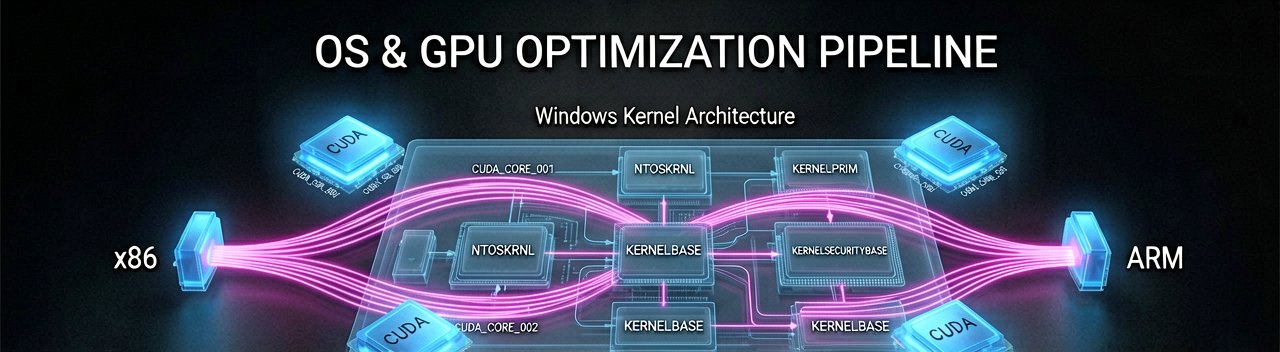
What Most Reports Miss: The real battle here is not about raw clock speeds or marketing buzzwords, but about the invisible layer of software optimization that glues modern PCs together. For decades, Windows on Arm was considered a dead-on-arrival gimmick because Microsoft’s emulation layer struggled to translate classic x86 software without introducing massive performance penalties. NVIDIA’s entry into this ecosystem, however, changes the calculus completely. By leveraging decades of driver optimization experience and a tight, secretive engineering partnership with Microsoft, the chipmaker has helped fundamentally overhaul how the Windows kernel interacts with alternative silicon architectures, turning what was once a clunky compatibility bridge into a seamless highway.
Industry insiders suggest that this move has been quietly brewing behind closed doors ever since NVIDIA’s failed multi-billion-dollar attempt to acquire Arm outright back in 2022. Blocked by global antitrust regulators, the company simply pivoted from owning the architecture to dominating how it is utilized in the consumer space. By designing custom silicon that pairs Arm's high-efficiency CPU architecture with its own proprietary graphics IP, NVIDIA has achieved the exact vertical integration that made Apple’s transition away from Intel so wildly successful. This allows laptop manufacturers to offer performance profiles that were previously impossible without a noisy, battery-draining cooling fan running at maximum capacity.
The Developer Ecosystem Trap
What truly terrifies rivals like Intel and AMD is NVIDIA’s absolute stranglehold on the global developer ecosystem. Software engineers do not build complex AI tools or high-end games for a specific processor family; they build them for CUDA, the proprietary computing platform that NVIDIA has cultivated for nearly two decades. By placing a Blackwell-derived GPU inside standard consumer laptops, the company is effectively putting an entry-level AI workstation into the hands of millions of software developers, students, and content creators who can write and run advanced code locally without paying for expensive cloud computing time.
This developer-first strategy creates a powerful network effect that forces traditional silicon providers into a corner. While AMD relies on open-source alternatives like ROCm to bridge the software gap, and Intel plays catch-up with its own software suites, NVIDIA's platform is already the industry standard. As software developers increasingly optimize their creative suites, video editing tools, and machine learning models specifically for green-team hardware, consumers will naturally gravitate toward laptops that run those programs fastest, effectively locking out the traditional x86 duopoly from the high-margin premium laptop segment.
The financial pressure on hardware partners is also shifting under this new paradigm. Original equipment manufacturers like Dell and Lenovo have historically operated on razor-thin margins, caught between the expensive licensing fees of Windows and the rigid pricing tiers of Intel and AMD processors. NVIDIA’s arrival offers these supply chains a disruptive alternative, allowing them to market premium, hyper-efficient "AI laptops" at higher price points that consumers are actually willing to pay for. It is a win-win scenario that could permanently relegate traditional x86 hardware to budget, entry-level office machines while the Arm-based architecture claims absolute dominance over the lucrative premium market.
Reading Between the Lines: The prevailing tech industry euphoria paints this migration to Arm as an unmitigated triumph, but a colder look at consumer computing history suggests a rougher road ahead. The assumption that elite specifications like 6,144 CUDA cores will instantly translate into flawless everyday performance ignores the fragmented reality of the Windows software ecosystem. Unlike Apple, which dictates every piece of code allowed on its hardware, Microsoft must support a legacy graveyard of enterprise apps, niche tools, and ancient peripherals. If a user tries to run a critical business application only to find that the Arm emulation layer stutters or crashes, all the theoretical AI compute power in the world will not save that laptop from being returned to the store.
There is also an inherent contradiction in NVIDIA’s dual identity as a premium hardware vendor and a savior for cost-weary laptop manufacturers. While original equipment manufacturers rejoice at the prospect of breaking free from Intel’s pricing grip, they are merely swapping one master for an arguably more ruthless one. Given the green team's notorious history of maintaining high profit margins and imposing strict supply restrictions on its desktop graphics cards, there is little reason to believe it will play nice in the laptop arena once it establishes a dominant position. Laptop makers might soon find that trading the x86 duopoly for an Arm-based monopoly leaves them with even less leverage over their own component supply chains.
The Realities of the Mobile Battery Myth
Furthermore, the promise of infinite battery life coupled with desktop-class gaming performance defies the fundamental laws of thermodynamics. While Arm processors are legendary for their idling efficiency during light tasks like web browsing or text editing, pushing thousands of graphics cores to run modern, ray-traced video games or heavy machine learning models will inevitably drain a lithium-ion battery just as fast as any older x86 machine. Marketing materials easily showcase optimal, low-power scenarios, but real-world users who expect to render complex 3D scenes on a cross-country flight without plugging into an outlet are in for a disappointing reality check.
Ultimately, this aggressive expansion could spark an unintended regulatory backlash that complicates NVIDIA’s grand strategy. By simultaneously controlling the leading AI training hardware in the cloud, the dominant developer software platform, and now the premium consumer silicon inside personal computers, the corporation is painting a massive bullseye on its own back for antitrust regulators in Washington and Brussels. What looks like a brilliant corporate synergy today could easily be reinterpreted as predatory market consolidation tomorrow, turning a highly anticipated consumer hardware launch into a protracted legal headache that slows down the entire ecosystem.
It turns out that escaping the iron grip of the decades-old x86 duopoly didn't actually liberate the personal computer market; it just handed the keys of the kingdom to a company that measures its net worth in trillions and views the entire tech landscape as an optimization problem waiting to be solved.
Artūras Malašauskas is an AI Systems Integrator with 20+ years of production-grade web engineering experience. He has designed, shipped, and scaled enterprise Python/PHP systems for logistics, SaaS, and public-sector clients. For the past year, he has focused exclusively on AI integrations: deploying open-source LLMs, building generative media pipelines (image, audio, video), and engineering multi-agent workflows for real production environments. His standard: reproducibility, security, cost-efficient inference—no vaporware. He documents and evaluates emerging AI tooling, separating verified capabilities from marketing noise. Technical editor at: muza-ai.eu, ai-verslas.lt, ai-naujinos.lt Connect on LinkedIn
Comments