Nvidia Allocates $3.8 Billion to Key AI Infrastructure Assets as Specialist Competitors Post 121% Market Surges
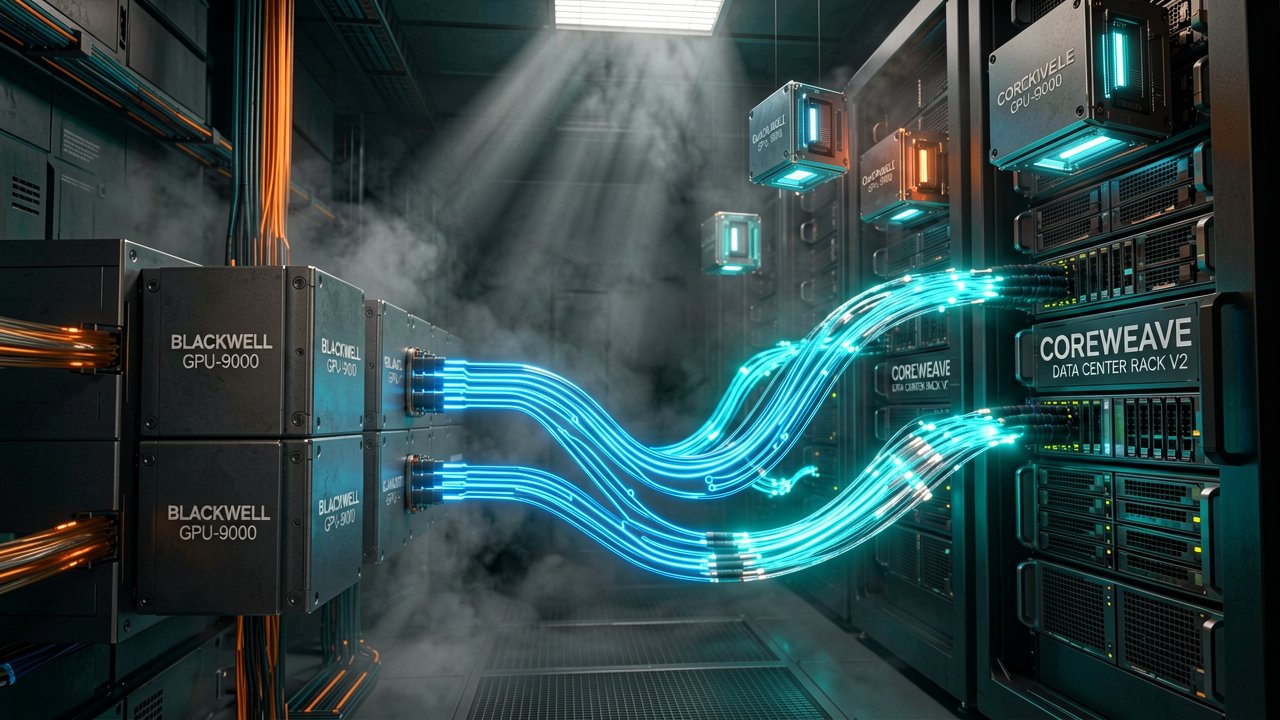
The global artificial intelligence landscape is witnessing a profound structural shift as hardware requirements move beyond core computation. Nvidia has rapidly scaled its capital deployment strategy, executing a massive $3.8 billion investment into targeted public AI equities during the first quarter. This aggressive expansion pushed the chip giant's total regulatory 13F asset portfolio to approximately $18.4 billion, reflecting a broader corporate pivot to finance and anchor the physical supply chain essential for next-generation data centers.
While Nvidia commands a dominant position in the graphics processing unit accelerator market, specialized hardware sectors are experiencing explosive momentum. For instance, advanced components manufacturers supplying alternative nodes and optical technology are surging ahead, with specific infrastructure plays generating up to 121% gains in 2026. This stark contrast highlights a market that is aggressively rewarding specialized sub-verticals, prompting Nvidia to aggressively transition from a pure-play component vendor into an omnipotent ecosystem financier.
According to comprehensive market tracking by The Globe and Mail , Nvidia allocated its latest $3.8 billion capital injection to double down on high-conviction partnerships. The silicon leader expanded its stake in specialized AI cloud provider CoreWeave by 95%, bringing its total holding in the platform to over $3.65 billion. Simultaneously, Nvidia committed fresh capital to photonics and laser networking specialist Coherent to counter evolving bottleneck risks associated with multi-terabit data transmission speed requirements.
The Circular Investment Mandate
Institutional analysis reveals that Nvidia is executing a highly strategic, circular investment philosophy. By leveraging its unprecedented GPU manufacturing profits to purchase equity stakes in its own major customers and core hardware suppliers, the firm ensures that emerging infrastructure is pre-optimized for its proprietary Blackwell and upcoming Vera Rubin architectures. This dynamic creates an insular ecosystem where capital loops directly back into sustained hardware demand.
Evolving System Bottlenecks and Supplier Momentum
Market returns indicate that the primary constraints of the AI boom have shifted away from raw processing capacity toward data center space, power grid access, and optical transit. Specialist stocks addressing optical interconnect technology have rapidly outpaced broader semiconductor gains, demonstrating that high-speed data transmission is now the critical frontier. Nvidia's heavy capitalization of external photonics partners represents a defensive moat aimed at preserving the performance efficiency of its unified clusters.
Balance Sheet Risks and Leverage Concerns
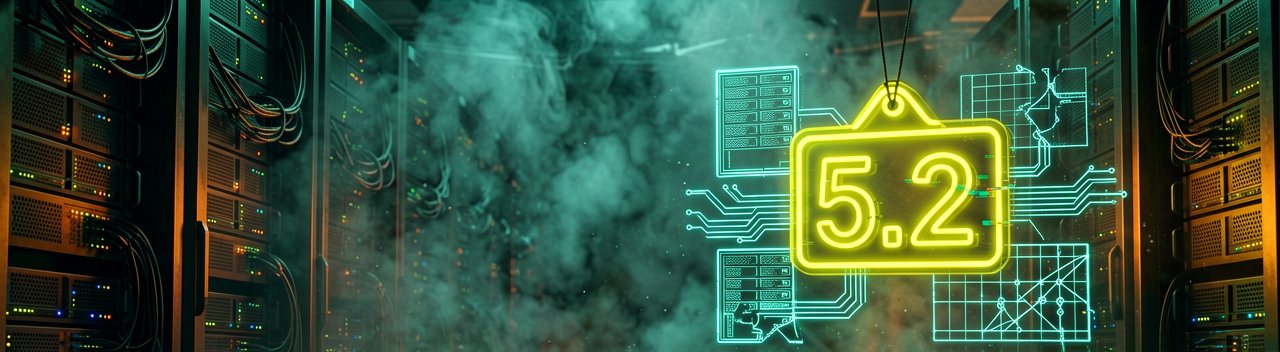
Despite the immense valuation growth throughout the AI supply chain, this capital-intensive expansion introduces notable structural risks. High-growth infrastructure providers remain heavily leveraged; CoreWeave, for example, maintains a high debt-to-equity ratio of 5.2, signaling substantial dependency on debt financing. Wall Street experts note that while these aggressive infrastructure expansions are vital to support ongoing AI software scaling, any deceleration in broader cloud capital expenditures could expose highly leveraged equity portfolios to rapid market corrections.
An Analysis of Ecosystem Interdependency and Structural Realities
Behind the Scenes: The massive scale of Nvidia’s multi-billion dollar capital deployment reveals a calculated defensive maneuvering strategy that goes far beyond standard corporate venture capital. Industry insiders point out that by anchoring itself financially within the operations of cloud provider CoreWeave and optics manufacturer Coherent, Nvidia is actively manipulating its own supply and demand curves. This approach effectively ensures that its key customers remain capitalized enough to buy its premium processors, while concurrently securing a priority position in the production queues of component suppliers who provide critical optical packaging materials.
This financial intertwining mirrors historical structural shifts seen during previous technology booms, most notably the telecommunications buildout of the late 1990s. During that era, dominant network infrastructure vendors aggressively extended vendor financing to emergent telecom carriers to artificially sustain demand for fiber-optic hardware. While Nvidia’s direct equity investments are fundamentally healthier than traditional vendor debt, the underlying economic vulnerability remains identical. The entire semiconductor supply chain has become uniquely centralized around a closed-loop ecosystem where the vendor, the financier, and the customer are frequently the same entity.
From the perspective of data center operators and hyperscalers, this strategy introduces a complicated competitive paradox. Emerging cloud platforms that receive significant capital from the chipmaker gain a significant advantage in hardware allocation, often receiving advanced architectures months before tier-one legacy cloud providers. This dynamic explains why specialized infrastructure plays have experienced massive triple-digit market gains, as Wall Street rewards the companies that hold guaranteed access to physical chips. However, independent hardware buyers are increasingly expressing concern over this consolidation, noting that a single company now holds the power to pick winners and losers across the entire AI service provider tier.
Compounding these competitive tensions is the escalating physical bottleneck of data center power consumption and network latency. The 121% surge seen across specialized alternative infrastructure stocks reflects a growing market realization that computing power is useless without the necessary optical interconnects to transmit data between massive server clusters. By embedding itself into Coherent, Nvidia is trying to engineer its way out of the physics-based scaling limits that threaten its upcoming chip architectures. If optical data transmission fails to match the speed of GPU advancements, the massive valuation of the entire hardware sector faces a steep structural ceiling.
Ultimately, the stability of this multi-billion dollar framework rests on the continuous monetization of generative AI software. If enterprise software revenues do not scale quickly enough to justify the immense capital expenditures currently flowing into physical data centers, the highly leveraged balance sheets of specialized cloud providers will face intense pressure. For tech journalists and market analysts looking past the immediate earnings reports, the real story is no longer about who builds the fastest chip, but rather how long this tightly bound network of strategic investments can sustain its own momentum before macroeconomic realities catch up.The Limits of Capital-Induced Demand and Market Saturation Risks
Reading Between the Lines: The prevailing Wall Street narrative frames Nvidia’s $3.8 billion deployment as a definitive victory lap, signaling an era of unassailable ecosystem control. However, a deeper examination reveals a more defensive truth: this multi-billion dollar capital loop may be an act of operational necessity rather than pure market dominance. By continuously injecting capital into specialized cloud provider CoreWeave, Nvidia is effectively constructing a secondary tier of demand to absorb its premium Blackwell and Rubin chip inventory. This pattern creates a delicate ecosystem where corporate valuations are being sustained by internal capital shifting rather than independent, organic enterprise adoption.
This economic architecture exposes a glaring contradiction in the current artificial intelligence bull market. While silicon vendors and specialized infrastructure platforms post staggering triple-digit stock gains, the underlying software layer has yet to show proportional monetization. Hyperscalers and venture-backed cloud providers are spending hundreds of billions of dollars on physical data infrastructure, but the enterprises renting these clusters are still largely running pilot programs and low-margin automation tools. The tech sector is currently building a high-speed transit system before confirming if there are enough passengers willing to pay the premium fare required to keep it solvent.
Furthermore, the reliance on specialized cloud providers with debt-to-equity ratios exceeding 5.0 introduces a systemic fragility to the broader hardware supply chain. If enterprise software spending experiences a macroeconomic slowdown, these highly leveraged, niche infrastructure players will be the first to trim their capital expenditures. Because Nvidia's investment portfolio is tied directly to the balance sheet health of its own buyers, a correction in the cloud tier would trigger a simultaneous degradation of Nvidia's asset base and its forward order book. This structural loop converts standard market volatility into a potential bullwhip effect across the entire semiconductor sector.
As optical networking specialists surge ahead on the back of multi-terabit data transmission demands, the physical reality of the power grid remains the ultimate bottleneck. No amount of financial engineering or equity allocation can bypass the localized shortages of electrical megawatt capacity facing modern data centers. The market is aggressively bidding up infrastructure stocks based on theoretical computing capacity, yet many of these planned cluster expansions are facing multi-year delays from regional utility providers. Consequently, investors may be paying premium valuations for high-tech hardware that is destined to sit idle in warehouses waiting for a grid connection.
"The modern tech economy has achieved something truly remarkable: an economic perpetual motion machine where a chipmaker can buy its own chips by funding its own customers, who then use those chips as collateral to borrow more money to buy more chips. It is a brilliant strategy, provided everyone agrees never to look too closely at the electricity bill or ask when the software profits are supposed to arrive."
Artūras Malašauskas is an AI Systems Integrator with 20+ years of production-grade web engineering experience. He has designed, shipped, and scaled enterprise Python/PHP systems for logistics, SaaS, and public-sector clients. For the past year, he has focused exclusively on AI integrations: deploying open-source LLMs, building generative media pipelines (image, audio, video), and engineering multi-agent workflows for real production environments. His standard: reproducibility, security, cost-efficient inference—no vaporware. He documents and evaluates emerging AI tooling, separating verified capabilities from marketing noise. Technical editor at: muza-ai.eu, ai-verslas.lt, ai-naujinos.lt Connect on LinkedIn
Comments