Pentagon's Battlefield AI Push Sparks Strategic Debate Among Military Leaders
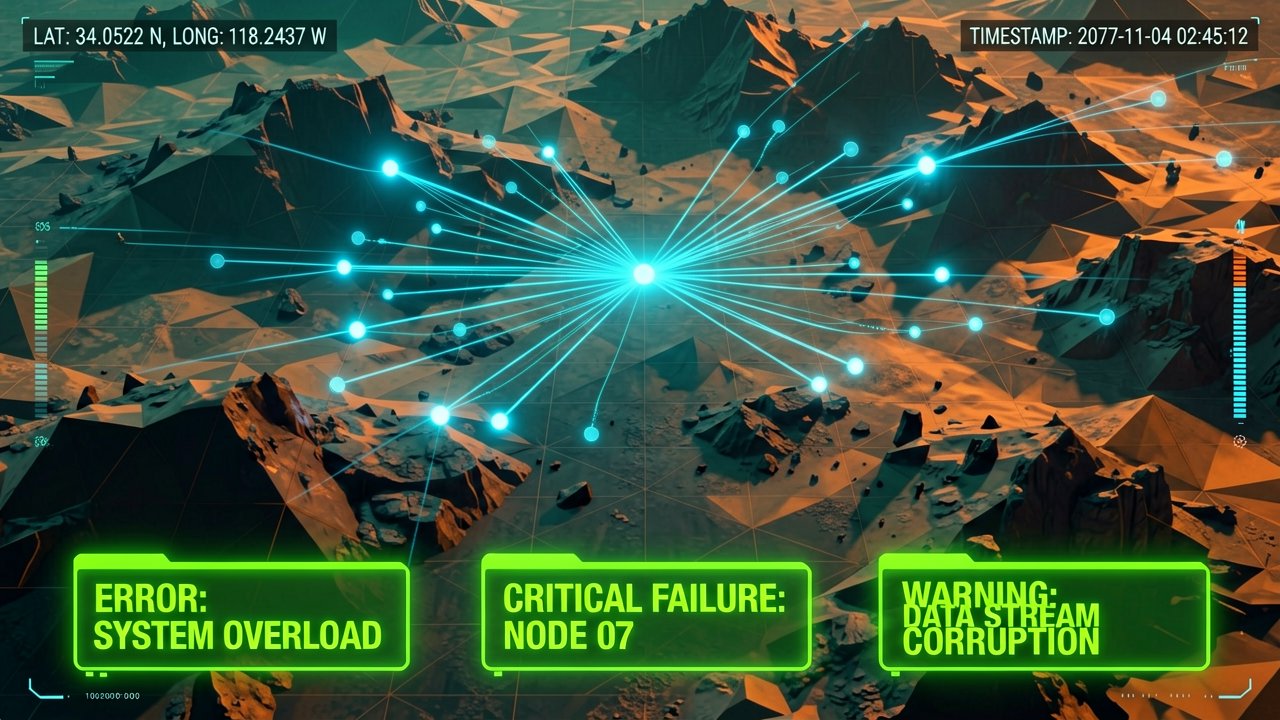
The Pentagon is aggressively accelerating the deployment of artificial intelligence across its operational theater, triggering an intense strategic debate among senior defense officials, ethicists, and frontline commanders. This rapid technological push aims to shorten the kill chain through automated targeting and real-time data synthesis, fundamentally altering modern warfare. However, the unprecedented speed of this rollout has created deep friction between civilian leadership demanding immediate tactical advantages and military leaders raising crucial warnings about system reliability, algorithmic bias, and the erosion of human oversight in lethal decision-making.
This strategic shift has fundamentally restructured the defense procurement landscape, turning battlefield AI into a multi-billion-dollar market. Legacy defense contractors are facing intense pressure from agile, venture-backed tech startups that specialize in computer vision, predictive logistics, and autonomous systems. Traditional hardware-centric acquisition models are giving way to continuous software deployment contracts, shaking up standard defense investment portfolios. According to reporting by The Seattle Times, the explosive growth in users has outpaced foundational consensus on how these systems operate under chaotic battlefield conditions.
Market Displacement and Contractor Re-alignment
The Pentagon's prioritization of algorithmic warfare has created a distinct divide in the defense industrial base. Companies that seamlessly integrate commercial cloud infrastructure with proprietary machine learning models are capturing major market share, while firms lagging in software capabilities find themselves sidelined. This trend is accelerating consolidation across the defense tech sector as prime contractors acquire specialized AI startups to maintain their competitive edge in upcoming government tenders.
Algorithmic Risks and the Command Dilemma
Military commanders face a difficult dilemma balancing technological speed against operational certainty. AI models trained on clean data often degrade when confronted with electronic warfare, sensory deception, or unexpected environmental variables. Senior leaders warn that over-reliance on automated recommendations could lead to catastrophic targeting errors or unintended escalations, making rigorous testing and validation protocols a matter of national security rather than mere bureaucracy.

Behind the Scenes: The Cultural Rift in Algorithmic Warfare
The acceleration of algorithmic warfare has exposed a cultural rift between Silicon Valley developers and frontline military commanders. Software engineers rely on an iterative ethos of deploying code quickly and fixing bugs later through routine patches. This methodology conflicts directly with the risk-averse tradition of the armed forces, where equipment must undergo years of rigorous testing before deployment. Commanders argue that an unverified algorithmic anomaly in a combat zone cannot be resolved with a simple software update, as faulty targeting data carries immediate, irreversible consequences for human lives.
This friction is further intensified by the fundamental lack of transparency inherent in deep learning models, often referred to as the black box problem. When an artificial intelligence system identifies a target, it cannot provide its reasoning to the operator. Military lawyers and ethics officials note that this opacity complicates the chain of command and challenges established laws of armed conflict. Without a clear understanding of why a system made a specific determination, commanders face a difficult choice between trusting an unexplainable machine output or delaying operations to perform manual verification.
Historical precedents from early automated defense systems, such as the Patriot missile errors during the 2003 Iraq War, serve as a constant warning for cautious officers. These early automated mishaps demonstrated how easily automation bias can lead operators to defer blindly to computer recommendations. Current defense strategists worry that the vast scale of modern data feeds will make human intervention practically impossible, reducing the required human-in-the-loop oversight to a mere rubber-stamping mechanism. This dynamic shifts the actual decision-making power from the officer on the ground to the data scientists who programmed the underlying algorithms months prior.
Geopolitical competition remains the primary force driving civilian leadership to accept these operational risks. Defense officials frequently assert that adversaries are developing fully autonomous weapons without ethical constraints, leaving the United States with no choice but to prioritize deployment speed to maintain its strategic position. This competitive pressure creates an environment where competitive urgency routinely overshadows the systemic testing regimes advocated by military traditionalists, permanently altering the balance between technological speed and operational safety.
Reading Between the Lines: The Illusion of Algorithmic Certainty
The prevailing narrative surrounding the Pentagon’s AI push presumes that faster data processing inherently yields superior strategic outcomes. This assumption overlooks a fundamental paradox of modern warfare: increasing the speed of the kill chain simultaneously compresses the time available for political de-escalation. By treating battlefield friction merely as a software engineering problem to be optimized, defense planners risk creating a hyper-automated operational environment where strategic errors occur at machine speed, far outpacing the capacity of human leaders to intervene or comprehend the broader geopolitical fallout.
A glaring contradiction lies within the defense establishment's reliance on commercial artificial intelligence models trained on open-source infrastructure. While civilian leaders champion these tools for their agility, these systems are fundamentally designed for predictable commercial environments rather than highly contested electronic warfare environments. Committing billions of dollars to unhardened algorithms creates a critical vulnerability, as adversaries can exploit data poisoning and adversarial perturbation to deceive computer vision models with minimal effort. The institutional rush to integrate these commercial technologies reveals a profound misunderstanding of how easily mathematical optimizations can be turned against themselves when deployed against a creative, adaptive human enemy.
Furthermore, the promise of reduced manpower requirements through automation is proving to be a logistical mirage. Rather than reducing personnel footprints, the introduction of battlefield AI simply shifts the labor burden from frontline combat units to an expanding ecosystem of data annotators, system calibrators, and cloud infrastructure engineers. This operational reality creates a fragile, software-dependent supply chain that requires constant bandwidth and localized processing power to function. In a near-peer conflict defined by degraded communications and disrupted satellite networks, the Pentagon's highly complex algorithmic framework could easily transform from a decisive tactical advantage into a catastrophic point of failure.
"We are spending billions to replace the fog of war with the fog of software, operating under the comforting but entirely mistaken belief that a catastrophic targeting error is somehow more acceptable to the public if it arrives via an elegant, venture-backed algorithm rather than a flawed human judgment."
Artūras Malašauskas is an AI Systems Integrator with 20+ years of production-grade web engineering experience. He has designed, shipped, and scaled enterprise Python/PHP systems for logistics, SaaS, and public-sector clients. For the past year, he has focused exclusively on AI integrations: deploying open-source LLMs, building generative media pipelines (image, audio, video), and engineering multi-agent workflows for real production environments. His standard: reproducibility, security, cost-efficient inference—no vaporware. He documents and evaluates emerging AI tooling, separating verified capabilities from marketing noise. Technical editor at: muza-ai.eu, ai-verslas.lt, ai-naujinos.lt Connect on LinkedIn
Comments