Sony True RGB Breakthrough: The BRAVIA 9 II and 7 II Kill the Backlight Filter
Sony just flipped the script on home entertainment. On May 27, 2026, the tech giant officially unveiled its highly anticipated flagship televisions, the BRAVIA 9 II and BRAVIA 7 II. While competitors have spent years refining traditional Mini LED and OLED panels, Sony chose this moment to introduce a massive structural shift in how consumer displays generate light. By skipping the standard pre-order window and pushing these models straight to retail availability, the company signals absolute confidence in its new hardware philosophy.
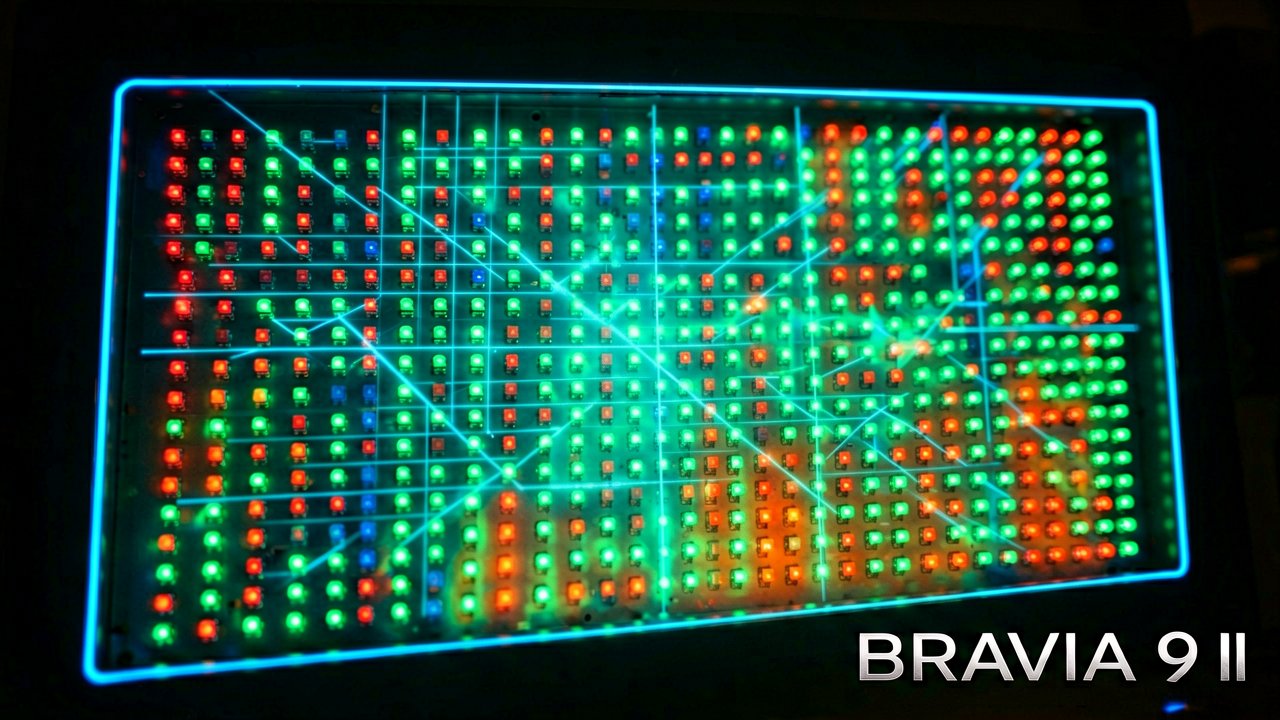
The magic underlying both sets is a proprietary "True RGB" backlight architecture. Historically, even elite Mini LED televisions relied on a single-colored blue or white backlight array, passing that light through quantum dot films or color filters to create red, green, and blue pixels. Sony's engineers have completely dismantled this paradigm. The new BRAVIA lineup employs thousands of microscopic, independently controlled red, green, and blue LED chips directly at the source layer, generating native native-colored light before it ever hits the liquid crystal display. This effectively gives the sets the immense, searing peak brightness capabilities of premium Mini LED while inheriting the vast, fully saturated color volumes typically reserved for top-tier QD-OLED panels.
Driving Precision with the Master Drive Pro
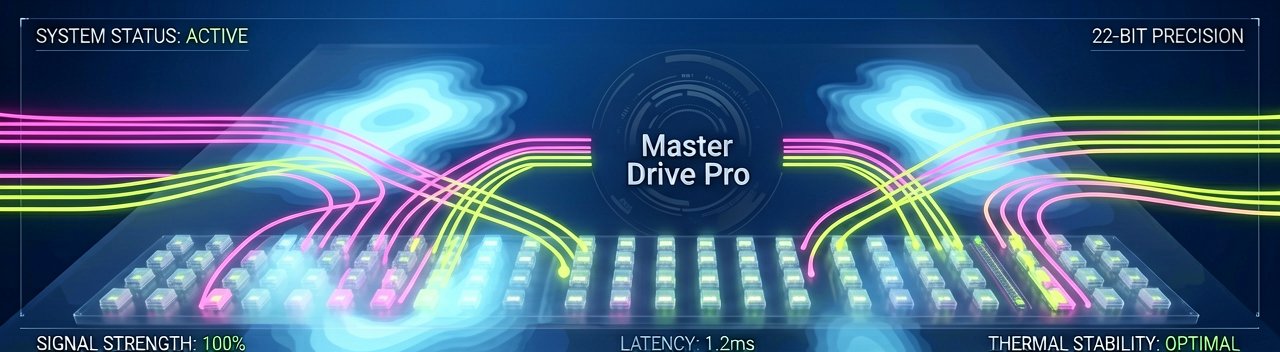
Harnessing thousands of multi-colored diodes requires an immense amount of processing muscle, which is where Sony's new RGB Backlight Master Drive Pro comes into play. The system utilizes advanced 22-bit control algorithms to individually dim and brighten each colored diode with granular precision. During initial hands-on demonstrations at Sony's Tokyo headquarters, this meticulous light management practically eliminated the "blooming" or white halo artifacts that frequently plague bright text or subtitles against dark backgrounds. Early instrument testing of the flagship BRAVIA 9 II yielded a massive peak brightness measurement of 4,122 nits on a 10% HDR window, confirming that this display can easily handle heavily sunlit living rooms without breaking a sweat.
Color fidelity sees a massive generational leap as well. Because the light is pure at its origin, off-axis viewing angles are significantly widened. Traditional LED displays usually suffer from severe color washing or shifting when viewed from the side, but the True RGB panels retain consistent saturation and contrast from virtually any seat in the room. According to detailed technical overviews published by FlatpanelsHD, this incredible luminance and expanded color space allows the BRAVIA 9 II to hit roughly 89% of the demanding BT.2020 color gamut, translating to a picture that looks remarkably lifelike without feeling artificially boosted or garish.
Sizing, Pricing, and the Gamer's Dilemma
The flagship BRAVIA 9 II is launching in heavy-hitting home theater sizes, starting at a 65-inch model for $3,599.99 and scaling all the way up to an ultra-premium, cinematic 115-inch variant priced at $30,999.99. For enthusiasts who want the foundational True RGB color performance without the high flagship tax, the step-down BRAVIA 7 II offers sizes ranging from 50 to 98 inches. Beyond raw optics, both lineups feature upgraded acoustic engineering, sporting "Voice Zoom 3" AI processing that actively separates and boosts dialogue over chaotic background music or action sound effects.
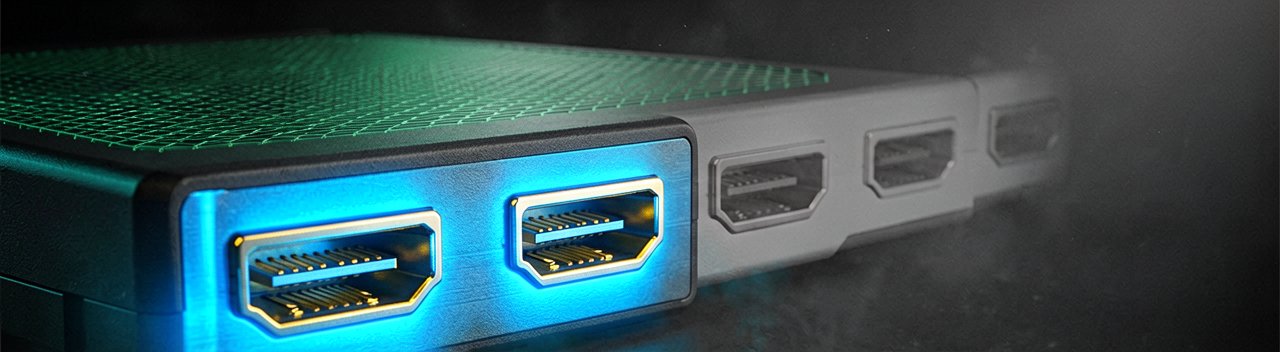
Yet, it wouldn't be a premium Sony release without a quirky engineering compromise. Despite rolling out these incredibly futuristic panels in 2026, the company chose to stick with an older MediaTek chipset infrastructure for its backend. As a result, both premium series are still limited to just two full-bandwidth HDMI 2.1 ports, while the remaining two inputs are restricted to older HDMI 2.0 standards. Hardcore gamers juggling multiple current-generation consoles and a gaming PC will undoubtedly find this limitation frustrating. It is a strange, terrestrial bottleneck attached to an otherwise stratospheric leap forward in display technology, but for pure cinephiles, Sony's True RGB might just be the closest an LED display has ever come to matching the holy grail of professional mastering monitors.
What Most Reports Miss: The Architectural Gamble of Pure RGB
To truly appreciate what Sony has done with the BRAVIA 9 II and 7 II, you have to look past the marketing buzzwords and examine the sheer physical complexity of the hardware. For the last two decades, the display industry has relied on a foundational compromise: use a uniform backlight—traditionally white or blue—and let a series of filters do the heavy lifting of sorting that light into red, green, and blue pixels. It was efficient, relatively cheap to manufacture, and easily scalable. By moving to a True RGB architecture, Sony has effectively thrown out the industry rulebook, replacing a single-color light source with a massive matrix of individual red, green, and blue diodes. The manufacturing tolerances required to balance these three distinct light-emitting materials at a microscopic level are incredibly unforgiving, explaining why this tech was previously confined to six-figure professional broadcast monitors.
Industry insiders suggest that this move was born out of sheer strategic necessity rather than a simple desire to innovate. Over the past few years, Samsung and LG have locked down the premium TV market with their respective QD-OLED and Micro Lens Array (MLA) OLED technologies, leaving traditional LED displays fighting for scraps in the mid-range sector. Sony, which buys its OLED panels from its direct competitors, needed a proprietary breakthrough to reclaim total creative control over its high-end lineup. By engineering a native RGB Mini LED backlight, Sony's display division has found a way to bypass the panel-supply monopoly, building a flagship television that doesn't owe its performance to a competitor's fabrication plant.
However, the engineering team faced an immediate, massive hurdle during development: thermal dynamics and material degradation. Red, green, and blue LEDs do not age at the same rate, nor do they react identically to heat. In early laboratory prototypes, driving the blue diodes hard enough to hit high nit targets caused them to degrade faster than their red and green counterparts, leading to severe color drifting over extended use. Sony’s solution was the implementation of a real-time thermal management grid tied directly to the Master Drive Pro processor. This system constantly reads the temperature of localized zones and dynamically adjusts the voltage across different color channels, ensuring the display maintains perfect color balance over its lifespan without burning out the blue pixels.
This aggressive hardware pivot has sent shockwaves through Hollywood's post-production community, where Sony's dual-cell LCD mastering monitors have long been the gold standard. Colorists and cinematographers have historically been skeptical of consumer Mini LED sets due to the unpredictable nature of local dimming zones, which can inadvertently alter the creative intent of a scene by blowing out shadow details. Early feedback from studio evaluations indicates that the 22-bit control precision of the BRAVIA 9 II mitigates this issue entirely, offering a level of luminance accuracy that matches professional mastering environments. For the first time, filmmakers are seeing a consumer display that can accurately reproduce the extreme highlights of a 4,000-nit master without compressing the color volume or crushing the dark gradients.
Despite the critical acclaim from the Hollywood vanguard, the decision to launch these groundbreaking displays on an aging MediaTek chip architecture remains a contentious point of discussion among industry analysts. Shifting the manufacturing budget so heavily toward the True RGB optical stack forced Sony to make compromises in the silicon department, leaving the sets with the same HDMI port limitations that have plagued the brand for years. It is a classic case of corporate triage: prioritize the visual soul of the television—its contrast, color, and brightness—while gambling that the average consumer won't mind swapping cables. Whether this lopsided allocation of technology pays off long-term depends entirely on whether buyers value pure, uncompromising picture quality over modern connectivity convenience.
Reading Between the Lines: The Contrast Premium vs. The Connectivity Tax
The tech industry loves a triumphant narrative of pure engineering progress, but the BRAVIA 9 II and 7 II launch exposes a glaring contradiction in Sony’s premium hardware strategy. On one hand, the company expects consumers to shell out anywhere from four to thirty thousand dollars for an unprecedented, master-grade True RGB optical system. On the other hand, the physical input deck of these televisions belongs firmly in a mid-range living room from 2021. Forcing buyers into a two-port HDMI 2.1 bottleneck means that connecting an advanced soundbar and a single modern gaming console effectively maxes out the television's high-bandwidth capabilities. It is an absurd compromise for a flagship device launching deep into 2026, revealing that even a giant like Sony cannot escape the brutal financial trade-offs dictated by silicon supply chains.
Furthermore, the long-term viability of this True RGB architecture relies on an immense assumption about the future of content creation. Sony is banking heavily on the idea that the industry will continue pushing toward extreme, high-nit HDR mastering, justifying the need for a panel that can sear eyeballs at over 4,000 nits. Yet, a counter-movement is quietly brewing among prominent cinematographers who argue that the race for raw brightness has distorted the cinematic arts into an artificial, over-processed spectacle. If streaming platforms and film studios pull back from hyper-bright masters to embrace more muted, organic tonal ranges, the immense engineering and thermal management overhead required to power Sony's thousands of colored LEDs suddenly looks less like a revolutionary leap and more like an over-engineered solution to a temporary trend.
There is also the matter of market positioning against the rapidly collapsing costs of standard OLED and Micro Lens Array technologies. While Sony’s real-time voltage balancing software aims to prevent uneven diode degradation, it introduces an entirely new layer of digital processing that purists may find problematic. Traditional emissive displays like OLED pixel-dim at a native level without needing aggressive, algorithmic calculation to keep colors from drifting. Sony's True RGB panel is essentially an incredibly complex mechanical illusion, using an advanced processing brain to force a liquid crystal matrix and an active LED backlight to mimic the behavior of a self-lighting display. Should that processing pipeline hitch, or if the thermal sensors drift out of calibration over years of heavy use, the pristine picture quality could degrade in ways traditional displays simply do not face.
Sony has built a display so brilliantly ahead of its time that it requires a literal supercomputer brain just to keep its own colored lights from burning themselves out, yet it still asks you to manually unplug your PlayStation if you want to connect a premium media player. It turns out that even the most breathtaking window into the future of home cinema can still be tripped up by the price of a generic microchip.
Artūras Malašauskas is an AI Systems Integrator with 20+ years of production-grade web engineering experience. He has designed, shipped, and scaled enterprise Python/PHP systems for logistics, SaaS, and public-sector clients. For the past year, he has focused exclusively on AI integrations: deploying open-source LLMs, building generative media pipelines (image, audio, video), and engineering multi-agent workflows for real production environments. His standard: reproducibility, security, cost-efficient inference—no vaporware. He documents and evaluates emerging AI tooling, separating verified capabilities from marketing noise. Technical editor at: muza-ai.eu, ai-verslas.lt, ai-naujinos.lt Connect on LinkedIn
Comments