iPhone 18 Pro vs. Pro Max: The Anatomy of Apple’s Split-Season Flagships
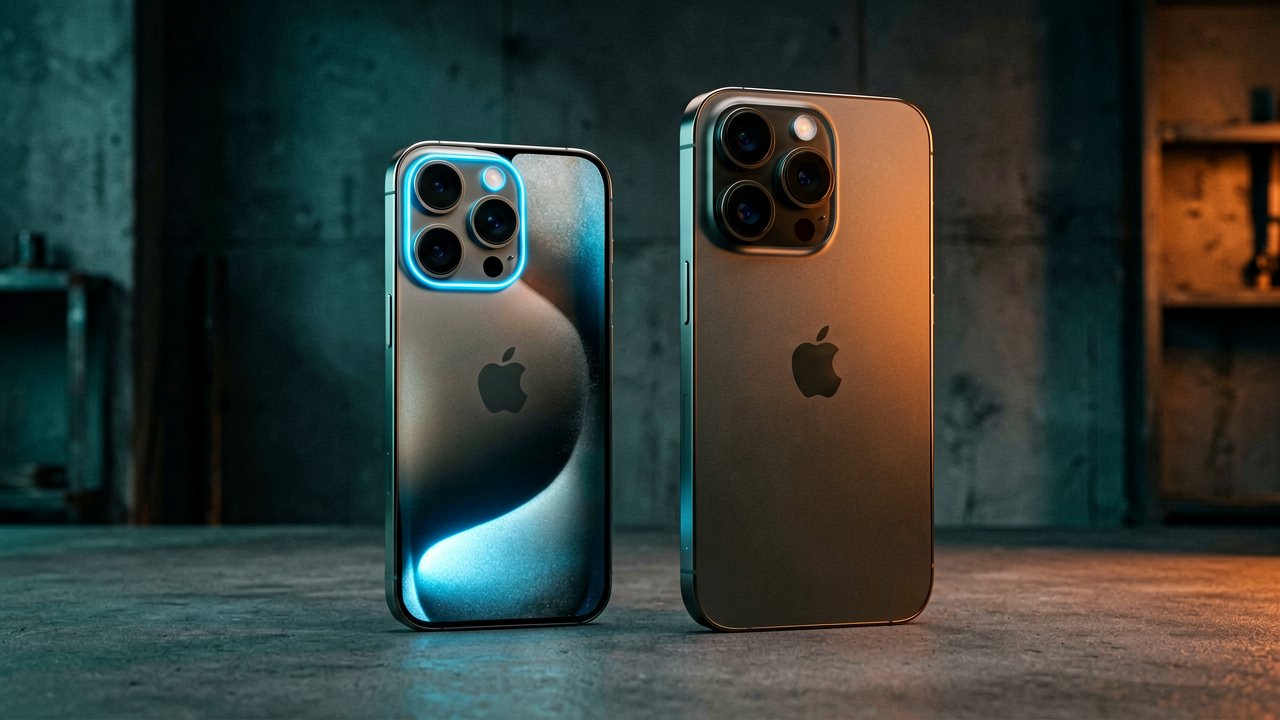
Apple is rewriting its hardware playbook for the fall of 2026. Rather than dropping a four-device lineup all at once, Cupertino is splitting the family tree, reserving its usual September window strictly for the premium iPhone 18 Pro, the hulking Pro Max, and a wild-card folding handset. According to detailed industry roundups on MacRumors , budget-conscious buyers will have to wait until spring 2027 for the standard models, pushing the two Pro variants into an immediate, high-stakes sibling rivalry for the holiday quarter.
Choosing between the Pro and the Pro Max used to be a simple question of screen real estate and battery endurance. Lately, however, the gap has become a moving target of subtle design shifts, charging variances, and camera packaging constraints. While they share the same silicon foundation, their real-world ergonomics and feature execution tell two entirely different stories.
The Real Estate and the Real Weight
On paper, the physical footprints mirror the previous generation, with the smaller Pro holding steady at a 6.3-inch display and the Pro Max anchoring the lineup at 6.9 inches. However, the hands-on experience feels fundamentally distinct this year. Thanks to engineering advances detailed by Cashify, Apple has moved a portion of its Face ID hardware completely beneath the glass, trimming the width of the polarizing Dynamic Island by roughly 35 percent. While this frees up valuable status bar space on both handsets, the visual payoff feels far more expansive on the smaller Pro, making its compact screen feel noticeably less cluttered.
The Pro Max, meanwhile, pays a physical penalty for its sheer size. Apple has packed an enormous battery cell into the larger frame, pushing its weight past the 240-gram mark to make it the heaviest iPhone ever built. It is a dense, unapologetically massive slab of technology that requires deep pockets and two hands. Conversely, the 6.3-inch Pro keeps things remarkably manageable, offering the same pocket-friendly agility that made its predecessor a hit without sacrificing structural integrity.
Silicon, Packaging, and the Battery Divide
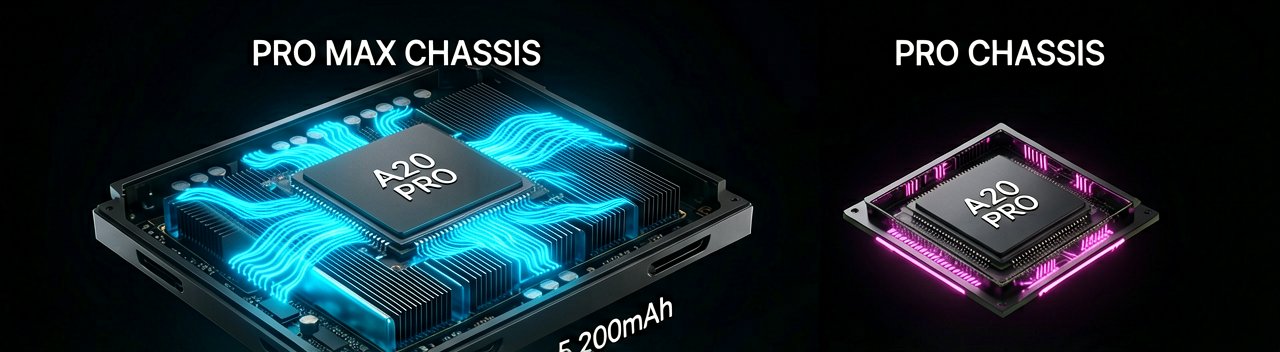
Under the hood, both flagships run on the groundbreaking A20 Pro chipset, built on TSMC’s industry-first 2-nanometer manufacturing process. It is a massive technical leap that boasts a 15 percent bump in raw speed and a 30 percent reduction in power consumption. Both phones also ship with 12GB of RAM to handle local AI heavy lifting, but the way they manage heat and power is where they truly diverge.
The Pro Max leverages its larger chassis to offer a superior thermal runway, ensuring that intense gaming sessions or prolonged 4K video recording do not trigger performance throttling. This extra space also accommodates a massive 5,200mAh battery block. Paired with the efficiency of the 2nm architecture, the Pro Max easily sails into legitimate two-day battery territory. The smaller Pro is no slouch, but its smaller physical capacity means you will be hunting for a charging brick long before the Max shows signs of fatigue.
Variable Aperture and Camera Constraints
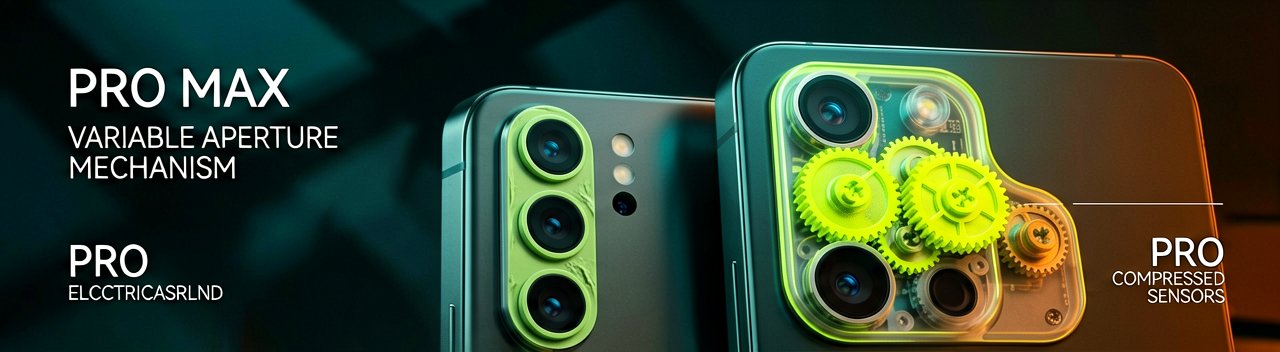
Photography is where Apple traditionally draws its hardest line in the sand. Both devices sport an advanced triple-lens array on a refined, color-matched rear plateau, but early production indicators imply that the headline feature—a physical, variable mechanical aperture—could face space constraints. This mechanical lens physically narrows and widens to control light intake and natural background blur, functioning much like a traditional DSLR camera.
Because the mechanical components require substantial physical depth, the camera bump on the Pro Max has grown noticeably thicker to accommodate the gear. While early reports from tech outlets like Memeburn suggest Apple wants this variable aperture on both premium models, the physical volume constraints of the 6.3-inch Pro chassis mean its implementation may be slightly modified or visually louder on the smaller body. For pure mobile photographers, the Pro Max remains the safer, uncompromised imaging platform.
The Final Verdict on Hand Feel
Ultimately, the choice between these two flagships comes down to an honest assessment of your daily endurance needs and tolerance for weight. If you demand a phone that doubles as an unstoppable multimedia powerhouse, can survive an entire weekend off the grid, and you do not mind a device that feels like a literal anchor in your pocket, the Pro Max justifies its premium. But if you value ergonomics, want the cleaner look of the slimmed-down Dynamic Island on a dense canvas, and prefer a phone that can be operated comfortably with a single thumb, the standard Pro delivers the exact same 2nm future in a far more civilized package.
The Hidden Strain on Apple’s Supply Chain
Behind the Silicon Curtain: The decision to shift the iPhone 18 Pro lineup to TSMC’s cutting-edge 2-nanometer process is more than just a bullet point on a spec sheet; it represents a massive logistical gamble for Apple's operations team. Historically, pioneering a new node results in volatile manufacturing yields during the initial months of mass production. Supply chain insiders suggest that by delaying the standard, non-Pro models until early 2027, Apple is deliberately throttling demand to ensure its limited allocation of 2nm wafers goes exclusively toward its highest-margin flagships. This calculated scarcity keeps the premium tier stocked for the critical holiday quarter while giving assembly partners breathing room to stabilize production lines.
This operational pivot marks a distinct departure from Tim Cook's long-standing strategy of synchronized global launches. Industry analysts view this phased rollout as a direct response to escalating component costs, particularly regarding the sophisticated under-display Face ID hardware and the complex mechanical parts needed for the variable aperture lens. By splitting the release calendar, Apple can spread its capital expenditure across two distinct quarters, mitigating the financial risk associated with simultaneously launching four highly complex, redesigned devices.
For long-time observers, this dynamic recalls the staggered launch of the iPhone X in 2017, where manufacturing bottlenecks for the TrueDepth camera system forced a prolonged delay behind the standard iPhone 8. However, unlike that era's frantic scramble, the 2026 strategy appears entirely premeditated. Carrier partners, who rely heavily on autumn upgrade cycles to hit their annual fiscal targets, are reportedly adjusting their marketing strategies to focus almost entirely on financing the premium Pro and Pro Max models, creating an artificial market push toward the upper end of Apple's pricing spectrum.
The engineering team in Cupertino faced an equally daunting challenge when fitting the new variable aperture mechanism into the smaller 6.3-inch chassis. Internal design documents hint at an intense debate over whether to delay the feature for the standard Pro entirely, fearing that a massive camera bump would ruin the device's ergonomic balance. The compromise resulted in a highly dense, vertically stacked sensor arrangement that maximizes every millimeter of internal space, though it leaves almost no room for future battery expansion within that specific footprint.
Ultimately, this technical compromise highlights the widening philosophical gap between the two devices. The Pro Max has evolved into an uncompromising, experimental sandbox where Apple can deploy its most ambitious, space-consuming technologies without regard for physical limitations. Meanwhile, the smaller Pro remains an exercise in extreme miniaturization, forced to balance the bleeding edge of mobile innovation with the strict real-world constraints of pocketability and daily comfort.
The Silicon Paradox and the Illusion of Choice
Reading Between the Lines: The tech industry has conditioned consumers to believe that a smaller form factor shouldn't mean a compromised experience, but the iPhone 18 Pro lineup shatters that illusion. Apple’s marketing machine heavily promotes the parity of its A20 Pro silicon across both devices, yet this narrative ignores the brutal realities of thermodynamics. Packing a 2-nanometer processor into a restricted 6.3-inch frame creates an immediate engineering contradiction. Without the expansive thermal runway of the Pro Max, the standard Pro is fundamentally bound by its physical boundaries, meaning its peak performance will likely be cut short by aggressive software throttling during sustained workflows.
This reality exposes a glaring discrepancy in Apple’s push toward on-device artificial intelligence. Running complex local AI models demands continuous, intensive computational power that drains batteries and generates massive heat. By equipping both phones with the same 12GB of RAM, Apple claims identical capability, but the standard Pro’s smaller battery cell means users may have to choose between utilizing advanced AI features and making it to the end of the work day. It raises the uncomfortable question of whether premium features are truly practical on a compact device, or if they simply exist to justify the entry-level Pro's price tag.
The introduction of the variable aperture lens further complicates this dynamic. For years, mobile photography aimed to eliminate mechanical moving parts in favor of computational photography and software algorithms. Reverting to a physical, mechanical system is a fascinating U-turn that introduces genuine points of mechanical failure to a device that users drop on a daily basis. While the Pro Max possesses the internal volume to isolate these delicate components from everyday shock, the tightly packed interior of the smaller Pro leaves little room for impact mitigation, potentially turning a premium camera upgrade into a long-term liability for the consumer.
Furthermore, the decision to stagger the launch calendar and push the standard iPhone 18 models into 2027 represents a cynical reshaping of consumer behavior. By positioning the expensive Pro and Pro Max as the only traditional new iPhones available for the holiday shopping season, Apple is effectively removing the middle ground for upgrades. It is a brilliant play for average sale prices that forces mainstream buyers into the ultra-premium tier, cloaked in the guise of technological ambition and supply chain necessity.
When the dust settles, the choice between these two flagships is not a choice between two sizes of the same phone, but a choice between two entirely different product philosophies. The Pro Max remains an uncompromised power-user slab that embraces its identity as a heavy, pocket-stretching tool. The smaller Pro, caught in a trap of trying to match its sibling's footprint while adhering to strict pocketability, stands as a monument to technical compromise, proving that even a 2-nanometer chip cannot rewrite the laws of physics.
"We are rapidly approaching a future where buying a premium smartphone requires both a line of credit and a dedicated wrist-strengthening routine, leaving us to marvel at a device that can predict our thoughts but will still shatter if it encounters a set of keys at the bottom of a bag."
Artūras Malašauskas is an AI Systems Integrator with 20+ years of production-grade web engineering experience. He has designed, shipped, and scaled enterprise Python/PHP systems for logistics, SaaS, and public-sector clients. For the past year, he has focused exclusively on AI integrations: deploying open-source LLMs, building generative media pipelines (image, audio, video), and engineering multi-agent workflows for real production environments. His standard: reproducibility, security, cost-efficient inference—no vaporware. He documents and evaluates emerging AI tooling, separating verified capabilities from marketing noise. Technical editor at: muza-ai.eu, ai-verslas.lt, ai-naujinos.lt Connect on LinkedIn
Comments