The Coming Inference Upheaval: Can Cost-Cutting Chips Unseat the King?
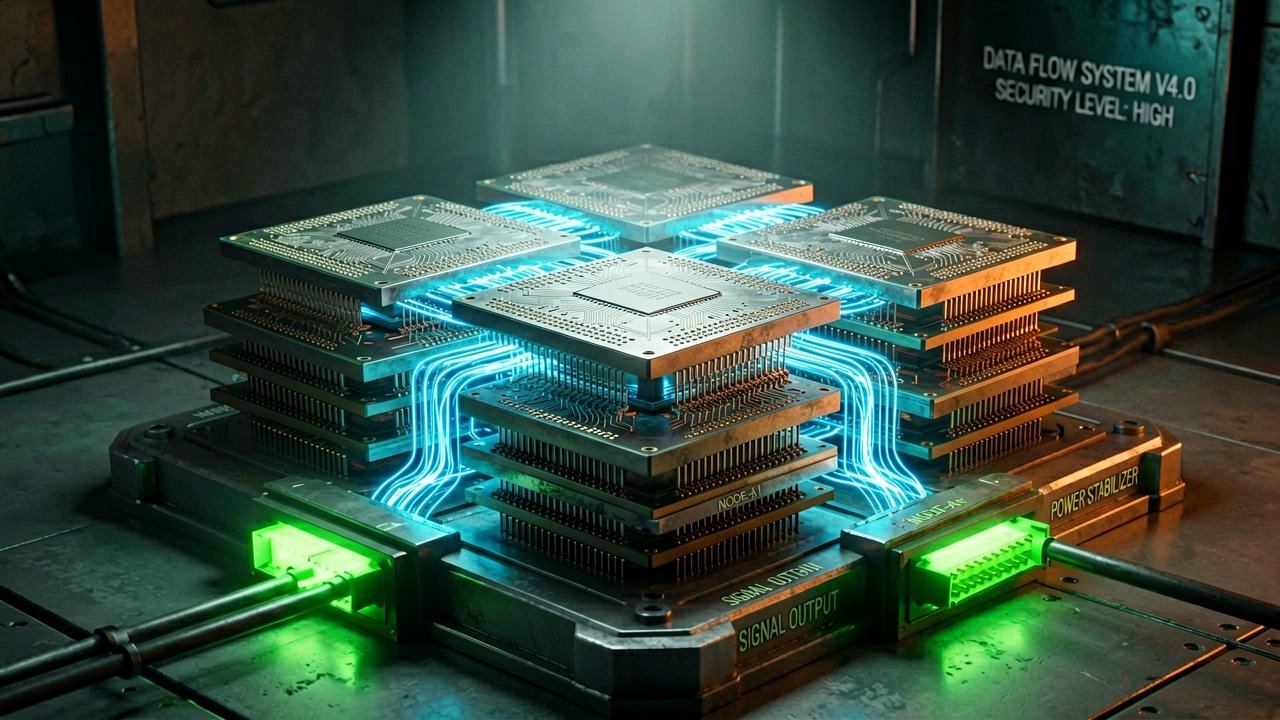
The artificial intelligence gold rush is quietly entering its second phase. While the last few years were defined by training massive foundation models—a process requiring brute computational strength—the industry is pivoting hard toward inference. Running these models efficiently at scale is now the operational bottleneck. This shift has triggered a fierce battle among hardware makers, as silicon startups and tech giants race to slash the eye-watering costs of serving AI to the masses.
For years, Nvidia has maintained a near-monopoly on this terrain, leveraging its entrenched CUDA software ecosystem to keep developers locked in. Competitors like AMD have recently made notable strides, aggressively capturing market share by offering compelling hardware alternatives. However, a new wave of specialized architecture targeting the stock market is threatening to disrupt this duopoly by promising unprecedented cost efficiency specifically tailored for high-volume inference workloads.
Reading Between the Lines:
Silicon valley thrives on the myth of the hardware savior, but the promise of pure architectural efficiency rarely survives its first collision with real-world enterprise software. Wall Street analysts are quick to reward any newcomer boasting a 10x improvement in cost-per-token metrics, yet these theoretical benchmarks often ignore the massive hidden friction of software migration. A chip that excels at running a specific transformer model today can quickly become an expensive paperweight tomorrow if the open-source community shifts toward a completely new architectural paradigm overnight.
This dynamic exposes a fundamental contradiction in the current market enthusiasm. While venture capital and public markets chase hardware startups that decouple computation from traditional memory architectures, hyperscalers like Microsoft, Amazon, and Google are quietly building their own custom application-specific integrated circuits (ASICs). The real threat to established giants isn't necessarily a brilliant standalone startup, but rather the fact that the largest customers for AI silicon are rapidly becoming its primary manufacturers, threatening to relegate third-party hardware vendors to a shrinking slice of the mid-market enterprise pie.
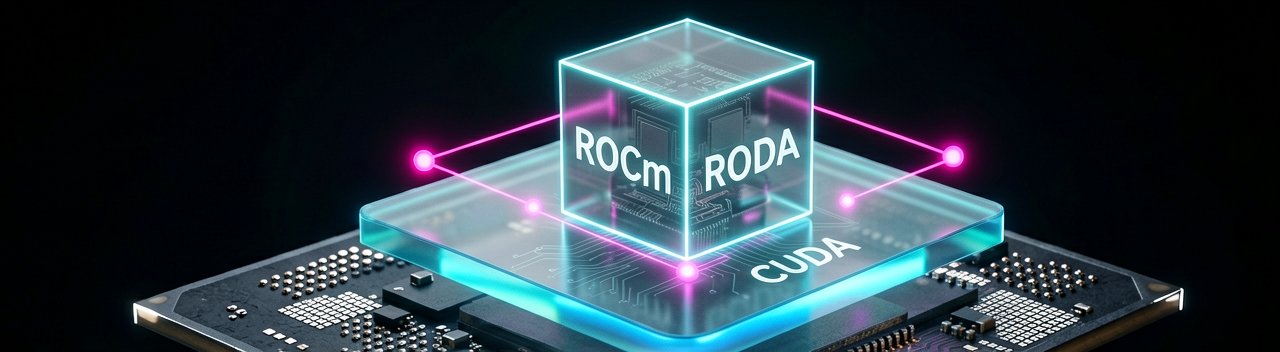
Furthermore, AMD's recent gains prove that breaking the incumbent monopoly requires an enormous commitment to software compatibility, not just clever engineering. AMD spent years optimizing its ROCm software suite to match Nvidia's ecosystem, showing that developer familiarity is the ultimate gatekeeper of hardware adoption. Any new contender aiming for market dominance must convince thousands of skeptical software engineers to rewrite their production pipelines—a hurdle that has killed far more hardware companies than faulty silicon ever did.
Ultimately, the inference market may not experience a clean, singular realignment, but rather a messy fragmentation. High-margin, bleeding-edge reasoning models will likely remain bound to premium hardware ecosystems, while routine, low-latency tasks get offloaded to hyper-optimized, low-cost silicon alternatives. Investors betting on a total overthrow of the current guard are likely misjudging how sticky software ecosystems are, and how quickly entrenched incumbents can adapt their own pricing and architectures to smother emerging threats.
"In the tech world, history repeats itself twice: first as a revolutionary whitepaper that promises to democratize computing, and second as an enterprise software bundle that costs twice as much as the monopoly it was supposed to destroy."
Artūras Malašauskas is an AI Systems Integrator with 20+ years of production-grade web engineering experience. He has designed, shipped, and scaled enterprise Python/PHP systems for logistics, SaaS, and public-sector clients. For the past year, he has focused exclusively on AI integrations: deploying open-source LLMs, building generative media pipelines (image, audio, video), and engineering multi-agent workflows for real production environments. His standard: reproducibility, security, cost-efficient inference—no vaporware. He documents and evaluates emerging AI tooling, separating verified capabilities from marketing noise. Technical editor at: muza-ai.eu, ai-verslas.lt, ai-naujinos.lt Connect on LinkedIn
Comments