The Architecture War: Benchmarking GPT-5, Gemini 2.0, and Llama 3 in the Enterprise Trenches
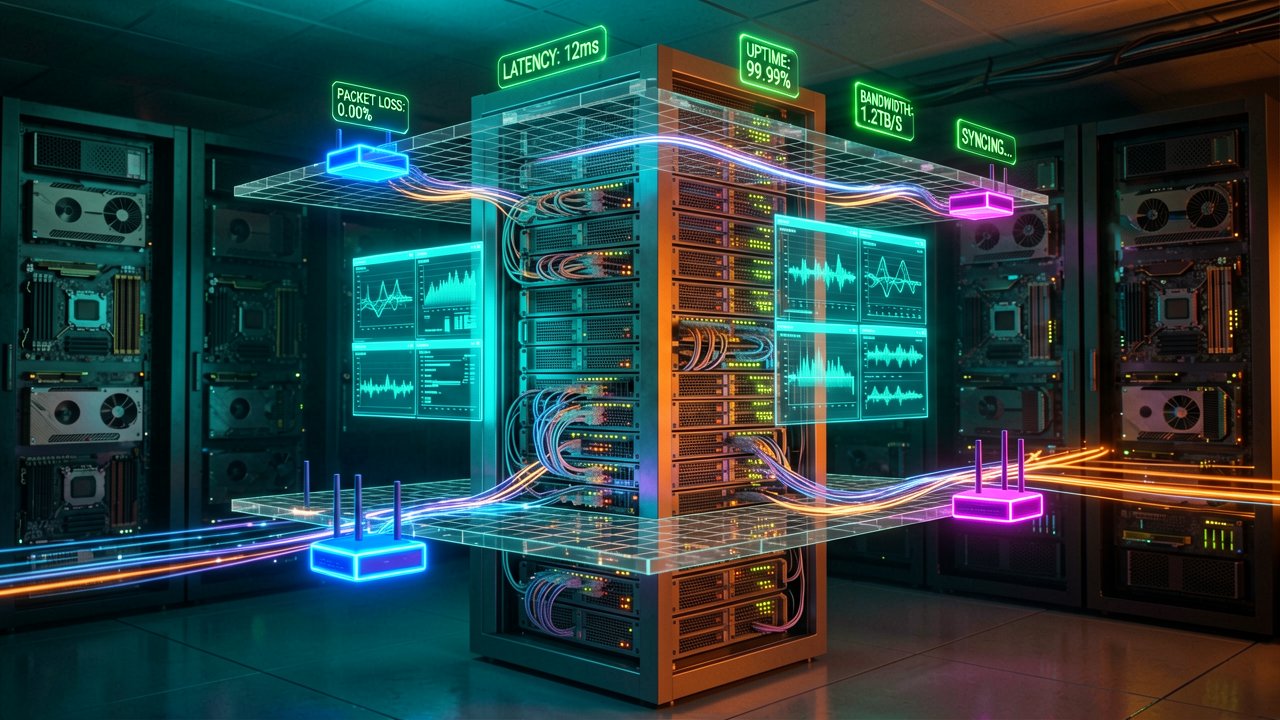
The enterprise AI landscape just endured a massive shakeup, and the dust is finally settling on a fierce three-way battle for the corporate backbone. Tech giants OpenAI, Google, and Meta have pushed their flagship architectures into the wild, forcing CIOs to look past the marketing hype and scrutinize raw infrastructure performance. We are no longer just chatting with bots; we are deploying deep-tier agents that handle everything from multi-million token code repositories to live, high-throughput financial compliance audits.
When OpenAI dropped OpenAI GPT-5, it shifted the paradigm by introducing a native router-based architecture that separates fast, intuitive generations from deep, compute-heavy reasoning. Meanwhile, Google countered by expanding its Google Developers Blog Gemini 2.0 ecosystem, doubling down on a massive one-million-token context window designed to digest entire company databases natively. Meta, flying the open-weights flag, disrupted the pricing economics entirely with Llama 3, giving enterprises a self-hosted alternative capable of matching proprietary giants in localized tasks.
The Reasoning Heavyweight: GPT-5's Router Domination
If your enterprise workloads demand hyper-precise logic, OpenAI’s latest flagship holds a definitive edge. By separating standard generation from dedicated "Thinking" modes, it manages to contain API costs while delivering unmatched accuracy on complex tasks. It currently spearheads advanced data-analysis segments by executing multi-round coreference resolutions across expansive data sheets without losing track of user variables. The trade-off is structural latency; when you flip the switch for maximum reasoning effort, execution times jump, making it a stellar choice for asynchronous batch processing but a tough sell for instant-response customer applications.
The Context King: Gemini 2.0's Multimodal Dominance
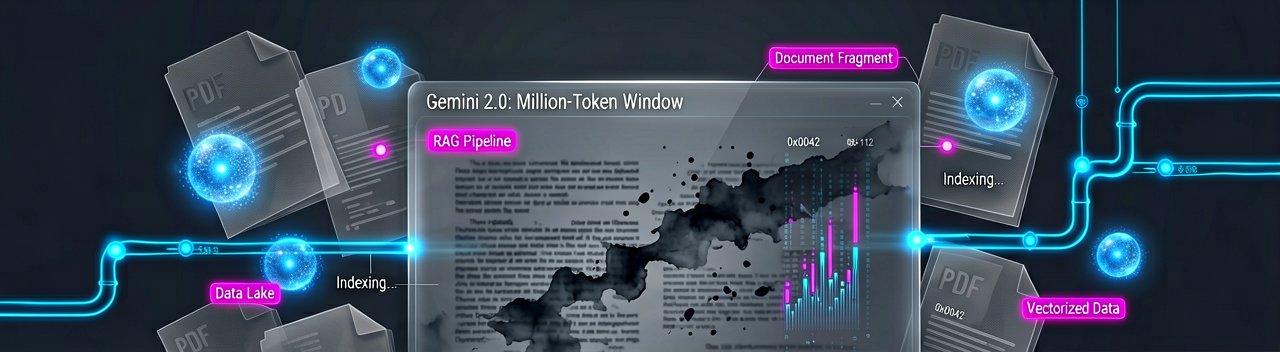
Google has carved out an undeniable niche for organizations tied to heavy document processing and cross-media analysis. While it may occasionally lag behind its peers in raw, hyper-complex math competitions, its ability to chunk massive PDFs directly into Retrieval-Augmented Generation (RAG) pipelines is a game-changer. Enterprises deploying Gemini 2.0 Flash or Pro models are bypassing traditional vector database steps entirely, feeding continuous audio feeds, codebases, and structural blueprints straight into the prompt. It remains the most fluent operator for real-time information retrieval and broad data ingestion pipelines.
The Open Frontier: Llama 3’s Cost Revolution
Meta’s open-weights strategy is the wild card that keeps proprietary ecosystems honest. For businesses hamstrung by strict data sovereignty or compliance regulations that forbid third-party API dependencies, Llama 3 is a triumph. When fine-tuned for specialized corporate domains, it matches the operational efficiency of closed models at a fraction of the long-term inference cost. It does require you to bring your own hardware, but the freedom from token-per-minute rate limits and external data leaks makes it an incredibly compelling architecture for internal automation.
What the Benchmarks Miss: The true battlefield isn't the standardized testing suite; it is the silent, ongoing war over inference orchestration and the realities of day-two corporate integration. While marketing departments love to flash high scorecards on public leaderboards, enterprise architects are realizing that raw performance is useless if the model cannot survive a spike in production traffic. The sudden realization facing most technical leaders is that scaling an AI application requires a radical rethinking of cloud infrastructure, shifting the conversation from token generation speed to the hidden costs of state management and persistent memory.
Industry insiders report that OpenAI’s decision to move GPT-5 toward a native reasoning structure was born out of sheer necessity rather than purely academic ambition. Standard LLMs have hit a diminishing-returns wall regarding brute-force parameter scaling, prompting engineers to shift the heavy lifting to runtime compute. This architectural pivot means companies are essentially paying for the model to "think" before it speaks. While this significantly slashes the hallucination rates that plague automated legal and financial workflows, it introduces a volatile billing variable that makes quarterly IT budgeting a nightmare for mid-sized enterprises.
The Realities of Zero-Database RAG
Google’s massive context window approach with Gemini 2.0 has sparked intense debate among database administrators and cloud architects. On paper, throwing millions of tokens directly into a prompt eliminates the engineering overhead of building complex vector search indexes. In practice, however, pushing a massive corpus into every single query introduces a staggering amount of processing overhead. Early enterprise adopters note that while Gemini handles deep document correlation with uncanny accuracy, the latency penalty for massive inputs makes it unviable for real-time user interfaces, forcing teams to still build hybrid RAG pipelines anyway.
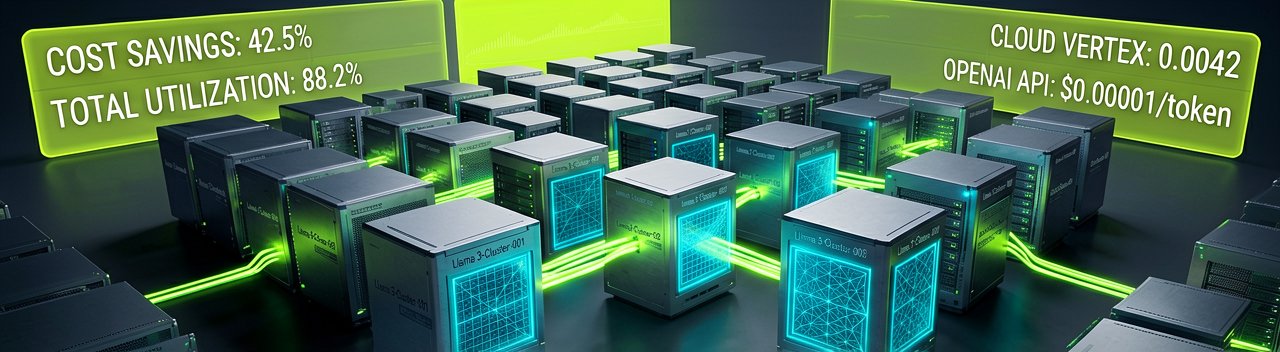
This dynamic has created a massive opening for Meta's ecosystem, which thrives on lean, hyper-optimized deployment. Because Llama 3 can be trimmed, quantized, and hosted on private cloud instances, engineering teams are aggressively adapting it for single-use internal agents. Rather than relying on a single, massive model to understand the entire company, enterprises are finding massive success by deploying a swarm of specialized Llama instances. Each instance is fine-tuned for a singular corporate function, which slashes infrastructure costs and keeps sensitive proprietary data completely insulated from external vendor APIs.
Ultimately, the choice between these three giants is no longer a question of which model is universally smarter. The decision hinges entirely on the organization's existing cloud footprint, tolerance for vendor lock-in, and specific latency requirements. OpenAI continues to dominate where autonomous, multi-step logical planning is paramount. Google remains the undisputed titan for multi-format, data-dense ingestion, while Meta provides the ultimate escape hatch for companies demanding total architectural sovereignty and predictable hardware expenses.
Reading Between the Lines: The corporate rush to crown a definitive victor in this tri-polar model war ignores a glaring structural hypocrisy. Tech giants are aggressively marketing these models as all-knowing, autonomous corporate saviors, yet the very engineering choices defining them reveal a deep anxiety about their inherent limitations. We are told models are becoming more efficient, yet the physical infrastructure required to run them is forcing hyperscalers to scout out private nuclear reactors just to keep the lights on. The enterprise AI gold rush has created an environment where the sophistication of the marketing far outpaces the predictability of the actual software fabric.
Consider the contradiction at the heart of OpenAI’s reasoning-centric approach. By shifting the computational burden to runtime thinking, the architecture implicitly admits that pre-trained patterns are fundamentally insufficient for complex corporate environments. This introduces a bizarre paradox where developers must pay premium token rates just for a model to decide how to format a basic database schema. For enterprises built on tight operating margins, this unpredictable "computation on demand" model threatens to destroy the very efficiency gains that automation was supposed to deliver in the first place.
The Illusion of Infinite Context
Google’s pitch for Gemini 2.0 presents an equally unstable premise by suggesting that infinite context windows render traditional data engineering obsolete. The assumption that you can simply dump an unorganized corporate data lake into a prompt window and expect flawless enterprise-grade insights is a dangerous simplification. It ignores the reality of "lost in the middle" phenomena, where crucial needles get buried in massive digital haystacks. Relying on an LLM as a substitute for a clean, structured database strategy is a technical debt time bomb that many IT departments are blindly fusing.
Meanwhile, the open-source community’s absolute devotion to Meta’s Llama 3 frequently overlooks the harsh realities of total cost of ownership. While saving millions on API token fees sounds fantastic to a Chief Financial Officer, the hidden expenses of specialized infrastructure management, elite machine learning engineering talent, and massive GPU cluster maintenance quickly eat away at those theoretical savings. Treating open-weights as a "free" alternative is a fundamental misunderstanding of modern enterprise economics; you are simply shifting your budget from an external API vendor to an internal infrastructure money pit.
Looking ahead, this frantic feature race will likely culminate in an industry-wide hangover. As the novelty of generative responses fades, enterprises will stop judging models by their theoretical cognitive ceilings and start evaluating them by their mundane engineering floors. The future does not belong to the most articulate model, but to the architecture that seamlessly blends into existing enterprise pipelines without requiring a complete rewrite of the company's financial and technical foundations.
"Ultimately, choosing a modern enterprise AI model feels a lot like buying a high-performance sports car to drive through a crowded construction zone; it boasts an incredible top speed on paper, but you spend most of your time idling in traffic, paying an astronomical premium just to watch the check-engine light flash in real time."
Artūras Malašauskas is an AI Systems Integrator with 20+ years of production-grade web engineering experience. He has designed, shipped, and scaled enterprise Python/PHP systems for logistics, SaaS, and public-sector clients. For the past year, he has focused exclusively on AI integrations: deploying open-source LLMs, building generative media pipelines (image, audio, video), and engineering multi-agent workflows for real production environments. His standard: reproducibility, security, cost-efficient inference—no vaporware. He documents and evaluates emerging AI tooling, separating verified capabilities from marketing noise. Technical editor at: muza-ai.eu, ai-verslas.lt, ai-naujinos.lt Connect on LinkedIn
Comments