The AI Triumvirate’s Spring Offensive: Inside the Relentless Push for Agentic Dominance

The artificial intelligence landscape just endured another seismic shift as the industry's heaviest hitters orchestrated a coordinated, multi-front product blitz. Within a breath of each other, OpenAI, Anthropic, and Google rolled out their latest flagship iterations, transforming what used to be a steady march of capability gains into an outright street fight for developer mindshare. This is no longer just about who can write a cleaner poem or summarize a PDF faster; the goalposts have officially moved to active agency, real-world utility, and ruthless token economics.
The escalation reached a boiling point at the annual Google I/O developer conference, where Alphabet showcased a wholesale rebuilding of its core ecosystem around the new Gemini 3.5 architecture and a multimodal "Gemini Omni" system. Not to be outmaneuvered, OpenAI countered by pushing its highly anticipated GPT-5.5 framework into wide availability, focusing heavily on expert-level engineering tasks. Meanwhile, Anthropic chose to flex its architectural muscle, deploying Claude Opus 4.7 to solidify its reputation for long-context reasoning and sophisticated code generation. The sudden downpour of frontier models has left enterprises and developers with an embarrassment of riches—and a massive optimization headache.
The Architecture of Autonomy
What Most Reports Miss is that the benchmark wars are effectively dead. For the past few years, the tech world obsessed over standardized test scores, but the latest telemetry shows the top-tier models sitting in a functional bottleneck. Instead of chasing marginal gains on generic leaderboards, the big three are fundamentally re-engineering how these models interact with the world. The defining feature of this generation is "agentic behavior"—the ability of an AI to execute multi-step, hours-long workflows entirely in the background without human hand-holding.
Google’s play here relies on sheer ecosystem scale. By deploying "Gemini Spark," a persistent agent that runs continuously across Gmail, Chrome, and Docs, Google wants to make the AI an invisible administrative layer of professional life. It can monitor workflows, update files, and manage background research tasks even when your device is powered down. This approach leverages Google's unique data footprint, turning a standard model upgrade into an omnipresent operating system feature that standard startups simply cannot replicate.
The Fight for the Developer's Terminal
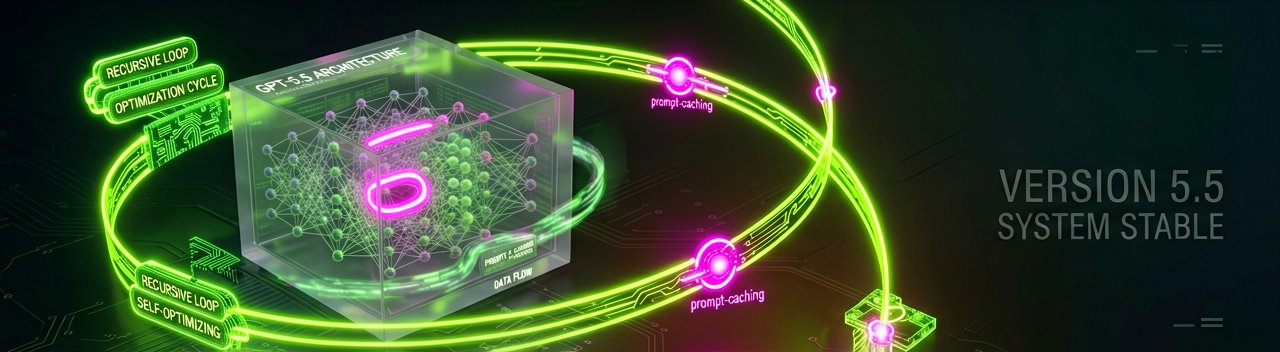
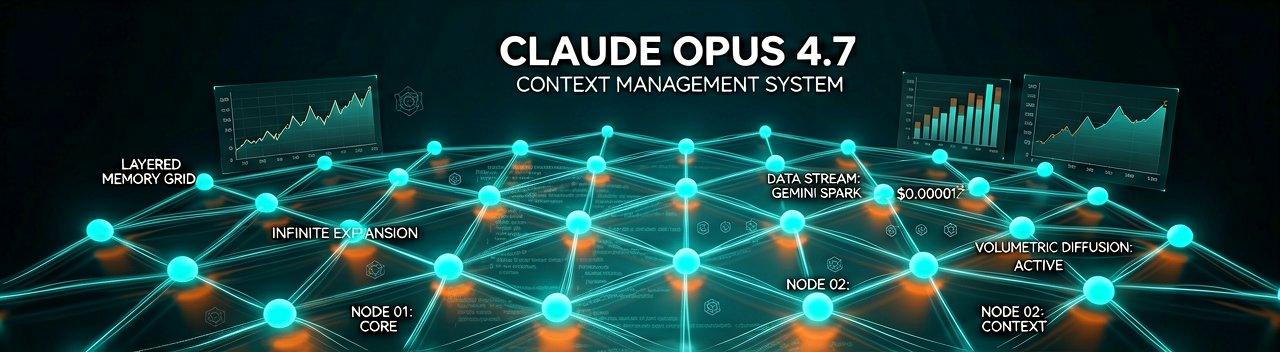
For OpenAI and Anthropic, the battleground remains deeply technical. OpenAI’s rollout of GPT-5.5 has targeted advanced software development, finding early enterprise footing via integrations like GitHub Copilot. Reports indicate that this model is the first in OpenAI’s lineup to actively assist in its own optimization cycles, signaling a loop of self-directed refinement. Anthropic has countered this by leaning into structural stamina; its Claude ecosystem is engineered to handle massive, multi-hour projects with advanced context management, keeping complex application codebases entirely in its active memory without degrading performance over time.
This technical rivalry has triggered an aggressive race to the bottom for API pricing. While individual premium subscriptions remain pinned at standard consumer rates, the real corporate turf war is being fought in fractions of a cent per million tokens. Google has used its vertically integrated data centers to undercut rivals on high-volume inputs, making it incredibly attractive for mass-market apps. OpenAI and Anthropic have responded by introducing granular effort controls and prompt-caching mechanisms, giving engineers the ability to dial down model intelligence on the fly to save cash on simpler steps of a task.
The Realities of a Crowded Frontier
The sheer velocity of these releases highlights an uncomfortable truth for the tech industry: structural advantages are becoming more critical than proprietary algorithms. The algorithmic gap between Silicon Valley's elite labs has narrowed to a razor-thin margin, and international challengers are moving in quickly. Open-source architectures and highly efficient mixture-of-experts models are matching commercial flagships on logic and programming tasks at a fraction of the operational cost.
As a result, the narrative is shifting from pure intelligence to execution and cost-efficiency. Building a brilliant model is no longer enough to guarantee market dominance if the computing infrastructure burns through venture capital faster than enterprise clients can scale their deployments. The coming months will likely see less emphasis on theoretical capability breakthroughs and far more focus on who can deliver reliable, autonomous digital agents at a price point that makes fiscal sense on a corporate balance sheet.
The Reality Gap in the Enterprise Pipeline
Reading Between the Lines: The marketing machinery driving this latest product blitz relies on a fragile illusion of seamless corporate adoption. While Silicon Valley executives paint a picture of automated factories and autonomous digital workers running businesses overnight, the reality on the ground is a mess of integration bottlenecks and severe corporate risk aversion. Enterprises are not plugging these models into their core systems nearly as fast as the labs are shipping them, primarily because the cost of an AI hallucinating an inaccurate financial ledger or leaking proprietary source code remains catastrophic. The market is experiencing a massive divergence between what these models can do in a sterile, controlled demo and what they can actually achieve inside a heavily regulated corporate environment.
This gap reveals a glaring contradiction in how the big three are selling their new agentic systems. On one hand, Google and OpenAI promise that their models can autonomously manage complex, multi-step workflows without human intervention. On the other hand, their legal terms of service still firmly shift all liability for errors, data breaches, and non-compliance onto the end user. This creates an unsustainable paradox for risk management teams: they are being asked to hand over critical business keys to automated background agents, but they must still employ a human workforce to constantly shadow, audit, and babysit every single output. Instead of cutting labor expenses, the current wave of agentic deployment frequently adds an expensive layer of digital supervision to existing corporate workflows.
Furthermore, the aggressive push toward dynamic API pricing and token discounts exposes a quiet desperation regarding long-term business models. The venture capital fueling these massive infrastructure expansions demands rapid revenue scale, yet the core product is rapidly becoming a commoditized utility. When three separate labs release functionally equivalent intelligence upgrades within days of each other, pricing power collapses. The labs are forced to burn through millions of dollars in compute power to run these giant architectures, while simultaneously cutting prices to prevent developers from jumping to a cheaper rival. This creates a bizarre race to the bottom where the most advanced technology on earth is being priced like a basic utility crop, calling into question whether any of these AI labs can actually achieve sustainable profitability without permanent corporate subsidies.
The Infrastructure Chokepoint
Looking ahead, the next structural bottleneck will not be algorithmic ingenuity or data availability, but the physical limits of power grids and hardware supply chains. The energy footprint required to train and run these persistent, always-on models is growing at an unsustainable rate, forcing tech giants into desperate scrambles for proprietary nuclear energy deals and custom silicon factories. A frontier model that requires its own dedicated substation just to handle background administrative tasks is fundamentally unscalable for the mass market, regardless of how clever its software optimization might look on paper.
As the industry shifts from pure training to massive, high-volume inference, the true winners of this competitive push will likely be the hardware architects and infrastructure providers rather than the software labs themselves. The current cycle of constant model replacements suggests that the intellectual property of any single model iteration depreciates to zero within six months. In this hyper-competitive market environment, the ultimate advantage belongs to the companies that own the data centers, the fiber-optic networks, and the cooling systems, while the software pioneers continue to bleed capital in an endless war of attrition.
"We were promised an era of artificial superintelligence that would solve climate change and cure disease, but instead we got three multi-billion-dollar corporations aggressively undercutting each other by fractions of a cent just to help an executive draft a slightly more polite rejection email."
Artūras Malašauskas is an AI Systems Integrator with 20+ years of production-grade web engineering experience. He has designed, shipped, and scaled enterprise Python/PHP systems for logistics, SaaS, and public-sector clients. For the past year, he has focused exclusively on AI integrations: deploying open-source LLMs, building generative media pipelines (image, audio, video), and engineering multi-agent workflows for real production environments. His standard: reproducibility, security, cost-efficient inference—no vaporware. He documents and evaluates emerging AI tooling, separating verified capabilities from marketing noise. Technical editor at: muza-ai.eu, ai-verslas.lt, ai-naujinos.lt Connect on LinkedIn
Comments