Nvidia’s Next-Gen AI Juggernaut Is Officially on the Launchpad
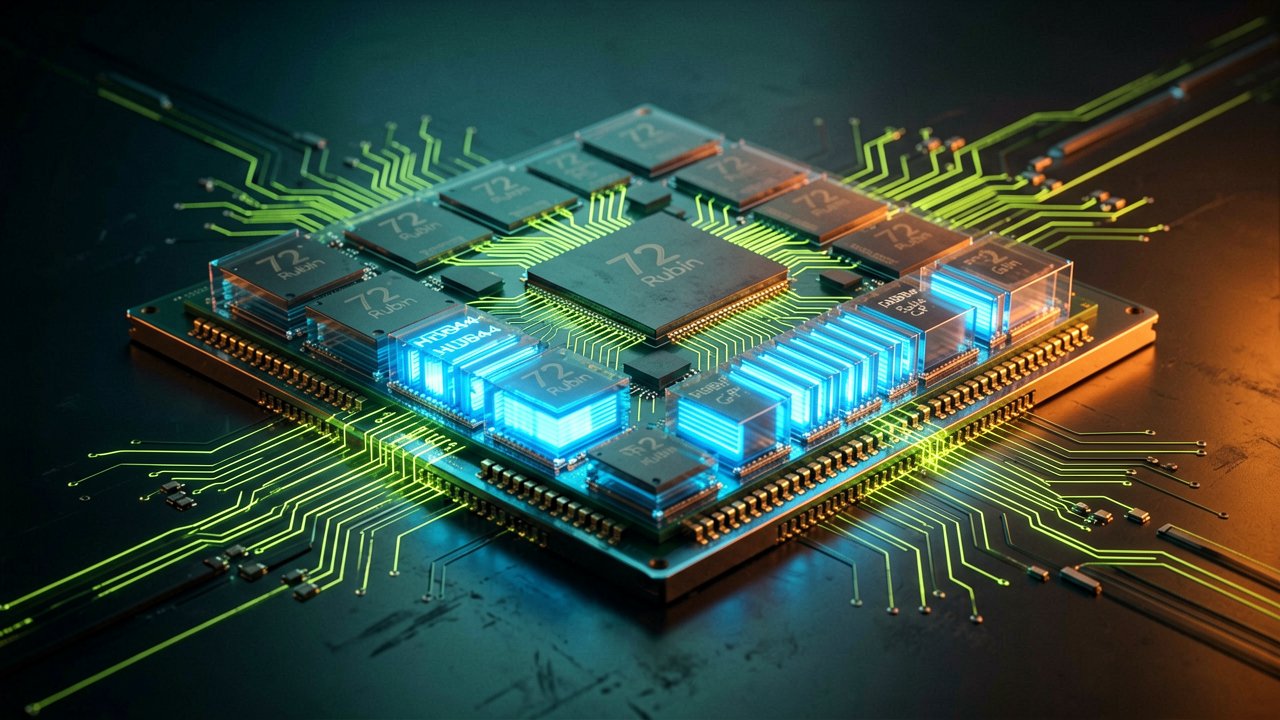
Nvidia is rewriting its own playbook yet again, and the competition should probably take a seat. While the tech industry is still aggressively scrambling to get its hands on the current-generation Blackwell hardware, Nvidia CEO Jensen Huang has confirmed that the spectacular next-generation Vera Rubin AI platform is tracking flawlessly for initial shipments in the third quarter of 2026, with a massive volume ramp scheduled for the final quarter of the year. This isn't just a minor incremental spec bump; it's a massive, multi-chip architectural overhaul designed to cement Nvidia's absolute dominance in the hyper-competitive artificial intelligence infrastructure landscape.
According to the latest industry details tracked by Wccftech, the upcoming Vera Rubin ecosystem arrives at a time when the AI boom shows zero signs of cooling down. By shifting away from standalone components, Nvidia is treating the entire rack as a single, cohesive computer. The flagship NVL72 configuration will pack an eye-watering array of 72 Rubin GPUs and 36 Vera CPUs into a unified architecture. That integration translates directly into a mind-boggling ten-fold reduction in inference token costs compared to the previous generation, removing the financial bottleneck for companies trying to scale massive, trillion-parameter generative models.
The Exorbitant Price of Absolute Power
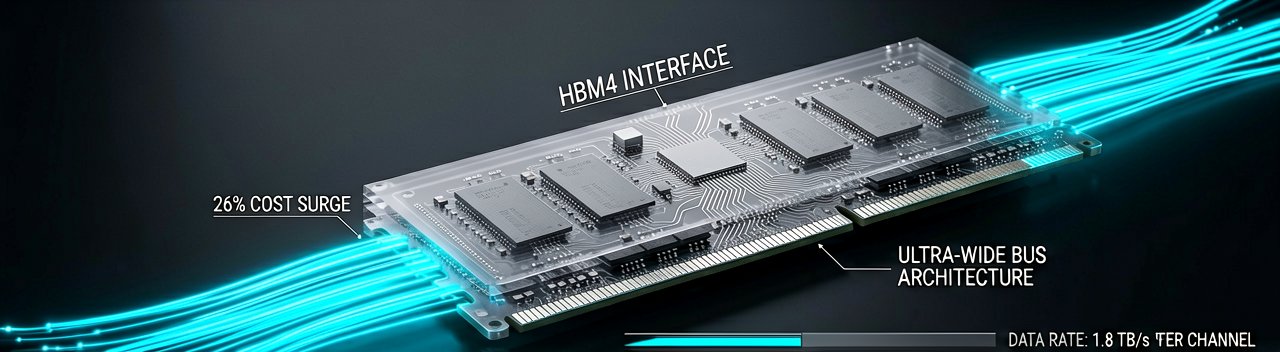
Engineering at the absolute bleeding edge of silicon physics doesn't come cheap, and Nvidia's bill of materials reveals just how expensive this next frontier will be. Financial analyst breakdowns reported by Wccftech show that a crippling surge in next-gen memory pricing means High-Bandwidth Memory (HBM4) and LPDDR5X components will eat up a staggering 26% of the total system cost. For perspective, memory accounted for just 9% of a Grace Blackwell rack's build sheet. When the total cost for a single high-end system rack hovers around the $7.8 million mark, you quickly realize that only hyperscale cloud giants like Microsoft, Google, and Meta have the deep pockets required to enter the Rubin era.
Chasing the Agentic AI Horizon
The engineering shift here focuses heavily on what Nvidia calls "agentic AI factories"—autonomous systems capable of complex reasoning, multi-step planning, and real-time inference rather than just spitting out static text. By pairing the sheer throughput of the Rubin GPUs with specialized software layers, Nvidia aims to stay steps ahead of custom internal chips being cooked up by rivals. Despite Wall Street's occasional anxiety over the long-term return on investment for data centers, the financial reality remains staggering. Tech giants have already signaled a massive wave of capital expenditures continuing into next year, ensuring that Nvidia’s upcoming silicon masterpiece will launch into a market starved for raw compute.
The Architectural Evolution: Solving the Trillion-Parameter Bottleneck
Behind the Scenes: The transition from the Hopper architecture to Blackwell was a monumental leap, but Rubin represents a profound paradigm shift in how computing clusters are manufactured and deployed. For the past decade, chip designers focused primarily on squeezing more transistors onto a single piece of silicon. Now, Nvidia is facing the hard physical limits of the reticle size—the maximum area a lithography machine can expose on a wafer at one time. Rubin bypasses this physical wall by treating the entire data center rack as the fundamental compute unit. This modular approach relies heavily on advanced packaging tech from TSMC, which physically stitches together disparate pieces of silicon using high-speed interconnects that mimic the latency of a single, massive die.
This structural change directly impacts the engineering teams tasked with training the next generation of frontier AI models. As model architectures transition from simple text generation to agentic systems that run continuous, internal reasoning loops, memory bandwidth becomes the ultimate limiting factor. The decision to adopt ultra-wide HBM4 interfaces is an expensive cure for this specific ailment. By widening the memory bus, Nvidia is unlocking unprecedented data transfer rates between the processor and the memory stacks, ensuring that the massive matrix multiplication engines inside the Rubin GPUs are never left waiting for data to process.
From a historical perspective, Nvidia's dominance has rarely been about the raw hardware alone, a detail that hardware-focused competitors continually overlook. The company's true moat is CUDA, the software ecosystem developers have been building upon for nearly two decades. With the Rubin platform, Nvidia is deeply integrating this legacy software layer with its new NIM (Nvidia Inference Microservices) framework. This allows enterprises to deploy complex, multi-agent AI workflows out of the box, completely bypassing months of low-level optimization work. It is a brilliant lock-in strategy that makes switching to cheaper, rival hardware an incredibly painful and costly proposition for software engineers.
However, the sheer financial scale of this ecosystem is beginning to reshape the power dynamics within the tech sector. When a single data center infrastructure tier demands multi-million dollar investments per rack, the gap between the technology "have-nots" and the hyperscale elite widens into a chasm. Venture capital firms are already recalibrating their funding models, realizing that early-stage AI startups cannot afford the computing toll booths controlled by Microsoft, Amazon, and Google. This capital concentration is forcing a strategic pivot toward smaller, highly optimized open-source models that can run on less exotic hardware, creating a parallel market segment that actively tries to circumvent Nvidia's premium pricing.

Meanwhile, the operational realities of housing these systems are causing headaches for data center operators worldwide. A single Rubin NVL72 rack will draw unprecedented amounts of power, pushing liquid cooling requirements from a luxury choice to an absolute engineering necessity. Data centers built just five years ago simply do not have the plumbing, structural reinforcement, or electrical substations required to support these machines. Consequently, the rollout of Rubin will be heavily gated not just by Nvidia's silicon supply chain, but by the global speed of physical real estate development and power grid modernization.
The Sovereign AI Illusion and the Realities of Silicon Geopolitics
Reading Between the Lines: The prevailing industry narrative suggests that the insatiable global demand for Nvidia’s Rubin platform will be driven entirely by a harmonious mix of corporate AI integration and national "sovereign AI" initiatives. Yet, a closer examination reveals a glaring contradiction between political ambition and fiscal reality. While nation-states loudly proclaim the need to build localized AI infrastructure to safeguard cultural and data sovereignty, the eye-watering $7.8 million price tag per high-end Rubin rack changes the math entirely. Most domestic budgets outside of a few wealthy Gulf states simply cannot sustain capital expenditures of this magnitude without hollowing out other critical public services, threatening to turn sovereign AI into a luxury vanity project rather than a viable alternative to Big Tech dependency.
Furthermore, Wall Street's unwavering assumption that hyper-scalers will indefinitely tolerate Nvidia’s eye-popping 70-plus percent gross margins feels increasingly detached from corporate history. Tech giants like Microsoft, Google, and Amazon are not accustomed to paying a permanent tax to a single silicon gatekeeper. Every dollar spent on a Rubin system is a dollar that validates their own internal silicon initiatives—like Google’s TPUs or Amazon’s Trainium chips. While Nvidia holds the performance crown today, the massive capital poured into custom internal chips represents a ticking clock. The moment these proprietary chips become "good enough" for the majority of standard enterprise AI workloads, the hyper-scalers will aggressively pivot away, leaving Nvidia vulnerable to a sudden, structural demand shock.
There is also a profound mismatch between the breakneck speed of Nvidia's hardware cycles and the slow-moving realities of corporate software adoption. Nvidia is essentially launching a new architectural paradigm every twelve to eighteen months, forcing its customer base into a relentless, exhausting upgrade cycle. However, the vast majority of Fortune 500 enterprises are still struggling to move basic generative AI pilots out of the sandbox phase and into production using older Hopper-generation chips. Forcing the market onto Rubin’s ultra-expensive HBM4 architecture when corporate America has yet to monetize its current hardware investments creates an economic bubble where computing capacity drastically outpaces actual, revenue-generating utility.
Ultimately, Nvidia’s relentless pursuit of raw computing power might be blinding the industry to the law of diminishing returns in AI model training. The assumption that scaling models by another factor of ten will automatically yield artificial general intelligence is an unproven hypothesis, not a physical law. If the next generation of trillion-parameter models trained on Rubin systems only yields incremental improvements in reasoning, the massive capital expenditure model collapses. Nvidia has brilliantly positioned itself as the exclusive arms dealer in the AI gold rush, but if the miners realize the gold is just fool's gold, the demand for expensive shovels will evaporate overnight.
"We are rapidly approaching a surreal technological future where Nvidia's liquid-cooled AI supercomputers will possess the flawless capability to simulate human consciousness, while the corporations buying them will still be desperately trying to figure out how to use the technology to automate a basic customer service email without accidentally hallucinating a coupon code for free airline tickets."
Artūras Malašauskas is an AI Systems Integrator with 20+ years of production-grade web engineering experience. He has designed, shipped, and scaled enterprise Python/PHP systems for logistics, SaaS, and public-sector clients. For the past year, he has focused exclusively on AI integrations: deploying open-source LLMs, building generative media pipelines (image, audio, video), and engineering multi-agent workflows for real production environments. His standard: reproducibility, security, cost-efficient inference—no vaporware. He documents and evaluates emerging AI tooling, separating verified capabilities from marketing noise. Technical editor at: muza-ai.eu, ai-verslas.lt, ai-naujinos.lt Connect on LinkedIn
Comments