The Hard Truth: NVIDIA Officially Does Not Give a Single Fuck About Gaming

Let's stop lying to ourselves. For decades, PC gamers wore the green badge of the GeForce empire like a badge of honor, firmly believing that NVIDIA was a company built by gamers, for gamers. We tolerated the steadily creeping MSRPs, the artificial generational feature-locking, and the agonizingly stingy VRAM allocations because, at the end of the day, Jensen Huang would still walk out on stage in his leather jacket and give us the shiny new graphics cards we craved. But the latest financial reality has laid bare an uncomfortable, unavoidable truth: the gaming market is no longer Team Green's favorite child. It is barely an afterthought, a rounding error on a ledger written entirely in the language of artificial intelligence.
The numbers don't lie, and they paint a devastating picture for anyone still holding out hope for a consumer-first hardware revolution. According to NVIDIA's monumental fiscal earnings reports published by NVIDIA Investor Relations, the company pulled in a mind-boggling $215.9 billion for the full fiscal year of 2026. If you look closely at where that cash actually came from, the Data Center division accounted for a staggering $193.7 billion of that total. Meanwhile, the legacy gaming sector has watched its piece of the pie shrink to pitiful single-digit percentages of total corporate revenue. The company’s newly minted quarterly reporting structure even goes so far as to lump video game consoles and PCs into a generic "edge computing" bucket, effectively treating your beloved rig with the exact same corporate enthusiasm as an autonomous delivery robot or a smart car.
The Blackwell Pivot and the Death of the Mid-Range GPU
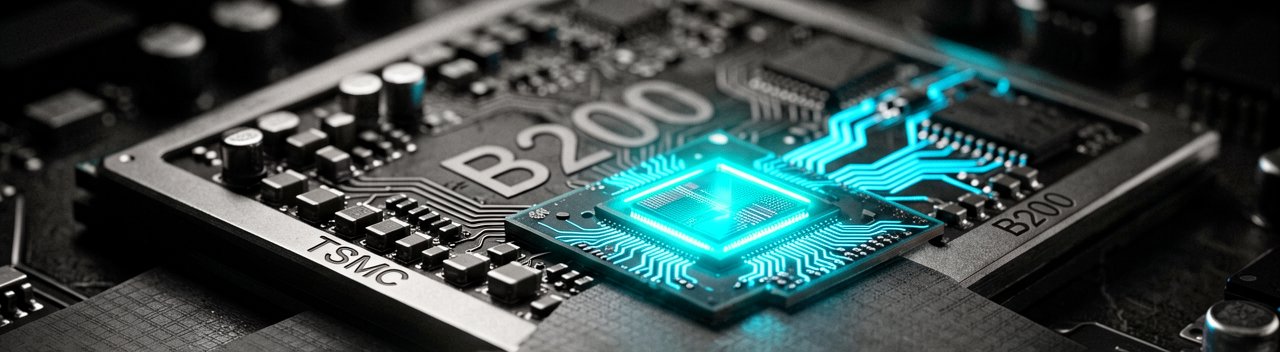
This massive financial realignment explains exactly why the consumer desktop GPU market feels so thoroughly broken. When a single B200 or Vera Rubin AI architecture rack can fetch tens of thousands of dollars from hyperscale cloud providers, halting silicon manufacturing lines to print mid-range GeForce cards becomes an active disservice to Wall Street. The trickle-down effect has left consumer graphics cards feeling starved for innovation, as silicon priorities dictate that the absolute best yields go straight to enterprise deep learning cluster contracts rather than the local retail shelves.
Every piece of consumer software magic NVIDIA gives us now—whether it is DLSS frame generation or neural rendering—is fundamentally an artifact of technology built to optimize server farms, repackaged with a shiny bow for the desktop crowd. As detailed by analysts via CNBC, data center revenue now commands more than 90% of NVIDIA’s overall business operations. The company isn't trying to build the ultimate graphics card for your monitor anymore; they are building the industrial factories of the next global revolution, and we are just picking up the leftover crumbs from the factory floor.

Behind the Scenes: The Invisible Pivot from Pixels to Power
The transformation didn't happen overnight, but the inflection point is now visible in the rearview mirror. For years, Silicon Valley insiders watched Jensen Huang subtly lay the groundwork for an enterprise takeover while public relations kept the gaming community docile with flashy ray-tracing demos. The architecture names themselves tell the story of a company changing its DNA. Where GeForce chips once honored scientists whose work directly advanced mathematics and visual physics, the silicon pipeline split permanently when the Hopper and Blackwell architectures moved exclusively toward matrix multiplication and tensor processing. The engineering talent inside Santa Clara shifted away from optimizing triangle rasterization speeds and toward building massive, interconnected server fabrics capable of running large language models.
This structural migration has fundamentally altered how NVIDIA interacts with traditional board partners like ASUS, MSI, and Gigabyte. While these companies used to be vital lifelines for moving desktop silicon, they are now treated as low-margin distributors of consumer leftovers. The real executive-level energy is spent courting hyperscalers like Microsoft, Amazon, and Meta, who buy enterprise hardware by the warehouse full. Independent hardware reviewers have noted a distinct chill in communication from the green team, marked by tighter reviewer guidelines and a refusal to address why mid-range consumer cards continue to suffer from restricted bus widths and minimal memory capacities that feel deliberately designed to prevent creative professionals from using them for local AI workloads.
Historically, the gaming division served as the financial cushion that kept the company afloat during economic downturns, most notably during the crypto crash when mining demand collapsed overnight. Today, that safety net is no longer required. The sheer velocity of AI infrastructure spending has created a corporate reality where the consumer market represents an operational distraction. Engineering hours spent debugging driver profiles for a newly released video game are hours stolen from optimizing enterprise software stacks like CUDA, which serves as the ultimate proprietary moat keeping competitors like AMD and Intel at bay.
For the average consumer, this means the era of the high-value, sub-$400 graphics card is dead and buried, replaced by a luxury hardware model where premium pricing is mandatory to justify occupying valuable factory floor space at TSMC. The silicon wafers that could become a dozen mid-range GeForce chips are instead allocated to a single enterprise accelerator that yields massive profit margins. NVIDIA has outgrown the bedrooms and gaming dens that built its empire, pivoting toward a future where it functions as the infrastructure backbone of global computing, leaving the gaming community to realize they were just a stepping stone on the path to unimaginable scale.
Reading Between the Lines: The Illusion of Choice in a Monopolized Future
The tech industry loves a good narrative about corporate loyalty, but the prevailing assumption that NVIDIA will eventually return to its gaming roots during an AI market correction is wishful thinking at best. Wall Street has tasted triple-digit margin growth, and there is no corporate mechanism for gracefully downsizing expectations back to the modest returns of consumer retail. Even if the artificial intelligence bubble experiences a standard cyclical cooling period, the infrastructure investment is already baked into global corporate strategies. NVIDIA has successfully transformed itself from a specialized hardware vendor into a systemic utility provider, making a pivot back to focusing on high-frame-rate desktop gaming structurally impossible.
This reality exposes a glaring contradiction in Team Green’s current marketing playbook. The company still spends millions hosting lavish keynotes at consumer tech shows, heavily promoting software features like DLSS and digital avatar tech to everyday consumers. Yet, this is not an investment in the gaming community; it is a clever marketing strategy designed to use gamers as a massive, unpaid beta-testing pool for their enterprise enterprise software stack. Every time a consumer enables an AI-driven upscaling feature on a GeForce card, they are telemetry-testing algorithms destined to optimize enterprise cloud services. The consumer pays a premium price for the privilege of stress-testing the very technology that is actively displacing them from the company's priority list.
The long-term implications for the PC gaming ecosystem are remarkably bleak, pointing toward a bifurcated market where local, high-end hardware becomes an elite luxury good. As mid-range silicon continues to stagnate, the average gamer will be systematically pushed toward cloud streaming services—ironically hosted on NVIDIA’s own data center nodes. By pricing the average consumer out of physical desktop ownership, the company creates a closed-loop ecosystem where they control both the hardware manufacturing and the digital distribution pipeline. The open-platform nature of PC gaming, historically celebrated for its accessibility and modding freedom, is being quietly suffocated by enterprise-grade economic realities.
Skeptics who argue that AMD or Intel will simply step in to rescue the mid-range market fail to grasp the scale of the collateral damage. The entire consumer semiconductor supply chain is held hostage by the same manufacturing bottlenecks at major foundries like TSMC. When enterprise silicon commands such astronomical premiums, independent foundries naturally prioritize the highest bidder, leaving rivals scrambling for leftover production capacity. The industry-wide shift toward AI silicon ensures that even competitors cannot afford to build cheap, high-performance gaming GPUs in the volume required to reset the market, locking consumers into an expensive, stagnant status quo for the foreseeable future.
"We spent years arguing over frame rates and VRAM capacities, completely oblivious to the fact that we were just the launchpad. Now that Team Green has successfully docked with the AI mothership, the consumer GPU market feels less like a cutting-edge hobby and more like buying a luxury tractor from a company that secretly wants to build spaceships."
Artūras Malašauskas is an AI Systems Integrator with 20+ years of production-grade web engineering experience. He has designed, shipped, and scaled enterprise Python/PHP systems for logistics, SaaS, and public-sector clients. For the past year, he has focused exclusively on AI integrations: deploying open-source LLMs, building generative media pipelines (image, audio, video), and engineering multi-agent workflows for real production environments. His standard: reproducibility, security, cost-efficient inference—no vaporware. He documents and evaluates emerging AI tooling, separating verified capabilities from marketing noise. Technical editor at: muza-ai.eu, ai-verslas.lt, ai-naujinos.lt Connect on LinkedIn
Comments