Nvidia’s Q1 Fiscal 2027: The AI Infrastructure Juggernaut Shows No Signs of Slowing
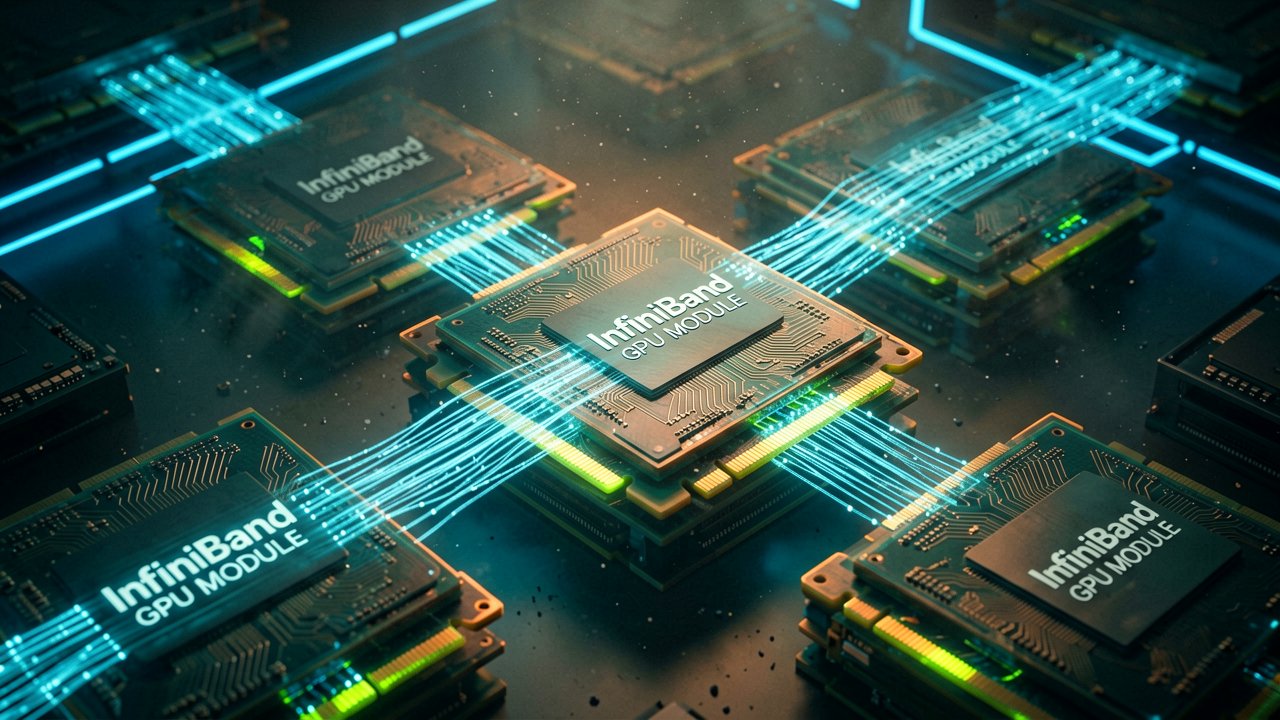
Anyone waiting for the artificial intelligence bubble to pop will have to keep waiting. Nvidia just dropped its first-quarter fiscal 2027 financial results, and the numbers are nothing short of a flex. The Silicon Valley giant posted a mind-boggling record revenue of $81.6 billion, marking an 85% leap from the same period last year. Wall Street expected a lot, but Nvidia delivered more, comfortably outpacing analyst estimates of $78.86 billion and proving that the global hunger for specialized silicon remains insatiable.
The real engine behind this relentless growth remains the Data Center division, which raked in an unprecedented $75.2 billion. That is a 92% spike year-over-year, making up the vast majority of the company's total intake. According to a report by , adjusted earnings per share landed at $1.87, outperforming the projected $1.76. Chief Executive Officer Jensen Huang noted that the buildout of "AI factories" is currently accelerating at an extraordinary speed, signaling that we are transitioning from early experimentation to a mature era of agentic AI operating at scale.
Shareholder Rewards and a Changing Structure
Nvidia is also making sure its investors share in the bounty. The board approved a massive $80 billion additional stock buyback program alongside a significant dividend hike, raising the quarterly payout from a mere penny to $25.25 per share. Beyond the raw cash flow, the company is adjusting how it tracks its own empire. Starting this quarter, financial reporting has shifted into a streamlined framework divided between Data Center and Edge Computing, offering a clearer picture of how hyperscalers and corporate networks are dividing up their capital expenditures.
Looking Ahead to a Ninety-Billion-Dollar Quarter
The momentum is practically guaranteed to carry into the summer months. For the second quarter of fiscal 2027, management issued guidance forecasting revenue of $91.0 billion, give or take a couple of percentage points. Crucially, this projection completely excludes compute revenue from China, demonstrating that the hardware pioneer can hit atmospheric heights even while navigating tight U.S. export controls and complex geopolitical boundaries. The hardware rush continues, and Nvidia still holds the keys to the kingdom.

Beyond the Box Scores: Inside Nvidia's Architectural Moat
What Most Reports Miss: The staggering headline numbers obscure a much more profound shift in how computing architecture is being rewritten. Wall Street tends to treat Nvidia as a traditional hardware vendor selling discrete components, but the company's real leverage lies in its evolution into a full-stack systems provider. The massive $75.2 billion flowing into the Data Center division is no longer just a tally of graphic processing units shipped in crates. It represents the enterprise lock-in of an entire ecosystem where compute, proprietary networking fabrics like InfiniBand, and optimized software layers are welded together into a single, indivisible product line.
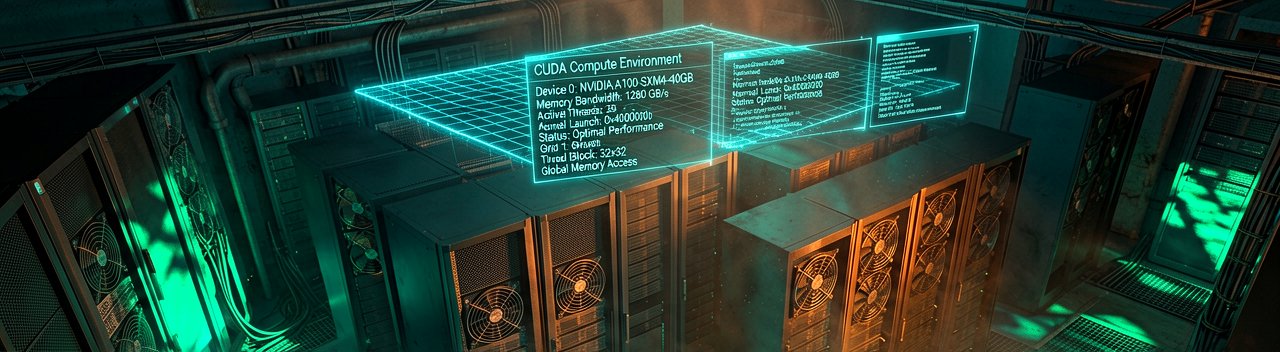
This systemic approach is precisely why cloud hyperscalers find it nearly impossible to diversify their supply chains, even as they aggressively develop their own custom silicon. Big tech firms are discovering that designing an AI chip in a laboratory is vastly different from orchestrating tens of thousands of those chips to run a trillion-parameter model without crashing. According to deep-dive industry reporting by Bloomberg, rival cloud providers are forced to keep writing massive checks to Nvidia because the software layer, CUDA, remains the industry's default language, rendering alternative hardware platforms a risky and labor-intensive bet for software developers.
Historically, hardware monopolies are vulnerable to supply chain bottlenecks, and this remains the primary risk factor that seasoned industry observers watch closely. Nvidia does not actually manufacture its own silicon; it relies almost entirely on advanced packaging technologies from Taiwan Semiconductor Manufacturing Company. The blistering $91 billion guidance for the upcoming quarter suggests that production yields for next-generation architectures are stabilizing faster than anticipated. This operational execution effectively keeps competitor counter-offensives at bay, as rivals struggle to secure the necessary high-bandwidth memory and fabrication allocations required to mount a serious challenge.
From a macroeconomic perspective, the shift toward "AI factories" highlights a permanent realignment of corporate capital expenditures. Enterprises are actively pulling funds away from general-purpose server renewals to bankroll Nvidia-powered infrastructure, betting that generative agents will drive future productivity gains. While some skeptical macroeconomic analysts still question the long-term return on investment for end-users buying these services, the current corporate consensus prioritizes the risk of falling behind over the risk of overspending. For the foreseeable future, Nvidia is operating less like a chip designer and more like a toll collector on the main highway of global computing infrastructure.
The Capital Expenditure Conundrum and the Spectre of Overcapacity
Reading Between the Lines: The euphoric market reaction to Nvidia’s quarterly triumphs masks a growing tension between silicon consumption and actual software monetization. Right now, the technology sector is locked in a classic prisoner's dilemma, where every major cloud provider feels compelled to buy tens of billions of dollars in hardware simply to maintain parity with their peers. This has created a massive disconnect where Nvidia enjoys historic 75% gross margins, while the companies actually deploying these chips are still burning capital trying to find enterprise use cases that justify the infrastructure costs.
The core contradiction lies in the sustainability of this buildout. While Jensen Huang frequently points to the transition from traditional data centers to accelerated computing as a permanent architectural shift, history suggests that infrastructure buildouts happen in cyclical waves rather than permanent vertical lines. Telecommunications companies in the late 1990s laid enough dark fiber to circle the globe, only to suffer a decade of financial pain before application demand caught up to that capacity. A similar digestion period could easily hit the AI sector if the current crop of generative models fails to generate the trillions of dollars in recurring software revenue required to pay for the underlying hardware.
Furthermore, the exclusion of China from Nvidia's forward guidance is less of a triumph and more of a delicate tightrope walk. While the company has successfully backfilled Chinese demand with ravenous orders from Western hyperscalers and sovereign AI initiatives in Europe and the Middle East, this geographic concentration introduces a new kind of fragility. The company is becoming overwhelmingly reliant on a handful of mega-cap customers. If even two or three of these tech giants decide they have built sufficient capacity and choose to tap the brakes on their capital expenditures, the demand drop-off will be swift and severe, irrespective of how dominant the CUDA platform remains.
"Building the infrastructure of the future is an exceptionally profitable business, right up until the moment your customers realize they have bought enough digital concrete to pave the entire planet twice over."
Artūras Malašauskas is an AI Systems Integrator with 20+ years of production-grade web engineering experience. He has designed, shipped, and scaled enterprise Python/PHP systems for logistics, SaaS, and public-sector clients. For the past year, he has focused exclusively on AI integrations: deploying open-source LLMs, building generative media pipelines (image, audio, video), and engineering multi-agent workflows for real production environments. His standard: reproducibility, security, cost-efficient inference—no vaporware. He documents and evaluates emerging AI tooling, separating verified capabilities from marketing noise. Technical editor at: muza-ai.eu, ai-verslas.lt, ai-naujinos.lt Connect on LinkedIn
Comments