The Vision Reclaimed: Google’s Intelligent Eyewear Aims for a Fall Reset
Google is taking another run at the bridge of your nose, but this time, it isn’t bringing a dorky prism or a "Glasshole" stigma to the party. Dubbed "Intelligent Eyewear," the company’s latest venture into head-worn hardware is slated for a fall release, leaning heavily on the multimodal muscle of Gemini and the spatial awareness of Project Astra. Unlike the ill-fated Google Glass of a decade ago, these new frames prioritize "short, high-value interventions" over immersive computing, according to reports from Virtual Reality News.
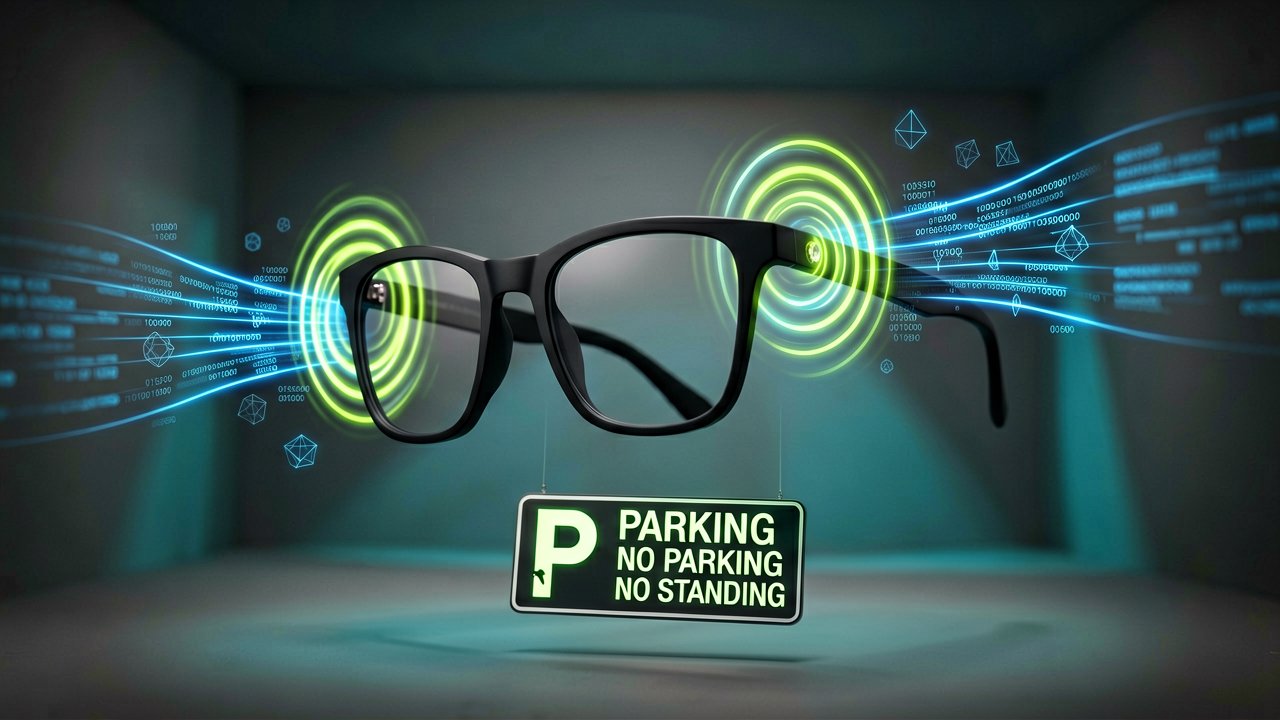
The strategy here is a pincer movement of style and substance. Google has tapped heavy hitters like Samsung, Warby Parker, and Gentle Monster to ensure the hardware looks like something a human would actually wear in public without attracting a side-eye. Under the hood, these devices run on the new Android XR platform, acting as a seamless extension of your phone rather than a standalone replacement. Whether it’s real-time translation that sounds like the person speaking or a camera that helps Gemini "see" a confusing parking sign to explain it to you, the goal is utility that feels invisible until you need it.
What Most Reports Miss: The Ghost of Google Glass Past
Behind the Scenes: The tech industry’s collective memory of the 2013 Google Glass launch is a cautionary tale of "over-promising and under-designing," but Google’s current pivots suggest they’ve finally internalized those scars. Where the original Glass felt like a laboratory experiment escaping into the wild, the new "Intelligent Eyewear" ecosystem is being positioned as a lifestyle accessory first. By outsourcing frame design to fashion icons like Warby Parker and Gentle Monster, Google is effectively "laundering" its tech reputation through brands that people already trust on their faces. It’s a page taken directly from Meta’s Ray-Ban playbook, and it acknowledges a hard truth: tech journalists might care about the specs, but the general public cares about not looking like a cyborg.
There’s also a subtle shift in how these glasses handle "context." While early prototypes of Project Astra showcased at CNET featured a color display in one lens, the fall lineup includes an audio-only entry-level model. This tiered approach suggests Google is testing the waters of "screenless" AI before forcing visual overlays on everyone. It’s a clever hedge; if the display-heavy models face the same social friction as their ancestors, the audio-centric frames still provide a path for Gemini to live in your ear, helping you navigate or summarize missed messages without the "always-watching" creepiness of a visible prism.
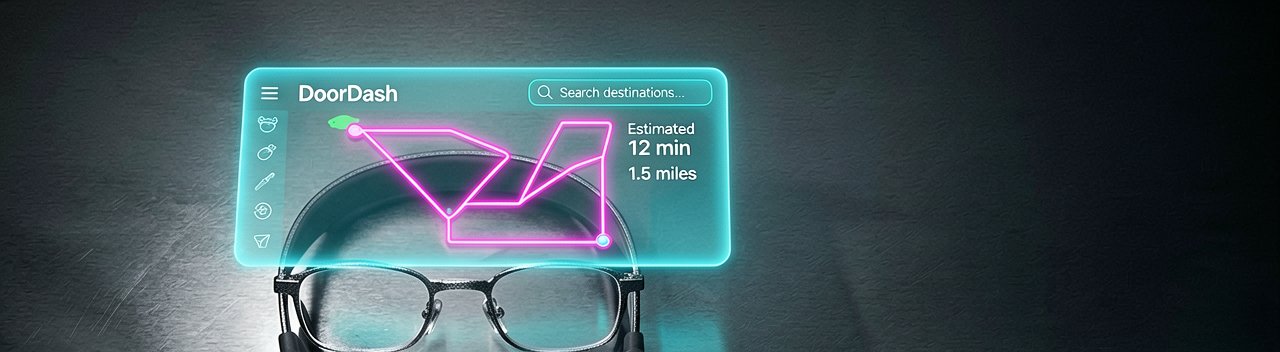
Internally, stakeholders are betting on Gemini’s "agentic" capabilities to be the real differentiator. While Meta’s current glasses are great for snapping POV photos or basic voice queries, Google is aiming for deeper app integration. We’ve seen demos where Gemini can actually navigate a DoorDash order on your phone after a simple verbal request through the glasses. This level of cross-device orchestration is what seasoned reporters at Road to VR highlight as the potential breakthrough. If the hardware can act as a hands-free remote control for your entire digital life, it stops being a toy and starts being a tool.
However, the privacy hurdles haven’t vanished; they’ve just evolved. Google is leaning into "Gemini Live" mode for continuous recording and environmental awareness, which raises familiar questions about consent in public spaces. Tech veterans know that even the most helpful AI can’t overcome a "creep factor" if the social contract isn't clear. To combat this, Google is emphasizing transparency and user control, allowing for corrections of what the system has "learned" about the wearer. This focus on "responsible AI" isn't just marketing fluff; it’s a survival tactic for a company that can’t afford another high-profile wearable flop.
The fall launch will likely be a "select markets" affair, a move that allows Google and Samsung to refine the software based on real-world usage before a global blitz. This measured rollout indicates a new corporate humility—a realization that conquering the face requires more than just the world's best search engine. By focusing on utility-driven moments like translating a menu or finding a restaurant reviews on the fly, Google is trying to prove that smart glasses aren't just for early adopters, but for anyone who’s ever been annoyed by the friction of pulling a phone out of their pocket.
Google is taking another run at the bridge of your nose, but this time, it isn’t bringing a dorky prism or a "Glasshole" stigma to the party. Dubbed "Intelligent Eyewear," the company’s latest venture into head-worn hardware is slated for a fall release, leaning heavily on the multimodal muscle of Gemini and the spatial awareness of Project Astra. Unlike the ill-fated Google Glass of a decade ago, these new frames prioritize "short, high-value interventions" over immersive computing, according to reports from Virtual Reality News.

The strategy here is a pincer movement of style and substance. Google has tapped heavy hitters like Samsung, Warby Parker, and Gentle Monster to ensure the hardware looks like something a human would actually wear in public without attracting a side-eye. Under the hood, these devices run on the new Android XR platform, acting as a seamless extension of your phone rather than a standalone replacement. Whether it’s real-time translation that sounds like the person speaking or a camera that helps Gemini "see" a confusing parking sign to explain it to you, the goal is utility that feels invisible until you need it.
What Most Reports Miss: The Ghost of Google Glass Past
Behind the Scenes: The tech industry’s collective memory of the 2013 Google Glass launch is a cautionary tale of "over-promising and under-designing," but Google’s current pivots suggest they’ve finally internalized those scars. Where the original Glass felt like a laboratory experiment escaping into the wild, the new "Intelligent Eyewear" ecosystem is being positioned as a lifestyle accessory first. By outsourcing frame design to fashion icons like Warby Parker and Gentle Monster, Google is effectively "laundering" its tech reputation through brands that people already trust on their faces. It’s a page taken directly from Meta’s Ray-Ban playbook, and it acknowledges a hard truth: tech journalists might care about the specs, but the general public cares about not looking like a cyborg.
There’s also a subtle shift in how these glasses handle "context." While early prototypes of Project Astra showcased at CNET featured a color display in one lens, the fall lineup includes an audio-only entry-level model. This tiered approach suggests Google is testing the waters of "screenless" AI before forcing visual overlays on everyone. It’s a clever hedge; if the display-heavy models face the same social friction as their ancestors, the audio-centric frames still provide a path for Gemini to live in your ear, helping you navigate or summarize missed messages without the "always-watching" creepiness of a visible prism.
Internally, stakeholders are betting on Gemini’s "agentic" capabilities to be the real differentiator. While Meta’s current glasses are great for snapping POV photos or basic voice queries, Google is aiming for deeper app integration. We’ve seen demos where Gemini can actually navigate a DoorDash order on your phone after a simple verbal request through the glasses. This level of cross-device orchestration is what seasoned reporters at Road to VR highlight as the potential breakthrough. If the hardware can act as a hands-free remote control for your entire digital life, it stops being a toy and starts being a tool.
The Reality Check: Silicon Valley’s Persistence Problem
Reading Between the Lines: There is a persistent, almost desperate assumption in Mountain View that the only thing standing between us and a wearable future is the right pair of acetate frames. While the partnership with fashion houses addresses the "uncanny valley" of wearable tech, it doesn't solve the fundamental contradiction of "Ambient AI." Google wants Gemini to be an omnipresent companion that sees what you see, yet the success of these devices relies entirely on people forgetting they are wearing a data-collection node on their faces. The friction isn't just aesthetic; it's social. We are asking society to accept a reality where every conversation might be a training data point for a large language model.
Furthermore, the reliance on the Android XR ecosystem highlights a glaring bottleneck: the smartphone tether. If these glasses are essentially a fancy peripheral for your Pixel or Galaxy phone, the "revolutionary" nature of the hardware is somewhat dampened by the reality of Bluetooth lag and battery anxiety. Google’s promise of "invisible utility" often translates to "yet another thing to charge at night." Projecting these as a paradigm shift ignores the fact that most consumers are still struggling to find a reason to wear a smartwatch, let alone a pair of glasses that might run out of juice halfway through a Saturday brunch.
Ultimately, the fall launch will be the ultimate test of whether AI can bridge the gap between "cool demo" and "daily necessity." There is a fine line between a helpful digital assistant and a nagging voice in your ear that hallucinates the name of the person walking toward you. Measured skepticism suggests that while the hardware has finally caught up to our faces, the software still needs to prove it can handle the messiness of the real world without becoming a high-priced distraction. Google is betting the house on Gemini being the "killer app" for your eyes, but the history of consumer tech is littered with brilliant ideas that simply couldn't justify the weight on the user's bridge.
If Silicon Valley keeps insisting that the future of humanity involves wearing cameras on our faces, the least they can do is make sure the AI knows when to stop "helping" and just let us walk into a pole in peace.
Artūras Malašauskas is an AI Systems Integrator with 20+ years of production-grade web engineering experience. He has designed, shipped, and scaled enterprise Python/PHP systems for logistics, SaaS, and public-sector clients. For the past year, he has focused exclusively on AI integrations: deploying open-source LLMs, building generative media pipelines (image, audio, video), and engineering multi-agent workflows for real production environments. His standard: reproducibility, security, cost-efficient inference—no vaporware. He documents and evaluates emerging AI tooling, separating verified capabilities from marketing noise. Technical editor at: muza-ai.eu, ai-verslas.lt, ai-naujinos.lt Connect on LinkedIn
Comments