Alibaba’s New Silicon Play: Taking the Fight to NVIDIA with the Zhenwu M890
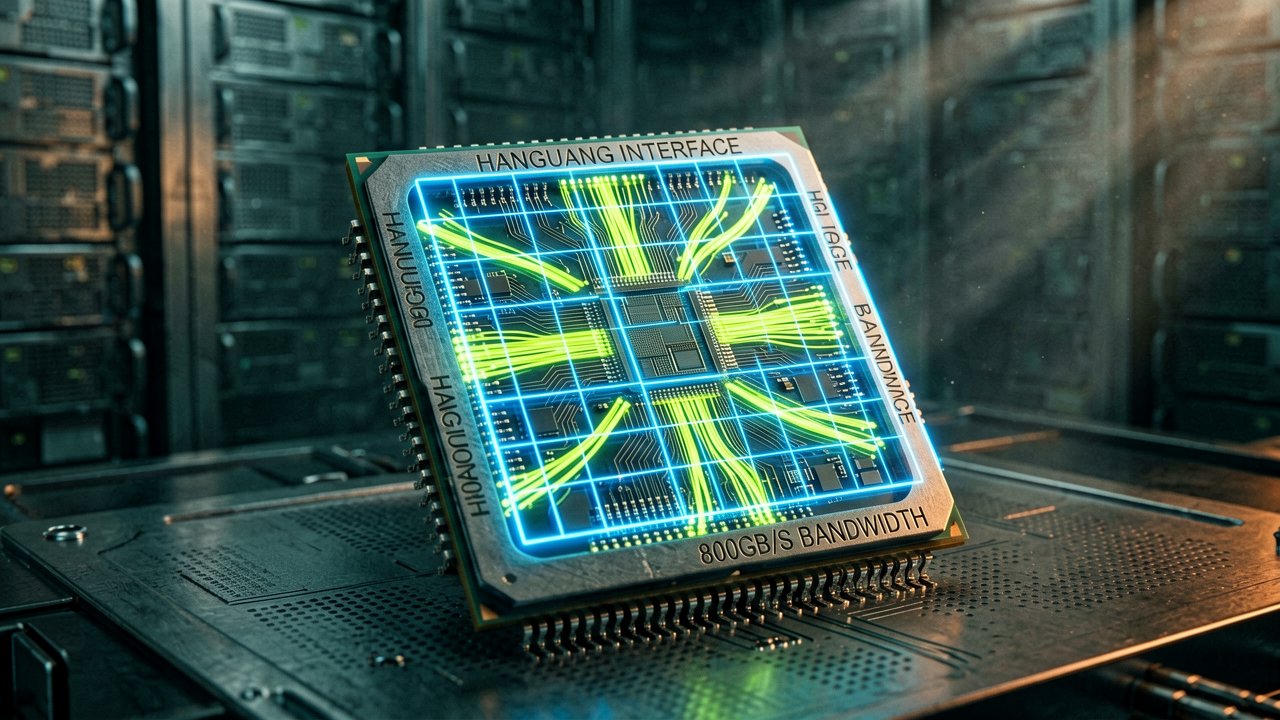
Alibaba isn't just playing defense against U.S. export curbs anymore; it’s going on a full-scale offensive. On Wednesday, the Chinese tech titan pulled the curtain back on the Zhenwu M890, a powerhouse AI chip designed by its T-Head semiconductor division. This isn't some incremental speed bump, either. The M890 reportedly delivers triple the performance of its predecessor, the Zhenwu 810E, and comes packed with 144GB of GPU memory to keep up with the data-hungry world of modern machine learning. By positioning this hardware specifically for "agentic AI"—those clever systems that handle complex, multi-step tasks without a human holding their hand—Alibaba is signaling that it wants to own the infrastructure beneath the next big shift in software.
The timing of this reveal is about as subtle as a sledgehammer, landing just as NVIDIA navigates a minefield of regulatory hurdles in the Chinese market. While NVIDIA has had to settle for "lite" versions of its flagship accelerators to satisfy trade restrictions, Alibaba is building a homegrown ecosystem that doesn't need a hall pass from Washington. Beyond the raw specs, the M890 boasts an impressive interchip bandwidth of 800GB per second, a critical metric for the massive clusters required to run elite models like Alibaba's own Qwen series. According to reports from Reuters, the company has already shipped over half a million Zhenwu units to a roster of 400 customers, proving this isn't just a lab experiment—it’s a commercial reality.
Building the Full Stack in Hangzhou
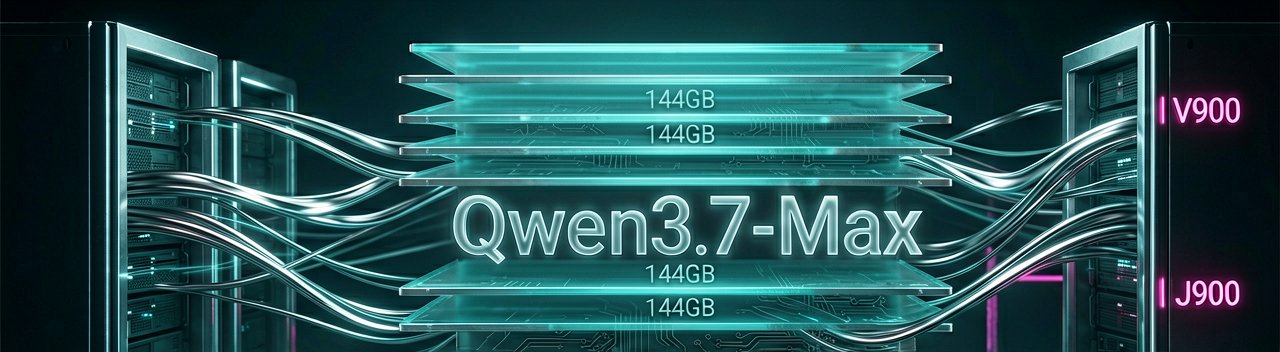
What makes this move particularly interesting is how Alibaba is vertically integrating. Most cloud providers are happy to rent out someone else's silicon, but Alibaba is following the Apple playbook: build the chip, build the model, and build the cloud it runs on. Alongside the hardware, they launched Qwen3.7-Max, an LLM update tailored to squeeze every drop of performance out of the M890. This synergy allows for "agentic" workloads that can run continuously for 35 hours, a feat that would be prohibitively expensive or technically unstable on generic hardware. It’s a calculated bet that the future of AI isn't just about who has the biggest model, but who can run it most efficiently on their own terms.
A Roadmap Beyond the Horizon
The Zhenwu M890 is just the current spearhead. Alibaba also laid out a multi-year roadmap that suggests they're settling in for a long war of attrition. The M890 is slated to be followed by the V900 in late 2027 and the J900 in 2028, with each generation promising to keep the performance curve steep. As noted by analysts at Benzinga, this aggressive schedule serves as a tactical response to a market where "AI + Cloud" is no longer just a tagline but the primary pillar of growth. While NVIDIA still holds the global crown, Alibaba is effectively building a walled garden in the world’s second-largest economy that might soon be too lush for local enterprises to ignore.
What Most Reports Miss: The Quiet Architecture of Control
Behind the splashy performance metrics and the inevitable NVIDIA comparisons lies a far more strategic maneuver regarding supply chain sovereignty. For years, the global tech narrative focused on whether Chinese firms could match the raw FLOPS of American silicon, but Alibaba’s T-Head division has shifted the goalposts toward "interconnect efficiency." By engineering the proprietary "Hanguang" interface within the Zhenwu M890, Alibaba is effectively insulating its data centers from the whims of external hardware cycles. This isn't just about speed; it is about ensuring that their massive Qwen model library remains optimized for a hardware layer that no foreign entity can throttle or switch off.
The pivot toward "agentic AI" is where the editorial nuances get interesting. While the industry has been obsessed with simple chat interfaces, Alibaba is betting the house on autonomous agents that can navigate complex enterprise workflows. To do this, you need massive memory bandwidth—the kind that allows an AI to "remember" thousands of pages of context without crashing the system. The M890’s 144GB of memory and its 800GB/s bandwidth are designed specifically to prevent the latency bottlenecks that plague generic cloud clusters. It’s a specialized tool for a world where AI doesn't just talk to you, but actually does your job for you.
From the perspective of domestic stakeholders, this chip is a lifeline. Major Chinese enterprises have been caught in a "performance purgatory," forced to choose between aging NVIDIA stock and newer, neutered variants designed to comply with export rules. Alibaba’s roadmap, which includes the upcoming V900 and J900, provides these companies with a predictable, high-performance future that is entirely domestic. This creates a powerful gravitational pull for the local software ecosystem; if you want the best performance for Chinese-language LLMs, you’re almost forced to build on Alibaba’s silicon, cementing their dominance in the regional cloud market.
Historically, Alibaba was primarily seen as an e-commerce giant that happened to have a cloud business. However, the Zhenwu series marks its transition into a full-stack semiconductor powerhouse. This internal transformation mirrors the evolution of hyperscalers like Amazon with their Graviton and Trainium chips, but with the added pressure of geopolitical survival. The M890 represents the culmination of a decade of R&D that began with the acquisition of C-Sky Microsystems in 2018, proving that Alibaba’s long-term play for silicon independence was never just a "nice-to-have" side project.

Finally, the economic implications for the global market cannot be ignored. As Alibaba scales its internal chip usage, its reliance on external vendors drops, potentially leading to a massive shift in capital expenditure. By lowering the cost of "intelligence" through in-house silicon, Alibaba can offer cloud credits and AI training at rates that could undercut international competitors in Southeast Asia and other emerging markets. This isn't just a domestic survival tactic; it’s a blueprint for a parallel tech ecosystem that competes with the West on both price and performance without ever needing to cross a single border.
Reading Between the Lines: The Reality of the Silicon Gap
While the Zhenwu M890 is an undeniable triumph of engineering under pressure, we must treat the "NVIDIA-killer" narrative with a healthy dose of skepticism. Triple the performance of a predecessor is an impressive stat on a slide deck, but it remains a moving target in a world where NVIDIA’s Blackwell architecture is already setting a stratospheric benchmark. Alibaba is effectively sprinting to stay in the same place; they aren't necessarily leapfrogging the state-of-the-art so much as they are closing the gap to a level that is "good enough" for sovereign self-sufficiency. The real test isn't the peak theoretical throughput, but the maturity of the software stack that makes that hardware usable for developers who have spent a decade speaking NVIDIA’s CUDA language.
There is also a glaring contradiction in the push for "agentic AI" as a domestic savior. These complex, multi-step systems require immense reliability and a sprawling interconnected infrastructure. By building a walled garden around the M890 and the Qwen models, Alibaba risks creating a high-performance island. If the rest of the global AI community continues to innovate on open-source frameworks optimized for different silicon, Alibaba’s customers might find themselves locked into a proprietary ecosystem that is technically superior at home but diplomatically isolated abroad. It is a classic trade-off between the security of a domestic supply chain and the innovative velocity of a globalized one.
Furthermore, we have to talk about the manufacturing elephant in the room. Designing a world-class chip is one thing; fabricating it at scale while navigating tightening lithography constraints is quite another. Alibaba’s roadmap through 2028 assumes a steady access to advanced process nodes that are increasingly becoming geopolitical bargaining chips. If the hardware can't be stamped out in the millions due to yield issues or further equipment bans, the Zhenwu M890 remains a boutique solution for Alibaba’s own internal needs rather than a true commercial rival to the mass-produced giants of Silicon Valley.
Ultimately, this launch proves that the "tech decoupling" is no longer a theoretical threat—it’s a physical reality etched in silicon. Alibaba is betting that the Chinese market is large enough to sustain its own standards, its own hardware, and its own definition of AI progress. It’s a bold gamble that assumes the future of intelligence will be regional rather than universal. Whether this leads to a more competitive global market or a fractured one where innovation is duplicated at double the cost is a projection that even the M890’s 144GB of memory might struggle to calculate.
In the end, Alibaba has proven that if you can't buy the best chips in the world, you can simply build your own and hope the software engineers don't mind the new learning curve; it’s a bit like building a custom sports car because the dealership won't sell to you—it’s brilliant, expensive, and you’d better pray you don't need a spare part from overseas.
Artūras Malašauskas is an AI Systems Integrator with 20+ years of production-grade web engineering experience. He has designed, shipped, and scaled enterprise Python/PHP systems for logistics, SaaS, and public-sector clients. For the past year, he has focused exclusively on AI integrations: deploying open-source LLMs, building generative media pipelines (image, audio, video), and engineering multi-agent workflows for real production environments. His standard: reproducibility, security, cost-efficient inference—no vaporware. He documents and evaluates emerging AI tooling, separating verified capabilities from marketing noise. Technical editor at: muza-ai.eu, ai-verslas.lt, ai-naujinos.lt Connect on LinkedIn
Comments