Silicon Sovereignty: Alibaba’s Dual-Threat Play for China’s AI Future
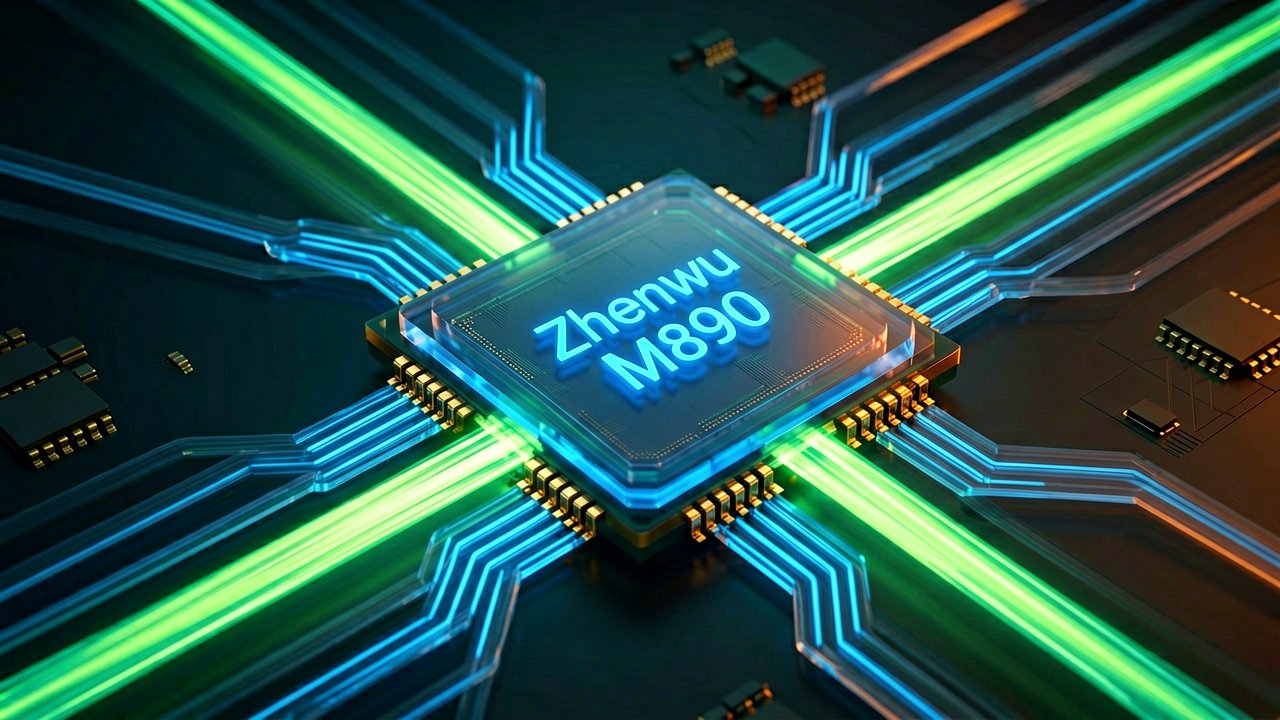
Alibaba isn't just hedging its bets anymore; it’s building a fortress. This week’s unveiling of the Zhenwu M890 AI chip and the Qwen 3.7-Max large language model (LLM) at the Alibaba Cloud Summit marks a definitive shift from reactive scrambling to a long-term, vertically integrated strategy. With U.S. export curbs tightening the noose on Nvidia’s high-end silicon, Alibaba’s semiconductor arm, T-Head, has delivered a processor that reportedly triples the performance of its predecessor, specifically tuned for the "agentic" workloads that define the next frontier of generative AI. While the industry has been fixated on raw FLOPs, Alibaba is pivoting toward the memory and interconnect bottlenecks that often cripple domestic hardware, equipping the M890 with 144 GB of GPU memory and a beefy 800 GB/s bandwidth to keep data moving as fast as its latest models can think.
The synergy here is the real story. By launching the Qwen 3.7-Max alongside its custom silicon, Alibaba is signaling that the era of "hardware-agnostic" software is a luxury Chinese tech giants can no longer afford. The new model is engineered for the kind of complex, multi-step reasoning and coding tasks that require the sustained, high-speed communication the Zhenwu units provide. It’s a classic Apple-esque play: control the silicon, optimize the software, and own the ecosystem. For the 400-plus enterprise customers already utilizing T-Head’s designs, the message is clear: domestic silicon isn't just a backup plan—it's becoming the primary engine for China’s industrial AI transformation.
The Agentic Shift and the Interconnect War
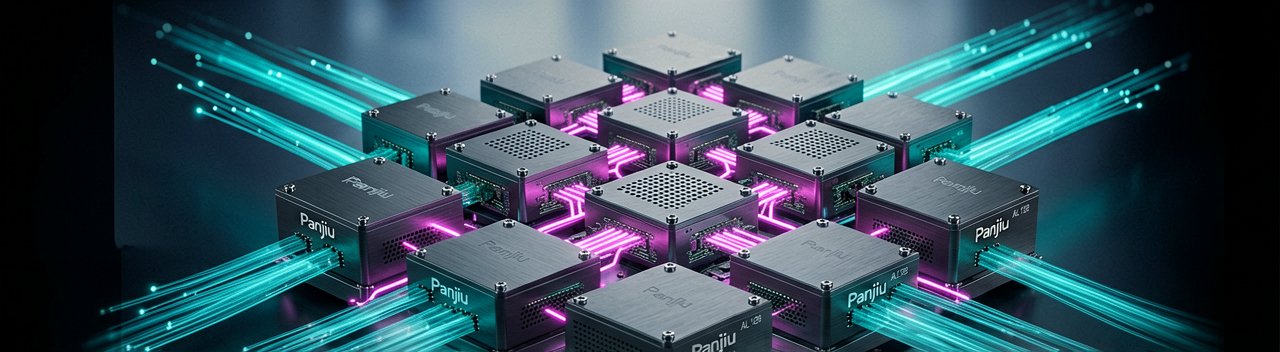
Behind the Scenes: What many surface-level reports overlook is that the M890 isn't just another GPU clone; it’s a direct response to the specific architectural demands of AI agents. Unlike traditional chatbots that handle isolated queries, agentic AI—autonomous systems that can code, navigate file systems, and execute complex workflows—requires massive "context windows" and low-latency coordination between multiple model instances. Alibaba’s focus on the Panjiu AL128 server system, which clusters 128 of these accelerators into a single rack, suggests they aren't just chasing Nvidia’s H20—they are building the high-density infrastructure needed to run persistent, long-running digital employees that don't degrade in performance over a 35-hour operational cycle.
The historical context here is critical. Just a few years ago, Alibaba’s chip efforts were viewed as ambitious R&D experiments. Today, with over 560,000 units shipped, the "Zhenwu" line has moved from the laboratory to the front lines of the cloud market. Analysts at SemiAnalysis point out that while Chinese domestic chips still face an uphill battle in raw compute density compared to Western flagship silicon, the gap is narrowing where it matters most: the ability to deploy usable, cost-effective inference at scale. By leveraging its Bailian platform, Alibaba is effectively subsidizing the learning curve for Chinese enterprises, offering a "one-stop-shop" where the friction of adapting models to non-Nvidia hardware is handled behind the scenes.
From a stakeholder perspective, this isn't just about technical specifications; it’s about survival and margin protection. Alibaba CEO Eddie Wu has been vocal about AI becoming the primary driver of cloud revenue growth. To make those margins work, the company has to move away from the high premiums (and high political risks) associated with imported chips. The three-year, 380-billion-yuan infrastructure pledge isn't just a capital expenditure; it’s an insurance policy. By committing to a roadmap that includes the V900 in 2027 and the J900 in 2028, Alibaba is trying to provide the one thing the Chinese AI ecosystem lacks: predictability.
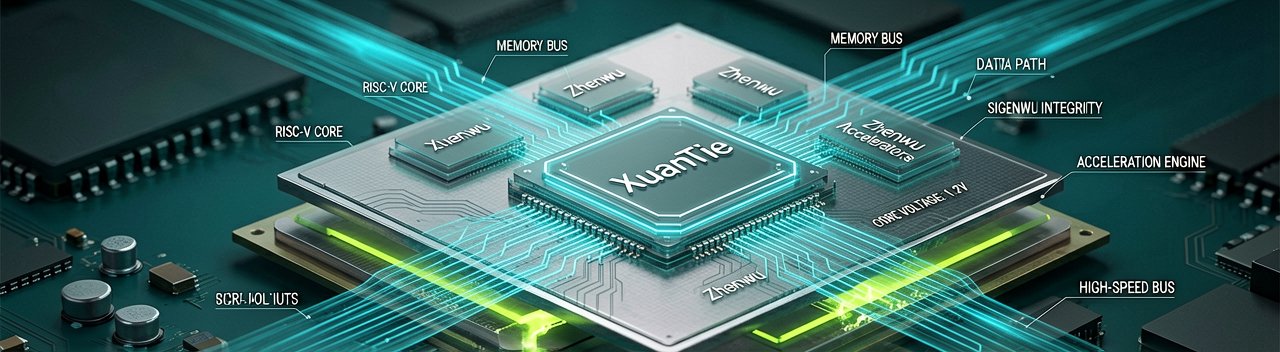
The broader landscape in China is also evolving into a "one superpower, multiple strong players" dynamic. While Huawei’s Ascend series has dominated the domestic headlines for its "brute force" clustering capabilities, Alibaba is carving out a niche in high-memory, agent-optimized workloads. This specialization is vital because it moves the competition away from a direct 1:1 comparison with Nvidia’s restricted H20 and toward a conversation about system-level efficiency. By integrating its XuanTie RISC-V CPUs with these accelerators, Alibaba is also insulating itself from the licensing vulnerabilities that plague ARM-based designs, effectively creating a fully independent compute stack from the instruction set up to the application layer.
Ultimately, the release of Qwen 3.7-Max on the M890 is a "proof of life" for China’s high-end AI ambitions. It demonstrates that despite the lack of 2nm photolithography or the latest HBM3e supplies, architectural cleverness and software-hardware co-design can produce results that are competitive enough for the domestic market. The real test will be whether this stack can attract the next wave of "AI native" startups that have previously relied on the familiarity of CUDA. For now, Alibaba has proven it has the engineering stamina to run this race, and more importantly, the custom-built shoes to do it in.
Alibaba isn't just hedging its bets anymore; it’s building a fortress. This week’s unveiling of the Zhenwu M890 AI chip and the Qwen 3.7-Max large language model (LLM) at the Alibaba Cloud Summit marks a definitive shift from reactive scrambling to a long-term, vertically integrated strategy. With U.S. export curbs tightening the noose on Nvidia’s high-end silicon, Alibaba’s semiconductor arm, T-Head, has delivered a processor that reportedly triples the performance of its predecessor, specifically tuned for the "agentic" workloads that define the next frontier of generative AI. While the industry has been fixated on raw FLOPs, Alibaba is pivoting toward the memory and interconnect bottlenecks that often cripple domestic hardware, equipping the M890 with 144 GB of GPU memory and a beefy 800 GB/s bandwidth to keep data moving as fast as its latest models can think.
The synergy here is the real story. By launching the Qwen 3.7-Max alongside its custom silicon, Alibaba is signaling that the era of "hardware-agnostic" software is a luxury Chinese tech giants can no longer afford. The new model is engineered for the kind of complex, multi-step reasoning and coding tasks that require the sustained, high-speed communication the Zhenwu units provide. It’s a classic Apple-esque play: control the silicon, optimize the software, and own the ecosystem. For the 400-plus enterprise customers already utilizing T-Head’s designs, the message is clear: domestic silicon isn't just a backup plan—it's becoming the primary engine for China’s industrial AI transformation.
The Agentic Shift and the Interconnect War
Behind the Scenes: What many surface-level reports overlook is that the M890 isn't just another GPU clone; it’s a direct response to the specific architectural demands of AI agents. Unlike traditional chatbots that handle isolated queries, agentic AI—autonomous systems that can code, navigate file systems, and execute complex workflows—requires massive "context windows" and low-latency coordination between multiple model instances. Alibaba’s focus on the Panjiu AL128 server system, which clusters 128 of these accelerators into a single rack, suggests they aren't just chasing Nvidia’s H20—they are building the high-density infrastructure needed to run persistent, long-running digital employees that don't degrade in performance over a 35-hour operational cycle.
The historical context here is critical. Just a few years ago, Alibaba’s chip efforts were viewed as ambitious R&D experiments. Today, with over 560,000 units shipped, the "Zhenwu" line has moved from the laboratory to the front lines of the cloud market. Analysts at Reuters point out that while Chinese domestic chips still face an uphill battle in raw compute density compared to Western flagship silicon, the gap is narrowing where it matters most: the ability to deploy usable, cost-effective inference at scale. By leveraging its Bailian platform, Alibaba is effectively subsidizing the learning curve for Chinese enterprises, offering a "one-stop-shop" where the friction of adapting models to non-Nvidia hardware is handled behind the scenes.
From a stakeholder perspective, this isn't just about technical specifications; it’s about survival and margin protection. Alibaba CEO Eddie Wu has been vocal about AI becoming the primary driver of cloud revenue growth. To make those margins work, the company has to move away from the high premiums (and high political risks) associated with imported chips. The three-year, 380-billion-yuan infrastructure pledge isn't just a capital expenditure; it’s an insurance policy. By committing to a roadmap that includes the V900 in 2027 and the J900 in 2028, Alibaba is trying to provide the one thing the Chinese AI ecosystem lacks: predictability.
The Illusion of Total Independence
Reading Between the Lines: While the headline-grabbing triple performance boost of the M890 suggests a domestic breakthrough, we should be wary of the "silicon gap" being closed entirely through architectural cleverness. The reality of semiconductor manufacturing means Alibaba is likely hitting the limits of what mature DUV lithography can achieve without access to the most advanced ASML gear. By branding the M890 as "agent-optimized," Alibaba might be strategically pivoting the conversation toward memory bandwidth—where they can still compete—to distract from a persistent disadvantage in raw transistor density. It’s a smart marketing pivot: if you can’t win the sprint, redefine the race as an ultramarathon where efficiency and endurance matter more than peak speed.
There’s also a striking contradiction in Alibaba’s "open" strategy. While they continue to open-source versions of the Qwen series to gain global developer mindshare, the hardware required to run the flagship 3.7-Max at peak efficiency is becoming increasingly proprietary. This creates a "soft lock-in" where the global community helps improve the code, but only those on Alibaba’s domestic infrastructure can truly unlock its full "agentic" potential. It’s a geopolitical balancing act that tries to maintain a facade of international collaboration while building a closed, sovereign silo designed to withstand further sanctions.
Looking ahead, the global software export market may find itself bifurcated not just by ideology, but by instruction sets. As Alibaba pushes its RISC-V based XuanTie CPUs alongside these AI accelerators, we are seeing the birth of a stack that doesn't just bypass Nvidia, but eventually ARM and Intel too. If Alibaba succeeds in exporting this "full-stack AI" to Belt and Road partners, we could see a future where Western software developers have to choose between optimizing for the Nvidia-CUDA world or the T-Head-Qwen ecosystem. It’s a high-stakes gamble that assumes the rest of the world is as tired of the silicon status quo as Beijing is.
"Building a domestic AI ecosystem in the middle of a trade war is a bit like trying to assemble a high-performance jet while the fuel supplier is checking your ID every five minutes—impressive if you get off the ground, but you probably shouldn't expect a smooth ride to the top of the leaderboards just yet."
Artūras Malašauskas is an AI Systems Integrator with 20+ years of production-grade web engineering experience. He has designed, shipped, and scaled enterprise Python/PHP systems for logistics, SaaS, and public-sector clients. For the past year, he has focused exclusively on AI integrations: deploying open-source LLMs, building generative media pipelines (image, audio, video), and engineering multi-agent workflows for real production environments. His standard: reproducibility, security, cost-efficient inference—no vaporware. He documents and evaluates emerging AI tooling, separating verified capabilities from marketing noise. Technical editor at: muza-ai.eu, ai-verslas.lt, ai-naujinos.lt Connect on LinkedIn
Comments