Alibaba’s New Silicon Power Play: The Zhenwu M890 and the Rise of Qwen 3.7
The Strategic Gamble of Sovereignty
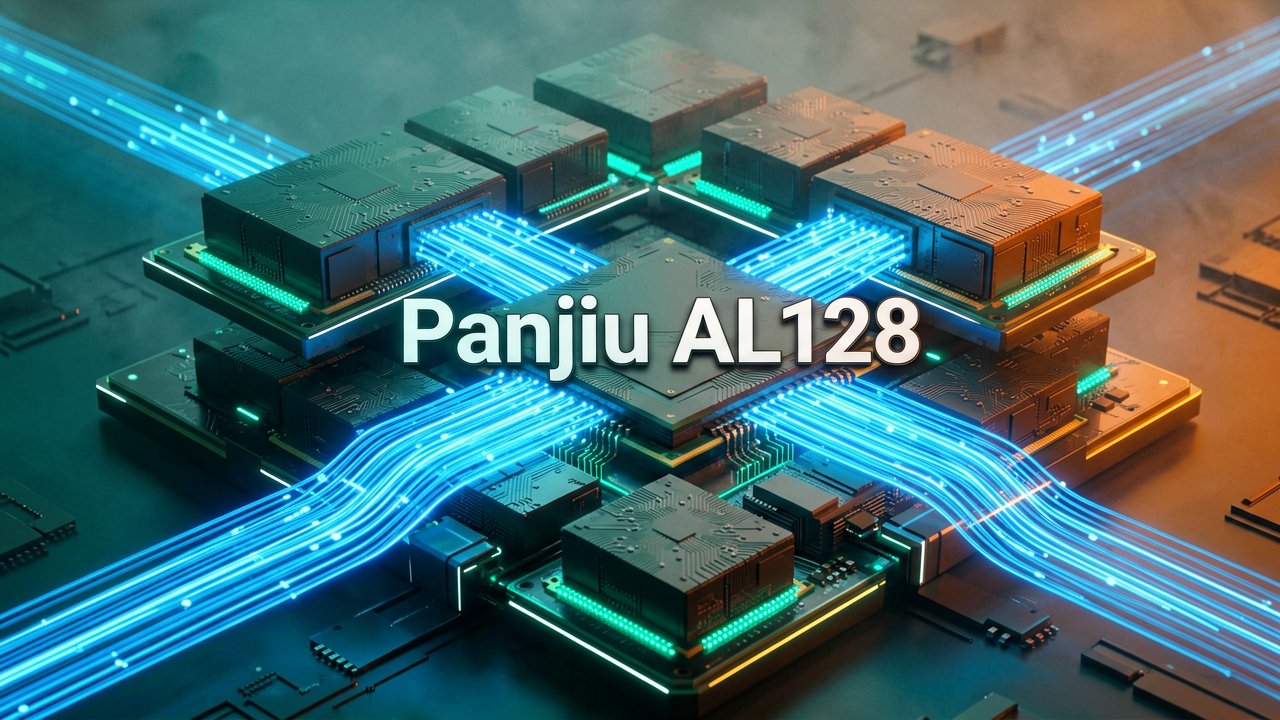
Behind the Silicon Curtain: Alibaba’s pivot toward high-end proprietary hardware represents a calculated defiance of the "compute-poor" narrative often applied to Chinese tech firms under global trade restrictions. While most headlines focus on raw clock speeds, the real story lies in the interconnectivity. The Zhenwu M890 isn't just a standalone processor; it is a fundamental component of the Panjiu AL128 architecture, which seeks to solve the "memory wall" that plagues modern AI. By pushing inter-chip bandwidth to 800 GB/s, Alibaba is effectively trying to simulate the performance of forbidden high-end Western clusters using cleverly optimized domestic nodes. This allows for a massive pool of shared memory that is absolutely critical for running models as large as Qwen 3.7-Max without hitting the latency bottlenecks that usually cripple secondary-tier hardware.
Industry insiders view this as a legacy-defining moment for T-Head, Alibaba’s semi-secretive chip division. Historically, T-Head was seen as an internal cost-saving venture, but it has evolved into a cornerstone of national industrial policy. According to veteran analysts cited by South China Morning Post, the sheer volume of 560,000 units shipped suggests that Alibaba is no longer just prototyping; they are effectively subsidizing the growth of a domestic ecosystem. By locking in early adopters like China Unicom, they are creating a feedback loop where software optimization for Qwen happens natively on Zhenwu silicon, making it increasingly difficult for these firms to switch back to international alternatives even if sanctions were to ease.
The human element of this technological shift cannot be understated. Within the Hangzhou campus, the push for "agentic AI" is being treated as the second coming of the mobile internet revolution. Developers are moving away from simple chatbots toward "digital employees" that can autonomously navigate 35-hour work cycles. This shift requires a level of hardware stability that Alibaba claims to have mastered with the M890. For the enterprise customer, the promise isn't just a faster query response, but a reduction in "hallucination" and downtime—the two biggest hurdles to AI adoption in the financial and automotive sectors where Alibaba is currently gaining its strongest foothold.
Looking at the broader competitive landscape, Alibaba’s vertical integration strategy mirrors the early days of the smartphone era, where controlling both the OS and the processor was the only way to achieve peak efficiency. By controlling the chip (Zhenwu), the server (Panjiu), and the model (Qwen), Alibaba is insulating itself from the volatility of the global supply chain. This "full-stack" approach allows them to tweak the microcode of the M890 specifically to handle the unique attention mechanisms found in Qwen 3.7, a luxury that companies relying on off-the-shelf components simply don't have. It’s a high-stakes gamble that requires billions in R&D, but the alternative—total dependence on an uncertain international market—is a risk the company is no longer willing to take.
Ultimately, the success of the M890 will be measured by its ability to power the next generation of "Reasoning Models." As AI moves from generating text to solving complex logic puzzles, the demand for high-bandwidth memory will only skyrocket. Alibaba’s roadmap, which includes the upcoming V900 and J900 chips, suggests they are already anticipating a future where AI isn't just an assistant, but the primary operating system for modern business. The deployment across 400 major clients serves as a live beta test for this vision, proving that domestic silicon can handle the heavy lifting required for the world's most demanding digital infrastructures.
The Sovereignty Paradox and the Yield Reality
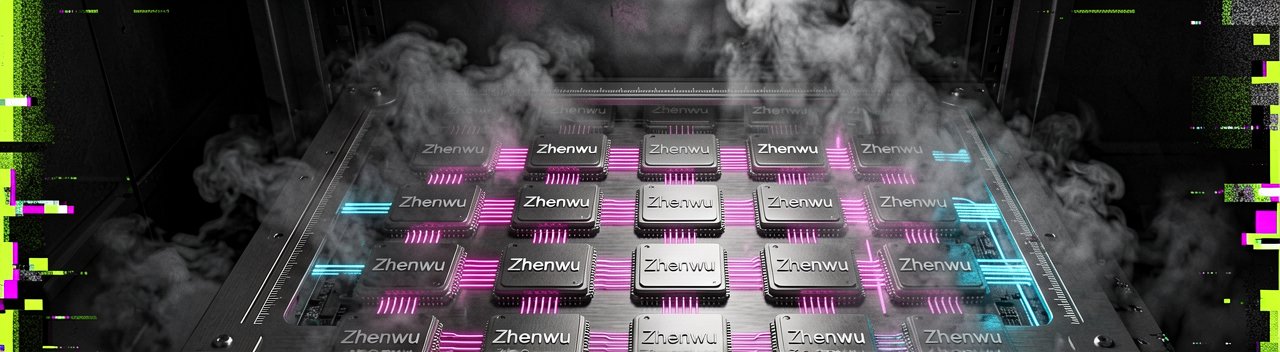
Reading Between the Lines: The sheer bravado of Alibaba’s hardware rollout masks a simmering tension between architectural ambition and the cold reality of fabrication. While the Zhenwu M890’s 144GB of HBM is an impressive spec-sheet flex, it highlights an uncomfortable truth: to compete with restricted top-tier silicon, Alibaba must over-engineer its physical footprints. Packing more memory and wider buses into a domestic node is a clever workaround for the "compute gap," but it inevitably leads to higher power consumption and heat dissipation challenges that Western counterparts have largely optimized away. The "Supernode" approach of clustering 128 chips is as much a necessity as it is an innovation; it’s a brute-force solution to maintain parity in an era where single-chip efficiency is increasingly hard to come by under current trade constraints.
There is also the matter of the "35-hour operational window" mentioned alongside Qwen 3.7-Max. In the world of enterprise cloud computing, 35 hours is an oddly specific and remarkably short metric for a system touting long-term reliability. To a seasoned skeptic, this suggests that "agentic AI" might still be prone to cumulative drift or memory leaks that require frequent resets, rather than being the perpetual-motion machine the marketing suggests. As noted by technical teardowns in MIT Technology Review, the challenge with autonomous agents isn't just starting a task, but finishing it without a hallucinatory breakdown. Alibaba is betting that their vertical stack can mitigate these software glitches through hardware-level fixes, but the proof will be in the actual uptime reported by their first 400 clients.
Furthermore, the aggressive push to lock in domestic giants like China Unicom creates a monolithic ecosystem that could inadvertently stifle local competition. If the entire Chinese AI sector standardizes on Zhenwu-specific microcode, it creates a "gilded cage" scenario. While this protects these firms from the volatility of US export bans, it also ties their future technological agility to a single provider's R&D cycle. If Alibaba hits a wall in chip manufacturing or fails to scale the V900 and J900 series on time, a significant portion of China's digital infrastructure could find itself stranded on a proprietary island, unable to easily port their workflows back to global open-source standards or competing hardware architectures.
"Building your own silicon to bypass a blockade is a bit like weaving your own parachute while you're already in freefall—it’s incredibly impressive if you pull it off, but you really shouldn't be surprised if the stitches are a little tight in the corners."
Alibaba isn't just playing defense against global export curbs anymore; it's building a fortress. At its annual Cloud Summit in Hangzhou, the tech giant pulled the curtain back on the Zhenwu M890, a powerhouse AI chip that leaves its predecessor, the 810E, in the rearview mirror with a staggering 3x performance leap. This isn't just about raw speed, though. By packing 144GB of GPU memory and 800 GB/s inter-chip bandwidth into this silicon, Alibaba’s chip-making arm, T-Head, is clearly gunning for the "agentic AI" crown—those complex, multi-step systems that need massive memory to think straight without human hand-holding. As reported by , the roadmap doesn’t stop here, with even more potent V900 and J900 chips already in the works to keep the momentum high.
Hardware is only half the battle, and Alibaba knows it. Alongside the new silicon, they’ve dropped Qwen 3.7-Max, the latest iteration of their flagship large language model. This version is a specialist, engineered specifically for high-level agentic tasks and advanced coding. According to details shared by Bloomberg, the model is designed to sustain performance over grueling 35-hour operational windows, a clear nod to enterprise needs for reliability in autonomous workflows. By pairing this sophisticated software with the Panjiu AL128 Supernode—a server rack that clusters 128 Zhenwu chips into a single, low-latency beast—Alibaba is offering a vertically integrated stack that makes a compelling case for domestic self-reliance.
Breaking the Nvidia Dependency
The timing of this release is anything but accidental. With Western chip giants like Nvidia facing increasingly tight regulatory hurdles in the Chinese market, Alibaba is aggressively filling the vacuum. They’ve already shipped over 560,000 Zhenwu units to roughly 400 customers, ranging from major telecom players like China Unicom to automotive and financial services firms. Analysts at CNBC note that while some performance metrics are still under wraps, the sheer scale of the deployment suggests Alibaba has moved past the "experimental" phase of chip design and into serious industrial competition. This move underscores a broader strategy: spending billions to ensure that the next generation of Chinese AI isn't just built on domestic soil, but on domestic silicon too.
The Strategic Gamble of Sovereignty
Behind the Silicon Curtain: Alibaba’s pivot toward high-end proprietary hardware represents a calculated defiance of the "compute-poor" narrative often applied to Chinese tech firms under global trade restrictions. While most headlines focus on raw clock speeds, the real story lies in the interconnectivity. The Zhenwu M890 isn't just a standalone processor; it is a fundamental component of the Panjiu AL128 architecture, which seeks to solve the "memory wall" that plagues modern AI. By pushing inter-chip bandwidth to 800 GB/s, Alibaba is effectively trying to simulate the performance of forbidden high-end Western clusters using cleverly optimized domestic nodes. This allows for a massive pool of shared memory that is absolutely critical for running models as large as Qwen 3.7-Max without hitting the latency bottlenecks that usually cripple secondary-tier hardware.
Industry insiders view this as a legacy-defining moment for T-Head, Alibaba’s semi-secretive chip division. Historically, T-Head was seen as an internal cost-saving venture, but it has evolved into a cornerstone of national industrial policy. According to veteran analysts cited by South China Morning Post, the sheer volume of 560,000 units shipped suggests that Alibaba is no longer just prototyping; they are effectively subsidizing the growth of a domestic ecosystem. By locking in early adopters like China Unicom, they are creating a feedback loop where software optimization for Qwen happens natively on Zhenwu silicon, making it increasingly difficult for these firms to switch back to international alternatives even if sanctions were to ease.
The human element of this technological shift cannot be understated. Within the Hangzhou campus, the push for "agentic AI" is being treated as the second coming of the mobile internet revolution. Developers are moving away from simple chatbots toward "digital employees" that can autonomously navigate 35-hour work cycles. This shift requires a level of hardware stability that Alibaba claims to have mastered with the M890. For the enterprise customer, the promise isn't just a faster query response, but a reduction in "hallucination" and downtime—the two biggest hurdles to AI adoption in the financial and automotive sectors where Alibaba is currently gaining its strongest foothold.
Looking at the broader competitive landscape, Alibaba’s vertical integration strategy mirrors the early days of the smartphone era, where controlling both the OS and the processor was the only way to achieve peak efficiency. By controlling the chip (Zhenwu), the server (Panjiu), and the model (Qwen), Alibaba is insulating itself from the volatility of the global supply chain. This "full-stack" approach allows them to tweak the microcode of the M890 specifically to handle the unique attention mechanisms found in Qwen 3.7, a luxury that companies relying on off-the-shelf components simply don't have. It’s a high-stakes gamble that requires billions in R&D, but the alternative—total dependence on an uncertain international market—is a risk the company is no longer willing to take.
Ultimately, the success of the M890 will be measured by its ability to power the next generation of "Reasoning Models." As AI moves from generating text to solving complex logic puzzles, the demand for high-bandwidth memory will only skyrocket. Alibaba’s roadmap, which includes the upcoming V900 and J900 chips, suggests they are already anticipating a future where AI isn't just an assistant, but the primary operating system for modern business. The deployment across 400 major clients serves as a live beta test for this vision, proving that domestic silicon can handle the heavy lifting required for the world's most demanding digital infrastructures.
The Sovereignty Paradox and the Yield Reality
Reading Between the Lines: The sheer bravado of Alibaba’s hardware rollout masks a simmering tension between architectural ambition and the cold reality of fabrication. While the Zhenwu M890’s 144GB of HBM is an impressive spec-sheet flex, it highlights an uncomfortable truth: to compete with restricted top-tier silicon, Alibaba must over-engineer its physical footprints. Packing more memory and wider buses into a domestic node is a clever workaround for the "compute gap," but it inevitably leads to higher power consumption and heat dissipation challenges that Western counterparts have largely optimized away. The "Supernode" approach of clustering 128 chips is as much a necessity as it is an innovation; it’s a brute-force solution to maintain parity in an era where single-chip efficiency is increasingly hard to come by under current trade constraints.
There is also the matter of the "35-hour operational window" mentioned alongside Qwen 3.7-Max. In the world of enterprise cloud computing, 35 hours is an oddly specific and remarkably short metric for a system touting long-term reliability. To a seasoned skeptic, this suggests that "agentic AI" might still be prone to cumulative drift or memory leaks that require frequent resets, rather than being the perpetual-motion machine the marketing suggests. As noted by technical teardowns, the challenge with autonomous agents isn't just starting a task, but finishing it without a hallucinatory breakdown. Alibaba is betting that their vertical stack can mitigate these software glitches through hardware-level fixes, but the proof will be in the actual uptime reported by their first 400 clients.
Furthermore, the aggressive push to lock in domestic giants like China Unicom creates a monolithic ecosystem that could inadvertently stifle local competition. If the entire Chinese AI sector standardizes on Zhenwu-specific microcode, it creates a "gilded cage" scenario. While this protects these firms from the volatility of US export bans, it also ties their future technological agility to a single provider's R&D cycle. If Alibaba hits a wall in chip manufacturing or fails to scale the V900 and J900 series on time, a significant portion of China's digital infrastructure could find itself stranded on a proprietary island, unable to easily port their workflows back to global open-source standards or competing hardware architectures.
"Building your own silicon to bypass a blockade is a bit like weaving your own parachute while you're already in freefall—it’s incredibly impressive if you pull it off, but you really shouldn't be surprised if the stitches are a little tight in the corners."
Artūras Malašauskas is an AI Systems Integrator with 20+ years of production-grade web engineering experience. He has designed, shipped, and scaled enterprise Python/PHP systems for logistics, SaaS, and public-sector clients. For the past year, he has focused exclusively on AI integrations: deploying open-source LLMs, building generative media pipelines (image, audio, video), and engineering multi-agent workflows for real production environments. His standard: reproducibility, security, cost-efficient inference—no vaporware. He documents and evaluates emerging AI tooling, separating verified capabilities from marketing noise. Technical editor at: muza-ai.eu, ai-verslas.lt, ai-naujinos.lt Connect on LinkedIn
Comments