Realme 16T 5G Price in India: With 8,000mAh Battery and Dimensity 6300 Specs Unveiled Ahead of May 22 Launch
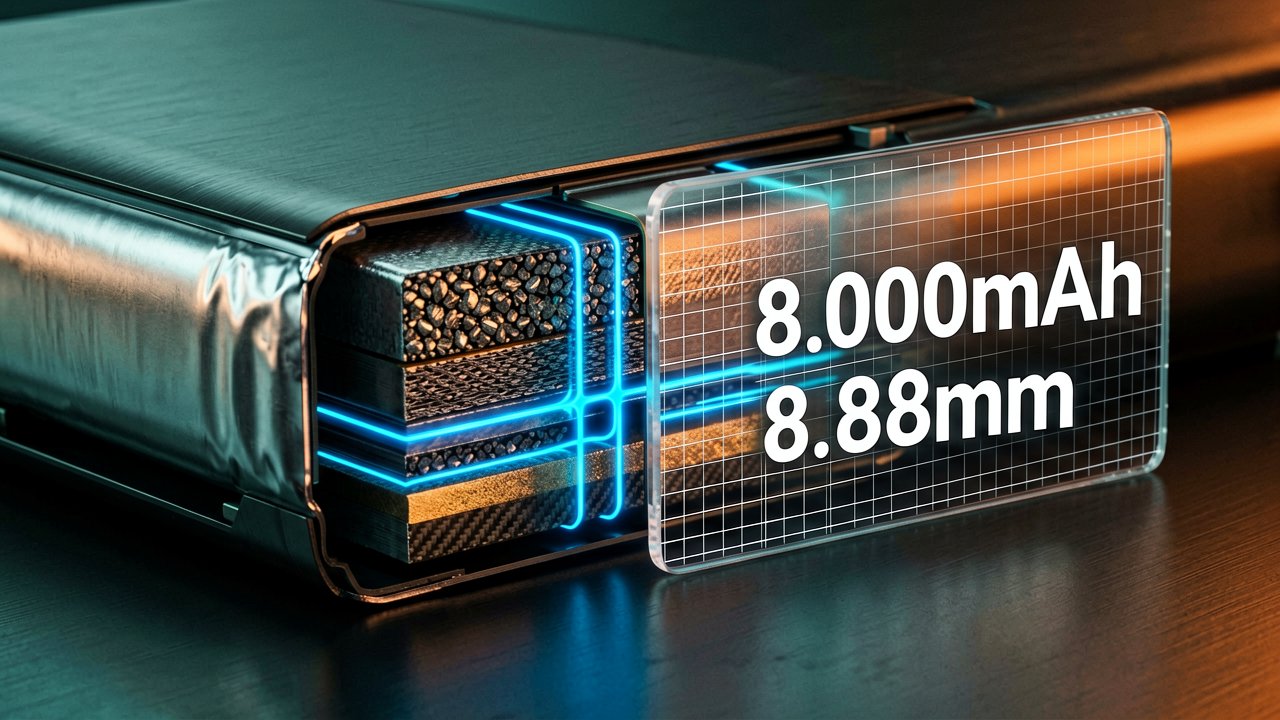
Realme is ready to shake up the mid-range market with the debut of its "battery beast," the Realme 16T 5G, scheduled for an official Indian launch on May 22, 2026. While the headline feature is undoubtedly the massive 8,000mAh battery, recent leaks have painted a clearer picture of what this device will cost and the hardware trade-offs made to accommodate such a large cell. According to industry tipster Gizmochina, the device is expected to start at Rs 29,999 for the 6GB/128GB variant, scaling up to Rs 33,999 for the 8GB/256GB top-end model.
Under the hood, the Realme 16T 5G pivots toward endurance over raw power, utilizing the MediaTek Dimensity 6300 chipset. This choice has sparked debate among enthusiasts, as it represents a shift toward efficiency rather than the high-octane performance often expected at the Rs 30,000 price point. The phone is confirmed to feature a 6.8-inch LCD panel with a 144Hz refresh rate, opting for a high-speed liquid crystal display over the AMOLED panels seen in earlier "T" series iterations. To keep the 8,000mAh "Titan Battery" healthy, Realme is including a "seven-year battery health" promise and 45W fast charging support, alongside bypass charging to assist mobile gamers during long sessions.
What Most Reports Miss: The Ergonomic Gamble
Behind the Scenes: While most of the buzz is centered on the sheer capacity of the 8,000mAh cell, the real story lies in the engineering required to keep this device from feeling like a brick. At just 8.88mm thick, the Realme 16T 5G is surprisingly svelte given its power reserves, suggesting that Realme has employed high-density silicon-carbon anode technology similar to what we've seen in their recent concept designs. This move allows for a significantly higher energy density than traditional lithium-ion batteries, effectively squeezing more "juice" into a footprint that would normally only hold a 5,000mAh or 6,000mAh pack.
However, this focus on battery longevity has forced Realme into a strategic "spec-sheet shuffle" that might alienate spec-hungry buyers. By opting for the Dimensity 6300—a chipset more commonly found in sub-Rs 20,000 devices—and an LCD panel, Realme is betting that there is a silent majority of users who value multi-day battery life and long-term durability over peak benchmarks or deep OLED blacks. It is a bold departure from the standard "Performance First" mantra that has dominated the Indian mid-range segment for the last three years.
Stakeholder perspectives within the supply chain indicate that this device is also a testbed for Realme's new "seven-year battery health" promise. By limiting charging speeds to 45W—conservative by Realme's standards—the brand is prioritizing thermal management to ensure that the massive capacity doesn't degrade prematurely. This long-term play suggests that Realme is targeting "reliable workhorse" status, aiming at users who keep their phones for four or more years rather than the annual upgrade crowd. Historical context shows that Realme's "T" series often acts as a laboratory for such experimental shifts before they filter into the mainstream Pro or GT lines.
The pricing strategy, as noted by GSMArena, places the 16T 5G in direct competition with more powerful devices like the OnePlus Nord series and Motorola’s Edge line. By pricing it near Rs 30,000, Realme is positioning "Battery Supremacy" as a premium feature in its own right. Whether consumers will accept a lower-tier processor in exchange for what is effectively a built-in power bank remains the critical question that the May 22 launch will begin to answer.
Realme is ready to shake up the mid-range market with the debut of its "battery beast," the Realme 16T 5G, scheduled for an official Indian launch on May 22, 2026. While the headline feature is undoubtedly the massive 8,000mAh battery, recent leaks have painted a clearer picture of what this device will cost and the hardware trade-offs made to accommodate such a large cell. According to industry tipster Gizmochina, the device is expected to start at Rs 29,999 for the 6GB/128GB variant, scaling up to Rs 33,999 for the 8GB/256GB top-end model.
Under the hood, the Realme 16T 5G pivots toward endurance over raw power, utilizing the MediaTek Dimensity 6300 chipset. This choice has sparked debate among enthusiasts, as it represents a shift toward efficiency rather than the high-octane performance often expected at the Rs 30,000 price point. The phone is confirmed to feature a 6.8-inch LCD panel with a 144Hz refresh rate, opting for a high-speed liquid crystal display over the AMOLED panels seen in earlier "T" series iterations. To keep the 8,000mAh "Titan Battery" healthy, Realme is including a "seven-year battery health" promise and 45W fast charging support, alongside bypass charging to assist mobile gamers during long sessions.
What Most Reports Miss: The Ergonomic Gamble
Behind the Scenes: While most of the buzz is centered on the sheer capacity of the 8,000mAh cell, the real story lies in the engineering required to keep this device from feeling like a brick. At just 8.88mm thick, the Realme 16T 5G is surprisingly svelte given its power reserves, suggesting that Realme has employed high-density silicon-carbon anode technology similar to what we've seen in their recent concept designs. This move allows for a significantly higher energy density than traditional lithium-ion batteries, effectively squeezing more "juice" into a footprint that would normally only hold a 5,000mAh or 6,000mAh pack.
However, this focus on battery longevity has forced Realme into a strategic "spec-sheet shuffle" that might alienate spec-hungry buyers. By opting for the Dimensity 6300—a chipset more commonly found in sub-Rs 20,000 devices—and an LCD panel, Realme is betting that there is a silent majority of users who value multi-day battery life and long-term durability over peak benchmarks or deep OLED blacks. It is a bold departure from the standard "Performance First" mantra that has dominated the Indian mid-range segment for the last three years.
Stakeholder perspectives within the supply chain indicate that this device is also a testbed for Realme's new "seven-year battery health" promise. By limiting charging speeds to 45W—conservative by Realme's standards—the brand is prioritizing thermal management to ensure that the massive capacity doesn't degrade prematurely. This long-term play suggests that Realme is targeting "reliable workhorse" status, aiming at users who keep their phones for four or more years rather than the annual upgrade crowd. Historical context shows that Realme's "T" series often acts as a laboratory for such experimental shifts before they filter into the mainstream Pro or GT lines.
The pricing strategy, as noted by GSMArena, places the 16T 5G in direct competition with more powerful devices like the OnePlus Nord series and Motorola’s Edge line. By pricing it near Rs 30,000, Realme is positioning "Battery Supremacy" as a premium feature in its own right. Whether consumers will accept a lower-tier processor in exchange for what is effectively a built-in power bank remains the critical question that the May 22 launch will begin to answer.
Reading Between the Lines: The Efficiency Paradox
Reading Between the Lines: There is an inherent contradiction in pairing a massive 8,000mAh battery with a 144Hz LCD panel. While the battery screams "longevity," an LCD backlight is fundamentally less efficient than an OLED counterpart, especially when pushed to high refresh rates. By shunning OLED, Realme saves on manufacturing costs to offset the expensive high-density battery tech, but they also clip the wings of their own endurance goals. It feels like taking two steps forward in capacity and one step back in display efficiency.
Furthermore, the choice of the Dimensity 6300 at the ₹30,000 mark is a hard pill for the tech-savvy crowd to swallow. In a market where competitors are packing Snapdragon 7+ Gen 3 or Dimensity 8300 chips at similar prices, the 16T 5G risks being labeled as "underpowered" before it even hits shelves. Realme is banking on the idea that "good enough" performance is an acceptable trade for a phone you only have to charge twice a week, but history shows that Indian consumers are notoriously allergic to perceived downgrades in silicon, regardless of the perks.
The long-term implication here is a shift in how we define a "premium" mid-ranger. If the 16T 5G succeeds, it proves that "Utility" is a viable luxury, potentially sparking a race for larger batteries across the industry. If it fails, it will serve as a cautionary tale that no amount of battery life can compensate for a middling processor in the eyes of a value-conscious public. We are looking at a device that is essentially a high-capacity power bank with a smartphone attached to the front, and that is a niche play in a segment that usually demands a jack-of-all-trades.
The Realme 16T 5G is the ultimate smartphone for people who hate their chargers more than they love high-frame-rate gaming; it’s basically a massive battery that occasionally lets you check your email.
Artūras Malašauskas is an AI Systems Integrator with 20+ years of production-grade web engineering experience. He has designed, shipped, and scaled enterprise Python/PHP systems for logistics, SaaS, and public-sector clients. For the past year, he has focused exclusively on AI integrations: deploying open-source LLMs, building generative media pipelines (image, audio, video), and engineering multi-agent workflows for real production environments. His standard: reproducibility, security, cost-efficient inference—no vaporware. He documents and evaluates emerging AI tooling, separating verified capabilities from marketing noise. Technical editor at: muza-ai.eu, ai-verslas.lt, ai-naujinos.lt Connect on LinkedIn
Comments