Lenovo’s Legion Y70 (2026) is a Beastly Return to Form for Gaming Phones

After a nearly four-year hiatus that left fans wondering if they’d ever see a dedicated handheld from the brand again, Lenovo has officially stormed back into the mobile arena. The newly unveiled Lenovo Legion Y70 (2026) isn't just a iterative update; it’s a full-throated statement of intent. Launched in China on May 19, this device targets the high-end enthusiast market with a spec sheet that reads like a competitive gamer’s wish list. By combining a flagship-grade processor with an endurance profile that puts traditional flagships to shame, Lenovo is clearly aiming to reclaim the throne it once shared with the likes of ROG and RedMagic.
The headline-grabbing feature here is undoubtedly the massive 8,000mAh silicon-carbon battery. In an era where 5,000mAh is the standard and 6,000mAh is considered "large," Lenovo has gone for overkill, promising up to 19.3 hours of continuous gaming on a single charge. To keep that juice flowing safely, the phone supports 90W fast charging and includes a bypass charging feature—a must-have for serious players—which allows the phone to draw power directly from the wall to keep thermals low while you're deep in a match. According to reports from GSMArena, Lenovo even backs this longevity with a four-year warranty, promising a free replacement if battery health dips below 80%.
Performance Unleashed with Snapdragon 8 Gen 5
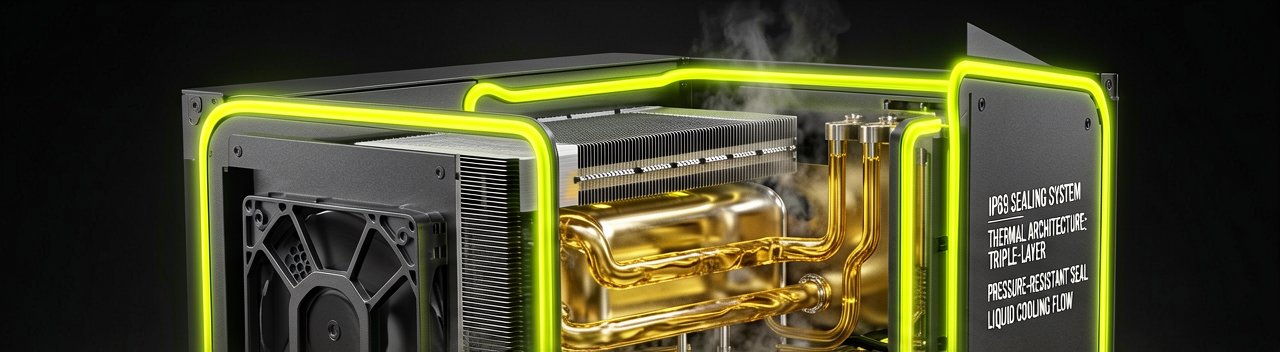
Under the hood, the Legion Y70 is one of the first to harness Qualcomm’s Snapdragon 8 Gen 5 chipset. This isn't the "Elite" variant seen in some ultra-premium productivity slabs, but rather a version tuned specifically for the high-sustained loads typical of mobile gaming. It’s paired with LPDDR5X Ultra RAM capable of hitting speeds up to 9,600Mbps and UFS 4.1 storage, ensuring that load times are virtually non-existent. To prevent the inevitable heat that comes with such power, Lenovo has implemented a 5,500mm² vapor chamber and a triple-layer thermal architecture involving liquid gold and thermal gel. Detailed specifications from Gizmochina suggest this cooling setup can drop core temperatures by as much as 7°C during heavy workloads.
A Display Built for Visibility and Speed
The visual experience is centered around a 6.82-inch BOE Q10 OLED panel that pushes a 2K resolution at a buttery-smooth 144Hz refresh rate. While the resolution is crisp, it’s the brightness that’s truly startling; Lenovo claims a peak of 7,000 nits, which should make outdoor visibility under direct sunlight a non-issue. For the competitive crowd, the 360Hz touch sampling rate provides the near-instantaneous response times needed for high-stakes play. It’s a sophisticated display that also manages to be efficient, with Notebookcheck noting that the panel actually consumes less power than many 1.5K displays currently on the market.

Durability and Optics
Despite being a gaming-first device, Lenovo hasn't ignored the fundamentals. The Y70 carries a rare triple-threat of IP66, IP68, and IP69 ratings, making it exceptionally resistant to dust and high-pressure water jets. On the camera front, it sports a 50MP Sony LYT-710 primary sensor with optical image stabilization, flanked by an 8MP ultrawide macro lens. While it won't replace a dedicated photography flagship, it's more than capable of capturing sharp social media shots. Starting at approximately 2,589 yuan (roughly $360) for the base model in China, the Legion Y70 represents a aggressive price-to-performance ratio that could seriously disrupt the current gaming phone landscape.
The Engineering Gambit: How Lenovo Shrunk a Power Plant
What Most Reports Miss: The sheer audacity of the Legion Y70’s engineering lies not just in the "8,000mAh" sticker, but in the material science required to fit that capacity into a chassis that doesn't feel like a brick. By utilizing a third-generation silicon-carbon battery chemistry, Lenovo’s engineers achieved an energy density that far outstrips traditional graphite solutions. This allows the phone to maintain a relatively svelte profile while offering nearly double the endurance of its predecessors. Historically, the Legion line was known for its "Side-mounted" dual-battery architecture, but the Y70 pivots to a centralized, high-density cell that improves weight distribution for long-form horizontal gaming sessions.
Industry analysts note that this aggressive push into battery longevity is a direct response to the "efficiency plateau" seen in modern mobile chipsets. While the Snapdragon 8 Gen 5 is remarkably efficient, the rising power demands of high-fidelity mobile titles like Genshin Impact and Honkai: Star Rail have consistently outpaced hardware gains. Lenovo’s decision to prioritize raw capacity over razor-thin aesthetics signals a return to the "function over form" philosophy that originally defined the gaming niche. It’s a calculated risk that acknowledges a core gamer reality: a phone that dies mid-tournament is useless, regardless of how fast its processor is.
Furthermore, the inclusion of an IP69 rating alongside such a massive battery and high-end cooling system is a quiet technical marvel. Most gaming phones struggle with ingress protection because the necessary ventilation for heat dissipation usually creates structural vulnerabilities. Lenovo bypassed this by using a sealed vapor chamber system that transfers heat to the outer metal frame, which acts as a secondary heat sink. This allows the device to survive high-pressure steam cleaning—a niche spec, perhaps, but one that highlights a level of build quality usually reserved for industrial-grade hardware rather than consumer electronics.
From a stakeholder perspective, Lenovo’s re-entry is clearly designed to destabilize the duopoly currently enjoyed by Asus and nubia. Internal sources suggest that the aggressive 2,589 yuan starting price is a "loss leader" strategy intended to capture market share rapidly in the competitive Chinese domestic market before a potential global rollout. By undercutting the competition while offering superior battery specs, Lenovo is forcing other manufacturers to justify their premium pricing. This move has already sparked conversations among supply chain experts regarding the sustainability of silicon-carbon battery costs for smaller manufacturers who lack Lenovo’s massive purchasing power.
The software layer also deserves a closer look, as the Legion Y70 debuts a gaming-specific fork of ZUI that prioritizes background process suppression and network stability. This isn't just about raw speed; it’s about "micro-latency" management. The integration with Lenovo’s broader Legion ecosystem—including seamless screen mirroring to Legion Go handhelds and laptops—suggests the company is building a unified gaming environment. This holistic approach indicates that Lenovo no longer views the smartphone as an isolated product, but as a critical node in a larger hardware web designed to keep users locked into their brand for every gaming need.
Ultimately, the Legion Y70 (2026) represents a pivotal moment for mobile hardware. It marks the end of the "spec-sheet wars" where megapixels and gigahertz reigned supreme, and ushers in an era where endurance and thermal stability are the true markers of a premium device. As the first major brand to successfully bridge the gap between "daily driver" usability and "hardcore gaming" specs without making the device look like a toy, Lenovo has effectively reset the expectations for what a flagship should be in the latter half of the decade.
The Hidden Cost of the Numbers Game
Reading Between the Lines: While the 8,000mAh battery and 7,000-nit display make for spectacular headlines, they also create a series of engineering contradictions that Lenovo’s marketing gracefully sidesteps. There is no such thing as a free lunch in thermodynamics; a battery of this density, even with silicon-carbon chemistry, generates significant internal resistance during the 90W rapid-charging cycles. While the four-year battery warranty is a confident move, it suggests that Lenovo expects the cell to degrade under the stress of high-heat gaming and fast-charging more than a standard 5,000mAh unit would. The long-term stability of this "monster" capacity under the sustained heat of a Snapdragon 8 Gen 5 remains a localized experiment that early adopters will essentially be beta-testing.
There is also the matter of that "7,000 nits" peak brightness. In the real world, such a figure is likely achievable only on a microscopic percentage of the screen for a fraction of a second during HDR playback. To sustain even a quarter of that brightness across the entire 6.82-inch panel would require power draws that would negate even an 8,000mAh reservoir in short order. It’s a classic case of "spec inflation," where manufacturers chase laboratory numbers that have diminishing returns in a dark bedroom or a dimly lit subway car. The industry is reaching a point where these figures serve more as psychological reassurance for the buyer than as practical upgrades for the player.
Furthermore, Lenovo’s pivot back into the phone market raises questions about corporate consistency. Having previously axed the Legion phone line to "streamline operations," this sudden reversal suggests a lack of long-term vision or, perhaps, a reactionary response to the surging popularity of handheld PCs like the Steam Deck. By framing the Y70 as a companion to the Legion ecosystem, Lenovo is attempting to retroactively justify its previous exit. Whether developers will actually optimize for Lenovo’s specific hardware—rather than just targeting the broad "Android flagship" baseline—will ultimately determine if this phone is a genuine gaming tool or just a very powerful, very heavy smartphone with a gamer-centric skin.
It’s a magnificent piece of kit, provided you’ve spent the last four years at the gym preparing your wrists to hold a small power station, and you don’t mind that your phone’s screen is technically capable of signaling passing aircraft.
Artūras Malašauskas is an AI Systems Integrator with 20+ years of production-grade web engineering experience. He has designed, shipped, and scaled enterprise Python/PHP systems for logistics, SaaS, and public-sector clients. For the past year, he has focused exclusively on AI integrations: deploying open-source LLMs, building generative media pipelines (image, audio, video), and engineering multi-agent workflows for real production environments. His standard: reproducibility, security, cost-efficient inference—no vaporware. He documents and evaluates emerging AI tooling, separating verified capabilities from marketing noise. Technical editor at: muza-ai.eu, ai-verslas.lt, ai-naujinos.lt Connect on LinkedIn
Comments